REVIEW · NEW DELHI
Authentic Indian Cooking Class with Jyoti in Delhi
Book on Viator →Operated by Gourmet Desire · Bookable on Viator
A Delhi home-cooked meal beats restaurant guessing. This Authentic Indian Cooking Class with Jyoti turns a few hours in New Delhi into real food knowledge: North Indian family dishes, the “why” behind ingredients, and a hands-on kitchen lesson at a local home. You get a thali-style meal at the end, plus practical techniques you can actually repeat later.
What I like most is Jyoti’s hands-on teaching and the way the class connects food to daily culture and even wellness ideas like holistic healing. I also love that the experience is capped at 10 people, so you’re not lost in a crowd. One thing to keep in mind: you’re responsible for getting yourself to the meeting point, since private transportation isn’t included.
In This Review
- Key highlights at a glance
- Cooking in Jyoti’s Delhi home: what makes it feel local
- North Indian dishes, thali-style meals, and the meaning behind spices
- From Gourmet Desire meeting point to the kitchen: how the 4 hours typically work
- Market-style ingredient talk: spices, grocery stalls, and what to watch for
- Hands-on cooking: techniques you can repeat back home
- What you’ll eat: more than just lunch, it’s your final exam
- Price and value in New Delhi (and what you should compare)
- Who this cooking class is best for
- Should you book this Jyoti class?
- FAQ
- How long is the cooking class?
- What’s the group size limit?
- Where do I meet, and where does it end?
- What’s included in the price?
- Is private transportation included?
- Can the class be customized for dietary requirements?
- How far in advance should I book?
- What’s the cancellation policy?
Key highlights at a glance
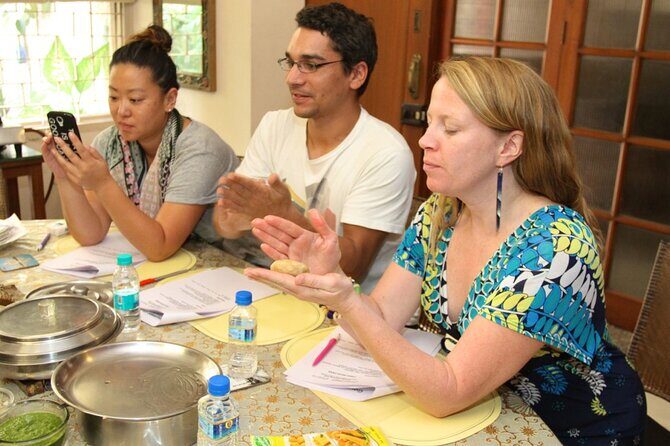
- Small group (up to 10): more attention, less waiting around at the counter
- North India focus: family-style recipes and repeatable cooking techniques
- Thali-style dining: you eat like you’ve stepped into an everyday Indian meal
- Custom options for needs: you can adjust what you cook and how you cook it
- Ingredient + spice context: you don’t just follow steps; you learn why they work
Cooking in Jyoti’s Delhi home: what makes it feel local
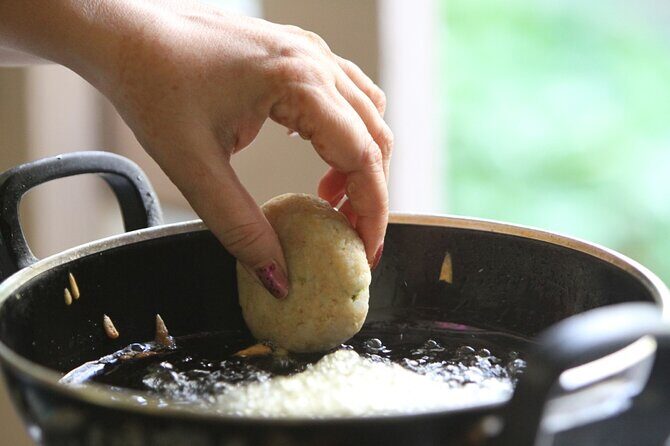
There’s a big difference between watching Indian cooking videos and cooking with a real home cook in real time. In this class, Jyoti hosts in her home in heart-of-Delhi surroundings, so you learn the way dishes are built in everyday kitchens, not just the way they’re plated for tourists.
The vibe is warm and personal. You’re not treated like an observer. You’re treated like someone helping out and learning as you go. And since this is a 3–4 hour experience, it’s long enough to cover real technique, not just a quick demo.
This is also a smart early-trip choice. If you do it in the first half of your India trip, you’ll pick up a toolkit for later. You start seeing what you’re tasting: spice blends, sour-sweet balances, and the role of herbs and aromatics. It makes the rest of your travels easier and more fun, because you know what to ask for when you’re eating out.
You can also read our reviews of more cooking classes in New Delhi

North Indian dishes, thali-style meals, and the meaning behind spices
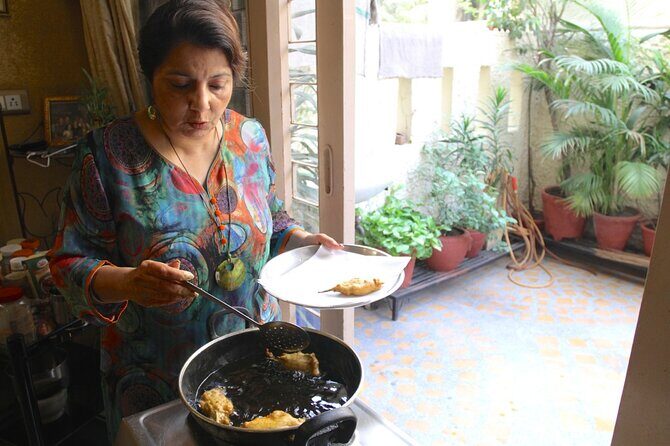
The class centers on traditional family dishes from North India—the kind that get passed down and adjusted at home, not just served at one specific restaurant. That matters, because North Indian cooking often relies on layered flavor: toasted spices, aromatics that bloom in hot fat, and sauces balanced with yogurt, tomatoes, tamarind, or lemon.
You also eat in the classic thali style. That’s not just a presentation choice. It’s a teaching tool. When you eat several small components together—like a curry with a bread and a chutney—you start understanding how Indian meals are designed as combinations. Each dish supports the others, and the meal feels complete even when you’re eating simple things.
Another angle I appreciate here is that Indian cuisine is taught as part of culture and wellness, not only flavor. The experience includes the idea of holistic healing as part of food traditions. In practice, that means ingredient choices get explained with extra context—how certain spices are used and why they show up in everyday routines. Some classes in this format also connect ingredients to homeopathy-style thinking, so you might hear those connections too. Even if you don’t follow that approach yourself, the food logic can be surprisingly interesting.
From Gourmet Desire meeting point to the kitchen: how the 4 hours typically work
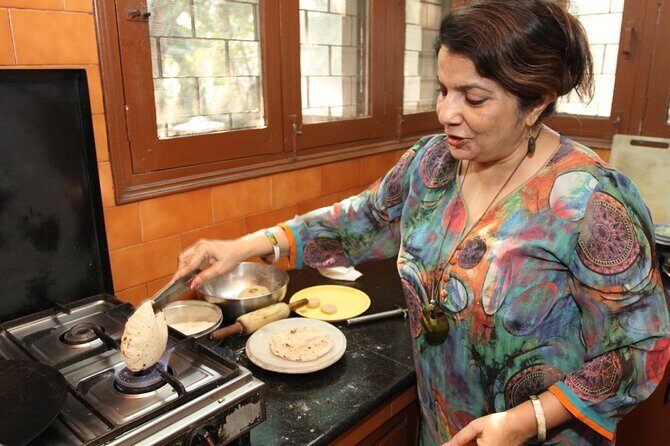
The class starts and ends at the same place: Gourmet Desire Pocket C, Sheikh Sarai Phase 1, Sheikh Sarai, New Delhi 110017. It’s described as near public transportation, which is a big help in New Delhi, where door-to-door transport can get expensive.
Once you meet up, expect a proper introduction before you start cooking. A key part of the experience is that Jyoti doesn’t rush you from one step to the next. The pacing is designed so you can follow the technique, ask questions, and get comfortable with what you’re doing.
Timing-wise, a 4-hour block usually breaks down like this:
- Getting oriented and reviewing what you’ll cook
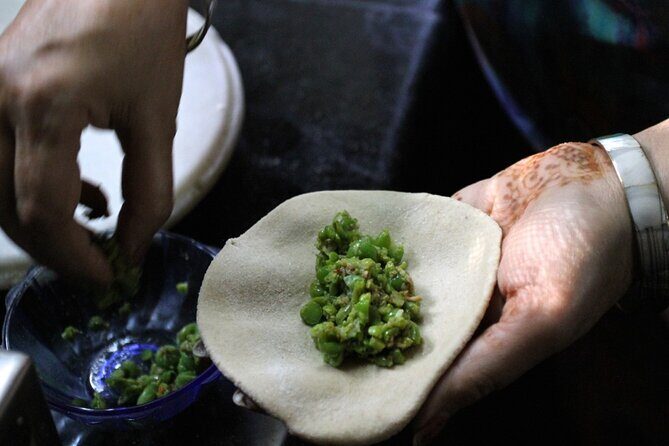
- Hands-on cooking in the kitchen
- Finishing and plating
- Eating together in thali style
- Taking your recipes/notes for later
One practical benefit of small-group cooking: you’re not waiting endlessly for turns, and you can usually get help when something doesn’t behave the way you expect (spice roasting going too fast, chutney too thick, sauce not thickening yet, and so on).
Market-style ingredient talk: spices, grocery stalls, and what to watch for
A nice bonus you may run into is an ingredient-focused walk. One version of this experience includes meeting Jyoti around the INA market area, then checking out stalls—especially a spice and grocery store—where ingredients get explained for specific dishes. You might also hear notes connecting ingredients and homeopathy.
Even if your class day doesn’t include a full market segment, the theme stays the same: you learn to identify what matters in Indian cooking. That can mean learning:
- which spices are used for warmth versus aroma
- how freshly ground spices taste compared with pre-ground
- how a dish can change with small swaps (like changing chili level or adjusting sourness)
If you’re the type who likes to shop with a plan, this is where you’ll start thinking about what to buy later. For example, you’ll likely leave knowing which pantry items are worth seeking out versus which are just extras.
Practical tip: if you have a spice sensitivity or a food sensitivity, tell Jyoti at the start. This class format supports customization, and the more specific you are, the better she can adjust technique and ingredients.
Hands-on cooking: techniques you can repeat back home
The best cooking classes teach steps, but the best ones teach technique. Here, you’ll learn kitchen fundamentals that make Indian cooking feel less mysterious once you’re back in your own place.
A few of the teaching strengths show up clearly:
- You get a handout/recipe guidance: you should leave with written recipes so you can recreate dishes
- You learn techniques, not just dishes: things like how to build flavor for curries, manage chutney texture, and balance seasoning
- You can choose or customize: the class can be tailored for preferences and needs, including vegan options in at least some cases
In past sessions, the cooking list has included items like chai tea, green chutney, cauliflower, butter chicken, and chana masala. Your exact menu may vary, but the takeaway is consistent: you’ll work on a mix of dishes that teach different parts of the North Indian flavor system—curries, sides, and condiments.
What makes this useful is that the kitchen skills are transferable. Even if you don’t cook the exact same dishes again, you’ll know how to:
- roast and toast spices properly
- build sauce depth
- adjust thickness and seasoning
- use chutneys to brighten and balance a meal
And because you’re learning in a real home kitchen, you’ll see how things are handled efficiently—how someone actually cooks at home when they’re not filming an episode.
A few more New Delhi tours and experiences worth a look




What you’ll eat: more than just lunch, it’s your final exam
The included meal is a big part of the value: lunch (or dinner, depending on timing) served in a thali-style setup, plus soda/pop, bottled water, and coffee and/or tea, along with snacks.
This matters because you’re eating what you cooked, and that’s how technique sticks in your brain. You can compare your expectations to what you made. You learn which flavors land first, what tastes good together, and which components do the balancing.
If you’re doing this early in your trip, the meal also becomes your reference point. Later, when you order North Indian food outside, you’ll be able to recognize:
- the spice base behind the curry
- the sour element that lifts flavor
- the role of chutneys and condiments
Also, it’s not just about “spicy.” The class tends to emphasize balance: sweetness, acidity, aromatics, and texture.
Dietary needs: the experience can be customised based on your requirements, and past participants have noted accommodations for sensitivities (including vegan cooking). Don’t wait until the last minute—send your needs at booking time.
Price and value in New Delhi (and what you should compare)
The price is $62.25 per person for about 4 hours. You’ll see this booked around 9 days in advance on average, which suggests it’s popular enough that waiting too long can reduce your options.
How this price stacks up in real terms:
- You’re paying for an intimate, home-based experience with real teaching time
- You get a full meal setup with drinks and snacks, not just a snack-sized experience
- The group size cap (up to 10) increases the odds you’ll get help and learn properly
- You typically leave with recipes/notes you can use again
The one cost you should plan for is transportation. Private transportation isn’t included, so factor in your own way to the meeting point. The good news: it’s listed as near public transportation, so you can likely handle it without hiring a private car.
Also note that group discounts and a mobile ticket are part of the package. If you’re traveling with someone you trust, you can often make this feel even better value.
Who this cooking class is best for
This is a great fit if you want more than a food photo. You want the skills, not just the taste. It’s especially good for:
- people who like practical learning and want repeatable methods
- anyone doing a shorter New Delhi stay and wants a high-impact experience
- food lovers who want North Indian cooking explained in plain language
- couples or small groups who prefer a small class (max 10)
It’s also a good choice if you’re traveling with dietary needs. The experience supports customization, and Jyoti is used to adjusting dishes rather than just offering a one-size-fits-all menu.
If you’re the type who only wants “the dishes” and doesn’t care about technique, you might find it slower than a restaurant meal. But if you’re here to learn, this class is exactly the right speed.
Should you book this Jyoti class?
I’d book it if you want a hands-on Delhi experience that teaches you how the food works. The combination of North Indian family recipes, thali-style eating, and technique-focused instruction is strong value—especially when you consider you’re not just consuming, you’re learning.
Skip it only if:
- you’d rather spend your time on guided sightseeing routes
- you really don’t want to manage getting to the meeting point yourself
- you’re looking for a very fast, casual tasting with no cooking work
If your goal is to leave Delhi knowing how to recreate Indian flavors at home, this is a very practical way to do it.
FAQ
How long is the cooking class?
It runs for about 4 hours.
What’s the group size limit?
The experience has a maximum of 10 travelers.
Where do I meet, and where does it end?
You meet at Gourmet Desire Pocket C, Sheikh Sarai Phase 1, Sheikh Sarai, New Delhi 110017, India, and it ends back at the same meeting point.
What’s included in the price?
Included are lunch, soda/pop, bottled water, coffee and/or tea, and snacks.
Is private transportation included?
No. Private transportation is not included.
Can the class be customized for dietary requirements?
Yes. The experience can be customised based on your requirements.
How far in advance should I book?
On average, it’s booked about 9 days in advance, so earlier booking gives you more choice.
What’s the cancellation policy?
You can cancel for a full refund if you cancel at least 24 hours in advance. If you cancel within 24 hours of the start time, the amount paid is not refunded.