REVIEW · NEW DELHI
Agra Taj Mahal Tour and Jaipur Tour from Delhi in 2 days
Book on Viator →Operated by Julie International Tours · Bookable on Viator
Taj and forts in two days can work. This Delhi to Agra to Jaipur trip packs in the Taj Mahal and the big Jaipur sights with a private driver and guided stops, and I like that you get an organized pace without having to manage tickets or routes. The main drawback is simple: day one is long, with a 4-hour drive each way in the middle of sightseeing, so it’s not the kind of trip you do to truly slow down.
Here’s the good part: you’ll see major “Golden Triangle” highlights without spending extra days hopping hotels. You also get an air-conditioned car, an approved guide, and breakfast included so the logistics stay mostly painless. Just keep your expectations realistic about timing, heat, and how much walking you’ll do.
In This Review
- The Quick Reality Check Before You Go
- Key Highlights You’ll Actually Feel On the Ground
- Two Days, Realistic Pace: How This Loop Works
- Price and Value: Is $229 Fair for What You Get?
- Day 1 Delhi to Taj Mahal to Jaipur: Long Drive, Strong Payoff
- Taj Mahal Timing and What You’ll Notice
- After Taj: Lunch Is On You, Then Off to Jaipur
- Jaipur Fort at Amer: Red Sandstone, White Marble, and Mirror Magic
- Sheesh Mahal (Mirror Palace) Is the Moment
- Jal Mahal to City Palace: Jaipur Sights That Mix Views With Museums
- City Palace: The Seat of Power You Can Actually Walk Through
- Jantar Mantar and Hawa Mahal: Science Meets Street Life
- Hawa Mahal: 953 Windows and Royal Privacy
- Hotels, Breakfast, and the Parts That Make or Break Two Days
- Guides, Communication, and the Tip Question
- What This Tour Is Best For (And Not Best For)
- Should You Book This 2-Day Taj Mahal and Jaipur Tour?
- FAQ
- How long is the Agra Taj Mahal and Jaipur tour from Delhi?
- Is pickup included in Delhi?
- Are monument entrances included?
- What meals are included?
- Is hotel accommodation included?
- Is this a private tour?
- Can I get a full refund if I cancel?
The Quick Reality Check Before You Go
This is a private, group-based style tour for your party only. That’s great for comfort and flexibility, but it also means you’re relying on the schedule to hit key sights—especially the Taj Mahal timing. Admission for monuments isn’t fully included, so plan for entrance fees (and bring cash/card where possible).
Key Highlights You’ll Actually Feel On the Ground
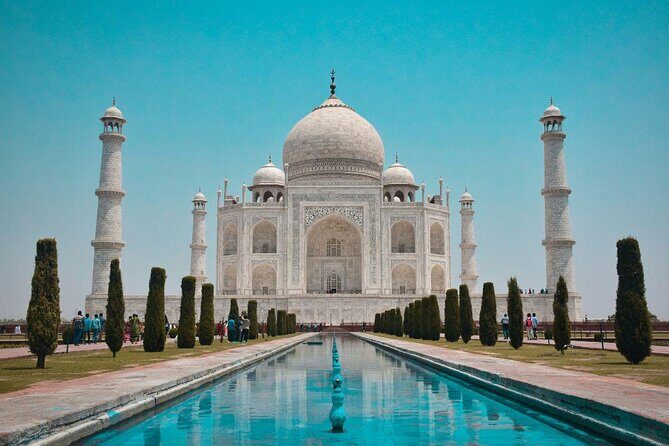
- Taj Mahal visit built into a short route: you get a dedicated stop with time to see the marble details up close
- Amer Fort with Sheesh Mahal (Mirror Palace): the Hindu-Muslim architectural blend is a standout in Jaipur
- Jantar Mantar + Samrat Yantra: you don’t just “look,” you learn how the instruments measure the sky
- City Palace museum time: you’ll see royal costumes and Rajput weapons through the Chandra Mahal museum
- Hawa Mahal’s 953 windows: the design explains how royal women watched street life while following purdah rules
- Air-conditioned chauffeur and packaged water: small comforts that matter on long drives
A few more New Delhi tours and experiences worth a look



Two Days, Realistic Pace: How This Loop Works
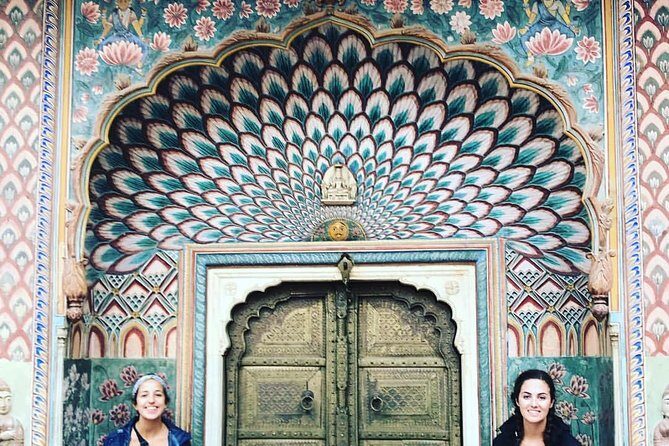
This is a classic short-form Golden Triangle trip designed for people who have limited time. You start in Delhi, drive to Agra, tour the Taj Mahal, then continue to Jaipur for an overnight stay. The second day is then focused on Jaipur’s core landmarks before you’re returned to Delhi.
Day 1 is built around one big goal: Taj Mahal. Everything else supports that. You’ll have a guide meet you in Agra, and you’ll move through the Taj Mahal with a set block of time. After that, you’ll drive onward to Jaipur, check into your hotel, and sleep.
Day 2 is sightseeing-heavy but efficient. You’ll cover Amer Fort first, then a photostop at Jal Mahal, then City Palace, Jantar Mantar, and finally Hawa Mahal, before returning to Delhi.
Price and Value: Is $229 Fair for What You Get?
At $229 per person, the value comes from what’s included for a two-day loop: pickup/transfer service, an air-conditioned vehicle, a professional licensed chauffeur, a government-approved tour guide, and breakfast.
The value calculation hinges on one detail: accommodation is included only if you choose the hotel option (3, 4, or 5-star). If you select that option, you’re paying for a full overnight base in Jaipur plus the guided sightseeing framework. If you don’t, the tour may still function, but your costs will shift to your own lodging.
Here’s what isn’t included, and it affects your real total:
- Monument entrances (including Taj Mahal)
- Lunch and dinner
- Anything not explicitly listed
So I treat the advertised price as a foundation, not the entire trip budget. If you add entrance tickets and your meals, it becomes a more honest “all-in” comparison versus booking each city separately.
Day 1 Delhi to Taj Mahal to Jaipur: Long Drive, Strong Payoff
Your day starts with pickup in Delhi—airport, railway station, or your hotel—then a drive of about 4 hours to Agra. The route is planned to get you to Taj Mahal without losing your whole day on the road. Having a chauffeur in an air-conditioned car matters here; this kind of drive is where group tours either feel comfortable or feel punishing.
Taj Mahal Timing and What You’ll Notice
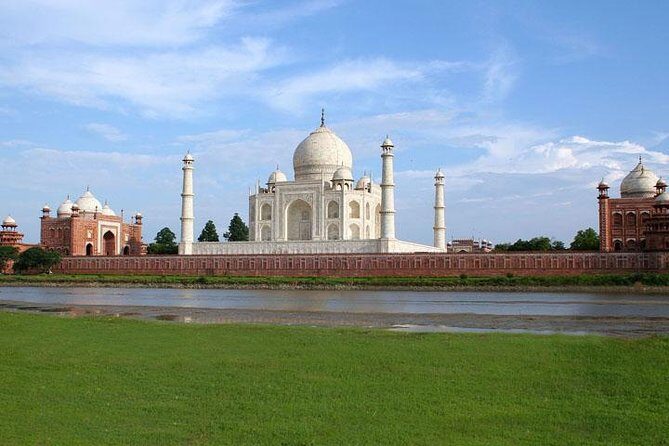
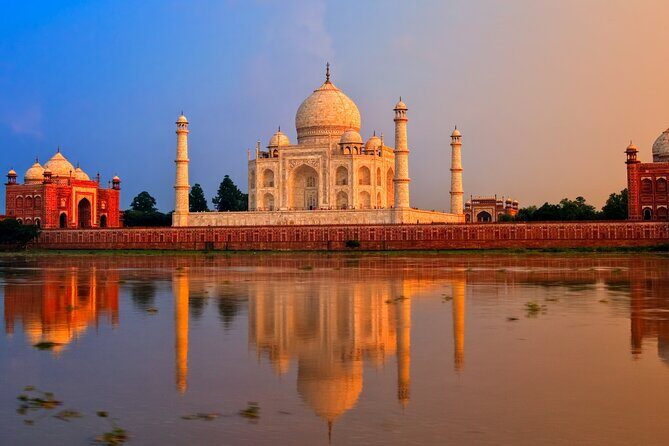
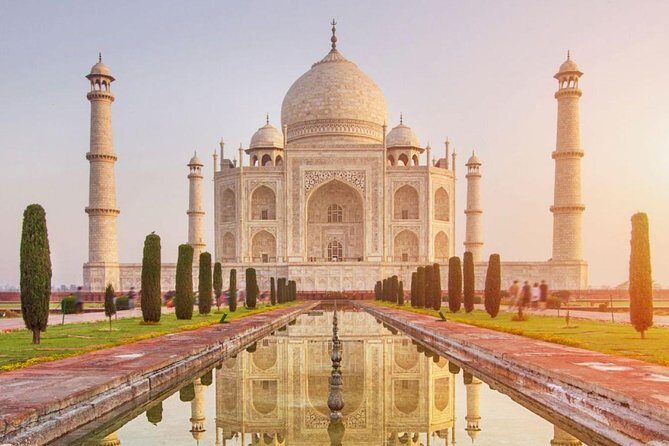
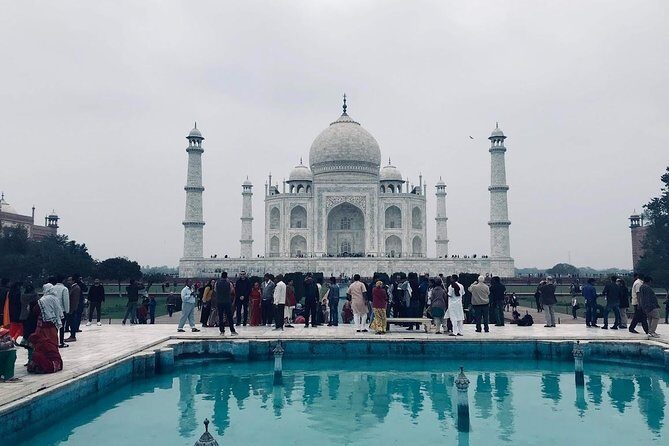
Once in Agra, you meet your private tour guide and head to the Taj Mahal. The visit block is about 2 hours, which is enough time to see the main marble surfaces, the surrounding layout, and the way light changes the color of the white marble.
The Taj Mahal is famous for a reason, but the “enigma” is real: when you’ve seen countless photos, the first shock is how different the scale feels in person. Up close, the marble details and symmetry start to feel less like a postcard and more like craft—especially as you move and the light shifts across surfaces.






After Taj: Lunch Is On You, Then Off to Jaipur
After the Taj Mahal, you stop for lunch, but it’s own expense. That’s normal for short itineraries: the tour keeps you moving so you can still reach Jaipur and check in.
Then you drive to Jaipur. The transfer time is about 5 hours to get you there, and you’ll check into your hotel and spend the night in Jaipur. Practically speaking, this is the part where you should not plan extra evening activities unless your hotel is close and you’re feeling energetic.
Jaipur Fort at Amer: Red Sandstone, White Marble, and Mirror Magic
Day 2 starts with breakfast, then you meet your local guide and head to Amer Fort, one of the most impressive fort complexes outside Jaipur. You’ll tour the fort with an emphasis on its architecture and standout chambers.
What makes Amer Fort worth your limited time is its blend of styles. You’ll see the Hindu and Muslim influences expressed through the red sandstone and white marble work. Even if you’re not a “fort person,” Amer Fort has that mix of grand views and intimate details.
Sheesh Mahal (Mirror Palace) Is the Moment
The highlight is the Sheesh Mahal, known as the Mirror Palace. It’s famous for craftsmanship using mirrors, and that’s the kind of detail that’s hard to capture in photos. The point isn’t just to look—it’s to notice how the light and reflections create a different mood inside the palace spaces.
Also, Amer Fort served as the residence of the Rajput rulers. So while you’re walking ramparts and gateways, you’re also reading the political story of how power was organized here.
Jal Mahal to City Palace: Jaipur Sights That Mix Views With Museums
Next up is a short photostop at Jal Mahal, the Water Palace. It’s associated with the Man Sagar Lake, and the appeal is the illusion that the palace is floating. This stop is brief (about 15 minutes), so treat it as a quick pause for photos and a moment to reset your feet.
City Palace: The Seat of Power You Can Actually Walk Through
Then you visit the City Palace of Jaipur, once the seat of the Maharaja. This is a palatial complex with gardens and multiple historical buildings, including Chandra Mahal and Mubarak Mahal. One reason it works well on a tight schedule is that it’s not only exterior architecture—you can also go inside for museum time.
If you’re interested in material culture, the Chandra Mahal museum is the key interior stop. You’ll see a collection of royal costumes and Rajput weapons. Even on a short visit, that kind of exhibit helps you connect the fort and palace architecture to the people who lived and ruled there.
The architecture is also described as a fusion of Rajput, Mughal, and European influences. That matters because it explains why Jaipur feels different from other Indian cities—you’re not just seeing one era layered on top of another.
Jantar Mantar and Hawa Mahal: Science Meets Street Life
After City Palace, you go to Jantar Mantar, Jaipur’s astronomical observatory. This is a different kind of landmark: less about buildings and more about measuring the sky. You’ll spend about 40 minutes here.
Jantar Mantar contains 19 large instruments, each made for a specific measurement. The centerpiece is the Samrat Yantra, the largest sundial in India. What I like about stopping here is that it turns “tourist time” into “real understanding.” Even if you don’t become a science person, you’ll walk away with the idea that people once studied the heavens with serious tools made of stone.
Hawa Mahal: 953 Windows and Royal Privacy
Finally, you visit Hawa Mahal, the Palace of Wind, built like a honeycomb with 953 windows. The design is functional: breezes would pass through, and the windows let royal ladies observe street scenes without being seen, because purdah rules were in place at the time.
This stop is short (about 10 minutes), so don’t expect a long sit-down. But do expect the “aha” moment: the architecture is a social system. You’re not just seeing pretty façades—you’re seeing how design supported a way of life.
Hotels, Breakfast, and the Parts That Make or Break Two Days
The tour includes breakfast, and you’ll have an overnight stay in Jaipur if you pick the accommodation option. The hotel is categorized as 3, 4, or 5-star depending on what’s chosen.
In a trip this short, the hotel choice matters more than usual. You’re coming in late on Day 1 after a long drive. You’ll likely want:
- a comfortable bed and a good shower
- reliable air-conditioning
- enough quiet to actually sleep
Also, the tour includes packaged drinking water and runs an air-conditioned vehicle with a licensed chauffeur. Those are the unglamorous inclusions that keep a tight itinerary from feeling like a trial.
Guides, Communication, and the Tip Question
The tour is private in the sense that it’s arranged for your group only, and you have tour guidance from a government-approved guide. That’s a meaningful difference. A guide helps you understand what you’re seeing, and it also helps keep you from losing time to uncertainty.
One practical note: guides sometimes discuss tipping directly. I recommend you decide ahead of time what you’re comfortable giving so you’re not negotiating mid-trip.
Separately, the driver can be the hero of the whole thing. India road conditions can be chaotic, and in a two-day schedule, a steady driver keeps you sane. If your comfort depends on the car ride, this is one place where paying attention to transportation is worth your energy.
What This Tour Is Best For (And Not Best For)
This trip is best for you if:
- you want a tight, organized introduction to Agra and Jaipur
- you like having someone handle the route and timing
- you’re okay with a long day drive and a packed second day
It may be less ideal if:
- you want lots of free time for cafés, slow shopping, or wandering
- you hate early starts or long car rides
- you’re planning on skipping monument entrance fees entirely (because entrances are not included)
If your goal is deep, unhurried exploration, you’ll likely want a longer stay in either Agra or Jaipur. But if your schedule only allows two days, this is one of the more efficient ways to hit the core hits.
Should You Book This 2-Day Taj Mahal and Jaipur Tour?
I’d book it if your priority is classic highlights, clean logistics, and a guided route that fits into a short window. The biggest “yes” is the structure: Taj Mahal first, then Jaipur with Amer Fort, City Palace, Jantar Mantar, and Hawa Mahal. You get variety—mausoleum, fort, palace, observatory, and a design built for daily life.
I’d think twice if you’re the type who hates paying surprise extras. Entrance tickets and meals are not included, so your final budget will be higher than the base price. Also, it’s a schedule with real time pressure, especially on Day 1 after the drive.
My quick decision tip: if you can handle a packed itinerary and you’re okay budgeting for entrance fees, this is a strong short-trip value.
FAQ
How long is the Agra Taj Mahal and Jaipur tour from Delhi?
The tour is about 2 days.
Is pickup included in Delhi?
Yes. Pickup is offered from the airport, railway station, or your hotel in Delhi.
Are monument entrances included?
No. Monument entrances are not included, and Taj Mahal admission is specifically listed as not included.
What meals are included?
Breakfast is included. Lunch and dinner are not included, and lunch is listed as an own expense.
Is hotel accommodation included?
Accommodation in a 3, 4, or 5-star hotel is included if the accommodation option is chosen.
Is this a private tour?
Yes. It’s private, and only your group participates.
Can I get a full refund if I cancel?
You can cancel up to 3 days in advance for a full refund. If you cancel less than 3 days before the start time, the amount you paid will not be refunded.
—
If you tell me your travel month and your comfort level with long car days, I can help you judge whether this two-day pace feels right for you.