REVIEW · NEW DELHI
7 Day Golden Triangle Tour with Ranthambore Tiger Tour
Book on Viator →Operated by Tour Guide Delhi · Bookable on Viator
Tigers and the Taj in one week. This Golden Triangle + Ranthambore combo stacks India’s big-name heritage with real wilderness time, including two Ranthambore safaris and a sunrise Taj Mahal visit. The route also keeps the pace mostly practical: you cover major monuments without spending your whole day stuck in paperwork or guessing what goes where.
I especially like the timing. You get an early-morning Taj Mahal plan (5:45 AM) and then you’re not just rushing on fumes; there are breaks built in, like returning to hotels after each major sightseeing block. I also like the “hands-on” feel from professional city guides, plus air-conditioned transport and bottled water in the car for the long drives.
One thing to consider: the itinerary relies on monument entry fees that are not included. The tour lists a monuments entrance fee of $79 per person, and several stops are photo stops or outside views, so if you expect every monument to be fully inside and included, you’ll want to adjust your expectations.
In This Review
- Key highlights
- Why This Golden Triangle + Ranthambore Mix Works in Real Life
- Day 1 in Delhi: Jama Masjid, Chandni Chowk, and Qutub Minar
- Day 2 to Agra: Agra Fort and a Sunset-View Strategy
- Day 3: The 5:45 AM Taj Mahal + Fatehpur Sikri Before Ranthambore
- Day 4 in Ranthambore: Two Safaris, Two Chances
- Day 5: Drive to Jaipur and Choose Your Evening Temple Stop
- Day 6 Jaipur Power Day: Fort, City Palace, Jantar Mantar, Hawa Mahal
- Day 7: Your Choice—Fly from Jaipur or Delhi
- Price and Value: What $599 Really Covers
- Service Quality: Communication That Actually Matters
- Should You Book This Golden Triangle + Ranthambore Tour?
- FAQ
- What cities are included in the tour?
- Where does pickup happen?
- Is the sunrise Taj Mahal visit included?
- How many Ranthambore jungle safaris are included?
- Are hotel stays included?
- Are monument entrance fees included?
- What is included for meals?
- How is transportation handled during the trip?
- Is this a private tour?
- What is the cancellation refund timeline?
Key highlights

- Sunrise Taj Mahal arranged for a golden light start, before crowds build up.
- Two Ranthambore safaris (morning and afternoon) to improve your odds of seeing tigers and other wildlife.
- Old Delhi rickshaw ride through Chandni Chowk, a classic way to understand the neighborhood quickly.
- Fatehpur Sikri added as an extra Mughal stop on the way to Ranthambore.
- Guides and service: clear pre-tour communication and attentive support from the team (including Sonia and chauffeur Raju, based on past guest notes).
- Comfort-focused logistics: air-conditioned vehicle, packaged water, and 3/4/5-star hotel options.
Why This Golden Triangle + Ranthambore Mix Works in Real Life

This kind of trip can go two ways: either it feels like a museum sprint, or it feels like a wildlife detour with no context. This one tries to balance both. You start with Delhi’s layered history, move through Agra’s Mughal landmarks, then hit Jaipur’s royal-era city planning. After that, you shift gears to Ranthambore National Park where the goal is simple: watch wildlife where it lives.
You’ll likely enjoy that the tour isn’t only “see the monument, move on.” It includes viewpoints and specific timing choices, like the Taj Mahal at sunrise and two separate safari drives. Those decisions matter. In India, light changes everything for photos, and in a tiger reserve, changing time-of-day can make a real difference in what you spot.
A few more New Delhi tours and experiences worth a look


Day 1 in Delhi: Jama Masjid, Chandni Chowk, and Qutub Minar
Day 1 is your orientation day. You’re picked up from Delhi Airport, your hotel, a railway station, or a chosen spot in Delhi/Noida/Gurgaon. Then the sightseeing loop pulls you across Old and New Delhi so you can get a sense of scale fast.
Jama Masjid is first. It’s India’s largest mosque, built by Shah Jahan in 1656, designed to hold up to 25,000 worshippers. You’re there long enough to take in the red sandstone and white marble design language, but the ticket note says admission isn’t included. So treat this as a “plan your entry fee” stop rather than a free wandering block.
Next is Chandni Chowk, where you do a rickshaw ride through the markets. That’s one of the most useful ways to get bearings in Old Delhi. You’ll be moving through narrow lanes that are hard to interpret on foot alone, and the rickshaw format keeps you from turning the day into a slow, exhausting walk.
You then get a Red Fort outside view. The tour specifies that around 70% of the fort is occupied by the Indian Army, so you’ll see it from the outside for photos rather than touring inside. That’s not necessarily a downgrade; it’s more honest about what’s realistically possible.
The day continues with major New Delhi landmarks—Raj Ghat (Gandhi’s memorial), India Gate (war memorial), Rashtrapati Bhavan and Parliament House (photo stops), and Qutub Minar. Qutub Minar is UNESCO-listed and rises to 73 meters, known as the tallest brick minaret. Admission isn’t included there either, so again: budget time and fees for what you want to enter.
Practical note: Delhi’s traffic can be unpredictable. This route still works because the stops are clustered and several are photo-based, but wear comfortable shoes and keep water and snacks ready.
Day 2 to Agra: Agra Fort and a Sunset-View Strategy
After breakfast, you’re driven to Agra. Agra is where the Mughal story becomes visually obvious. Once you arrive, you check into your pre-booked hotel and then meet your guide for sightseeing.
You’ll spend time at Agra Fort, a UNESCO World Heritage Site and a former Mughal power center. It was built by Akbar in 1565 and later modified by Shah Jahan. Admission is not included, so plan for the entrance fee there if you want to go inside rather than viewing from the edges.
Then comes Mehtab Bagh (the Moonlight Garden). This is a sunset-style stop designed for seeing the Taj Mahal from across the Yamuna. Admission isn’t included, and it’s also not framed as a long, museum-like experience. Think of it as a viewpoint appointment: you’re here for the light, the geometry, and the mood.
The day ends with an overnight in Agra, so you’re not constantly changing hotels at the worst times.
Drawback to keep in mind: Agra days often come with sore legs and early nights simply because you’re stacking major sites. If you’re sensitive to tiredness, consider doing light exploration in the hotel area after you return.
Day 3: The 5:45 AM Taj Mahal + Fatehpur Sikri Before Ranthambore
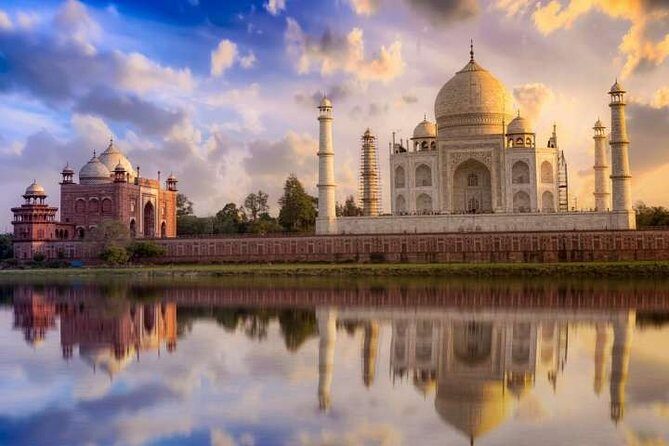
This is one of the most important days on the whole trip.
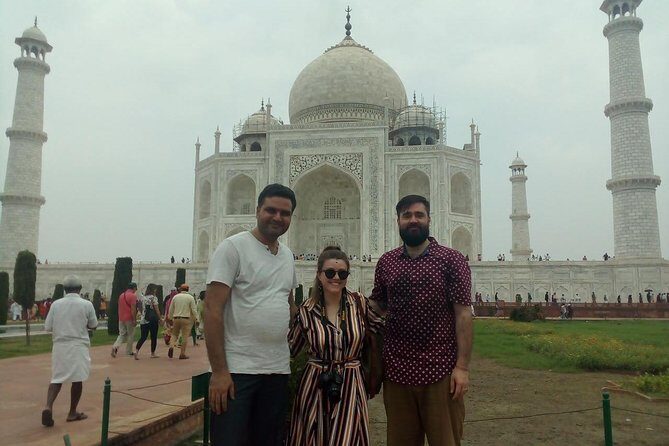
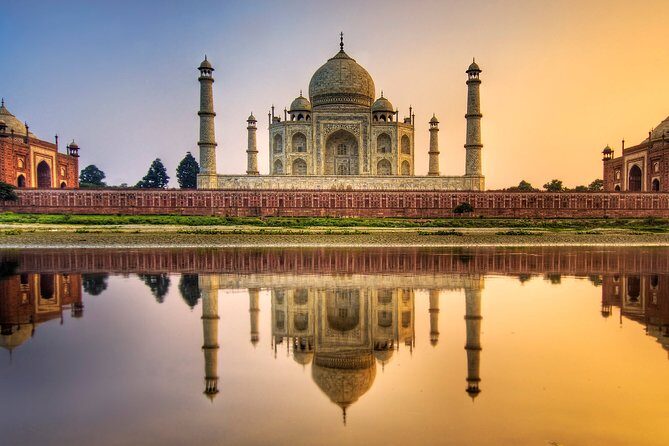
You start with a 5:45 AM sunrise visit to the Taj Mahal, meeting your guide in the hotel lobby and heading out before the day fully ignites. The payoff is the sunrise lighting on the ivory-white marble—the whole monument shifts color as the sky warms up. It’s the kind of timing that makes this stop more than just a checklist item.
After exploring the Taj Mahal and getting back for breakfast, you check out and travel toward Ranthambore. But instead of going straight there, you add Fatehpur Sikri, the abandoned Mughal capital about 35 km west of Agra. It’s UNESCO-listed and one of the finest examples of Mughal architecture. It was founded under Akbar in 1571 and served as the Mughal seat for a time, before it was left behind.
This is a smart choice for history lovers because it turns the travel day into a meaningful detour. It also helps wildlife-focus travelers, because it gives you a break from car time by adding a structured, guided site stop.
Finally, you arrive in Sawai Madhopur (the base area for Ranthambore) and check into your hotel for the night.
Potential consideration: starting very early can be tough if you’re not used to jet lag schedules or morning wakeups. If you’re sensitive, set yourself up the evening before with an early dinner and limited screen time.
Day 4 in Ranthambore: Two Safaris, Two Chances
Day 4 is all about Ranthambore National Park, and it’s set up to maximize your odds. You’re picked up at 6:00 AM for the first game drive, which typically runs 2–3 hours.
Ranthambore is one of India’s best-known tiger reserves. The plan also highlights the possibility of spotting Bengal tigers as the main attraction, plus other wildlife like leopards, deer, and exotic birds. The important part here isn’t the promise of a tiger on cue—it’s that the tour gives you actual time in the right place, with two separate chances during the day.
After the morning safari, you return to the hotel for breakfast and a midday break. This matters. Safari days can be physically fine but mentally intense, because you’re constantly watching and listening.
Then you head out again at 2:30 PM for the evening drive, typically 3–4 hours. Doing two drives rather than just one is one of the clearest value wins on this itinerary. Wildlife visibility changes with temperature and light, and the park dynamics shift throughout the day.
Safaris are listed as included in shared jeep/canters, which is normal for the park and helps keep costs controlled. Shared also means you’ll follow the group’s pace and seating setup rather than having a totally private vehicle for your party.
My practical tip: expect the day to be “quiet excitement.” You might spend long stretches seeing smaller animals or just patterns in the landscape, then suddenly have a big moment. If you’re calm and patient, the experience feels better.




Day 5: Drive to Jaipur and Choose Your Evening Temple Stop
On Day 5, you drive to Jaipur. The transition is big: from park sounds to a city pace. After breakfast, you check out and head toward Rajasthan’s capital city.
Once you arrive, you check in and then get an evening temple option. You can visit either Galta Ji (Monkey Temple) or Birla Mandir depending on preference.
Galta Ji is known for its seven sacred water tanks (kunds), and it’s a major home for rhesus macaques and langur monkeys—hence the nickname. Admission is not included, so plan for entry if you want to go in rather than just see the area.
Birla Mandir is a modern white marble temple dedicated to Lord Vishnu and Goddess Lakshmi. If you want clean lines and a less chaotic feeling than Old City temple areas, Birla Mandir can be a good contrast.
This day is a lighter lift compared to earlier sightseeing-heavy days. It works because you still have travel time and you’re not expected to cram every Jaipur landmark in one evening.
Day 6 Jaipur Power Day: Fort, City Palace, Jantar Mantar, Hawa Mahal
Day 6 is packed in a good way. Jaipur is a city where the planning itself tells a story. It was painted pink in 1882 to honor Prince Albert’s visit, and it’s considered India’s first planned city. You’ll see why once you start moving through the old core.
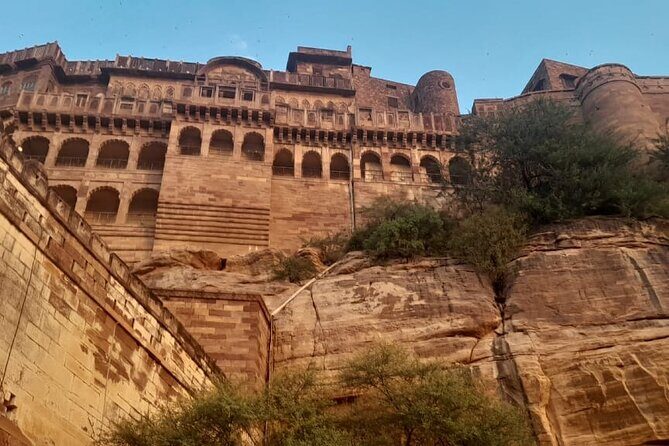
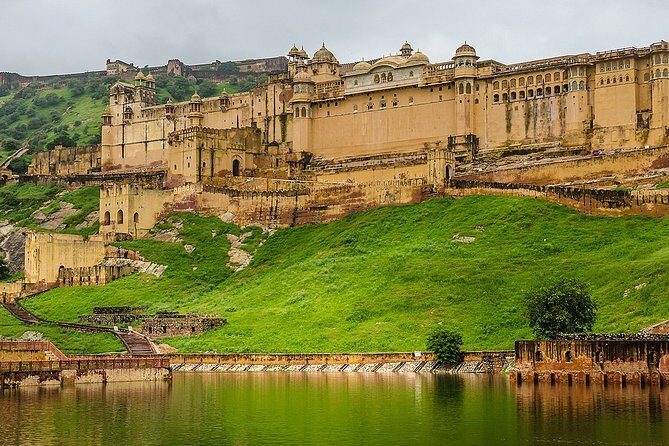
You begin with Jaipur Fort (a UNESCO World Heritage Site). The fort complex is made from pale yellow and pink sandstone with white marble. It was built by Raja Man Singh I in 1592 and expanded by Jai Singh I. Admission isn’t included, so decide ahead of time how much you want to go inside versus view from courtyards and viewpoints.
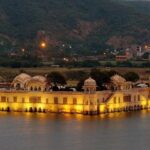
Next is a photo stop at Jal Mahal (Water Palace). It’s a five-story palace in Man Sagar Lake, built in 1699. The tour notes that when the lake is full, four floors are submerged, giving the illusion of it floating. Admission isn’t included, so treat this as a quick scenic break and photo time.
After that, you explore City Palace of Jaipur, the royal residence built by Maharaja Sawai Jai Singh II in 1729. It’s described as mixing Rajput, Mughal, and European styles. Admission is not included.
Then you go to Jantar Mantar, another UNESCO site, the astronomical observatory with 19 instruments, including the world’s largest stone sundial (as noted in the tour info). If you like “science made visible,” this is a standout. If you prefer pure palace aesthetics, it still works because it’s guided and structured.
Finally you do Hawa Mahal (Palace of Winds), a five-story red and pink sandstone façade built in 1799. It was designed for royal women to observe street life without being seen. It’s a photo stop, admission not included, but it helps you connect the dots between power, privacy, and city life.
You end with local markets for handicrafts, jewelry, textiles, and Rajasthani souvenirs, with about an hour of free roaming time.
Practical note: this is your longest walking day. Wear shoes you trust. Keep your phone charged because photo stops and market light can be very different from the morning light at forts.
Day 7: Your Choice—Fly from Jaipur or Delhi
Day 7 gives you an escape route: you can depart from Jaipur International Airport or have your driver drop you at Delhi International Airport or another preferred location in Delhi.
This flexibility is genuinely useful. If you’re continuing your trip, Jaipur can be the smoother starting point. If you have a connection from Delhi, it avoids the stress of relocating at the last minute without guidance.
Price and Value: What $599 Really Covers
At $599 per person, you’re mainly paying for the parts that are usually hard to coordinate solo: the intercity logistics, scheduled guide time in major cities, air-conditioned vehicle transport, and two Ranthambore safari drives (shared jeep/canter) plus hotel stays.
What’s included, as listed:
- 3/4/5-star hotels (based on your selected option)
- Air-conditioned vehicle
- Professional city guides
- Packaged drinking water in the car
- Two jungle safaris in Ranthambore
- Breakfast (6 breakfasts listed)
What’s not included:
- Monument entrance fees listed as $79 per person
- Anything not mentioned in inclusions
Here’s how I’d think about value: entrance fees are the easy cost to calculate, while safari time and guided pacing are harder to DIY. If you’d otherwise have to arrange hotels, transfers, and safari seats, this package often makes sense—especially if you’re not traveling with a local driver who knows which guide to hire for each city.
One more value angle: this itinerary includes multiple “outside view” or photo stops. That reduces your time inside paid sites and makes the schedule more efficient. If you like a tight plan with breaks, that’s good. If you want deep time inside every monument, you’ll spend a bit more on entrances and possibly add DIY time on your own.
Service Quality: Communication That Actually Matters
The best tourism value isn’t only where you go. It’s how stress is handled when something changes.
Past guest notes highlight that communication from the team is strong and that service attention can include vehicle upgrades for comfort. One example called out a move from a standard saloon to an SUV for more space, plus responsive support from Sonia as the tour manager. Chauffeur Raju was also mentioned for being helpful and driving smoothly.
You can take this as a good sign: this kind of tour depends on timing (sunrise, safari pickups, long drives). When the team stays organized, your day feels controlled instead of chaotic.
Should You Book This Golden Triangle + Ranthambore Tour?
Book it if you want one week that covers the big names—Delhi, Agra, Jaipur, plus Ranthambore—with guided structure and two real wildlife outings. The sunrise Taj Mahal and the two safari drives are the defining moments, and the schedule is built around them rather than treating them like random add-ons.
Think twice if you strongly prefer free, unplanned time at monuments. This is a guided itinerary with some outside-view and photo-stop moments, and you’ll pay the $79 per person monument entrance fees that aren’t included.
If you fall into the “I like seeing a lot, but I also want it to feel organized” camp, this one is a solid match.
FAQ
What cities are included in the tour?
The tour covers New Delhi, Agra, and Jaipur, with Ranthambore National Park safaris based around Sawai Madhopur.
Where does pickup happen?
You can be picked up from Delhi Airport, your hotel, a railway station, or your desired location in Delhi, Noida, or Gurgaon.
Is the sunrise Taj Mahal visit included?
Yes. The itinerary includes a sunrise visit to the Taj Mahal, scheduled for 5:45 AM.
How many Ranthambore jungle safaris are included?
Two jungle safaris are included in Ranthambore, one early morning and one later in the afternoon, using shared jeep/canter.
Are hotel stays included?
Yes. The tour includes good 3, 4, and 5-star hotels on the option chosen.
Are monument entrance fees included?
No. Monument entrance fees are listed as $79 per person and are not included.
What is included for meals?
Breakfast is included 6 times during the tour.
How is transportation handled during the trip?
You travel by an air-conditioned vehicle, with packaged drinking water provided in the car.
Is this a private tour?
It is described as a private tour/activity where only your group participates.
What is the cancellation refund timeline?
You can cancel up to 6 days in advance for a full refund. Cancel 2–6 full days before for a 50% refund. Within 2 days of the start time, there is no refund.