REVIEW · NEW DELHI
6 Days 5 Nights Golden Triangle Tour from Delhi
Book on Viator →Operated by Hidden India Tours · Bookable on Viator
A Golden Triangle that feels like your schedule.
This private tour is built around chauffeur-driven comfort, with the freedom to move at your pace and time the day’s big sights well. I especially like the air-conditioned vehicle with lots of leg room and luggage space, plus the way the driver may point out extra historically interesting stops en route. If you’re expecting everything to be included end-to-end, here’s the one watch-out: monument entry fees and most meals are not included, so you’ll want a simple budget before you go.
Across Delhi, Agra, and Jaipur, the route mixes major icons with hands-on street energy. You’ll get Old Delhi’s feel with Jama Masjid and a rickshaw ride through the Chandni Chowk area, and you’ll end up at the big-picture monuments—Taj Mahal at sunset, forts, palaces, and astronomical instruments—without the hassle of managing transport yourself. One more consideration: some top sites close on specific weekdays, so your exact day-by-day experience can shift slightly depending on when your tour runs.
In This Review
- Key highlights worth caring about
- Private Golden Triangle comfort: chauffeur-driven, with in-car perks that actually help
- Day 1 in Delhi: India Gate, then Jama Masjid and Old Delhi by rickshaw
- Day 2 Delhi: Raj Ghat, Akshardham, Qutub Minar, and the monument ticket reality
- The drive to Agra via Yamuna Expressway: time saved, vibes improved
- Agra Fort and Chand Baori: when the tour gets more than just Taj photos
- Jaipur Fort and palaces in one day: Amber, Jal Mahal sighting, craft time, then the royal core
- Jaipur museum finish: Albert Hall Museum and a calm last morning before flying
- Price and budget reality: what $211.48 really buys, plus the monument ticket math
- When this tour fits best (and when it won’t)
- Should you book this Golden Triangle tour?
- FAQ
- Is this a private tour?
- Where does the tour start and end?
- What’s included in the price?
- Are meals included?
- Which monument entry fees are not included?
- Does the itinerary include Taj Mahal sunset?
- Can I cancel for a full refund?
Key highlights worth caring about
- Private chauffeur + flexible pace across all ground transfers
- In-car extras: India SIM, onboard Wi‑Fi, mineral water, and a first-aid kit
- Old Delhi by rickshaw around Chandni Chowk and Khari Baoli spice lanes
- Taj Mahal sunset timing with a dedicated visit window
- Jaipur’s mix of sights in one rhythm: Amber Fort, Blue Pottery, City Palace, Jantar Mantar, Hawa Mahal
- Budget heads-up: major monuments have separate entry tickets
Private Golden Triangle comfort: chauffeur-driven, with in-car perks that actually help
This is a true private setup, meaning your group is the only one riding in the vehicle with your driver. That matters in India because the “time sink” is rarely the sights—it’s the logistics. Here, you’re handed the hard part: door-to-door ground travel in an air-conditioned vehicle designed for comfort (good leg room) and practical luggage storage (ample boot space).
What I like is the attention to small, useful extras. You get a mobile with India SIM, free Wi‑Fi onboard, complementary bottled mineral water, and a first-aid box in the car. None of these sound dramatic, but they quietly improve the day—especially if you’re juggling directions, tickets, or just trying to stay comfortable in warm weather.
Also, the driver isn’t just a taxi-for-hire. The plan includes drivers with strong route knowledge, and they may add helpful context about interesting spots you might not otherwise target. That kind of “extra explanation on the way” is one of the easiest ways to make a fast itinerary feel more meaningful.
A few more New Delhi tours and experiences worth a look


Day 1 in Delhi: India Gate, then Jama Masjid and Old Delhi by rickshaw
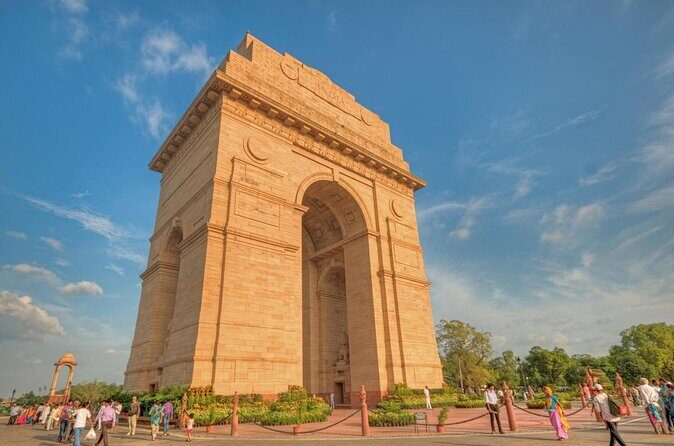
Day one is all about arriving in Delhi and getting oriented fast. You start at India Gate, the war memorial near Rajpath. It’s free to visit, and it works as a clean first step because it gives you a sense of Delhi’s grand ceremonial axis. The scale and the names etched into the memorial wall help you understand why this city carries layers—imperial, colonial, and modern—at the same time.
Then you move to Jama Masjid, built by Mughal Emperor Shah Jahan between 1650 and 1656. The mosque remains in active use, so you’re not looking at something frozen in time. You’ll get about 1 hour 30 minutes here, and because there’s no ticket cost included, it’s also a great value stop.
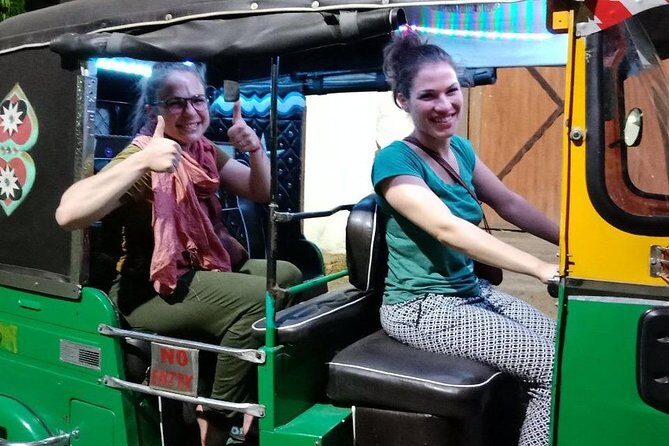
From there, the plan turns practical and fun: you’ll do a rickshaw ride after Jama Masjid. The ride connects you to Chandni Chowk, a historic market area, and then you’ll walk in Khari Baoli, known for spice shopping. This is one of those moments where your senses do the work—smells, color, and street rhythm—without you needing to plan routes.
A small realism note: this is a walking + street segment. Wear comfortable shoes, and don’t expect it to be quiet or minimalist. That’s the point.
Day 2 Delhi: Raj Ghat, Akshardham, Qutub Minar, and the monument ticket reality
Day two keeps Delhi moving, with stops that cover different eras and beliefs. You begin at Raj Ghat, the memorial dedicated to Mahatma Gandhi. The focus is a black marble platform open to the sky with an eternal flame nearby. It’s free, and the calm here is a nice contrast after the intensity of Old Delhi.
Next comes Pandara Road for lunch. Meals are not included in the price, and you’ll pay directly at the restaurant. This matters because in a good Golden Triangle tour, lunch shouldn’t be an afterthought, and it also shouldn’t blow your budget. The plan indicates they typically use restaurants with prior feedback, which is reassuring if you want a predictable meal without hunting.
After lunch, you visit Swaminarayan Akshardham. It’s described as a spiritual and cultural campus focused on devotion, learning, and harmony. The itinerary notes it is free, but with an important weekday catch: it is closed every Monday. If your tour lands on a Monday, you’ll want the day’s flow adjusted.
Finally, you’ll reach Qutub Minar, a UNESCO World Heritage Site and one of Delhi’s most visited landmarks. The big detail: the entry ticket is not included. You’re given about 1 hour 30 minutes here, so plan on time for photos and reading the carved details. If you’re making this your main Delhi “wow” photo, budget the ticket and show up rested.
The drive to Agra via Yamuna Expressway: time saved, vibes improved
On day three, you leave Delhi for Agra using the Yamuna Expressway, described as the fastest road route. The drive is around 3 hours, which is a big deal in India. Road time can wreck a trip if you’re stuck in traffic. Here, the plan explicitly targets speed and comfort.
There’s a stop along the way for Mathura, with time roughly 2 hours for a lunch/stop break in the middle of the route. This kind of mid-drive stop keeps the day humane. You don’t arrive at Agra already exhausted, which means you can actually enjoy the afternoon.
When you reach Agra (around 1:30 pm), the plan includes hotel check-in, then time on your own. That free window is valuable. Even if you love history, you’ll appreciate a chance to reset.
Then comes the signature moment: at 4:00 pm, you’ll visit the Taj Mahal at sunset. The tour description is clear that this monument is especially photogenic with changing angles and sunlight intensity. Taj Mahal is also noted as having a closure day: it remains closed every Friday. The entry ticket is not included, so plan your budget for it.
Agra Fort and Chand Baori: when the tour gets more than just Taj photos
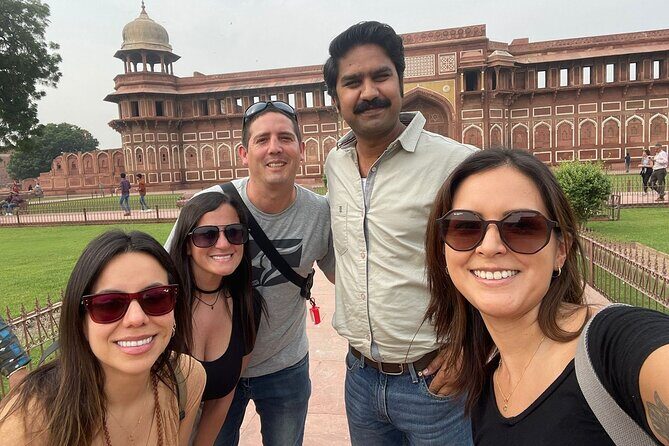
Day four starts with Agra Fort, a historic fort built during Akbar’s reign (1565–1573). It’s free to see only if you already have the ticket handled elsewhere—here, the monument entry is not included, so you’ll want to budget. You’ll spend about 1 hour 30 minutes at the fort.
Agra Fort is a helpful contrast to the Taj. The Taj Mahal is about romance and perfection. The fort is about power, defense, and daily rule. It’s also described as a “walled city,” about 2.5 km northwest of the Taj. Even if you’re not a total architecture nerd, you’ll likely feel the difference: the fort’s layout makes you think about how rulers actually lived and controlled space.
After that, you stop at Chand Baori, the famous stepwell in Abhaneri. This is listed with about 30 minutes, and its big claim is scale: it extends roughly 30 meters into the ground and is one of the deepest and largest stepwells in India. The note here is that it likely dates to around the 8th–9th century, based on style and carvings. It’s a quick stop, but it’s the kind of place that sticks in your memory because it’s visually strange in a good way: geometric depth you don’t forget after one look.






Jaipur Fort and palaces in one day: Amber, Jal Mahal sighting, craft time, then the royal core
Day five is where Jaipur flexes. It’s a dense day, so it works best if you like a steady rhythm and don’t mind switching neighborhoods and viewpoints throughout the day.
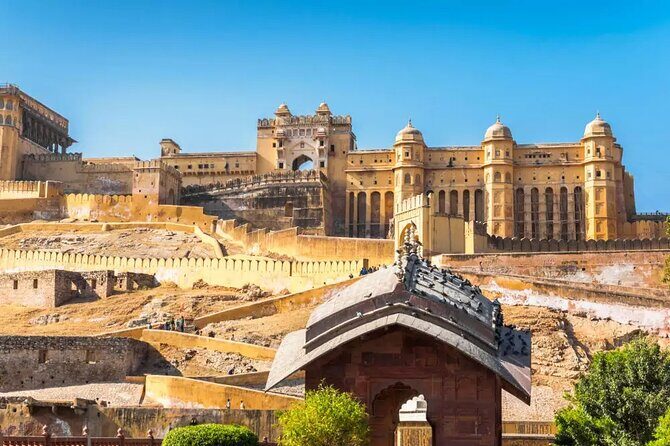
You begin at Amber Fort (Amer Fort), with about 1 hour 30 minutes. Entry is not included, and the itinerary frames it as the principal tourist attraction in Amer. It’s on a hill overlooking Maota Lake, and the fort is tied to Rajput architecture, with some stated Mughal influence in parts.
Next is Jal Mahal, a palace in the middle of Man Sagar Lake. The plan doesn’t specify ticket time here, so expect this more as a viewpoint-style stop than a long interior visit. Still, it’s a classic “postcard-but-real” moment in Jaipur.
Then you shift to something hands-on: Jaipur Blue Pottery Art Centre. You get about 30 minutes. Blue pottery is described as a Turko-Persian craft brought to India and developed in Rajasthan. The description also mentions workshop-style learning and open shops for visitors and buyers. If you like crafts or want a souvenir that doesn’t feel mass-produced, this is one of your best chances on the route.
After craft time, you move to the royal center: City Palace of Jaipur (about 1 hour; entry not included). You’ll see the palace complex and note its continuing role as the home of the Jaipur royal family, along with the museum component.
Then you hit Jantar Mantar, the UNESCO-listed astronomical observatory with 19 instruments and the world’s largest stone sundial. Entry is not included. This isn’t just “cool rocks.” It’s a working system designed for observing the sky with the naked eye, built by Sawai Jai Singh II.
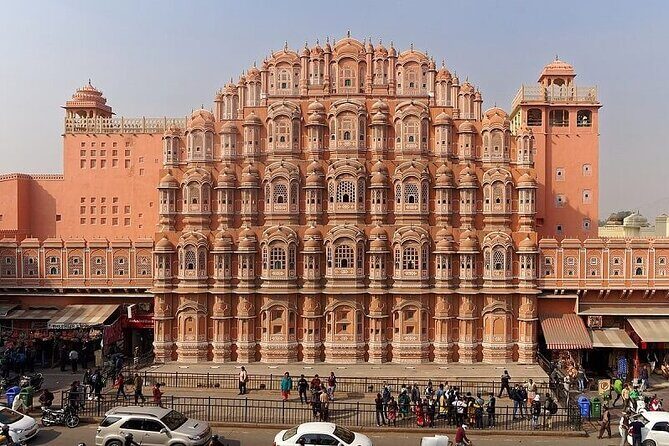
Finally, you end at Hawa Mahal, the Palace of Wind. The key visual here is the five-floor exterior with 953 small jharokhas (windows) in intricate latticework. Entry is listed as free, and your time is short (about 15 minutes), so it’s best for a photo stop and a quick appreciation of the façade design.
Jaipur museum finish: Albert Hall Museum and a calm last morning before flying
The last day is lighter. You start with Albert Hall Museum in Jaipur, described as the oldest museum of Rajasthan’s state museum functions. The building is noted as Indo-Saracenic architecture and sits in Ram Niwas Garden outside the city wall. Time here is short—about 10 minutes—and entry is free.
Why include it at all? Because it gives you a final, culture-forward sense of Rajasthan beyond forts and palaces. Even in a quick visit, you’ll get a reminder that Jaipur isn’t only about royal structures—it’s also about collecting, curating, and preserving.
After that, you’re driven back to Delhi Airport to catch your onward flight. The plan specifically says after breakfast, and that’s a practical way to avoid the stress of last-minute traffic or finding your way across cities with a tight schedule. You end back at the meeting point area in Delhi, which keeps things tidy at the finish.
Price and budget reality: what $211.48 really buys, plus the monument ticket math
At $211.48 per person for a 6-day / 5-night private Golden Triangle tour, the headline value is mainly about transport, time efficiency, and reducing stress. You’re paying for a chauffeur-driven AC vehicle, organized route timing, and basic “support services” like India SIM, onboard Wi‑Fi, water, and a first-aid kit.
But you are also paying attention to the separate costs. The tour explicitly lists that accommodation, meals, and monument entry fees are not included. That means your final trip cost depends on which paid sites you prioritize and how you handle food.
Here are the specific monument fees listed for Delhi, Agra, and Jaipur:
- Delhi: Qutub Minar INR 600 per person (not included)
- Agra: Taj Mahal INR 1300 and Agra Fort INR 650 per person (both not included)
- Jaipur: Amber Fort INR 500, City Palace INR 700, Jantar Mantar INR 200 per person (not included)
Meals are not included, and lunch is planned on Pandara Road at your cost.
So how do you judge value? For me, the math makes sense if you want:
- A private pace (no waiting for strangers)
- Air-conditioned comfort for longer drives
- Easy ticket planning for major icons
- Someone to keep the day moving without you guessing routes
If you’re the type who loves building itineraries yourself and you’re comfortable managing transit and entry tickets, then a cheaper non-private option might look tempting. But if you’d rather spend your energy on photos, people, and the sights themselves, this package is built for that.
When this tour fits best (and when it won’t)
This tour suits you best if you:
- Want Delhi–Agra–Jaipur in one clean plan with a driver handling logistics
- Like a mix of big monuments and memorable side stops (like Chand Baori and Old Delhi spice lanes)
- Prefer private movement and don’t want to squeeze your day around other groups
- Appreciate that communication and guidance can happen through local support channels, including team members like Digsa and Kiran and the friendly coordination often associated with Digvijay (Digi)
It may not be ideal if you:
- Hate paying separate monument fees (most of the “top tickets” are extra)
- Need lots of free time every afternoon—note that day five and day one/day two are packed with scheduled sightseeing
Should you book this Golden Triangle tour?
I’d book it if you want a private, comfort-first Golden Triangle that still includes the signature sights—especially Taj Mahal at sunset—and doesn’t leave you wandering around Delhi trying to figure out transport. The in-car support is practical, not gimmicky, and the plan includes free time windows (like after Agra hotel check-in) so you don’t feel trapped.
If you do book, do three things to make it smoother:
1) Budget for monument entry fees listed for Qutub Minar, Taj Mahal, Agra Fort, Amber Fort, City Palace, and Jantar Mantar.
2) Keep an eye on closures: Akshardham is closed Mondays and Taj Mahal is closed Fridays.
3) Bring comfortable shoes for the Old Delhi rickshaw + walk segment and the fort/palace days.
FAQ
Is this a private tour?
Yes. It’s described as a private tour/activity, and only your group will participate.
Where does the tour start and end?
The meeting point is Indira Gandhi International Airport in New Delhi, and the tour ends back at the meeting point.
What’s included in the price?
The tour includes an air-conditioned vehicle, all fees and taxes, and services such as a mobile with India SIM, complementary bottled mineral water in the car, free Wi‑Fi on board, and a first-aid box in the car.
Are meals included?
No. Meals are not included in the price. Lunch is planned at a restaurant stop (for direct payment).
Which monument entry fees are not included?
Qutub Minar (INR 600), Taj Mahal (INR 1300), Agra Fort (INR 650), Amber Fort (INR 500), City Palace (INR 700), and Jantar Mantar (INR 200) are listed as not included.
Does the itinerary include Taj Mahal sunset?
Yes. You’ll be taken to the Taj Mahal for a sunset visit window at around 4:00 pm (with the note that it’s closed every Friday).
Can I cancel for a full refund?
Yes. Free cancellation is available if you cancel up to 24 hours in advance for a full refund.