REVIEW · NEW DELHI
5 Days Private Tour to New Delhi, Agra, and Jaipur
Book on Viator →Operated by Rajasthan Cab · Bookable on Viator
Sunrise Taj, no hassle. This 5-day private Golden Triangle tour links Delhi, Agra, and Jaipur with a pre-planned route, private transport, and guides who help you make sense of major Mughal and Rajput sites. I like that the schedule is built around “see the landmark, then understand it” stops, including sunrise timing for the Taj Mahal and UNESCO-listed highlights across all three cities.
Two things I’m especially happy with: monument entrance fees are included for the listed sights, and the experience runs with a professional private guide cum driver (I’ve seen names like Manoj-ji, Bhoopendra Jaat, and Nandkishor mentioned for patient guidance and helpful problem-solving). The main drawback to watch for is that meals (lunch and dinner) are not included, and camera fees at monuments can add up—so budget a bit beyond the tour price.
In This Review
- Key things that make this 5-day private tour work
- Price and logistics: what you’re really buying for $409.44
- Day 1 in Delhi: from Raj Ghat through Old Delhi’s powerhouses
- Raj Ghat: the memorial that slows everything down
- Jama Masjid: Mughal scale in the middle of Old Delhi
- Red Fort: Mughal authority in red sandstone
- Humayun’s Tomb: Mughal design before the Taj
- Qutub Minar: history you can spot from far away
- Day 2: Agra by morning, Taj Mahal at sunrise, then fort and mausoleums
- Taj Mahal sunrise: why this tour schedules it early
- Agra Fort: the Mughal city inside the fort walls
- Itmad-ud-Daula: the Baby Taj effect
- Day 3: Fatehpur Sikri and Chand Baori before Jaipur’s Pink City life
- Fatehpur Sikri: the sandstone city of Akbar’s era
- Chand Baori in Abhaneri: stepwells that feel like architecture magic
- Jaipur transfer in the evening
- Day 4 in Jaipur: Hawa Mahal to City Palace to Jantar Mantar
- Hawa Mahal: the Palace of Wind and its 953 window story
- City Palace: royalty in courtyards and museum spaces
- Jantar Mantar: an astronomical observatory you can still feel
- Albert Hall Museum: Indo-Saracenic style plus unexpected items
- Panna Meena ka Kund: a stepwell that feels local
- Optional Chokhi Dhani Jaipur night: the cultural add-on
- Day 5: back to Delhi Airport Terminal 3, about 4–5 hours of driving
- What you’ll pay extra for: cameras and meals
- Service quality: why the driver-guide matters on a private tour
- Who this 5-day private tour suits best
- Should you book this 5-day private tour to Delhi, Agra, and Jaipur?
- FAQ
- Where does the tour start?
- Is this a private tour?
- What cities are covered in the 5 days?
- Are monument entrance fees included?
- Is the Taj Mahal included, and when is it visited?
- Where does the tour end?
Key things that make this 5-day private tour work
- Private car with an actual driver-guide team, so you’re not stuck decoding directions all day
- Entrance tickets included for the named monuments (fewer surprise costs at the gates)
- Sunrise Taj Mahal visit for better timing and fewer midday headaches
- A balanced mix of Mughal and Rajput-era icons, from Red Fort to Hawa Mahal
- Optional cultural evening at Chokhi Dhani Jaipur if you choose that add-on
- Easy start and finish at the airport, with a clear handoff to your next travel step
Price and logistics: what you’re really buying for $409.44
At about $409.44 per person for a 5-day private tour, you’re paying for three things that usually cost more when you do them on your own: private transport, a guide who’s watching the schedule, and entry fees for a long list of major monuments.
If you book the accommodation option, breakfast is included (the tour lists accommodation with breakfast if you select a suitable option). The itinerary is also structured with a representative meeting you on arrival, escorting you to your hotel, then running sightseeing days with a professional guide cum driver. That’s the practical win: less time haggling for tours, and more time on-site.
The tradeoff is “private” plus “many sights” equals a packed rhythm. You’ll be in cars between cities and between sites within cities. Also, your tour price does not cover lunch and dinner, and camera fees at monuments can be extra (listed as roughly $6–$10 each place). If you’re the kind of traveler who loves long, slow afternoons with zero agenda, you might feel the pace.
You can also read our reviews of more private tours in New Delhi


Day 1 in Delhi: from Raj Ghat through Old Delhi’s powerhouses

You start the tour at Indira Gandhi International Airport around 9:00 am, then a representative escorts you to your pre-booked hotel in Delhi. After you settle in, you jump straight into the sights—no waiting around for day two to “start moving.”
Raj Ghat: the memorial that slows everything down
Raj Ghat is a quiet stop, a memorial linked to Mahatma Gandhi. There’s an eternal flame on a black marble platform, and it’s one of those places where your brain naturally shifts from sightseeing mode into “context” mode. This first stop matters because the rest of your day is big, loud history in architecture form.
Jama Masjid: Mughal scale in the middle of Old Delhi
Then you head into Jama Masjid, the large Mughal-era mosque in Old Delhi. You’re there long enough to actually take in the courtyard space and the soaring minarets. It’s one of the best examples of Mughal planning—geometry, scale, and detailed stonework working together.
Red Fort: Mughal authority in red sandstone
Next is the Red Fort, a UNESCO World Heritage site tied to Mughal grandeur. You’ll spend about an hour here, which is enough time to see the main spaces named in the tour plan (like the audience halls). The red sandstone walls give you an instant sense of power, especially when you’re standing right at the fort’s main approaches.
A few more New Delhi tours and experiences worth a look




Humayun’s Tomb: Mughal design before the Taj
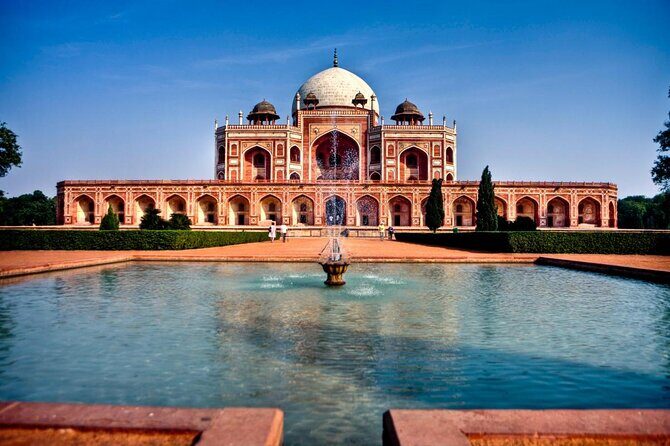
After Red Fort, Humayun’s Tomb feels like a bridge to what you’ll see later in Agra. It’s another UNESCO-listed stop, set in gardens, and the architecture is often seen as a precursor to the Taj Mahal style. It’s a good day to learn the “how” behind the “wow.”
Qutub Minar: history you can spot from far away
The day ends with Qutub Minar, famous for its towering minaret and the Iron Pillar nearby. This is a strong finale because it pulls the story backward and sideways—Indo-Islamic architecture with older layers of significance. Even if you’re not a history nerd, you’ll understand why this place is on every serious Delhi list.
Day 2: Agra by morning, Taj Mahal at sunrise, then fort and mausoleums
Day 2 is built around transition—breakfast first, then a guided road trip to Agra. Once you arrive, you check into the hotel, rest, and then go sightseeing.
Taj Mahal sunrise: why this tour schedules it early
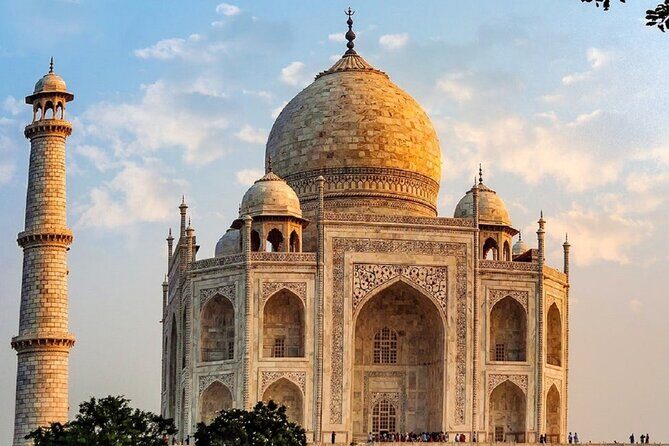
The centerpiece is a sunrise visit to the Taj Mahal. You get about an hour there in the plan, which is just enough for the main viewpoints without turning the morning into a sprint. The sunrise timing is the key benefit: the lighting and atmosphere are typically calmer earlier in the day, and you’re not fighting harsh midday contrast.
Agra Fort: the Mughal city inside the fort walls
After the Taj, you move to Agra Fort, another UNESCO World Heritage site. The plan calls out the red sandstone fort complex and includes time to see palaces and audience halls. This is where you stop thinking of the Taj as an isolated masterpiece and start seeing it as part of a larger imperial world.
Itmad-ud-Daula: the Baby Taj effect
Then comes Itmad-ud-Daula, often called the Baby Taj in the tour description. It’s smaller, but the point is the same: intricate carvings and inlay work that foreshadow the Taj Mahal’s style. It’s a great “finish-with-detail” stop because you can slow down your attention and notice craftsmanship.
Day 3: Fatehpur Sikri and Chand Baori before Jaipur’s Pink City life
Day 3 is one of the most interesting days because it shifts away from just “city famous” landmarks into architectural storytelling.
Fatehpur Sikri: the sandstone city of Akbar’s era
You start at Fatehpur Sikri, a UNESCO-listed sandstone city west of Agra. You get around two hours here. This stop is valuable because it feels like a whole planned world rather than a single monument—architecture as a statement of Mughal ambition. If you want to understand why Mughal rulers picked specific places and built in specific styles, this is one of the best places on the route.
Chand Baori in Abhaneri: stepwells that feel like architecture magic
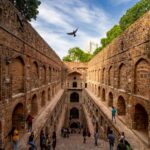
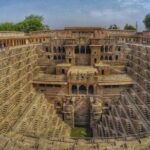
Next is Chand Baori in Abhaneri, known for its enormous stepwell. The plan includes about 3 hours, which is smart because this is not a “look once and go” site. The symmetrical steps create a visual rhythm as you go down (and look back up). It’s also one of the few stops where you can enjoy the place without needing to read a single plaque.
Jaipur transfer in the evening
In the evening, you continue to Jaipur. The driving time in the plan is about 2 hours, so you arrive in time to reset and be ready for the next day’s palace-and-observatory lineup.
Day 4 in Jaipur: Hawa Mahal to City Palace to Jantar Mantar
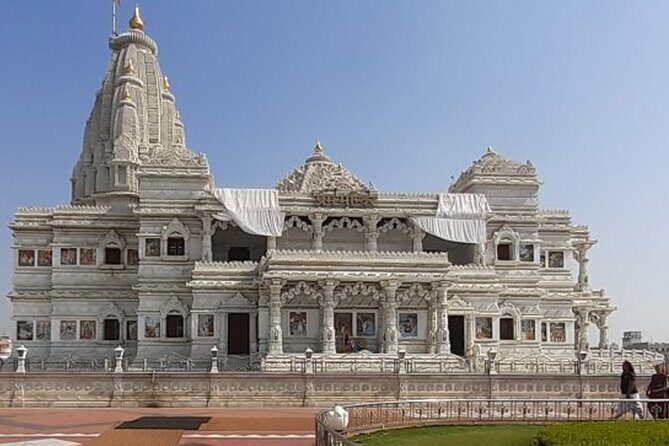
Jaipur Day 4 is a heavy hitter list, and it works because the stops cover different flavors of Rajput identity.
Hawa Mahal: the Palace of Wind and its 953 window story
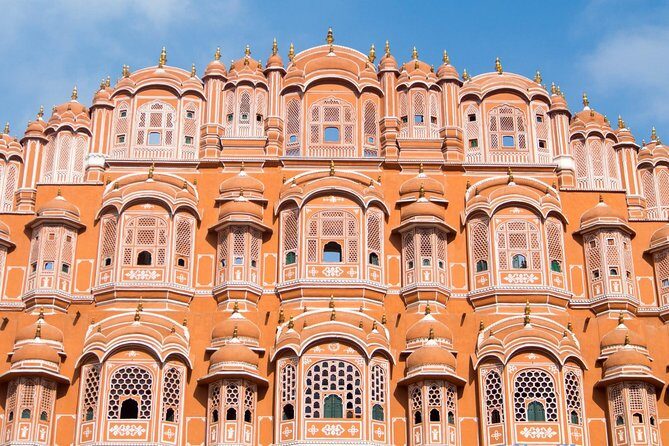
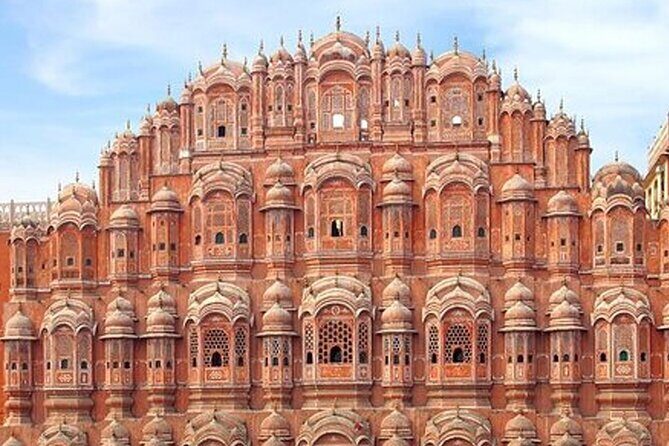
You start at Hawa Mahal (Palace of Wind), about an hour in the plan. The idea is clever: 953 small windows (jharokhas) designed so royal women could observe street life while staying private. It’s a rare structure where you can “read” daily life into the architecture.
City Palace: royalty in courtyards and museum spaces
Next is the City Palace, with about 2 hours. The tour plan emphasizes courtyards, gardens, and palace buildings plus a museum component. This stop is where you see Jaipur as a living center of power rather than just a photo backdrop.
Jantar Mantar: an astronomical observatory you can still feel
Then you go to Jantar Mantar, another UNESCO World Heritage Site. You’ll spend around 1 hour here. The big theme is ancient Indian astronomy, highlighted by giant instruments like the colossal sundial. Even if you don’t go full science mode, you’ll appreciate how seriously the designers took measurement.
Albert Hall Museum: Indo-Saracenic style plus unexpected items
After lunch (not included in the tour), you visit Albert Hall Museum. The plan places it at about an hour and calls out its Indo-Saracenic architecture and collections. The itinerary even notes that the museum includes items as varied as paintings and an Egyptian mummy—so it’s not just local artifacts.
Panna Meena ka Kund: a stepwell that feels local
The day ends at Panna Meena ka Kund, around 2 hours in the plan. This historic stepwell is part architecture, part social space, and part quiet pause after the bigger museum-and-palace stops. It’s a good last activity because you can enjoy the symmetry without rushing.
Optional Chokhi Dhani Jaipur night: the cultural add-on
The tour includes a Cultural Evening at Chokhi Dhani Jaipur if you book the suitable option. It’s listed as an inclusion, but since it’s conditional, you’ll want to confirm whether it’s part of your exact package.
In practical terms, this is the kind of evening that works best if you want some performance and atmosphere after long days of monuments. If you’d rather spend evenings working on your photos, resting, or exploring at your own pace, you can treat this as optional energy rather than a must-do.
Day 5: back to Delhi Airport Terminal 3, about 4–5 hours of driving
On the final day, you’re driven straight back to Delhi International Airport, Terminal 3. The plan lists a distance of about 286 kilometers, with a driving time of roughly 4 to 5 hours.
This end format is helpful because it reduces last-minute scrambling. Still, it’s a travel day, so keep your day expectations simple: say goodbye to Rajasthan, then focus on smooth airport timing.
What you’ll pay extra for: cameras and meals
Here’s the predictable money list based on what’s stated:
- Lunch and dinner are not included
- Camera fees at monuments are not included and can be about $6–$10
- Any extra things not listed under inclusions are on you
If you’re planning a lot of photos (and you will, because Taj Mahal and the stepwells are photo magnets), camera fees are the one line item that can surprise people. Also, since meals aren’t included, you’ll want a little cash flexibility for lunch breaks during sightseeing days.
Service quality: why the driver-guide matters on a private tour
On a private Golden Triangle, the driver-guide is the difference between a smooth trip and a stressful one. In the feedback connected to this operator, people highlight that the guides and drivers were patient, resourceful, and helped with day-to-day decisions—like how to navigate stops efficiently and where to find good food. Names that show up include Manoj-ji, Bhoopendra Jaat, and Nandkishor.
That matters because these cities move at their own speed. A good driver helps you manage timing so you’re not arriving at major sites at the worst moments. And a good guide answers the questions you actually have in the moment: what you’re looking at, why it was built, and what order makes the most sense.
Who this 5-day private tour suits best
This tour fits best if you:
- Want private transport between Delhi, Agra, and Jaipur
- Prefer guide-led site time instead of self-guided wandering
- Like UNESCO sites and architectural landmarks with meaningful context
- Want a single package that includes entrance fees for the listed sights
It may be less ideal if you:
- Hate a schedule that moves from one major stop to the next
- Want all meals included in the price
- Plan to travel very light and dislike extra monument camera fees
Should you book this 5-day private tour to Delhi, Agra, and Jaipur?
I’d say book it if you want a straightforward, high-comfort way to cover the Golden Triangle with private guidance and fewer on-the-ground logistics hassles. The value is strongest when you’ll use what’s included—entrance tickets, AC private transport, and the private guide setup that keeps the days flowing.
Skip it or rethink it if you’re budgeting tightly for food and extra fees, or if you’d rather spend more free time in each city than the itinerary’s pace allows. If you do book, I’d plan to budget extra for lunch and dinner and be ready for camera fees at monuments, then you’ll enjoy the tour as it’s designed: efficient, guided, and built around the big icons of North India.
FAQ
Where does the tour start?
It starts at Indira Gandhi International Airport in New Delhi, with a listed start time of 9:00 am.
Is this a private tour?
Yes. It’s described as a private tour/activity, so only your group participates.
What cities are covered in the 5 days?
The route covers New Delhi, Agra, and Jaipur.
Are monument entrance fees included?
Yes. Monument entrance fees for the sights listed are included, while camera fees are not included.
Is the Taj Mahal included, and when is it visited?
The itinerary includes a sunrise visit to the Taj Mahal.
Where does the tour end?
On the last day, you’re driven to Delhi International Airport, Terminal 3.