REVIEW · NEW DELHI
5-Day Private Luxury Golden Triangle Tour to Agra and Jaipur
Book on Viator →Operated by The Imperial Tours · Bookable on Viator
Five days, three icons, no map stress.
This private Golden Triangle tour strings together Delhi’s Mughal landmarks, Agra’s big monuments, and Jaipur’s royal sights with air-conditioned transport and a clear route. The highlight timing is the Taj Mahal at sunrise, plus a few smart photo stops that help you see more without feeling rushed.
I especially like two things. First, you get pickup and drop-back from your Delhi hotel or the airport area, which saves time and hassle in a city that’s never short on traffic. Second, you travel with an English-speaking approved guide for Delhi, Agra, and Jaipur, so the major sights come with context instead of just photos.
One consideration: entrance fees and meals aren’t included in the base price, so you’ll want to budget extra for paid sites (and decide how many you plan to enter fully vs. use photo stops).
In This Review
- Key points that make this tour worth a look
- Why a private Golden Triangle makes sense when you have limited time
- Day 1 in Delhi: Lotus Temple calm, Jama Masjid scale, Humayun’s Tomb geometry
- Day 2 in Agra: Agra Fort courtyard scale and Mehtab Bagh’s quiet Taj angle
- Day 3: Sunrise Taj Mahal, then Chand Baori stepwell on the way to Jaipur
- Day 4 Jaipur hits hard: Amber Fort, Jal Mahal views, Hawa Mahal photos, City Palace, Jantar Mantar
- Day 5: A real break morning, then back to Delhi around 6pm
- Price and value: what the $200 per person covers, and what you’ll likely pay more for
- Practical tips so this tour feels smooth, not rushed
- Should you book this private Golden Triangle tour?
- FAQ
- What’s included in this Golden Triangle tour?
- Are entrance fees included?
- Is lunch or dinner included?
- Does the tour include pickup and drop-off?
- Can I upgrade to a 5-star hotel?
- Is this tour private?
Key points that make this tour worth a look
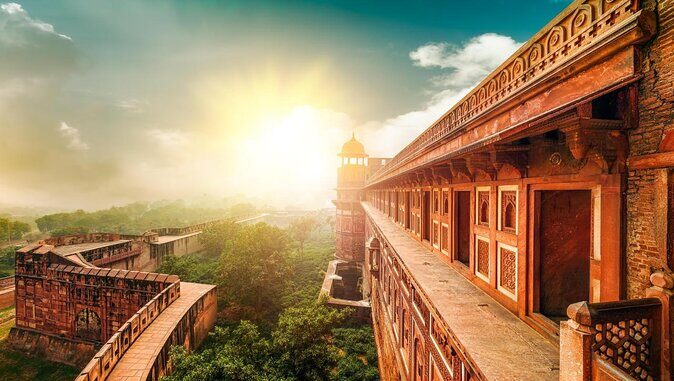
- Taj Mahal at sunrise for that early light and a calmer start before the day crowds build.
- Air-conditioned, private transport so the long drives feel manageable.
- Old Delhi to Mughal to Rajput pacing that keeps backtracking to a minimum.
- Photo-forward stops like Mehtab Bagh, Jal Mahal, and Hawa Mahal for great views with less museum time.
- Stepwell detours (Agrasen Ki Baoli and Chand Baori) that most Golden Triangle schedules skip.
- Good on-the-road service signals from the guides/drivers described, including examples like Asif, Dharmendra, Sunil, and Kanhaiya, with polite explanations and tidy vehicles.
Why a private Golden Triangle makes sense when you have limited time
The Golden Triangle is popular for a reason: Delhi, Agra, and Jaipur are dense with sights that take real energy to study and navigate. Doing it solo can work, but you’ll spend mental bandwidth on planning, ticket lines, and transport logistics. This tour is built to reduce that load, with a private car and an English-speaking guide covering key background as you go.
I also like that the route is structured for momentum. You start in Delhi with big landmarks, move to Agra with an afternoon fort and an evening Taj viewpoint, then hit Jaipur with forts, palaces, and the famous observatory. If you want a “see the essentials with context” trip that still feels comfortable, the format fits well.
You can also read our reviews of more private tours in New Delhi



Day 1 in Delhi: Lotus Temple calm, Jama Masjid scale, Humayun’s Tomb geometry
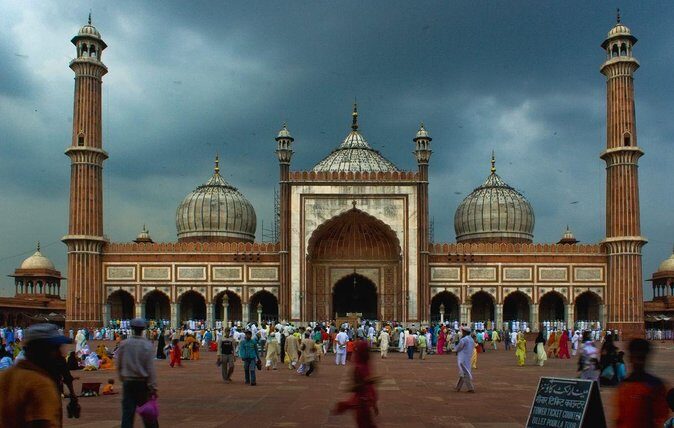
Day 1 is a strong mix of spiritual calm and major Mughal architecture, all arranged so you’re not only bouncing between markets and crowds.
First up is the Lotus Temple, known for its serene, interfaith approach. It’s shaped like a lotus flower, with 27 white-marble petals, and the idea is quiet prayer or meditation depending on your beliefs. Even if you’re not religious, it’s a good reset after getting oriented in Delhi.
Then you head into Old Delhi’s energy with Jama Masjid. This is the capital’s largest mosque, built on a 10-meter elevation and able to hold about 25,000 people. It’s also called the Friday Mosque, and it was Shah Jahan’s final architectural triumph, built between 1644 and 1658. The impressive scale matters here, because once you see the mass of the structure and the elevated position, you understand why the surrounding streets feel so alive.
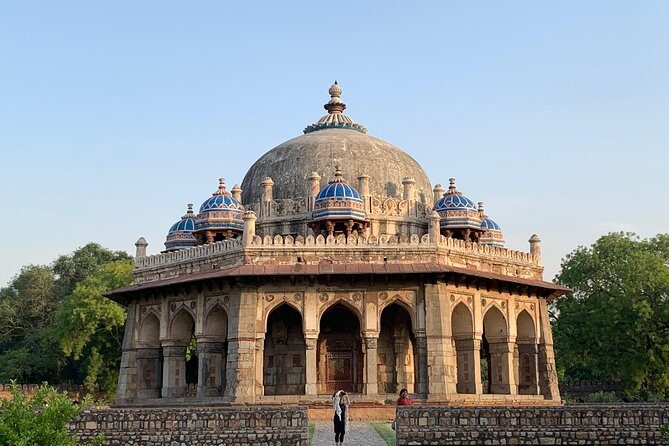
Next is Humayun’s Tomb, a UNESCO site and the tomb of Mughal Emperor Humayun. The facade blends white marble and red sandstone, but what really helps is the guide context about Islamic geometry—especially the emphasis on the number eight. That kind of detail turns a quick photo stop into something more memorable.
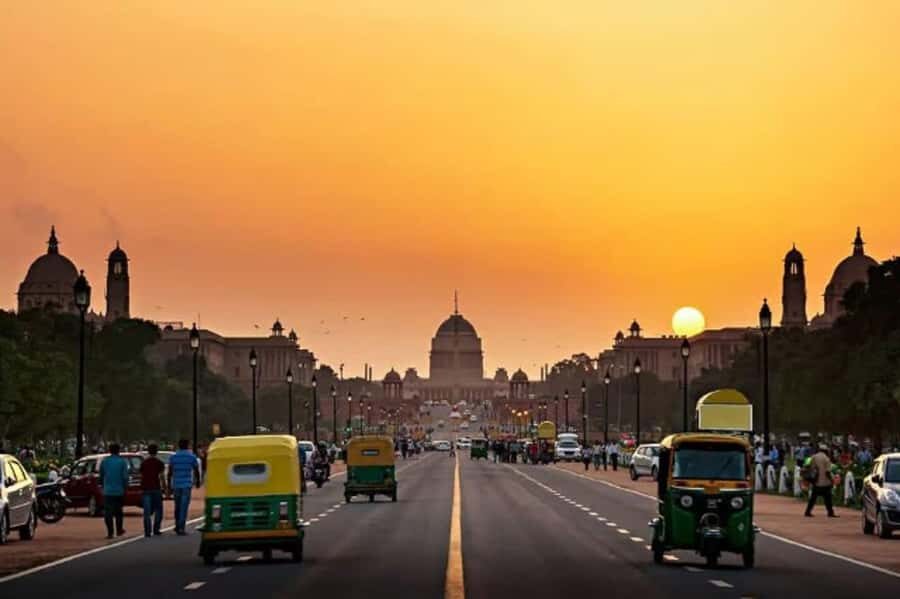
You also pass major landmarks like India Gate and the Presidential palace area. These are simpler stops (more of the “get your bearings” kind), but they help you understand where you are in the city.
Finally, you finish Day 1 at Agrasen Ki Baoli, a historical stepwell near Connaught Place. It’s about 60 meters long and 15 meters wide, and it’s free to visit. For me, the stepwell angle is one of the best parts of the day: it’s architectural, a little unusual for first-timers, and it gives you a break from the big-monument rhythm.
Day 2 in Agra: Agra Fort courtyard scale and Mehtab Bagh’s quiet Taj angle
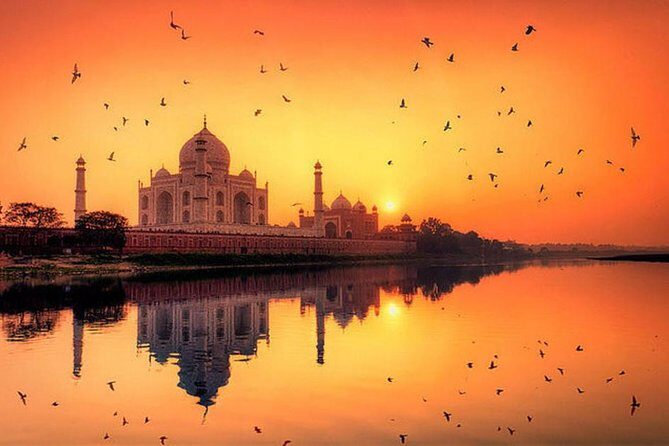
Agra is the classic midpoint of this route, and Day 2 is designed to give you more than one flavor of Taj Mahal.
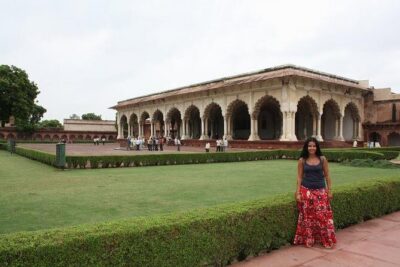
You arrive and then visit Agra Fort in the afternoon. Agra Fort is a UNESCO World Heritage site and was the main residence of Mughal emperors until 1638. The experience is mostly about walking through courtyard after courtyard inside a large red-sandstone and marble fortress. That scale builds slowly, and the more you move, the more you feel how much power and planning went into the place.
If your legs feel heavy after Delhi traffic, this is still manageable because the fort is a walkable complex (not a single long trek across a huge outdoor site). Still, plan for heat and sun exposure, since Agra can be intense.
In the evening, you do the Mehtab Bagh photo tour. This moonlit garden sits on the opposite bank of the Yamuna from the Taj Mahal, in direct alignment with it. The idea is to see the Taj from across the river, away from the day-time rush. Even if you’re not doing an actual late-night stroll, the viewpoint concept is smart: you’re not only chasing one angle, you’re collecting another.
Day 3: Sunrise Taj Mahal, then Chand Baori stepwell on the way to Jaipur
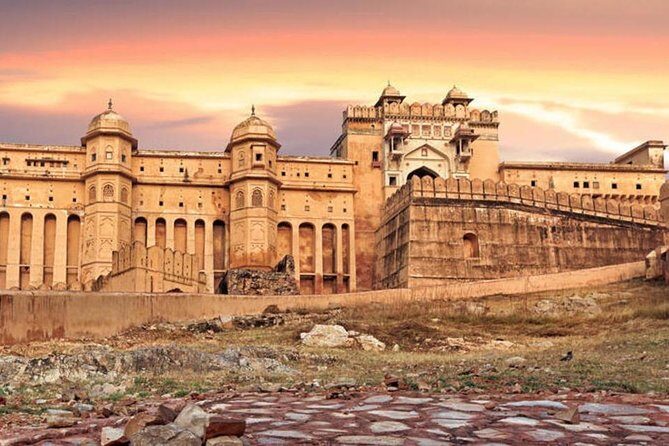
Day 3 is where the trip earns its name. The plan is to visit the Taj Mahal at sunrise. Timing here is everything. Early light changes how marble looks, and the whole experience feels different before the day’s momentum fully hits.
The Taj Mahal itself is UNESCO-listed and widely considered one of the most beautiful buildings in the world. Shah Jahan built it as a memorial for Mumtaz Mahal, who died giving birth to their 14th child in 1631. A guide makes this more than a famous photo spot, because you start noticing details in the design instead of only the overall silhouette.
After Taj, the tour heads en route to Jaipur with a stop at Chand Baori in Abhaneri. This is a spectacular stepwell famous for its geometric depth and repetition. Chand Baori is believed to date back to the 10th century and is associated with King Chand, along with the nearby Harshat Mata Temple. The short stop length is important: you’re not meant to spend all day here. You’ll likely want a bit of time to appreciate the scale and lines before moving on.
This is also one of those moments where the route choice matters. Golden Triangle schedules often rush directly to Jaipur. Adding Chand Baori gives you a pause that’s different from palace and mosque architecture.
Day 4 Jaipur hits hard: Amber Fort, Jal Mahal views, Hawa Mahal photos, City Palace, Jantar Mantar
Jaipur is the “royal architecture” day, and it’s structured to cover the essentials without making you choose between too many options.
You start with Amber Palace (Amber Fort). It’s a honey-hued fortress rising about 11 kilometers northeast of Jaipur, and it’s considered a must-see. The complex is built from pale yellow and pink sandstone with white marble, and it’s divided into four main sections, each with its own courtyard. The best way to enjoy Amber is to go step-by-step through the courtyards rather than only focusing on big exterior photos.
Then there’s a photo stop at Jal Mahal, the Water Palace near Man Sagar. Its origins aren’t fully clear, but it’s believed to have been extensively restored and associated with Jai Singh II around 1734. Even as a quick stop, it’s worth it because the setting gives you that surreal “palace-in-the-water” feel.
Next: Hawa Mahal (Palace of Wind). This is Jaipur’s most distinctive landmark—a pink, honeycombed facade rising five storeys. It was built in 1799 by Maharaja Sawai Pratap Singh, designed so royal ladies could watch city life and processions. The stop is short, but the visual impact is strong, and the guide context turns it from a postcard into a functional piece of royal design.
You then visit City Palace, the royal family’s residence complex. It includes courtyards, gardens, and buildings from different eras, with some dating into the early 20th century. What I like here is the blend of Rajasthani and Mughal architecture. It’s not only one style, which makes it more interesting than a single-theme site.
Finally, Jantar Mantar closes the day. It’s a UNESCO-listed observatory made of geometric constructions calibrated to monitor the movement of stars and planets. The value of this stop is that it stretches your idea of what a “sight” can be. It’s science translated into architecture, and it’s fun to watch how the shapes correspond to celestial measurement.
A few more New Delhi tours and experiences worth a look





Day 5: A real break morning, then back to Delhi around 6pm
Day 5 gives you breathing room. There’s a morning at leisure, so you can handle simple needs like checking your schedule, grabbing a last snack, or doing a quick self-guided stroll near your hotel.
Then you depart for Delhi in the afternoon and arrive around 6pm, with drop-off at your preferred location. That timing matters because it keeps your day from disappearing into constant driving.
Price and value: what the $200 per person covers, and what you’ll likely pay more for
The headline price is $200 per person for the five-day private luxury Golden Triangle. At that level, you’re paying for the big practical pieces: air-conditioned private transport, hotel nights (in the 3-star + breakfast structure when the all-inclusive option is chosen), and English-speaking guides covering Delhi, Agra, and Jaipur.
What’s not included in the base pricing is just as important. Entrance fees aren’t included, and neither are lunch and dinner. That doesn’t make the tour bad—it just means your final trip budget depends on how often you fully enter the paid sites vs. treat some as photo stops.
Also consider the upgrade path. The tour overview mentions an all-inclusive upgrade with four nights of 5-star hotel accommodation, breakfast, and admissions included. That kind of package can be easier on your wallet day-to-day if you prefer not to think about ticket costs and meal planning in multiple cities.
Tips for driver and guide are also not included. If you’ve learned how service works in India, you’ll likely plan for it anyway. If you haven’t, set aside a little extra rather than being surprised later.
Practical tips so this tour feels smooth, not rushed
Here’s how I’d prepare to get the best out of this exact style of itinerary.
- Wear smart casual clothing, since that’s the stated dress expectation. For temple/mosque contexts, comfortable layers help in sun and for any areas where you’ll want extra coverage.
- Expect that you’ll spend more time walking than you might think—especially at Agra Fort and Amber Palace. Bring shoes you’re willing to wear all day.
- Use the photo stops strategically. Mehtab Bagh, Jal Mahal, and Hawa Mahal are built into the route for viewing. If you want the best shots, give yourself a few minutes to position and watch the light change.
- If you care about stepwells, Day 1 and Day 3 are your best bets. Agrasen Ki Baoli and Chand Baori give you a different architectural perspective than the big-name monuments.
One more note about service quality: the guides and drivers described include people like Asif and Dharmendra, and drivers such as Sunil and Kanhaiya, with repeated mentions of politeness, punctuality, and tidy vehicles. That doesn’t guarantee your exact guide, but it’s a good sign that the operator is paying attention to the “on the ground” experience, not only the big-ticket sights.
Should you book this private Golden Triangle tour?
Book it if you want the Golden Triangle in five days with a private AC car, English-speaking guidance, and a route that mixes the famous monuments with a few less-common stops like the stepwells. It’s especially good for first-timers who want context without the stress of planning every ticket and transport move.
I’d think twice if you’re extremely cost-sensitive, because entrance fees and meals aren’t included and will add up across UNESCO sites and palace complexes. If you hate budgeting on the fly, look at the 5-star upgrade option that includes admissions and breakfast, since it can make the math simpler.
If you value flexibility, note that free cancellation is offered up to 24 hours in advance, which gives you some breathing room if your dates change.
FAQ
What’s included in this Golden Triangle tour?
The tour includes a luxury AC car, accommodation with breakfast (when the all-inclusive option is chosen), pickup and drop back in New Delhi, and an English-speaking approved guide for Delhi, Agra, and Jaipur.
Are entrance fees included?
No. Entrance fees are not included, unless you choose an all-inclusive upgrade option that mentions admissions included.
Is lunch or dinner included?
No. Lunch and dinner at restaurants or hotels are not included.
Does the tour include pickup and drop-off?
Yes. Pickup and drop back to your hotel or airport area in New Delhi are included.
Can I upgrade to a 5-star hotel?
Yes. An upgrade to 5-star hotel accommodation is available on request, and an all-inclusive option is described that includes four nights of 5-star accommodation, breakfast, and admissions included.
Is this tour private?
Yes. It’s a private tour/activity, and only your group participates.