REVIEW · NEW DELHI
5-Day Golden Triangle Tour: Explore Delhi, Agra, and Jaipur
Book on Viator →Operated by TRAVEL INDIA ONE DAY · Bookable on Viator
Golden Triangle roads, with comfort and planning. In five days, you roll between Delhi, Agra, and Jaipur in a private A/C vehicle with a live tour guide, so the trip stays organized even when the traffic doesn’t. I also like how the days are built around real travel time, then pay off with big UNESCO sights plus hands-on Old Delhi moments.
One consideration: monument entrance fees aren’t fully included, and camera fees may apply. The package notes entrance fees/camera fees around $60 per person, so budget a little extra even though most sightseeing is covered.
In This Review
- Key things that make this Golden Triangle run well
- The big picture: what this tour actually buys you
- Day 1 in Delhi: Old Delhi street time, then monumental Delhi
- Jama Masjid and Old Delhi rickshaw time
- Chandni Chowk and Khari Baoli spice atmosphere
- Red Fort and Agrasen Ki Baoli stepwell: big sights, different vibes
- Gurudwara Bangla Sahib and Gandhi Smriti: calm resets
- India Gate, Rashtrapati Bhavan views, Parliament views, plus Lotus Temple
- Qutub Minar: the day’s UNESCO finish
- Day 2 to Agra: the Taj Mahal area, plus Itmad-ud-Daula
- Taj Mahal view point: pacing matters
- Itmad-ud-Daula, the Baby Taj
- Day 3: Taj Mahal in the morning, Agra Fort after, then the drive to Jaipur
- Taj Mahal: the monument and the approach
- Agra Fort: red stone power and Akbar’s footprint
- Chand Baori at Abhaneri: stepwell engineering
- Day 4 in Jaipur: Hawa Mahal views, Amer fort, stepwells, and Jantar Mantar
- Hawa Mahal: the Palace of Wind
- Amer Palace: hilltop fort living
- Panna Meena ka Kund: the stepwell with the crisscross look
- Jal Mahal: the water palace
- Gaitore Ki Chhatriyan: quiet royal memorials
- City Palace and Jantar Mantar: where Jaipur gets intellectual
- Day 5: the return to Delhi or a drop in Jaipur
- Price and value: why this package can make sense
- Hotels, timing, and how to make the days feel less rushed
- Drivers and service quality: what the best experiences tend to share
- Should you book this 5-day Golden Triangle tour?
- FAQ
- What cities are included in the 5-day Golden Triangle tour?
- How long is the tour?
- Do I get pickup and drop-off included?
- Is transportation private and air-conditioned?
- Are entrance fees included for monuments and camera use?
- Does the tour include hotel accommodation?
- Is there support to reach the Taj Mahal on foot?
- Is this tour only for my group?
- Helpful quick check before you go
Key things that make this Golden Triangle run well
- Private A/C driver all day: road travel is the main part of this itinerary, and you’re not juggling buses or trains.
- Old Delhi by tuk-tuk and rickshaw: you get closer to the street-level vibe around Jama Masjid and Chandni Chowk.
- Taj Mahal access support: the itinerary includes a battery bus ride from the Taj parking area up toward the monument.
- A full Delhi mix: Mughal-era monuments, Sikh temples, Gandhi memorials, and modern landmarks in one packed day.
- Jaipur isn’t just forts: stepwells, a water palace (Jal Mahal), and Jantar Mantar are built in, not left for later.
The big picture: what this tour actually buys you
This Golden Triangle route is the classic India starter set: Delhi’s layered capital vibe, Agra’s Mughal monuments, and Jaipur’s pink-city geometry. The difference with this package is how it handles the hardest part for most people: getting around.
You’re in a chauffeur-driven A/C private vehicle with pickup and drop, and you’re not switching transportation every time you change cities or neighborhoods. That matters because delays in India travel are normal. When you have your own car, you can keep your day moving and spend less time waiting.
The other big win is the live tour guide. That’s what turns a monument photo from “pretty” into “I actually get what I’m looking at.” You’ll get explanations at the stops—especially helpful at places like Qutub Minar, the Taj complex, and Jaipur’s astronomical site at Jantar Mantar.
A few more New Delhi tours and experiences worth a look



Day 1 in Delhi: Old Delhi street time, then monumental Delhi
Day 1 is built like a one-day sampler. It starts in New Delhi, then dives straight into Old Delhi where the energy is tighter, louder, and more visually busy than the wide avenues later in the day.
Jama Masjid and Old Delhi rickshaw time
Jama Masjid is your first big Mughal anchor. Expect marble detailing and the kind of symmetry that makes you stop mid-walk. Afterward, you’ll do a rickshaw tour around the Old Delhi streets. This is one of the smarter inclusions because it gives you street views you’d miss if you only rode inside a car.
A practical note: street markets mean smells, steam from food stalls, and lots of people trying to sell things. If you want photos, pick your moments and keep your pace calm.
Chandni Chowk and Khari Baoli spice atmosphere
Next comes Chandni Chowk, with time set aside for shopping lanes and classic Delhi chaos. Then you head to Khari Baoli, the spice market area where you’ll find jars and stalls for spices, nuts, herbs, and packaged food products. This is a fun stop if you like sensory travel. If you don’t, you can treat it as a quick browse and focus on photos and local flavor.
Red Fort and Agrasen Ki Baoli stepwell: big sights, different vibes
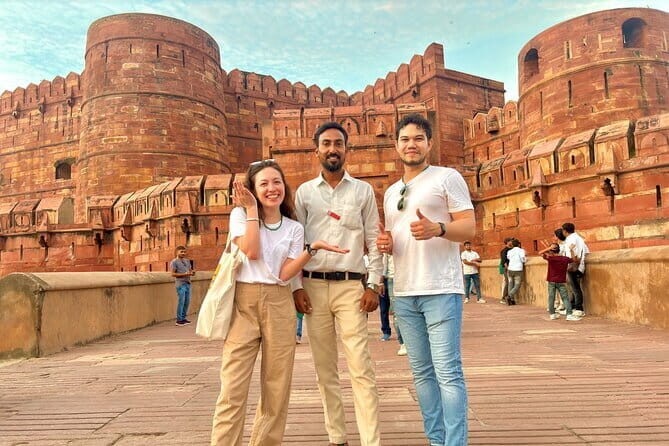
You won’t enter Red Fort on this route, but you’ll pass by it, which is still useful for orientation. Then comes Agrasen Ki Baoli, described as a quieter stepwell that feels magical when you move down toward its depths. Stepwells are surprisingly cool places to think about water engineering in a city built on stone and seasons.





Gurudwara Bangla Sahib and Gandhi Smriti: calm resets
You also visit Gurudwara Bangla Sahib, a major Sikh temple known for its peaceful atmosphere and the large sacred pond. It’s one of the day’s best emotional resets because it slows your breathing after the Old Delhi bustle.
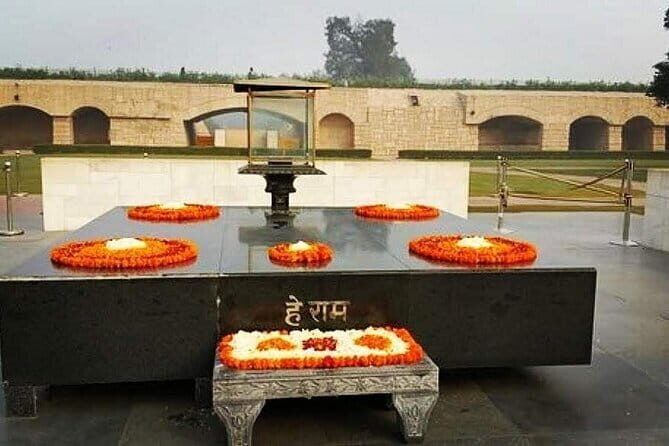
After that, Gandhi Smriti marks a shift from monuments to a human story. You’ll explore the memorial area connected to the house where Gandhi spent his last days. It’s not only about architecture here; it’s about place.
India Gate, Rashtrapati Bhavan views, Parliament views, plus Lotus Temple
Later you move into New Delhi’s landmarks. India Gate is your photo-and-stroll break on the green lawns. From there, you pass Rashtrapati Bhavan and Parliament House for views and pictures, even though you don’t go inside.
Then you finish the day at Lotus Temple, a Bahá’í House of Worship with lotus-like architecture. It’s a good “exhale” stop before the bigger vertical statement of the evening.
Qutub Minar: the day’s UNESCO finish
Qutub Minar is the capstone. The tower is about 73 meters and dates to the 12th century, with several structures in the wider Qutub complex. This is one of those places where the details reward patience: carvings, stonework, and the way the complex fits into the wider Delhi history.
Day 2 to Agra: the Taj Mahal area, plus Itmad-ud-Daula
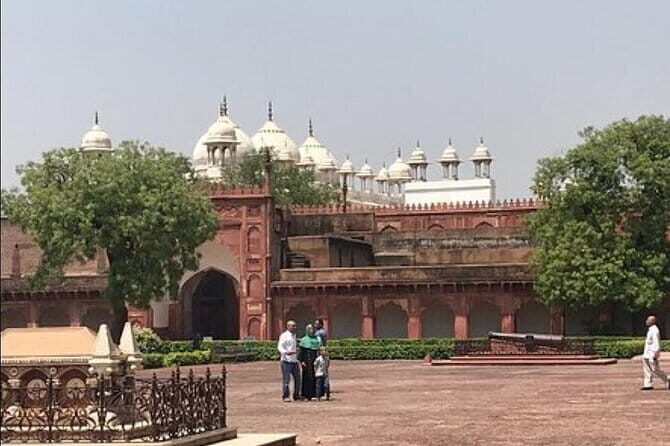
Day 2 starts with the road journey from Delhi toward Agra. The itinerary positions a “laid-back morning” before you get going, and you’re picked up by your private vehicle from your location.
Taj Mahal view point: pacing matters
When you arrive in Agra, you’ll start at a Taj Mahal view point. The goal here is comfort and photos without feeling swallowed by crowds, since you get a calmer viewing base first.
Just remember: entrance tickets may not be included in some parts of this specific stop, so it’s worth checking your package notes before you assume everything is included.
Itmad-ud-Daula, the Baby Taj
Next is Itmad-ud-Daula, often called the Baby Taj. This Mughal tomb is known for detailed inlay work and carvings, and the itinerary notes it as a tranquil spot. If you love craftsmanship, this is the stop that often surprises people because it’s less famous but very beautiful.
You finish the day with a drop-off in Agra so you can rest.
Day 3: Taj Mahal in the morning, Agra Fort after, then the drive to Jaipur

Day 3 is the money morning for a lot of people. You get picked up again and head straight to the main event.
Taj Mahal: the monument and the approach
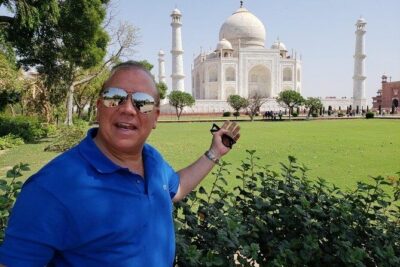
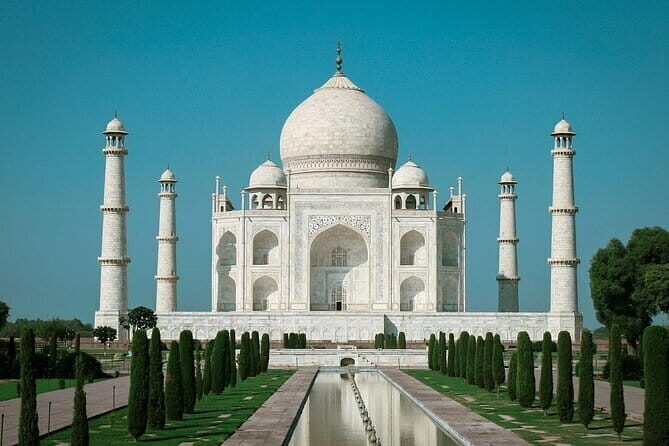
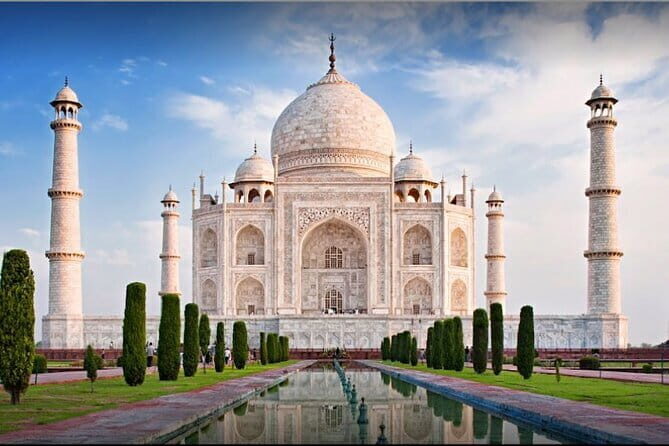
The itinerary schedules the Taj Mahal for a morning visit. The Taj is timed as the biggest highlight of the tour, and you get a few hours on-site. Since the package also includes battery bus support from the parking lot up toward the monument, you’re not stuck walking long distances in heat or fatigue.
What I like about doing Taj as part of a plan like this is that you’re not scrambling for the right time window on your own.
Agra Fort: red stone power and Akbar’s footprint
After Taj, the schedule moves to Agra Fort, linked with Mughal Emperor Akbar. Expect grand red-stone walls and a very “court and control” feel. It’s not only about external views. The fort’s role in the power story makes it worth your attention even if you’re not a hardcore architecture person.
Chand Baori at Abhaneri: stepwell engineering
Next up is Chand Baori in Abhaneri, a famous stepwell known for its age and its use for water storage during dry seasons. The itinerary lists it with limited time, so treat it like a focused stop: look down, study the geometry, then take your photos and move on.
Then you drive onward toward Jaipur with a long road transfer (the schedule notes about a 6-hour journey and mentions the Pushkar area timing), ending with a drop at your accommodation.
Day 4 in Jaipur: Hawa Mahal views, Amer fort, stepwells, and Jantar Mantar
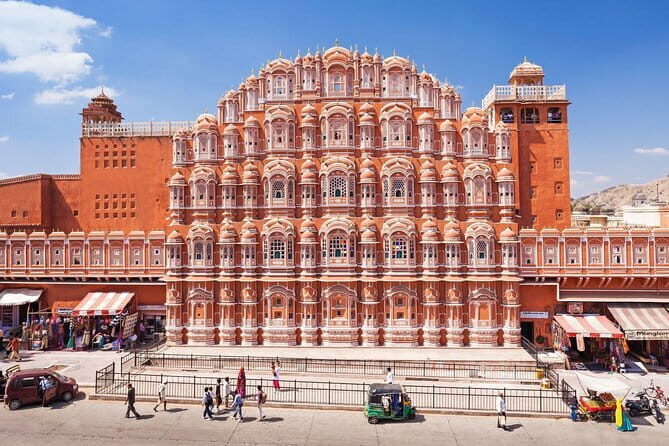
Jaipur day has a strong order: iconic exterior views early, hilltop fort midday, and then the smaller-but-interesting science and water stops.
Hawa Mahal: the Palace of Wind
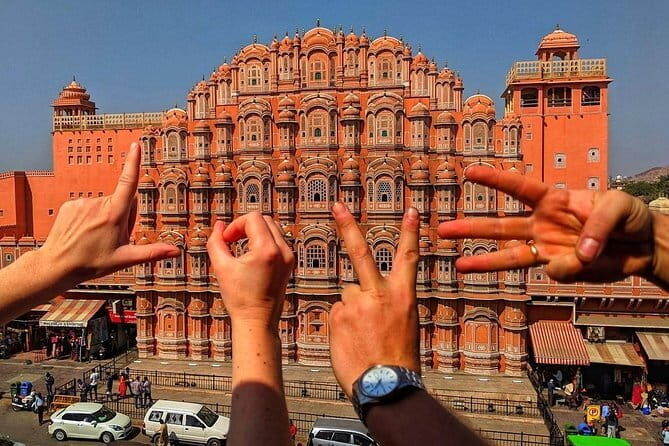
You start with Hawa Mahal. It’s the famous five-story facade with 953 small windows, designed to let people look out while staying shaded. Even if you don’t spend hours inside (the time here is short), it’s still a visual stop that helps you understand Jaipur’s design instincts.
Amer Palace: hilltop fort living
Next is Amer (Amer Palace), set on a hill near the city. The itinerary highlights it as a Rajput stronghold with a Hindu-Mughal mix in design. This is one of the stops where footwear and patience matter. You’ll likely do a fair amount of walking, and the fort setting can feel like a maze until it clicks.
Panna Meena ka Kund: the stepwell with the crisscross look
Then comes Panna Meena ka Kund, a 16th-century stepwell with a crisscross design and symmetrical staircase. It’s a short stop, but it’s one of those places where you’ll understand why stepwells show up in architecture books. They’re functional, but they’re also designed to impress.
Jal Mahal: the water palace
Jal Mahal is next, called the “water palace.” The itinerary lists it as a short visit, which makes sense because much of what you take in is the exterior effect of the palace surrounded by water. It’s a good photo stop, and it breaks up the harder fort walking.
Gaitore Ki Chhatriyan: quiet royal memorials
You then visit Gaitore Ki Chhatriyan, the royal cremation ground of Jaipur rulers. Expect carved stone memorial structures and a quieter feel away from the main crowds. If you like learning how different cultures handle death and commemoration through architecture, this stop is quietly powerful.
City Palace and Jantar Mantar: where Jaipur gets intellectual
The City Palace is scheduled next, with time to explore the complex that still connects to the royal family. The itinerary notes that entry fees aren’t included, so you’ll need to handle tickets/costs separately here.
Then you finish with Jantar Mantar, Jaipur’s UNESCO-listed astronomical site. It’s famous for large sundials and other instruments. This is a great final stop because it shows that this region’s heritage isn’t only about temples and forts.
Day 5: the return to Delhi or a drop in Jaipur
On the last day, you head back to Delhi after breakfast, with the schedule placing the road ride at about five hours. If you prefer not to return fully to Delhi, you can be dropped at your desired location in Jaipur, depending on how the tour is arranged.
This last day is intentionally less packed. It’s how you avoid the classic mistake of trying to do one more major sight right before a long travel day.
Price and value: why this package can make sense
The listed price is $16.86 per person, which is exceptionally low for a tour that includes private A/C transport, multi-city logistics, and multiple hotel nights (in the hotel option). Real talk: the low headline cost usually means you’ll pay attention to what’s not included.
Here’s what you should treat as value anchors:
- Private car and driver time across long distances between cities.
- Hotel accommodation with breakfast when you select that option.
- Taj Mahal battery bus support for easier access to the monument area.
- Tuk-tuk in Old Delhi and rickshaw touring for street-level context.
And here’s what you should plan to pay extra for:
- Monuments entrance fees and camera fees (not included; roughly $60 per person as noted).
- Some specific sites list admission as not included, like certain museum/shopping stops and City Palace.
In other words: if your main goal is to see the big landmarks without managing transportation and ticket puzzles all by yourself, this tour format is built for that.
Hotels, timing, and how to make the days feel less rushed
Hotel check-in is scheduled for 3:00 PM, and check-out for 12:00 PM. Early check-in before 2:00 PM isn’t guaranteed, but luggage storage may be offered so you can start exploring.
On a tour like this, you’ll feel the time pressure mostly around transfers and crowd flow. A few simple tactics help:
- Wear comfortable shoes. You’ll do plenty of walking, especially in fort and monument complexes.
- Bring a light layer for morning and evening. Delhi and Agra can swing in temperature.
- If you’re sensitive to heat, consider planning your busiest walks earlier in the day when you can.
The package also includes bottled mineral water during journeys in the car, which is a small thing that makes a long drive easier.
Drivers and service quality: what the best experiences tend to share
Some bookings include very specific driver names, and a theme shows up: safe driving and calm pacing. Drivers like Ashok Yadav, Arjun, Dinesh Chauhan, Lucky, and Nawal are mentioned as punctual and careful on busy roads.
There’s also a consistent idea that the organizer—Mr Raj of Travel India One Day is named—keeps follow-ups going and helps sort the logistics so you’re not stuck wondering what happens next. That kind of attention is especially useful on multi-day routes where small schedule changes can snowball.
Should you book this 5-day Golden Triangle tour?
Book it if you want a classic Golden Triangle itinerary but you prefer comfort and planning over self-navigating between cities. The private A/C vehicle and guided stops make it a good fit if you’re short on time, don’t want to figure out transport day by day, or simply want your days to run on a reasonable schedule.
Consider skipping or customizing if you hate crowds, dislike long road days, or would rather spend more time in fewer places. This route is packed by design, with many short stops that keep the day moving.
If your goal is to hit the big names—Qutub Minar, Taj Mahal, Hawa Mahal, Amer, and Jantar Mantar—while also getting street-level Old Delhi flavor, this tour format is a strong match.
FAQ
What cities are included in the 5-day Golden Triangle tour?
The tour covers Delhi, Agra, and Jaipur.
How long is the tour?
It’s about 5 days.
Do I get pickup and drop-off included?
Yes, hotel/airport/railway station pickup and drop are included.
Is transportation private and air-conditioned?
Yes. You get a chauffeur-driven A/C private vehicle for sightseeing.
Are entrance fees included for monuments and camera use?
No. Monuments entrance fees/camera fees are not included, and the package lists an approximate cost of $60 per person.
Does the tour include hotel accommodation?
It includes accommodation in a 3-star hotel with breakfast, and the notes mention 4 nights if you book the option including hotels.
Is there support to reach the Taj Mahal on foot?
Yes. The package includes a battery bus ride to and from the Taj Mahal parking lot up to the Taj Mahal monument area.
Is this tour only for my group?
Yes. It’s a private tour/activity where only your group participates.
Helpful quick check before you go
If you’re budgeting, plan for entrance fees on top of the base price. If you’re planning your packing, prioritize comfortable shoes and a light layer. And if you care about getting the story behind the sights, this is the kind of route where a live guide can turn “see it” into “understand it.”