REVIEW · NEW DELHI
2 Days Private Delhi Agra Tour by Car from Delhi
Book on Viator →Operated by Select India Holidays · Bookable on Viator
You can see the Taj without the usual travel headache. This 2 Days Private Delhi Agra Tour by Car strings together top Delhi landmarks and Agra’s biggest Mughal hits in a tight, sensible schedule with your own car and guide. I like the clear focus on major sights like Humayun’s Tomb and the Taj Mahal, and I also like that you get experienced English-speaking guidance in both Delhi and Agra.
My main caution: monument entrance fees are not included, and that can add up fast once you’re on-site (the package estimates around US$40 per adult for entries). If you’re fine budgeting for tickets, the rest of the day plan is refreshingly straightforward.
In This Review
- Key things that make this Delhi–Agra car tour work
- Price and logistics: what $93 buys you (and what it doesn’t)
- The private car advantage: less stress, better sight order
- Day 1 in New Delhi: Humayun’s Tomb, India Gate area, Raj Ghat, Akshardham
- Humayun’s Tomb: Mughal grandeur, real photo payoff
- The 42 m memorial crossroads stop: India Gate area
- Rashtrapati Bhavan (President House): British legacy to modern pride
- Raj Ghat: a quiet stop with clear meaning
- Swaminarayan Akshardham: big campus energy, strong design
- The move to Agra: what your overnight actually needs
- Day 2 at the Taj Mahal: how to spend your 2 hours well
- A small but important practical tip
- Agra Fort: the power side of Mughal architecture
- Itmad-ud-Daula (Baby Taj): the calm in-between stop
- The return to Delhi: drive time and how to plan your evening
- Tickets, tipping, and the real cost of the highlights
- Who this tour fits best (and who might want a different style)
- Safety, comfort, and the “Mr Om” factor
- Should you book this 2 Days Private Delhi Agra Tour by Car?
- FAQ
- What cities and sights are included in this 2-day tour?
- Is this tour private?
- Is pickup included?
- Are monument entrance fees included in the tour price?
- Does the tour include a hotel?
- What is included besides transport and guides?
- Are tips included for the driver or guides?
- How does cancellation work?
Key things that make this Delhi–Agra car tour work
- Private car, private timing: You’re not waiting around with a big bus crowd.
- English-speaking guide in Delhi and Agra: Helps you understand what you’re seeing, not just where to stand.
- Big Delhi hits on Day 1: Humayun’s Tomb, Raj Ghat, and Akshardham get real time.
- Taj Mahal gets the spotlight on Day 2: About 2 hours for the main event.
- Agra Fort + Itmad-ud-Daula included: You see more than just one photo stop.
- Fuel, tolls, parking, taxes handled: Fewer logistics problems for you.
Price and logistics: what $93 buys you (and what it doesn’t)
At $93 for roughly two days, this tour is priced for travelers who want structure without paying luxury-hotel-level rates. The biggest “value” part isn’t the sightseeing list—it’s the way the transport and guidance are packaged: your private car, all fuel/tolls/parking handling, and an English-speaking guide covering Delhi and Agra.
The part that surprises some people is what isn’t in the base price. Monument entrance fees are not included, and the package estimates around US$40 per adult. That typically covers paid sites like the Taj Mahal and Agra Fort, plus other ticketed monuments on your route. So when you budget, think: your tour price + entrance tickets + whatever you choose for tipping.
Also note what the day plan really means. This is a two-day tour, so you’ll move between multiple major stops. It’s not a slow, wandering “take your time” style of trip—more like a well-managed highlights route, which is perfect if you want the essentials and don’t want to spend hours figuring out transport.
You can also read our reviews of more private tours in New Delhi


The private car advantage: less stress, better sight order
In Delhi and Agra, timing matters. Traffic can turn a “quick trip” into a long one, and it’s exhausting when you’re also trying to find entrances, ticket counters, and local transport.
This tour helps by keeping transport simple: you’re picked up (pickup is offered) and you travel by car with fuel, toll taxes, parking, and related charges handled. That means you can spend your energy on the sights instead of re-planning your day every time you reach a new area.
The other practical win is that you’re on a private tour, meaning only your group participates. You’re not stuck matching someone else’s pace, and you’re less likely to feel rushed to “keep up.” For couples and families, this often turns a hectic route into something manageable—especially when you have limited time.
Day 1 in New Delhi: Humayun’s Tomb, India Gate area, Raj Ghat, Akshardham

Day 1 is a classic Delhi sampler, but it’s not random. It’s built around monuments that tell you how India’s power, faith, and memory have evolved over time.
Humayun’s Tomb: Mughal grandeur, real photo payoff
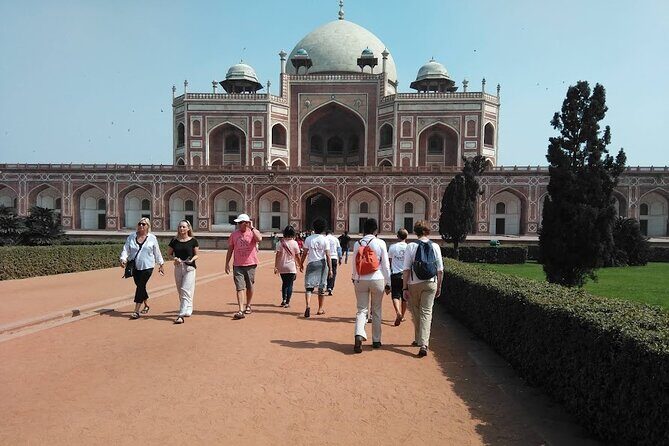
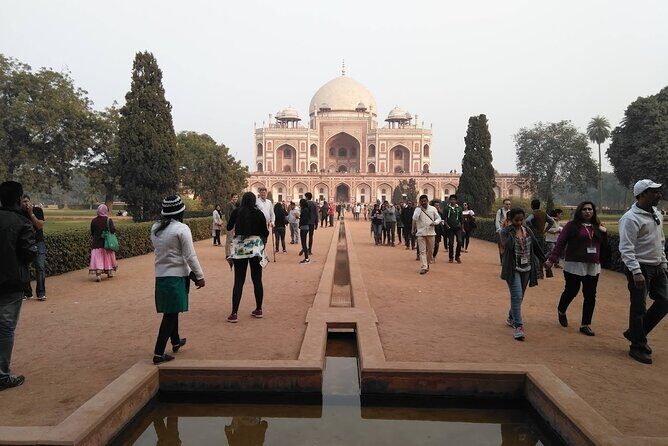
You start at Humayun’s Tomb, one of Delhi’s top Mughal-era monuments. The schedule gives you about 40 minutes, and that’s a good length for soaking up the layout without feeling trapped inside. The tomb was built in the 16th century by Humayun’s widow, Beda Begam, after a long effort of nine years. Knowing that detail helps you read the place: it’s not just pretty architecture, it’s a statement in stone and symmetry.
What I like about this stop is that it sets the mood for Day 2. You start seeing Mughal design logic early—then the Taj Mahal feels less like a separate world and more like the next step in the same story.
Ticket note: admission isn’t included for Humayun’s Tomb in this plan, so budget for entry there too.
The 42 m memorial crossroads stop: India Gate area
The itinerary includes a stop described as a 42 m high memorial site that feels like the Arc de Triomphe in the middle of a crossroad. In practical terms, this points you toward the India Gate area, where you can take in the “big monument” scale and get your bearings fast.
This is one of those stops that works even if you don’t have deep context yet. It’s a quick way to orient yourself in central Delhi before the more time-sensitive religious and memorial sites.
A few more New Delhi tours and experiences worth a look






Rashtrapati Bhavan (President House): British legacy to modern pride
Next up is the Rashtrapati Bhavan, formerly known as the Viceroy’s House, tied to the British Empire era—and today the pride of India where the President lives. Even if you don’t get inside (the package describes it as a sighting/stop in the day flow), the value is in how the exterior and scale change your sense of what the city has been.
I also like that the tour includes a pass-by theme through major landmarks like India Gate, Parliament, and President in the drive sequence. It turns the map into something you recognize later.
Raj Ghat: a quiet stop with clear meaning
Then you shift tone with Raj Ghat, the memorial dedicated to Mahatma Gandhi, where he was cremated. You get about 30 minutes, and the best way to enjoy it is to keep your visit simple—slow down, read what’s there, and let the site do the emotional work.
Ticket note: Raj Ghat is free in this plan.
Swaminarayan Akshardham: big campus energy, strong design
Finally on Day 1 you head to Swaminarayan Akshardham, across the Yamuna River. Your time here is about 45 minutes, and the package lists it as a spiritual campus and a Hindu temple known for breathtaking grandeur and architecture.
The practical reason this stop is great on Day 1: it gives you a sense of contemporary spiritual India after the historical Mughal and colonial-era sights. You’re also already in the right geography for the move toward Agra afterward.
Ticket note: Akshardham is listed as free in this schedule.
The move to Agra: what your overnight actually needs
After finishing the Delhi sightseeing blocks, you start your drive toward Agra. The schedule shows a very short “Agra” stop (likely arrival/settling), and the core point is that you’ll have time to rest before the big Day 2.
If you choose the option that includes hotels, you’ll get 1 night stay in a 4-star/5-star property (that choice is tied to whether you select the hotel-inclusive tour). Breakfast is included, so you’re not starting the Taj day hungry or scrambling for food.
Also, your return drive later includes options like going back through old roads or the Yamuna Expressway, with a refreshing stop in between. That means you’re not just stuck in one long stretch of road time both ways.
Day 2 at the Taj Mahal: how to spend your 2 hours well
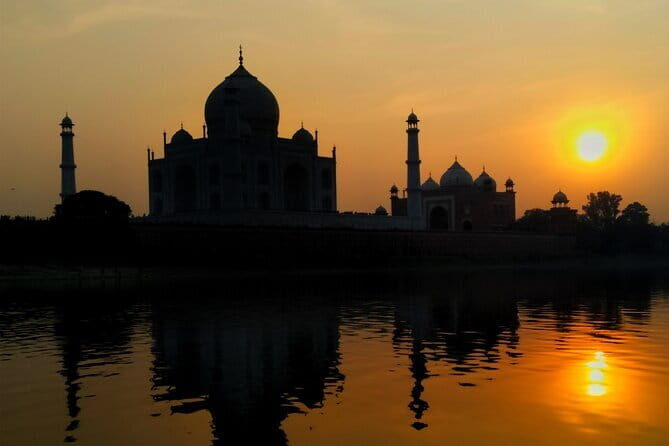
Day 2 is built around the one sight everyone comes for: the Taj Mahal. You’re scheduled for about 2 hours, and that’s enough time to see the key views, take photos, and still step back to understand what you’re looking at.
The plan notes the essentials: it was built by Shah Jahan as a memory of his wife Mumtaz Mahal, and construction took 22 years (1632–1648). Knowing that time span changes how you look at the place—this wasn’t “built quickly,” it was planned like an entire lifetime project.
Two architectural details mentioned in the tour description matter for your visit:
- A mosque sits on the left side
- A guest house is also part of the broader layout
Those features help you stop treating the Taj as one flat postcard. The building sits inside a structured complex.
Ticket note: Taj Mahal admission is not included in this package, so treat the entrance fee as part of the total cost.
A small but important practical tip
Taj Mahal visits are photo-focused, but don’t let your phone take over. Use the time to walk slowly and notice symmetry lines. That’s where the Taj starts feeling less like a famous building and more like engineering, art, and devotion working together.
Agra Fort: the power side of Mughal architecture
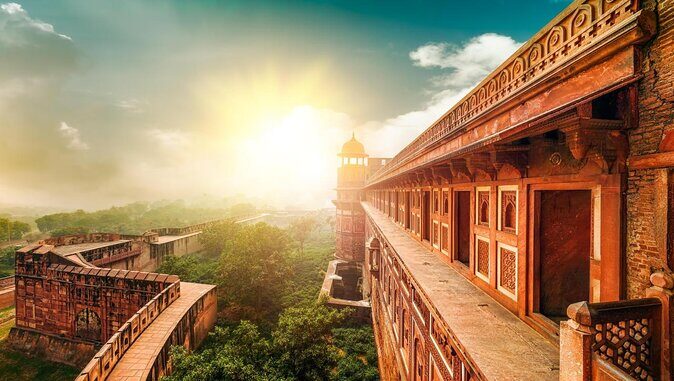
After the Taj, the itinerary takes you to Agra Fort, about 2.5 km northwest of the Taj Mahal. You’ll have about 40 minutes.
The tour frames Agra Fort as an UNESCO World Heritage site and as a symbol of Mughal creativity, culture, and power. That’s the right mindset. If Taj Mahal is romance and memory, Agra Fort is authority—walls, control, and the kind of fortress logic that says this empire meant business.
Ticket note: Agra Fort admission isn’t included here either.
With 40 minutes, you should focus on the “big reads” rather than trying to inspect every corner. Look for how the fort edges relate to the nearby city and how the design supports defense and status.
Itmad-ud-Daula (Baby Taj): the calm in-between stop
Next comes Itmad-ud-Daula, often called the Baby Taj. Your time is about 20 minutes, which might sound short, but it’s often the right length if your goal is to appreciate the craftsmanship without burning your day.
This stop is described as an exquisite marble tomb built by Nur Jahan in memory of her father, Mirza Ghias Beg. That family connection gives the monument a personal tone. It also helps you see it as more than a smaller Taj—it’s a key step in how Mughal tomb design matured.
Ticket note: admission isn’t included in this plan.
The return to Delhi: drive time and how to plan your evening
After Agra, you head back to Delhi by car, either via old roads or the Yamuna Expressway. The schedule suggests about 3 hours driving time after your Agra sightseeing.
The important part for you: plan for a relaxed evening. Even with a private car, two full sightseeing days are tiring. This itinerary ends with a drive and a refreshing stop in between, so you’re not completely locked into the seat nonstop—but you’ll still want low-effort plans after you get back.
Tickets, tipping, and the real cost of the highlights
Here’s the practical math you should keep in mind.
Not included:
- Monument entrance fees, estimated around US$40 per adult
- Tippings to drivers/guides (not included)
Included:
- Breakfast
- Private English-speaking guidance in Delhi and Agra
- All fuel charges, toll taxes, parking fees, and related taxes
- Personal care and attention
That “personal care” line is vague, but the lived meaning is usually clear on the ground: someone is managing the route, keeping your group moving, and communicating with guides so you don’t waste time hunting for the next entrance.
If you’re traveling with family or want peace of mind, this is the kind of package that pays off. But if your group is the type that loves spontaneous detours and long museum time, you might find the pace a touch “highlights-first.”
Who this tour fits best (and who might want a different style)
This tour is a strong fit if:
- You want a tight two-day plan that hits Delhi’s big names and Agra’s top monuments
- You’d like private transport rather than buses and crowded transfers
- You value English-speaking guides who can explain what you’re seeing
- You prefer a provider that feels organized—feedback around the organizer Mr Om points to good planning and accommodating needs
It may be less ideal if:
- Your priority is long, slow visits and deep museum time
- Your budget can’t absorb entrance fees on top of the tour price
- You’re hoping for a lot of off-menu stops. This route stays focused on the listed highlights.
Safety, comfort, and the “Mr Om” factor
One theme that shows up in the experience notes is that the organizer Mr Om helps keep things smooth. People explicitly call out safety and that the transport and guides feel friendly and helpful.
Even without over-promising, that’s exactly what you want from a private Delhi–Agra car tour. You don’t want surprise chaos on day one and you definitely don’t want it when you’re staring at the Taj Mahal and trying to make the timing work.
With a private car, English-speaking guidance, and a plan that sequences monuments in a logical way, this tour is designed to reduce the usual friction of first-time travel in the region.
Should you book this 2 Days Private Delhi Agra Tour by Car?
If your goal is simple—see Humayun’s Tomb, the Delhi memorial sights, and the Taj Mahal plus Agra Fort and Itmad-ud-Daula in two days—then yes, this is a practical choice.
Book it if:
- You like the idea of private car transport and clear schedules
- You want English-speaking guidance in both cities
- You’re okay paying entrance fees separately (plan for about US$40 per adult)
Skip it or compare options if:
- You want entrance fees bundled into the price
- You want more free time at fewer stops
- Your group has very specific interests that aren’t on this fixed highlights route
For most first-timers working with limited time, this tour hits the sweet spot: fewer logistics headaches, strong landmark coverage, and a smooth handoff from Delhi history to Agra’s main event.
FAQ
What cities and sights are included in this 2-day tour?
You’ll see major Delhi landmarks on Day 1, including Humayun’s Tomb, Raj Ghat, and Swaminarayan Akshardham, plus key sights around Rashtrapati Bhavan. On Day 2 in Agra, the focus is Taj Mahal, Agra Fort, and Itmad-ud-Daula.
Is this tour private?
Yes. It’s a private tour/activity, and only your group participates.
Is pickup included?
Pickup is offered.
Are monument entrance fees included in the tour price?
No. Monument entrance fees are not included, and the package estimates them at about US$40 per adult.
Does the tour include a hotel?
If you choose the tour with hotels, it includes 1 night stay in a 4-star/5-star property. (Breakfast is included as well.)
What is included besides transport and guides?
The inclusions list breakfast, experienced English/language-speaking guides in Delhi and Agra, all fuel charges, toll taxes, parking fees, and taxes, plus personal care and attention.
Are tips included for the driver or guides?
No. Tipping is not included.
How does cancellation work?
You can cancel for a full refund if you cancel at least 24 hours before the experience’s start time. Free cancellation is available, and changes within 24 hours aren’t accepted.