REVIEW · NEW DELHI
2 Days India Golden Triangle Tour – ALL INCLUSIVE
Book on Viator →Operated by Amazing India Tours · Bookable on Viator
Forty-eight hours, three icons. This private Golden Triangle sprint is built to get you to the right places fast, with a pro English-speaking guide and monument time slots that help you avoid the longest queues. I especially like the air-conditioned private car between cities and the way the schedule ties each site to what you can actually see in limited time. One drawback: it’s a tight pace, and the Taj Mahal is closed every Friday, so your day can shift.
You’ll start in Delhi, head to Agra for the big sights, sleep one night in Jaipur, then finish with Jaipur’s royal landmarks and a science stop (Jantar Mantar). The “all-inclusive” feel comes from the hotel night, guide, private transport, and entrance fees for most key monuments.
If you want a slow, room-to-room travel day, this isn’t that. If you want a smart hit list—without wasting hours in lines—this style of tour can work really well, especially at this short duration.
In This Review
- Key highlights that actually matter
- The Golden Triangle, compressed: what 2 days really feels like
- Delhi pickup and the private sedan comfort factor
- Day 1 in Agra: Taj Mahal timing, tickets, and what to expect
- Agra Fort after lunch: red sandstone, courtyards, and strong viewpoints
- Driving into Jaipur: the Pink City start and why orientation helps
- Day 2 in Jaipur: Hawa Mahal morning photos (and ticket expectations)
- Amber Fort: the main event you’ll feel for hours
- Jal Mahal photo stop: when to enjoy the pause
- City Palace and Jantar Mantar: royal residence plus 18th-century science
- Hotel night in Jaipur: the value of a real base
- Tickets, lines, and the meaning of all-inclusive here
- Price and logistics value: is $250 a fair deal?
- Who should book this 2-day Golden Triangle tour
- Possible drawbacks to know before you go
- Should you book it: my practical take
- FAQ
- What cities are included in this 2-day Golden Triangle tour?
- Do I get picked up from Delhi airport or Delhi hotels?
- Is the Taj Mahal ticket included?
- Are tickets included for Hawa Mahal and Jal Mahal?
- Where is the overnight stay, and is breakfast included?
- What kind of vehicle is used between Delhi, Agra, and Jaipur?
- Can the itinerary be changed at the last minute?
- Is this tour refundable if I cancel?
Key highlights that actually matter
- Private Delhi-to-Agra-to-Jaipur transportation in an air-conditioned sedan, with fuel and parking handled
- A guide who speaks English, so you get the story behind each stop instead of random photo ops
- Entrance fees included for major monuments, so you’re not stuck hunting tickets mid-day
- One hotel night in Jaipur (3-star or 4-star option) plus breakfast
- Long-line avoidance strategy at monuments, so your time stays focused
- Last-minute customization option, useful if you need to adjust pace on the day
The Golden Triangle, compressed: what 2 days really feels like
The Golden Triangle formula is simple: Delhi, Agra, Jaipur. What makes it tricky is the time math. Two days means you’ll see top monuments, but you’ll also spend meaningful stretches in the car. The tour handles that part with a private, four-door air-conditioned sedan and a professional driver, which helps a lot when the heat and traffic start stacking up.
I like that the plan is built around “signature moments.” You’re not asked to memorize five ticket booths’ worth of details, and the stops are sequenced in a way that keeps travel logical: Agra first for Taj Mahal and Agra Fort, then Jaipur next for the city’s royal and observatory highlights.
And yes, you’ll still feel the sprint. This is best for people who are happy to trade extra free time for seeing the biggest sights.
A few more New Delhi tours and experiences worth a look



Delhi pickup and the private sedan comfort factor
Your day begins with pickup in New Delhi, either from the Delhi airport or a hotel in Delhi. There’s also meet-and-greet assistance at Delhi International Airport, which can help if you’re arriving and don’t want to figure out transfers in a hurry.
The transport is a private air-conditioned four-door sedan, with all fuel and interstate tax included. In practice, that matters because the tour isn’t relying on public transport schedules. You also get bottled water and wet tissue in the vehicle, the kind of small things that keep your day moving.
One detail I really appreciate: it’s a private experience where it’s just your group. That usually means less waiting around and fewer “stand and shuffle” moments than multi-departure group tours.
A real-world example from a past experience: the driver Deepak was described as friendly and careful with the group. That’s the kind of attitude you want when your schedule is tight and you’re moving between cities.
Day 1 in Agra: Taj Mahal timing, tickets, and what to expect

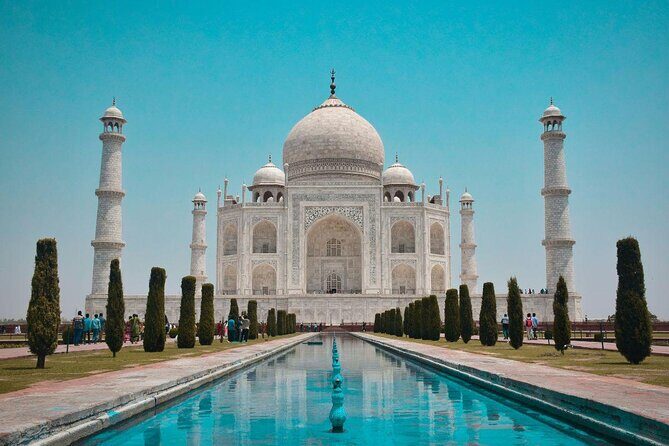
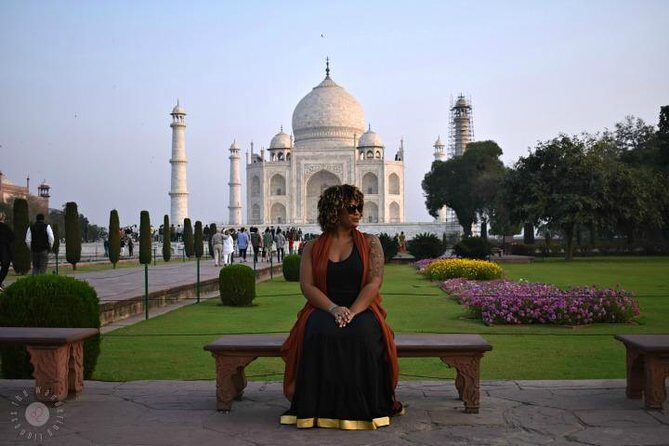
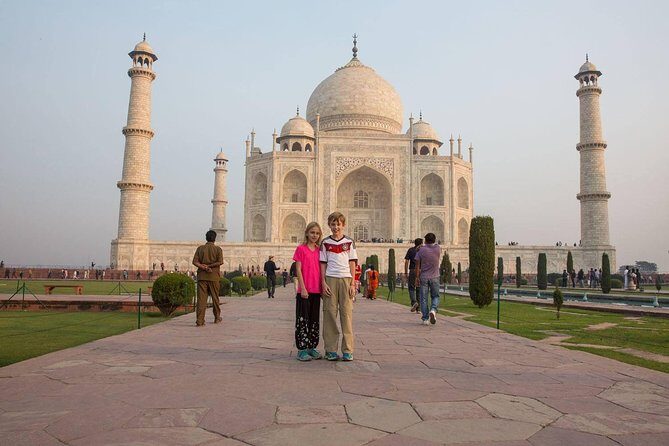
Agra starts with arrival around 10am, then guide meeting and sightseeing. The Taj Mahal visit is scheduled with entrance fee included, and it’s marked as a UNESCO World Heritage Site, tied to the Mughal-era love story of Shah Jahan and Mumtaz Mahal.
Here’s the practical takeaway for your planning: this schedule aims for you to actually enjoy the Taj Mahal rather than rushing only for a quick look. You’ll have a solid window (about 2 hours).
Two important notes:
- Taj Mahal closes every Friday. If your departure day lands on a Friday, you’ll need flexibility or a swap, since the closure is explicit.
- If you’re a photographer, you’ll want to be ready for changing light. The Taj Mahal’s look changes across the day, so arriving when your timing is set matters.
Also, even with line-avoidance support, it’s still a major site. Wear shoes you can walk in, and keep your pace calm once you’re inside.
Agra Fort after lunch: red sandstone, courtyards, and strong viewpoints
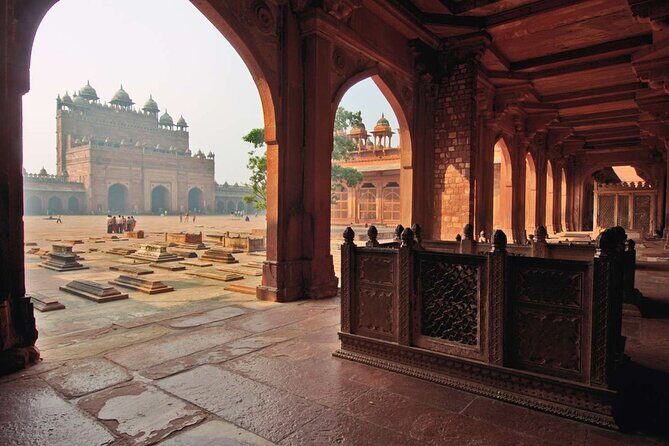
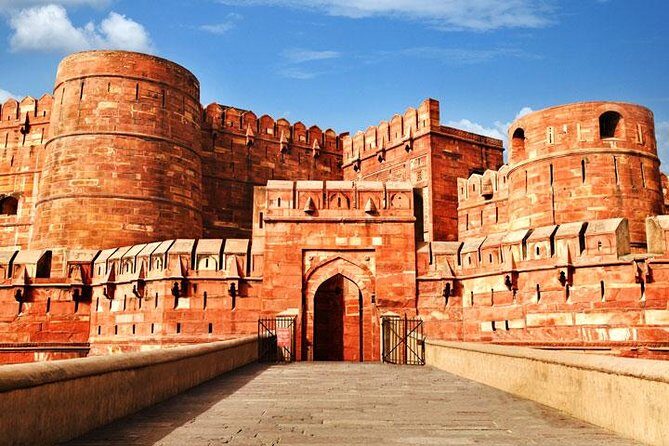
After the Taj Mahal, the tour moves to Agra Fort. This stop is also UNESCO-listed, built by Emperor Akbar starting around 1565 AD, and described as a massive red sandstone fort.
What I like about adding Agra Fort the same day is that it gives you a different feel from the Taj Mahal. The Taj is all about symmetry and white marble drama. Agra Fort is more about space—courtyards, mosques, and the fort’s internal layout that reflects Mughal power and design mixing.
Your schedule includes about 2 hours at Agra Fort, plus a lunch break in between (lunch is described as provided at a local restaurant). That lunch stop is important because Agra Fort involves walking and climbing at points, so you don’t want to skip fuel.
If your energy dips, this is one of those days where having an experienced guide and private car makes it easier to adjust without derailing everything.
Driving into Jaipur: the Pink City start and why orientation helps
After lunch, you head to Jaipur and visit the old walled city area. This segment is shorter in the plan (about 2 hours), but it’s not filler. Jaipur is big, and first-day orientation helps you connect later stops like Amber Fort, City Palace, and Jantar Mantar to where they sit within the broader city layout.
Jaipur’s planning is tied to the Shilpa Shastra, an ancient Hindu treatise on architecture. You’ll hear that explained by your guide, which is a good use of your time because it changes how you see the streets and built forms. Even when you’re just walking and photoing, that context turns it from random visuals into something you understand.
This stop is also listed with admission ticket free, so it’s mostly about viewing and guiding, not paperwork.





Day 2 in Jaipur: Hawa Mahal morning photos (and ticket expectations)
Day 2 starts early with breakfast and checkout from your Jaipur hotel, then you move into Jaipur sightseeing. The Hawa Mahal stop is scheduled for around 8am, with a photo stop approach.
Hawa Mahal is the Palace of Wind, built in 1799 by Maharaja Sawai Pratap Singh. The tour note says admission is not included for Hawa Mahal, and the time is listed as 1.5 hours. That suggests your time here may focus on exterior viewing and photos rather than full access inside.
Practical advice: if you want interior time, check directly whether you’ll have access during your version of the tour. If you’re okay with photos from the outside, this works nicely because Hawa Mahal is designed to be looked at from specific angles.
Amber Fort: the main event you’ll feel for hours
Amber Fort (also called Amber Palace) is scheduled next, with entrance fee included and about 3 hours on-site. It’s described as the former capital of the Kachhwaha clan until Jaipur became the official capital in 1727.
This is the kind of stop where 2 hours can feel rushed. The extra time helps because Amber Fort isn’t just one building; it’s a whole fort complex. You’ll likely spend time moving through courtyards and viewing the structures from multiple positions, which is where the fort’s scale becomes real.
If you’re sensitive to heat, plan to hydrate. The tour includes bottled water in the car, which helps, but you’ll still want to keep your own water habits steady once you’re walking.
Also, your guide matters here. A good explanation turns the fort’s design choices into something you can actually see and understand.
Jal Mahal photo stop: when to enjoy the pause
Midday includes a photo stop at Jal Mahal, the Water Palace in the middle of Man Sarovar lake. It’s listed as a photo stop with admission ticket not included, and the scheduled time is about 3 hours with lunch break built in.
In plain terms: Jal Mahal is best approached as a scenic break and photo moment rather than a full-length museum-style stop. If you arrive expecting a deep visit, you may feel the timing is short. If you go in knowing it’s about the look of the palace on the water, it works as a cool-down before the final cultural stops.
This is also a good time to reset your feet and attention before City Palace and Jantar Mantar.
City Palace and Jantar Mantar: royal residence plus 18th-century science
After lunch, you go to City Palace, the principal residence of Jaipur’s ruling family, with part of it now functioning as a museum. Entrance fee is included, and the time is about 2 hours.
City Palace hits a different note than Amber Fort. If Amber Fort is the power-fort, City Palace is the ongoing royal presence and the way the family’s legacy shows up in the buildings. Even if you’re not a museum person, having context from your guide helps you understand why the architecture and collections are arranged the way they are.
Next is Jantar Mantar, described as a stone observatory raised in the 18th century. Entrance fee is included, and the time is about 2 hours.
This stop is one of the best “different energy” moments of the tour. It’s not another fort or palace—Jantar Mantar is about observation and measurement. If you like seeing how past cultures built practical tools, you’ll likely enjoy this more than you expect.
The schedule also notes time permitting for a cottage industry stop specializing in hand-woven carpets and textiles, and an option to witness handmade silk carpet production. If you’re not interested in shopping, you can treat it as a quick cultural window and move on with your day.
Hotel night in Jaipur: the value of a real base
You get one night in Jaipur at a 3-star or 4-star hotel option, and breakfast is included at a multi-cuisine restaurant of the hotel. For a 2-day itinerary, having the overnight handled is where value shows up.
Without that, you’d be spending time booking and rebooking while also trying to match travel times between cities. Here, your schedule is built around that hotel night, so you can plan your energy and sleep like a normal human.
The tour also explicitly builds in check-out after breakfast on Day 2, which is the right rhythm for a short trip.
Tickets, lines, and the meaning of all-inclusive here
The tour description says it includes entrance fees of monuments, and the schedule marks entrance tickets included for key sites: Taj Mahal, Agra Fort, Amber Palace, City Palace, and Jantar Mantar. Hawa Mahal and Jal Mahal are marked as not included.
That’s an important distinction. “All-inclusive” can mean different things in different tours, so I like that the plan spells out where ticket costs are included and where they’re not.
It also states there’s support to skip guaranteed long lines at monuments. Even if you’ve never been to India’s major sites, you can assume the busiest times are busy. Having a plan that avoids some of the worst waiting pays off when your schedule is only two days.
Other included details that help you feel taken care of:
- bottled water and wet tissue in the vehicle
- parking fees of monuments and airports
- all fuel and interstate tax
- meet-and-greet assistance at Delhi International Airport
- mobile ticket
- pickup from airport or Delhi hotels
- private professional English-speaking guide and driver
If you want the day to feel structured rather than chaotic, these are the “invisible” benefits.
Price and logistics value: is $250 a fair deal?
At $250 for roughly two days, the big question is what you’re actually getting besides sightseeing. Here, you’re not just paying for access to a couple landmarks. You’re paying for:
- a private air-conditioned sedan between Delhi, Agra, and Jaipur
- a driver and a professional English-speaking guide
- entrance fees for most of the top monuments
- one hotel night in Jaipur plus breakfast
- parking, taxes, and support elements like bottled water and meet-and-greet
For short trips, the hidden cost is time and stress. A package like this can be worth it because it removes the “figure it out” chunk—especially if you’re arriving into Delhi and just want a clean start.
Could it be expensive? If you were traveling independently with your own hotel choices and a strong command of logistics, you might spend less. But for many visitors on a time limit, this setup saves energy and keeps your focus on the sights that actually matter.
Who should book this 2-day Golden Triangle tour
This fits best if you:
- have limited time in India and want the core Golden Triangle highlights
- prefer a private car over trains or multiple day transfers
- like guided explanations, especially at Taj Mahal, forts, and Jantar Mantar
- want hotel night support instead of planning sleep mid-trip
It’s also a good option if you want a pace that can adjust. The tour notes you can customize last-minute choices. That matters when you’re tired, jet-lagged, or just not feeling 100%.
Possible drawbacks to know before you go
The pace is the biggest one. Two days means you’ll be in transit and walking within tight windows. If you need long breaks, this schedule may feel rushed.
Also watch for these specifics:
- Taj Mahal closure on Fridays. That can force changes depending on your travel date.
- Hawa Mahal and Jal Mahal are listed with admission not included, meaning you may be doing more photo-oriented viewing rather than full entry.
- Lunch is mentioned as provided at local restaurants during lunch breaks, but the included list doesn’t spell out meals line-by-line. If meal inclusion matters to your budget, confirm it for your exact booking.
And finally, the tour emphasizes skips for long lines, but you’re still visiting major monuments. Bring patience for crowds and heat.
Should you book it: my practical take
Book it if you want a structured, private, short Golden Triangle trip that handles transport, guide time, hotel night, and monument access in a way that saves you from logistics headaches. With the entrance fees handled for the core sites and the private sedan between cities, the value makes sense for a first-time Golden Triangle visit.
Skip it or choose another plan if you want a relaxed pace, deep museum time, or if you’ll be in Jaipur/Agra on a Friday and can’t adapt around the Taj Mahal closure.
If you’re aiming for an efficient, high-impact 48 hours, this is a strong way to do it—see the big names, move with confidence, and sleep well in between.
FAQ
What cities are included in this 2-day Golden Triangle tour?
The tour focuses on New Delhi, Agra, and Jaipur.
Do I get picked up from Delhi airport or Delhi hotels?
Yes. Pickup is offered from Delhi airport or from hotels in Delhi.
Is the Taj Mahal ticket included?
Yes, the Taj Mahal admission ticket is included. Note that the Taj Mahal remains closed every Friday.
Are tickets included for Hawa Mahal and Jal Mahal?
No. Hawa Mahal has admission ticket not included, and Jal Mahal is listed as a photo stop with admission ticket not included.
Where is the overnight stay, and is breakfast included?
You spend one night in a Jaipur hotel (3-star or 4-star option), and breakfast is included.
What kind of vehicle is used between Delhi, Agra, and Jaipur?
The tour uses a private air-conditioned four-door sedan car, with fuel and interstate tax included.
Can the itinerary be changed at the last minute?
Yes. The tour can be customized as per your choice at last minute.
Is this tour refundable if I cancel?
No. This experience is non-refundable and cannot be changed for any reason.