REVIEW · NEW DELHI
10 Day Colorful Rajasthan Tour with Taj Mahal and Wildlife
Book on Viator →Operated by Joyful Holidays · Bookable on Viator
This route hits Rajasthan hard—and fast. It strings together Delhi, Rajasthan’s forts and palaces, and Agra’s Mughal crown jewel in a tight loop, then adds real wildlife time in Ranthambore. I like the way the schedule builds toward the big finale, with early starts that make sense when you’re chasing the best light and fewer crowds.
I also love the double chance for wildlife thanks to Ranthambore’s morning and afternoon game drives. The one drawback is you’ll spend a lot of time in the car between cities, and you’ll want to mentally budget for monument entry fees, since tickets aren’t included for many stops.
In This Review
- Key highlights worth planning for
- Why this Rajasthan loop feels efficient (and still fun)
- Entering Delhi: Old Delhi markets, then Mughal-era icons
- Jaipur’s fort-and-palace day: Hawa Mahal, City Palace, and the sky-watchers
- Jodhpur’s Mehrangarh: fortress views and Marwar street energy
- Udaipur: City Palace lookouts and Lake Pichola breathing room
- Ranthambore wildlife: early starts done for a reason
- Agra and the Taj Mahal: sunrise viewing is the real upgrade
- Price and what you’re actually paying for (and what you still must budget)
- The human side: Sonia’s support and family-friendly flexibility
- Who should book this tour, and who should consider a slower version
- Should you book 10 Day Colorful Rajasthan with Taj Mahal and Wildlife?
- FAQ
- Is pickup included on this 10-day tour?
- What major cities are included in the route?
- Are hotel stays included?
- Are the Ranthambore safaris included?
- Is breakfast included?
- Are monument tickets included?
- What is the timing for the Taj Mahal visit?
- What’s the cancellation window for a full refund?
- What’s included in the vehicle during transfers and sightseeing?
Key highlights worth planning for
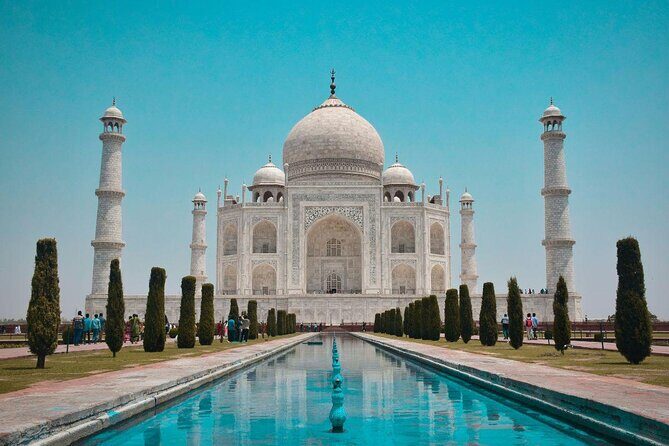
- Taj Mahal at sunrise: a special timing shift that changes the whole look of the marble
- Ranthambore two-safari rhythm: morning and afternoon drives give you more time in tiger country
- Old Delhi with a rickshaw ride: a quick, sensory way to experience Chandni Chowk
- Jaipur icons in one day: Fort, City Palace area, and major viewpoints like Hawa Mahal
- Udaipur lakeside time: City Palace overlooks Lake Pichola, plus a boat ride
- A strong mix of empires: Mughal sites in Delhi/Agra and Rajput architecture across Rajasthan
Why this Rajasthan loop feels efficient (and still fun)
This tour is built like a highlights reel, but not in a random way. You move through Delhi → Jaipur → Jodhpur → Udaipur → Ranthambore → Agra, so the story stays coherent: Mughal power shows up in Delhi and Agra, while Rajput culture takes the wheel across Rajasthan.
What makes it practical is the balance of big-ticket moments and human-scale breaks. You get full sights with guides, but you’re also given pockets of time to reset—especially on the wildlife side with an entire free day in Ranthambore and structured meals.
The “private tour” aspect matters too. Only your group participates, which usually means fewer logistics headaches than large-group bus tours. It also tends to make early departures and ticket timing easier to manage.
A few more New Delhi tours and experiences worth a look



Entering Delhi: Old Delhi markets, then Mughal-era icons

Delhi starts with an arrival transfer to your hotel and a free day segment for jet lag and settling in. If you arrive early, the plan even allows a short half-day option like a visit to Akshardham Temple—useful when you want to feel like you started sightseeing on day one.
On day two, you get a fast tour of the capital’s layers. Old Delhi begins with Jama Masjid, then moves into Chandni Chowk for a rickshaw ride through the market lanes. That combination is a smart way to understand Delhi: first a grand Mughal-style mosque, then daily life in motion.
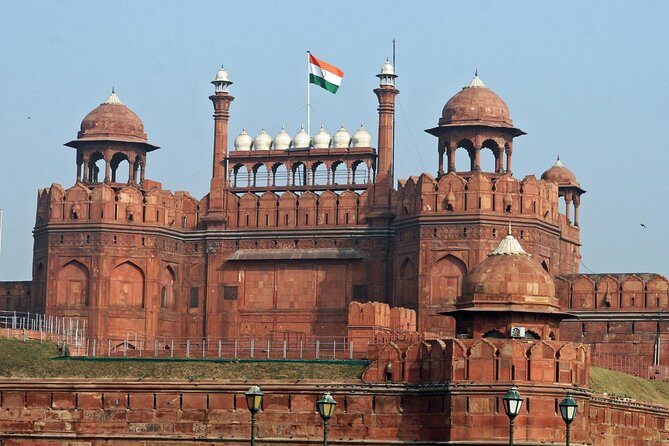
Next comes a photo-friendly spread of major landmarks. You’ll drive past the Red Fort (the Indian Army holds most of it, so you mainly see the exterior), then stop at Raj Ghat for a quieter moment at Gandhi’s memorial. India Gate and the grand government buildings follow as a different kind of scale—less personal, more monumental.
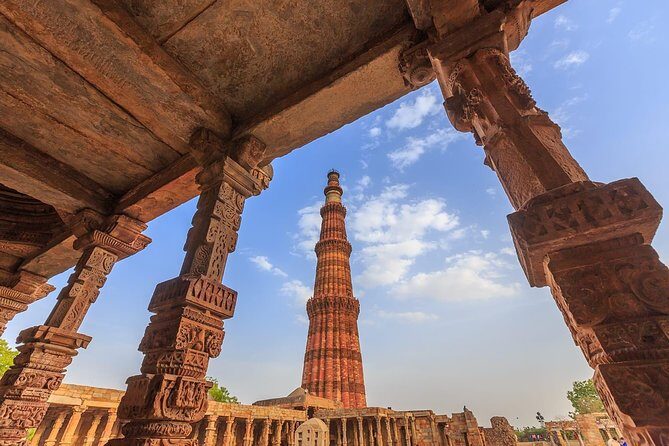
You close the day with Qutub Minar, an Indo-Islamic architectural landmark. It’s a good capstone because it connects the history you’ve been seeing with a clear visual anchor: that tall minaret pulling your eyes upward.
Finally, you travel to Jaipur the same day. That’s the tour’s style: action, then movement, then action again.
Jaipur’s fort-and-palace day: Hawa Mahal, City Palace, and the sky-watchers

Jaipur is often the stop people remember most for color, and this itinerary leans into it with a tightly scheduled sightseeing day. You start with Jaipur Fort, which rises from the rocky landscape and gives you that classic Rajput silhouette. The fort’s palace complex mix of sandstone and white marble is the kind of detail that makes you stop taking photos and just look.
Then you get City Palace, set right in the old city. It’s described as a complex of courtyards, gardens, and buildings, built over centuries—so it doesn’t feel like one single room or one single viewpoint. You’re seeing a layered royal footprint.
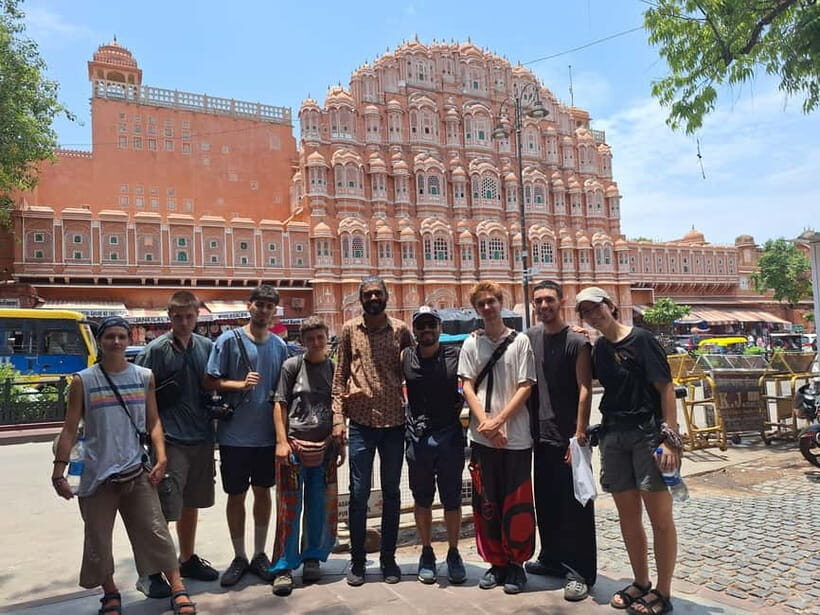
You also get the Jaipur postcard shots, including Hawa Mahal—the Palace of Winds. Even though it’s listed as a photo stop, it still works because the building is pure identity. Those honeycomb-like facades are meant for filtered views, and seeing it in person makes you understand why it became famous.
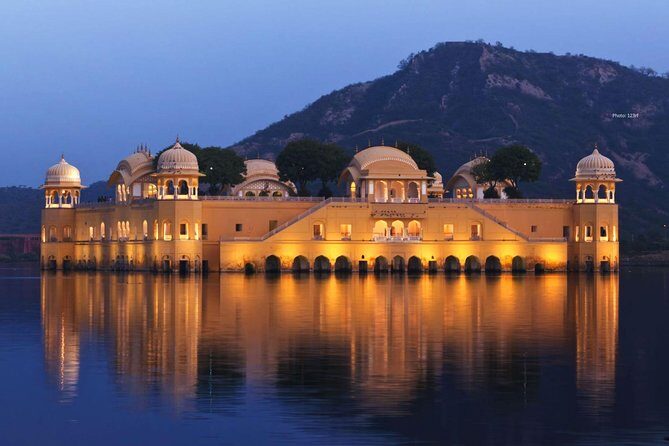
Two more stops round out the day. Jal Mahal is positioned for photos, and it’s one of those views that looks like it’s floating once you’re in the right angle. Jantar Mantar (UNESCO) is the science-and-geometry counterweight: curved instruments meant to track the sky.
Practical note: this is a packed day of walking and changing levels. Bring comfortable shoes and plan for sun and dry air, especially outside early mornings.
Jodhpur’s Mehrangarh: fortress views and Marwar street energy
Jodhpur comes after a countryside drive, which is a nice way to transition from Jaipur’s urban bustle into Rajasthan’s wider open feeling. Once you arrive, you go straight into the highlights with a guide.
Mehrangarh Fort is the center of gravity. It’s described as one of the largest forts in India, built on a hill about 410 feet above the city and enclosed by thick walls. That vertical distance pays off when you look out over Jodhpur—it’s one of those places where the fort makes sense as a defensive machine and a status statement.
Afterward, Jaswant Thada offers a slower pace. It’s a royal cremation ground, built in 1899, and it works well when you’ve already been absorbing huge fort walls. It’s also a place to breathe and reset your eyes after all the heavy stone.
If you have time, the evening plan includes Ghanta Ghar and Sardar Market nearby. That’s the part you use for casual wandering—vegetables, spices, sweets, textiles, and handicrafts. You get a street-level sense of Jodhpur without trying to force an overly structured shopping hour.
If you’re sensitive to late-day crowds, keep your expectations realistic: market areas are lively. If you’d rather keep evenings calmer, you can also treat this segment as a short walk and then head back.
Udaipur: City Palace lookouts and Lake Pichola breathing room
Udaipur earns its reputation with both setting and pace. The drive there also includes a meaningful stop on the way: Ranakpur Jain Temple. It’s known for beautiful carvings and being a marble complex, and it’s a nice break from the more dominant Hindu-and-Rajput visuals you’ll see elsewhere on the trip.
In Udaipur, you start with the religious anchor: Jagdish Temple. From there, it’s straight to City Palace, which overlooks Lake Pichola. The description emphasizes its long build history over nearly 400 years, which matters because it helps you understand why it feels like more than one era mashed into one spot.
Then you get the classic Udaipur pause: Lake Pichola with a boat ride. This is the kind of activity that changes the scale of the city. From water, palaces and ghats sit differently in your mind, and you get a break from heat and walking.
Finally, you visit Saheliyon ki bari, built as a garden for a queen and her maids, with fountains, pools, pavilions, and marble elephants. It’s not just a pretty garden stop; it’s also a useful mental shift. After forts and towers, gardens and water give you a reset.






Ranthambore wildlife: early starts done for a reason
Ranthambore is where the tour stops pretending you’re only here for photos. You’re here for wildlife, and the schedule is built around that reality.
Day one in the park area includes travel and check-in, then a free evening and dinner. The next day is the big rhythm shift: morning safari starts around 6:00 AM with pickup between 5:30 and 6:00. That early timing is your best bet for animal activity and cooler temperatures.
You return around 10:30 AM for breakfast and relaxation, then lunch, then the afternoon safari begins about 2:30 PM. The itinerary structures the day so you’re not doing back-to-back drives without recovery. It also means you get two chances rather than one, which is a practical advantage in wildlife watching.
Two additional points from the provided details:
- Game drives are done by shared Jeep/Canter (so you’re not always controlling the exact sightline within the vehicle).
- The safaris are included as 2 game drives in the package, so you’re not piecing together separate bookings.
Also, pack for early-morning comfort: in cooler months it can feel chilly, while afternoons can swing hot. Bring layers you can handle in a vehicle.
Agra and the Taj Mahal: sunrise viewing is the real upgrade
Agra is a highlight stop, and it’s scheduled so you don’t just show up and leave. First, you travel from Ranthambore to Agra, then you do the city tour.
That includes Agra Fort, described as a UNESCO site built by Akbar in 1565, and made of red sandstone. If you’re the type who loves how architecture links politics and power, Agra Fort is a strong follow-up to the desert-fort feeling you already got in Rajasthan.
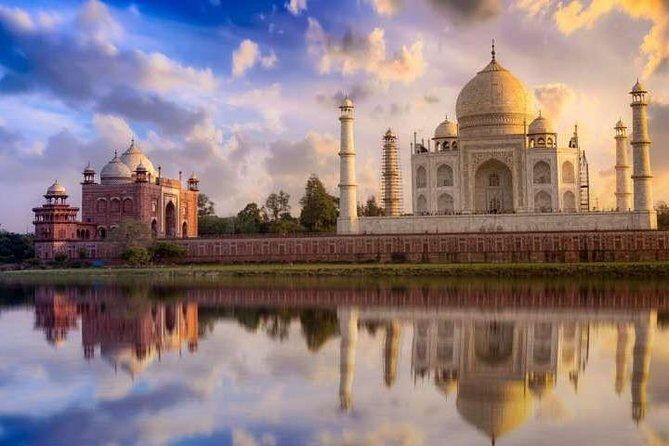
You also visit Mehtab Bagh, known as the Moonlight Garden and set on the Yamuna’s banks opposite the Taj Mahal. It’s listed as having a sunset view spot, which adds variety: you’re not only seeing the Taj Mahal from one side or at one time.
Then comes the most important moment: the next day’s Taj Mahal at sunrise. You meet your guide in the hotel lobby around 5:45 AM. The itinerary emphasizes that Taj Mahal changes hues through the day, and at sunrise it can look pink. That’s exactly the kind of timing shift worth building a trip around.
After sunrise viewing, you return for breakfast and check out, then you drive back to Delhi. It’s a long day at the end, but it protects the sunrise experience from being rushed.
Price and what you’re actually paying for (and what you still must budget)
The listed price is $1,199 per person for about 10 days, with the choice of hotels in the 3, 4, or 5-star range depending on your option. That’s a decent value when you compare what’s packaged: accommodation across multiple cities, guided sightseeing, air-conditioned vehicle transfers, and the two Ranthambore game drives.
Included items that matter for comfort and sanity:
- Professional private tour guides
- Transfers and sightseeing by air-conditioned vehicle
- Packaged drinking water in the car
- Breakfast (9) during the trip
- Two game drives in Ranthambore by shared Jeep/Canter
What you should not assume is covered:
- Monument tickets and many meals are not included (the itinerary repeatedly lists tickets as not included, with some stops marked as admission ticket free).
- Lunch and dinner are not listed as included.
So here’s the budgeting approach that works: plan to set aside a separate amount for entry fees and meals. If you’re the kind of traveler who wants to spend most of your time inside monuments and museums, your extra budget will feel justified. If you mainly want the big exteriors and viewpoints, you’ll spend less.
Also: the itinerary includes some stops as photo stops. That’s not a negative—it’s a time-saving strategy. You’ll still get the key visuals without every hour turning into line-ups and queues.
The human side: Sonia’s support and family-friendly flexibility
One of the strongest themes in the provided experience notes is support from the operator team, especially a coordinator named Sonia. The details shared point to clear communication before and during the trip, with prompt replies and patience when plans needed adjustment.
That matters because this itinerary runs on timing. Early safari starts and sunrise Taj Mahal can feel stressful if something changes. When you have a person on the other end who can respond quickly, you get calmer travel.
There’s also mention of organizing the trip as a birthday trip, and handling extra needs for families traveling with kids and an elderly aunt. I can’t promise every request can be tailored, but it’s a good signal that the company isn’t rigid.
Who should book this tour, and who should consider a slower version
This is a great fit if you want:
- A strong first trip to North India and Rajasthan highlights without building the route yourself
- One wildlife block that includes both morning and afternoon safaris
- Guided access to major sites in Delhi, Jaipur, Jodhpur, Udaipur, Ranthambore, and Agra
It might feel like too much if you’re someone who hates early starts, or if long driving days drain you. The schedule is efficient, but it’s still a lot of moving. If you’re traveling with very young children who can’t handle early mornings, or if your schedule needs frequent downtime, you may prefer a shorter version or an itinerary with fewer city jumps.
Should you book 10 Day Colorful Rajasthan with Taj Mahal and Wildlife?
I’d book it if you want a trip that covers the headlines and still gives you real time for wildlife and lakeside calm. The value comes from the mix: guided history, iconic architecture, structured breaks, and two Ranthambore safaris instead of one.
I’d hesitate if you hate spending extra on entry fees and meals, or if you know you’ll struggle with early mornings like the 5:45 AM Taj Mahal sunrise departure. In that case, you’ll spend time resenting the schedule instead of enjoying it.
If you’re comfortable with a packed pace and you like organized, point-to-point travel, this itinerary is one of the more direct ways to hit Rajasthan’s best-known experiences in a single sweep.
FAQ
Is pickup included on this 10-day tour?
The tour notes that pickup is offered. You’ll also be transferred between cities in an air-conditioned vehicle.
What major cities are included in the route?
This tour covers New Delhi, Jaipur, Jodhpur, Udaipur, Ranthambore (Sawai Madhopur), and Agra, with Taj Mahal at sunrise included on the final day.
Are hotel stays included?
Yes. Your accommodation is included in 3, 4, or 5 stars on the option chosen.
Are the Ranthambore safaris included?
Yes. You get 2 game drives in Ranthambore by shared Jeep/Canter.
Is breakfast included?
Yes. Breakfast is included for 9 breakfasts during the trip.
Are monument tickets included?
Not all of them. The itinerary repeatedly lists monuments tickets as not included for many stops, while a few photo stops are marked as admission ticket free. You should budget for monument entry fees.
What is the timing for the Taj Mahal visit?
You’ll meet your guide around 5:45 AM for a sunrise Taj Mahal visit, then return for breakfast afterward.
What’s the cancellation window for a full refund?
You can cancel up to 6 days in advance of the experience for a full refund (you must cancel at least 6 full days before the start time).
What’s included in the vehicle during transfers and sightseeing?
Transfers and sightseeing are by air-conditioned vehicle, and the tour includes packaged drinking water in the car.