REVIEW · BANGALORE
Block/ Eco Printing Workshop – 90 Minutes
Book on Viator →Operated by RangMudra · Bookable on Viator
Block printing is a practical kind of souvenir.
In Bengaluru, RangMudra’s block/eco printing workshop turns an old textile technique into a hands-on session that runs about 2 hours (the class is advertised as 90 minutes, so plan for a little extra time). I especially like that it focuses on making something yourself, not just watching, and that it’s led by local artisans like Padmashree, who comes across as warm and easy to learn from. One thing to keep in mind: you’ll be working on-site during a daytime slot, so if your energy runs low mid-day, plan food and rest first.
What I like most is the mix of creativity and purpose—this isn’t just about printing patterns, it’s about learning how sustainable craft choices fit into real production. You also get a clear payoff: a finished, block-printed fabric creation that you can take home. The only drawback I’d flag is simple scheduling—this runs only during a set window (Mon–Sat, 10:00 AM to 2:00 PM), so it can be tricky if your sightseeing days are packed.
In This Review
- Quick hits
- Where to Go: RangMudra near Kanakapura Main Rd
- The 90-Minute Plan: What You’ll Do During Class
- Eco Printing: The Sustainable Angle That Actually Helps
- Meet Padmashree and the Artisan-led Flow
- What You Take Home: Your Finished Block-Printed Piece
- Small Group Size and Scheduling: When to Book
- Value for Money: Is $28.33 Worth It?
- Who This Workshop Fits Best
- A Few Practical Tips Before You Go
- Should You Book This Block Printing Workshop?
Quick hits
- Small group size (max 14) keeps the pace friendly and questions more likely to get answered.
- Padmashree’s hosting style makes the class feel comfortable from the first moments.
- Start-to-finish block printing practice means you leave with a product you worked on, not a demo souvenir.
- Eco printing framing gives you a reason to care about the process, not just the final design.
- Mobile ticket + near public transport makes logistics simpler than many arts workshops in the city.
Where to Go: RangMudra near Kanakapura Main Rd
The workshop start point is at RangMudra Workstation 2 Shankaraa Foundation, Metro Station, Kanakapura Main Rd, Doddakallasandra, Konanakunte, Bengaluru, Karnataka 560062. That’s a very specific address, and it matters because Bengaluru can be easier when you anchor yourself to a precise landmark.
It also helps that the meeting point is listed as near public transportation. If you’re using metro/bus combos, this type of location usually saves time versus fighting heavy traffic from farther across town. The good news: the activity ends back at the same meeting point, so you don’t need to plan a separate stop or “meet-up scramble” to get home.
Timing is straightforward: it operates Monday through Saturday from 10:00 AM to 2:00 PM. The overall duration is listed as about 2 hours, so treat it like a mini-morning or early-afternoon commitment rather than something you’ll tack onto the end of a long day.
A few more Bangalore tours and experiences worth a look


The 90-Minute Plan: What You’ll Do During Class
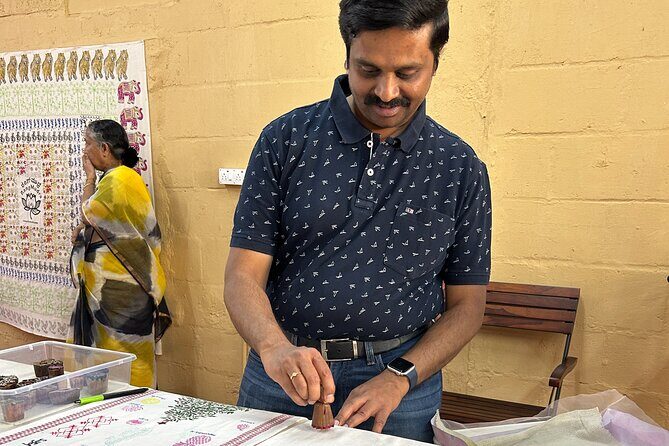
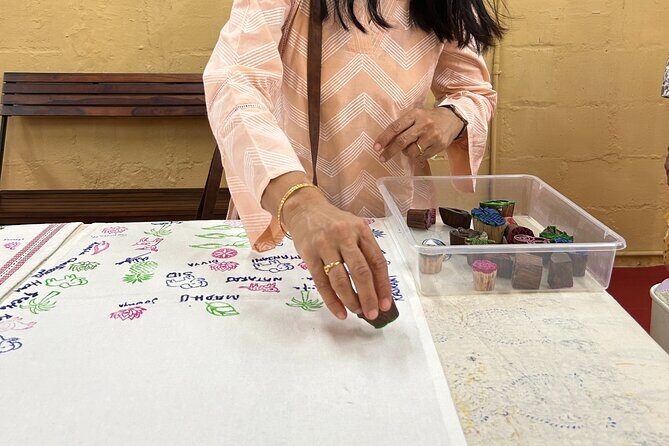
This is a hands-on block printing workshop, taught by seasoned artisans. Your main job is to learn the technique and then create your own block-printed fabric product from start to finish. In other words, you’re not just learning terminology—you’re doing the steps that lead to an actual print.
Because the workshop is described as both 90 minutes and approximately 2 hours, I’d plan as follows: arrive on time, expect a short orientation, and allow time for the printing portion plus finishing and wrap-up. That extra buffer can help if you get absorbed in choosing patterns or adjusting how the print lands.
What does start-to-finish usually feel like in a class like this? You’ll likely move through a sequence where you learn the method, test and refine your approach, then produce the piece you can take home. Even if you’re a first-timer, that structure is valuable. It reduces the mystery. You’re not stuck thinking, I don’t know what I’m supposed to do next—you’ll be guided through the workflow.
And since the workshop is capped at a small group (max 14), you should get real attention. In a bigger class, printing can turn into a quiet self-guided scramble. Here, the scale is small enough that you can ask questions without shouting over a room.
Eco Printing: The Sustainable Angle That Actually Helps
The workshop is described as block/eco printing, and that phrase matters. Eco printing isn’t only a marketing hook; it’s about connecting your creative output to responsible choices in the materials and process.
Even without a heavy lecture style, the eco framing changes how you pay attention while you work. Instead of treating the craft like a one-off activity, you start thinking about practical decisions: how the process affects materials, how printing is done, and why artisans care about waste and repeatability. You’ll come away with a better appreciation for why traditional textile techniques still have a place today.
I also like that the sustainability angle is paired with an outcome you can see. You’ll leave with a tangible, block-printed fabric creation, so the eco lesson doesn’t float in abstract theory. It’s attached to something real.
Meet Padmashree and the Artisan-led Flow
One of the strongest themes in the experience description is that it’s taught by seasoned artisans, not a casual demo. The class host Padmashree is specifically highlighted in feedback as welcoming and easy to be around. That matters more than people expect.
When you’re learning a craft that requires coordination—handling tools, managing ink or dye, aligning prints—an anxious start can make everything slower. A warm host helps you relax into the learning curve. You ask questions earlier, you correct small issues sooner, and you’re more likely to finish something you’re genuinely happy with.
Another practical plus: the workshop’s small cap helps preserve this artisan-led rhythm. In a group that stays under 14, guidance tends to stay personal. You can learn faster because you’re not waiting for the instructor to notice you missed a step.
If you’re the kind of person who likes small-group classes, this setting will feel comfortable right away.
What You Take Home: Your Finished Block-Printed Piece
The workshop promise is simple: you’ll leave with your own block-printed product. That’s the best part of creative classes for me. You get a souvenir that doesn’t look mass-produced, and it holds the memory of actually doing the work.
Because it’s designed as a start-to-finish experience, your time has a goal. You’re not just making test swatches for the first half and hoping the second half makes up for it. The structure is meant so you end with a finished fabric art item.
Here’s a practical tip: wear or bring clothing you don’t mind getting a little ink or dye residue risk from. Even if the studio is careful, craft spaces often have small splashes or dust. If you’re coming straight from sightseeing, consider changing before class or bringing a spare top.
Also, treat your take-home piece like something you’ll want to protect. If you’re traveling the same day, plan how you’ll carry it so it doesn’t crush in your bag. A finished textile creation is easy to fold, but easy to crease too—so give it gentle handling.




Small Group Size and Scheduling: When to Book
With a maximum of 14 people, you’re more likely to get personal guidance and a smooth pace. That’s important for block printing because the results can depend on alignment, pressure, and timing. In a large group, you can feel rushed. Here, the class size supports learning rather than just producing.
The workshop is listed as mobile-ticket based, and booking confirmation is received at the time of booking. That’s useful for planning—especially if you’re building your days around a short window.
The other scheduling note: this experience is commonly booked about 25 days in advance on average. That suggests it’s popular enough that prime slots can fill. If you’re visiting around holidays or weekends, I’d book earlier rather than assume you can just walk in.
For daily planning, aim for a time when you’re alert but not starving. If you go right after a long commute, block printing can feel like a lot. If you go too late, the early-day energy can be gone. The 10:00 AM to 2:00 PM window gives you options, so pick the slot that matches your body clock.
Value for Money: Is $28.33 Worth It?
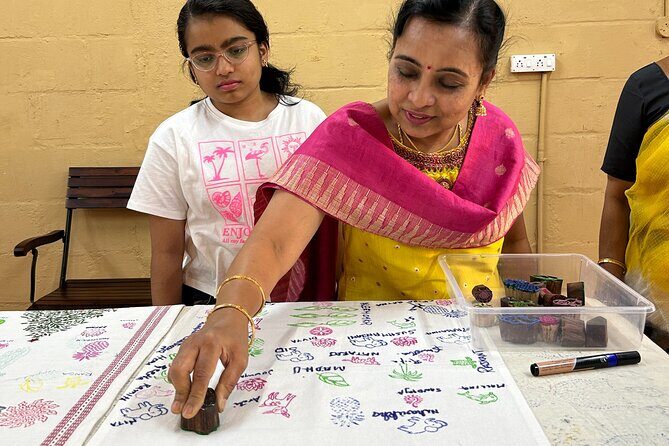
At $28.33 per person, this workshop is priced like a budget-friendly cultural activity. The value comes from what you actually get: artisan-led instruction plus a finished block-printed fabric creation you can take home.
You’re paying for more than the right to sit in a chair. You’re paying for:
- time with an artisan who can guide technique,
- materials and workspace,
- the opportunity to produce something that requires a learning process,
- and a small-group setting that keeps attention from slipping away.
If your travel style is mostly museums and photos, a class like this is a refreshing change. You also avoid the “I bought a souvenir but forgot the story” problem, because this one is tied to your own handwork.
Could it be overkill if you hate hands-on crafts? Sure. But if you enjoy creative experiences, this price-to-outcome ratio is solid. You’ll leave with something more meaningful than a store-bought print, and you’ll learn why the craft matters.
Who This Workshop Fits Best
This is a great fit if you want something cultural but practical. It’s also ideal for people who like small-group learning and don’t mind focusing for about two hours.
It especially makes sense if:
- you’re in Bengaluru for a few days and want a distinct creative activity,
- you prefer doing rather than just watching,
- you’re shopping for souvenirs but prefer a personal item.
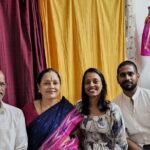
It can also work well for families. One set of feedback mentions daughters and a parent having a wonderful time designing and printing creations, which suggests the experience is approachable when you have at least one adult to coordinate and help.
If you’re someone who needs a lot of explanations before touching anything, you may still enjoy it—but you should be ready to jump into the process once guidance starts.
A Few Practical Tips Before You Go
Before you head to RangMudra, do these simple things to make class day smoother.
- Confirm your start time within the Mon–Sat 10:00 AM–2:00 PM window so you arrive in the correct slot.
- Plan light snacks. The class is short, but you’ll want your energy steady while printing.
- Wear clothing that’s comfortable and easy to move in, because you’ll be working closely with materials.
- Bring patience for the learning curve. Block printing rewards careful alignment, and that takes a minute to feel natural.
Also, since the end point returns to the meeting location, treat the workshop like a self-contained block in your schedule. It’s much easier that way than stacking multiple activities that require you to sprint between different areas.
Should You Book This Block Printing Workshop?
Book it if you want a hands-on cultural activity where the result is real and personal—a finished block-printed fabric piece you can take home. The small group size (max 14) and the welcoming artisan-led vibe under Padmashree make it especially appealing if you like learning in a calm setting.
Skip it if you’re only interested in passive sightseeing, or if you have zero patience for step-by-step craft work. Also, if your schedule can’t fit the 10:00 AM–2:00 PM days, it may be hard to make it work.
If you’re in Bengaluru and you want a creative break that feels authentic and grounded, this one is a strong choice.