REVIEW · NEW DELHI
World Heritage Monuments of Delhi – Premium Private Tour
Book on Viator →Bookable on Viator
One day, so many eras. This premium private tour strings together Delhi’s biggest UNESCO sights plus the gritty rhythm of Old Delhi markets. I like the mix of high-impact monuments and real street energy, and I especially like the built-in comfort: air-conditioned vehicle, bottled water, and a guided plan that keeps you moving without feeling rushed. A possible drawback: you’ll spend a lot of the day outdoors and walking, so plan for heat and crowds.
If you like your sightseeing with context, you’ll appreciate the story thread that runs through the day—from early fortified Delhi around Qutub Minar to Mughal power at the Red Fort and the imperial mosque at Jama Masjid. It’s also designed so you can handle it as a group, including families, with a cycle rickshaw ride for the narrow-lane feel. Just note the route packs in several major sites, so shoe choice and pace matter.
In This Review
- Key highlights worth your attention
- Qutub Minar: Why this “Victory Tower” still draws crowds
- Red Fort and Shah Jahan: Mughal power in brick and geometry
- Humayun’s Tomb: The garden-tomb idea that changed South Asian design
- Pasar Chandni Chowk to Jama Masjid: Old Delhi energy, minus the confusion
- Khari Baoli: A spice bazaar stop you can smell for blocks
- Gurudwara Sis Ganj Sahib: When architecture meets a hard story
- The drive past Lutyens’ Delhi: India Gate and the President’s House viewpoints
- How the 7 to 8 hour schedule really works
- Value check: Is $220 per person a fair deal?
- Who should book this Delhi heritage day
- Should you book the World Heritage Monuments of Delhi tour?
- FAQ
- What time does the tour start?
- How long is the tour?
- Is pickup included?
- Are monument tickets included?
- Does the tour include an Old Delhi ride?
- What’s included in the price?
- Can I get a full refund if I cancel?
Key highlights worth your attention
- UNESCO-focused day: Qutub Minar, Red Fort, Humayun’s Tomb, plus landmark Old Delhi stops
- Old Delhi on wheels: cycle rickshaw time to slip through tight lanes
- Meaningful monument order: Mughal architecture and imperial settings, then market Delhi
- Comfort between sights: pickup-style convenience and an air-conditioned ride
- Food and street-life support: the guide helps you navigate where to eat like a local (lunch can be a standout)
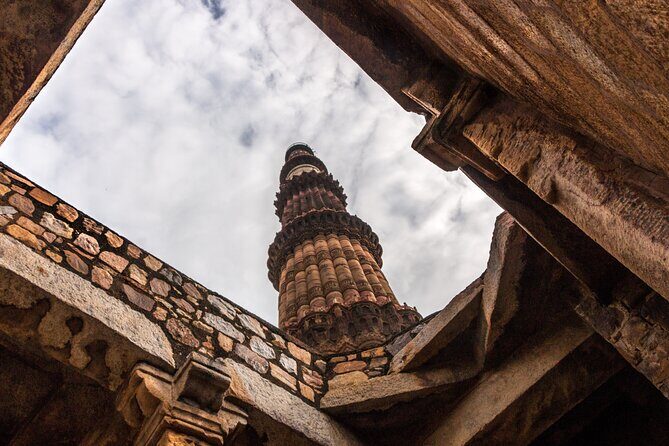
Qutub Minar: Why this “Victory Tower” still draws crowds
Qutub Minar is the kind of stop that instantly gives you scale. You’re looking at a minaret and victory tower in the Qutb complex, tied to Delhi’s oldest fortified city site at Lal Kot (linked with Tomar Rajputs). The monument is UNESCO-listed and is one of the most visited sights in Delhi.
The key thing to understand here is what you’re seeing under your feet and around you. Qutub Minar was mostly built between 1199 and 1220, and it went through architectural changes over time. That long timeline makes it more than a single photo moment. You’ll likely notice how the structure reads differently at different angles and distances, especially as you move around the base area.
Practical tip: go with light layers and sun protection. Even with shade in parts of the complex, you’ll still feel the morning-to-midday light.
You can also read our reviews of more private tours in New Delhi


Red Fort and Shah Jahan: Mughal power in brick and geometry
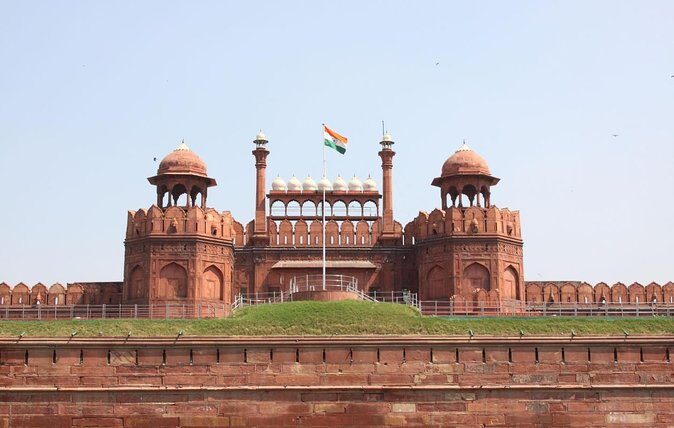
Red Fort (Lal Qila) is the classic “this is where the Mughal emperors lived” stop. Commissioned by Shah Jahan on 12 May 1638 after he shifted the capital from Agra to Delhi, it represents the peak of Mughal architecture under Shah Jahan. It’s also a mix of Persianate palace design with Indian traditions.
What I like about bringing Red Fort into a guided day is that it’s not just walls and gates. It’s a whole political stage. You can feel the logic of a fortress-meets-palace layout—built for control, ceremony, and authority. The tour time is set to let you see the fort as a space, not just a checklist item.
Construction trivia helps you “read” the place: the design is credited to architect Ustad Ahmad Lahori, also credited with the Taj Mahal. That link gives you a satisfying thread between the big Mughal names.
One consideration: Old Delhi traffic and the flow of visitors can affect your exact pacing. Go with the expectation that Red Fort is popular, and you’ll handle it better.
Humayun’s Tomb: The garden-tomb idea that changed South Asian design
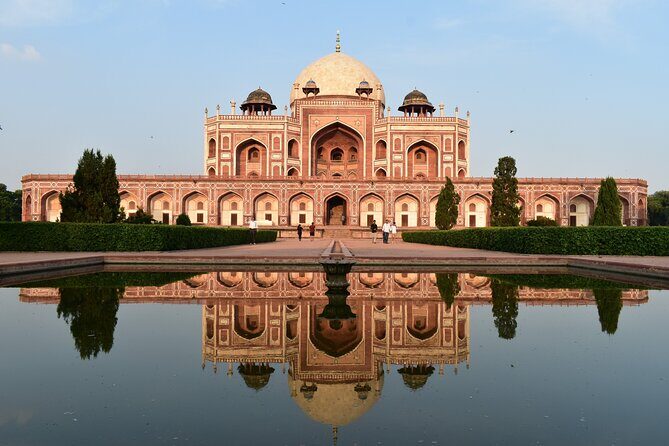
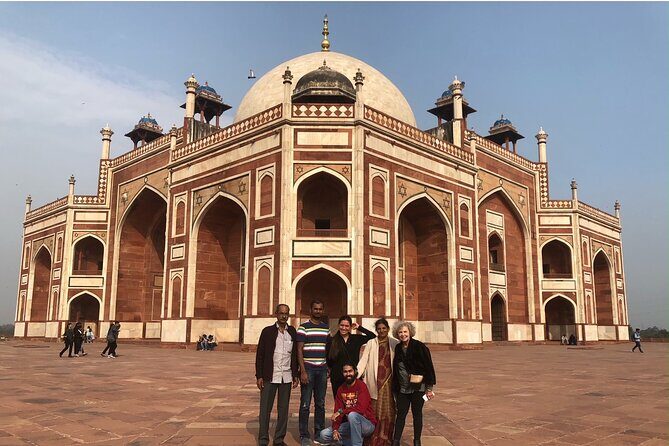
Humayun’s Tomb feels calmer than the largest fort or mosque stops. It’s the tomb of Mughal Emperor Humayun, commissioned by his first wife and chief consort Empress Bega Begum in 1558. Persian architects were chosen, including Mirak Mirza Ghiyas and his son Sayyid Muhammad.
The big reason this is worth your attention: it’s widely recognized as the first garden-tomb on the Indian subcontinent. That garden plan matters because it changes how the monument works. Instead of a building that just sits there, you experience it as a carefully arranged space, with pathways and symmetry guiding your attention.
There’s also an architectural detail point you’ll want to notice if your guide points it out: it was the first structure to use red sandstone at such a scale. That detail helps you see how materials and status show up in Mughal design.
UNESCO recognition came in 1993, but the deeper value is the influence. This tomb is one of the reasons later Mughal tomb-making makes sense.
Pasar Chandni Chowk to Jama Masjid: Old Delhi energy, minus the confusion
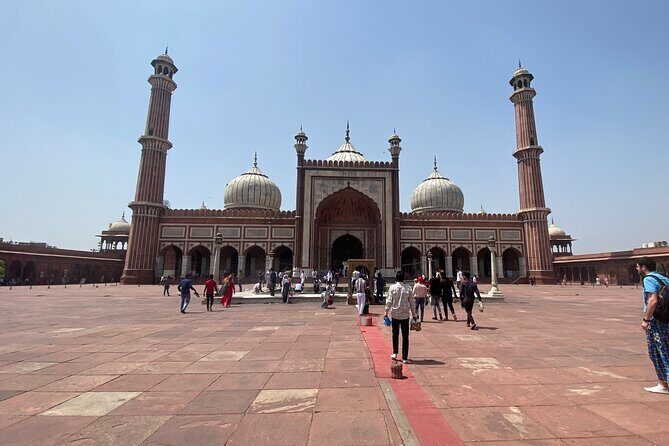
Chandni Chowk is famous for a reason: it’s a living market system, not an empty historic set. The old Chandni Chowk was a half-moon-shaped square with a water channel that ran from the Yamuna through the middle of the bazaar road, with shops and roads on either side. It was established by Princess Jahanara Begum in 1650 CE, and the canal idea is part of what gave the area its identity as Moonlight Square.
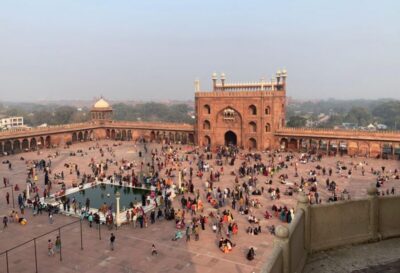
Then you pivot toward Jama Masjid, a huge step up in monument scale. Jama Masjid (Masjid-i Jehan-Numa, world-reflecting mosque) is one of the largest mosques in India. Built by Shah Jahan between 1650 and 1656 and inaugurated with an imam, it became the imperial mosque for Mughal emperors in Shahjahanabad until the empire declined in 1857. It’s still active today, which means the visit isn’t just about history—it’s part of ongoing daily religious life.
I like this pairing because it shows two sides of Old Delhi: commerce and imperial worship. You’ll see how the city’s layout supports both.
Practical advice: wear clothing that respects active religious sites, and plan time for people-watching. This section can feel crowded, which is part of the point.
Khari Baoli: A spice bazaar stop you can smell for blocks
Khari Baoli is a street tied to wholesale grocery and what’s described as Asia’s largest wholesale spice market. This isn’t a “look, don’t touch” kind of place—it’s a sensory experience. Spices, nuts, herbs, and food products create a thick atmosphere that makes Delhi feel instantly specific.
If you’re used to tourist markets elsewhere, this will feel different. The vibe here is supply-chain Delhi, the kind of wholesale trade that keeps kitchens and shops stocked. You’ll get a short stop window, which means it’s not about shopping for hours. It’s about seeing how people trade and what Delhi’s food world runs on.
What to do with the time: focus on prices and product variety if you like market culture, and don’t feel pressured to buy. The value is in understanding what’s being sold and why people come here.
You can also read our reviews of more historical tours in New Delhi





Gurudwara Sis Ganj Sahib: When architecture meets a hard story
Sis Ganj Sahib sits in the middle of Chandni Chowk, which helps you combine market chaos with a calm, meaningful pause. This shrine marks the exact site where Guru Tegh Bahadur, the ninth Sikh Guru, was beheaded in 1675 on orders of Mughal emperor Aurangzeb.
The building style is Mughal architectural style, with sandstone used for details instead of the white marble you might see at other gurudwaras. That material choice matters—it makes the shrine feel integrated with the wider Mughal-era architectural language of Delhi.
I recommend treating this stop as more than a photo stop. The surrounding neighborhood makes the contrast stronger. You’ll feel the weight of history in a place that still functions as part of daily life.
The drive past Lutyens’ Delhi: India Gate and the President’s House viewpoints
Between the older Mughal and market areas, you’ll also get a sense of modern Delhi planning. The day includes a drive through Lutyens’ Delhi, with passes around India Gate and the President’s House.
This part is less about a ticketed attraction and more about orientation. You’ll start to connect how Delhi evolved from fortified city layouts to government-axis planning. It’s also a relief break between heavy walking stops.
Tip: if the traffic cooperates, keep your camera ready during the drive. These passes can become your quick “okay, I get the city now” moments.
How the 7 to 8 hour schedule really works
This tour is designed for an early start, with a 8:00 am start time. In a day like this, timing is everything. You’ll likely spend chunks of time at Qutub Minar, Red Fort, and Humayun’s Tomb (each roughly 1 hour 30 minutes), then move through Old Delhi segments with shorter windows at Jama Masjid and Khari Baoli.
The practical win is the air-conditioned vehicle between locations, plus the guide-led flow that helps you avoid aimless wandering. The inclusion of bottled water (1 liter each) also matters. Heat and walking add up fast in Delhi.
Where you should be ready to adapt: crowd density. Jama Masjid and Chandni Chowk areas can get busy, and your exact walking pace may change based on foot traffic. The tour is built to keep moving, but you’ll still feel the city.
Footwear rule: wear shoes you can walk in for long stretches. Your comfort is the difference between a good day and a frustrating one.
Value check: Is $220 per person a fair deal?
At $220 per person for a 7 to 8 hour private experience, you’re paying for three big things: time efficiency, a local guide, and included access and logistics.
Here’s what you’re getting that protects your wallet from hidden extras:
- Monument tickets are included where listed (Red Fort, Humayun’s Tomb, Jama Masjid)
- Cycle rickshaw ride through narrow lanes of Old Delhi is included
- Pickup-style convenience (pickup offered) and an air-conditioned vehicle
- Bottled water (1 liter each) plus coffee and/or tea
Now the honest part: some stops in the schedule are marked free (like Qutub Minar’s admission as listed, and market streets). Even so, the guide time and transport still do the heavy lifting. If you were doing this on your own, you’d spend time figuring out routes, entrance details, and timing—costing you hours and energy.
For families and groups, the private factor can also lower the stress cost. It’s easier when one plan is handled for you.
Bottom line: it’s solid value if you want a guided, structured day with tickets handled and you’re okay with a packed itinerary.
Who should book this Delhi heritage day
This tour fits best if:
- You’re on a first trip and want big-name UNESCO sites plus a realistic Old Delhi feel
- You prefer having a guide handle the story and route logic
- You’re traveling with family or a group that benefits from comfortable transport
- You want a mix of monumental architecture and market culture in one long day
It might be less ideal if:
- You want a slow, leisurely pace with lots of free time in each location
- You hate crowds and don’t want to walk through busy bazaars
- You’re hoping for only one or two major sights instead of a full circuit
Should you book the World Heritage Monuments of Delhi tour?
I’d book it if your priority is a structured day that hits Delhi’s core monuments and then rewards you with real street context—especially with the included rickshaw ride and guided interpretation.
I wouldn’t book it if you’re chasing a relaxed schedule or you want deep time at just one site. This is a “see a lot, understand a lot” day, not a “wander with no plan” day.
If you do book, I’d go in with two strategies: wear comfy shoes, and treat Chandni Chowk and the spice area as cultural stops, not just shopping stops. That mindset turns the day from sightseeing into understanding.
FAQ
What time does the tour start?
The start time is 8:00 am.
How long is the tour?
It runs about 7 to 8 hours.
Is pickup included?
Pickup is offered.
Are monument tickets included?
Yes. Monument tickets are included for the stops that list admission as included.
Does the tour include an Old Delhi ride?
Yes. A cycle rickshaw ride through narrow lanes of Old Delhi is included.
What’s included in the price?
Included items are an air-conditioned vehicle, all fees and taxes, bottled water (1 liter each), coffee and/or tea, monument tickets, a tour guide, and the cycle rickshaw ride.
Can I get a full refund if I cancel?
Yes, you can cancel for a full refund if you cancel at least 24 hours in advance of the experience start time. Free cancellation is available, and changes within 24 hours aren’t accepted.