REVIEW · NEW DELHI
The Best 2 Day Delhi Tour
Book on Viator →Operated by Joyful Holidays · Bookable on Viator
Delhi hits hard, in the best way. This 2-day Delhi tour is built to stack the city’s major spiritual and historical landmarks with a helpful local guide, plus an air-conditioned car that keeps you moving. You get Old Delhi icons like Jama Masjid and a rickshaw ride in Chandni Chowk, then you swing into New Delhi’s big monuments and famous temples.
I especially like the balance here: you get Mughal-era sites (Humayun’s Tomb and Qutub Minar) paired with places of worship that feel active and lived-in (like Gurudwara Bangla Sahib and the Lotus Temple). The second thing I like is the practical setup—hotel/airport pickup and drop-off, a private vehicle, bottled water, and a guide who can explain what you’re looking at while also keeping the day realistic.
The one drawback to keep in mind: monument entry fees aren’t included (listed as $30 per person), and some stops have separate admissions. Also, it’s a full two days, so if you want lots of free time to wander at your own pace, you might feel a bit scheduled.
In This Review
- Key highlights that make this tour worth your time
- Day one: Old Delhi to Mughal milestones
- Jama Masjid: a landmark that teaches you how to read the city
- Chandni Chowk rickshaw ride: quick chaos, real character
- Red Fort outside: the smart way to see it without killing your day
- Raj Ghat: where architecture meets moral history
- Humayun’s Tomb and Qutub Minar: Mughal design you can actually feel
- Day two: Delhi temples and faith sites, with calm pacing
- Swaminarayan Akshardham and Lotus Temple: two very different styles of worship
- India Gate, Rashtrapati Bhavan, and Parliament: the New Delhi photo lesson
- Price and entry fees: where your $159 really goes
- The driver and guide: the difference between seeing Delhi and understanding it
- Who this tour suits best
- Should you book this 2-day Delhi tour?
- FAQ
- FAQ
- What does the tour price include?
- Are monument entry fees included in the $159 price?
- What are the main places you visit?
- Is pickup included?
- Is this tour private?
- What is the cancellation policy?
Key highlights that make this tour worth your time

- Old Delhi + New Delhi in one smooth loop, with both history and faith-focused stops.
- Chandni Chowk by rickshaw, a quick way to understand the maze and the pace of the old market.
- Mughal monuments with context, including Humayun’s Tomb and Qutub Minar (entry not included).
- Spiritual contrast across religions, from Jama Masjid to Gurudwara Bangla Sahib to Lotus Temple.
- A private driver and air-conditioned vehicle, so you’re not stuck negotiating traffic all day.
Day one: Old Delhi to Mughal milestones
Your first day is built around the dramatic shift from the chaotic energy of Old Delhi to the calmer, iconic architecture of the Mughal era. You start with pickup around 9:00 AM (or at your chosen time), then roll into Old Delhi with your guide and driver. This matters because Delhi’s distances can fool you—having transport ready means you spend more time looking and less time stuck.
You’ll hit Jama Masjid, the big Friday Mosque of Old Delhi, commissioned by Mughal ruler Shah Jahan. After that, the tour steers you into Chandni Chowk, one of the city’s oldest market lanes. The ride here isn’t just a novelty. It’s a fast, sensory way to see how the market works—tight streets, shopfronts, and people moving with purpose. You also get a photo-stop view of the Red Fort from outside, with an explanation that a large portion is used by the Indian Army. In other words, you’re getting the landmark, minus the frustration of trying to fit in everything.
Then the day continues to memorial and heritage sites: Raj Ghat (a black marble platform on the Yamuna’s bank marking where Mahatma Gandhi was cremated) and on to Mughal giants like Humayun’s Tomb and Qutub Minar. Those last two stops are where the day really “clicks”—you can feel why they’re called world heritage sites without needing a textbook.
A few more New Delhi tours and experiences worth a look



Jama Masjid: a landmark that teaches you how to read the city
Jama Masjid is the kind of place where Delhi history stops being abstract. The tour sets you up for a focused visit (about 30 minutes) so you can take in the scale without feeling rushed. You’ll learn it was commissioned by Shah Jahan, one of the Mughal rulers tied to the city’s monumental architecture.
Practical note: entry here is listed as not included, so plan on paying from your $30 per person monument-fee budget. Also, expect this to be a working religious site. Go in with a calm attitude—dress respectfully and keep your camera use mindful. If you’re unsure about what’s expected, your guide can help you figure out the basics on the spot.
Chandni Chowk rickshaw ride: quick chaos, real character
After Jama Masjid, the tour moves into Chandni Chowk with a rickshaw ride. This is one of the best “value moments” in the whole experience because it gives you movement through the neighborhood without you having to figure out navigation while traffic is doing its own thing.
Chandni Chowk is described as an old, major thoroughfare lined with hawkers and porters—so yes, it can feel intense. But that’s the point. You’ll get a better sense of what Old Delhi feels like than you would from a slow walk alone. And because this is a guided stop with set timing (about 30 minutes), you still have enough energy left for the next major sites.
Tip that helps: wear comfortable shoes. You’ll be standing, turning, and squeezing in and out of street edges while the rickshaw makes its way through the crowd flow. If you’re sensitive to tight spaces, keep your expectations realistic—but don’t miss this. It’s Delhi at full volume.
Red Fort outside: the smart way to see it without killing your day
The tour includes a photo stop for the Red Fort from outside, with an explanation that around 70% of the building is occupied by the Indian Army, so you mainly view it rather than tour it. I like this approach because the Red Fort is a huge anchor of Old Delhi, and you still get the visual payoff without losing time to logistics you might not control.
This kind of outside viewing is also useful if you’re on a tight schedule. Instead of spending half a day trying to do everything, you get the main landmark, take a few photos, and move on. You’ll keep the momentum that makes two-day tours work at all.
Raj Ghat: where architecture meets moral history
After Old Delhi, you shift to Raj Ghat—a simple but powerful place. The tour describes it as an elementary square platform of black marble on the Yamuna’s bank, marking the spot where Mahatma Gandhi was cremated, followed by his assassin. Even if you don’t know every detail beforehand, the setting and the idea behind it makes the stop feel intentional.
This stop is listed as about 30 minutes with admission free. If you like museums, you’ll recognize the “guided context” approach here: you’re not just seeing stone. You’re learning why this place matters in India’s modern story.
If you visit with a phone camera, remember: keep it respectful. This isn’t a theme-photo stop. It’s a memorial, and the mood is different.





Humayun’s Tomb and Qutub Minar: Mughal design you can actually feel
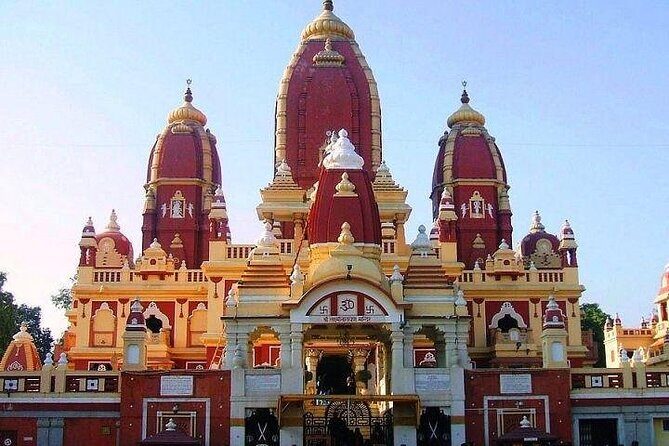
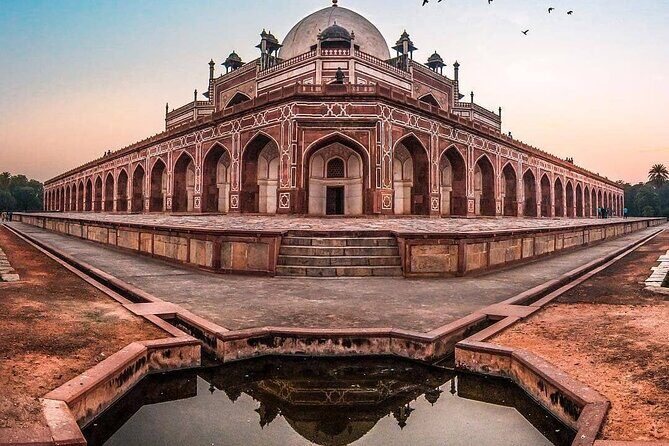
These are the two “architecture payoffs” of the first day, and they’re a great pairing. Humayun’s Tomb is described as a world heritage site and the final resting place of the second Mughal Emperor Humayun. It’s also called the first garden-tomb in the Indian subcontinent. That phrase matters because it tells you what you should notice: not just buildings, but the way the gardens and layout shape the feeling of the place.
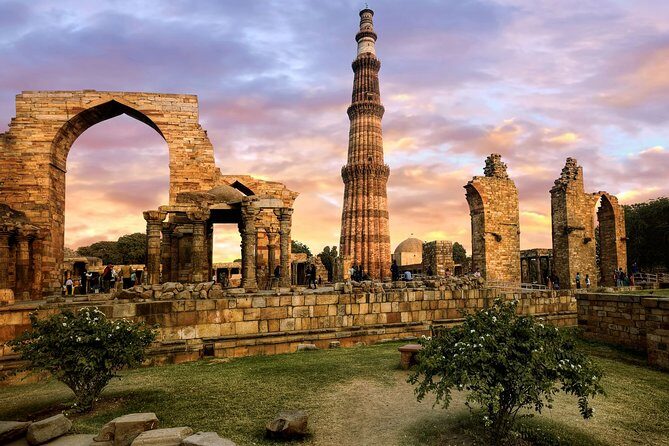
Expect about 1 hour here, with admission not included. The tour then sends you to Qutub Minar, another world heritage site and one of Delhi’s most famous silhouettes. The minaret was constructed in 1192 by Qutab-ud-din Aibak and later completed by Iltutmish. This part is why Qutub Minar is worth seeing in person: it’s tall, it’s detailed, and it’s the sort of landmark that helps you understand how far Delhi’s story reaches.
You’ll also get about 1 hour at Qutub Minar, again with admission listed as not included. If you’re thinking about value, this is where the guide really helps. Without explanations, you might only notice “a big tower.” With explanations, you notice the timeline, the design choices, and the cultural influence behind it.
Day two: Delhi temples and faith sites, with calm pacing
Day two is more spiritually focused—less about Mughal courts and more about the ways Delhi’s religious life shows up in daily practice. After breakfast, your driver and guide meet you and you head out for temple visits, with a start after you check out of your hotel.
This day is also where the tour feels smart about energy. You still have a full schedule, but the stops are the kinds of places where you don’t need to rush to “collect photos.” They reward slower attention.
You begin at Gurudwara Bangla Sahib, a Sikh temple in the heart of the capital. It’s described as one of the most important and sacred Sikh shrines, drawing followers and tourists. The stop is about 1 hour and admission is free. The “practical payoff” here is simple: this is a place where you can feel the living rhythm of faith without needing specialized background. And a good guide helps you understand what you’re seeing so it feels meaningful, not just scenic.
Then the tour shifts back into New Delhi landmarks, starting with photo time at India Gate. After that, you’ll stop for photos at the Presidential Palace (Rashtrapati Bhavan), and then ride past or drive around key government-area highlights like Parliament House designed by British architect Edwin Lutyens and Herbert Baker.
Swaminarayan Akshardham and Lotus Temple: two very different styles of worship
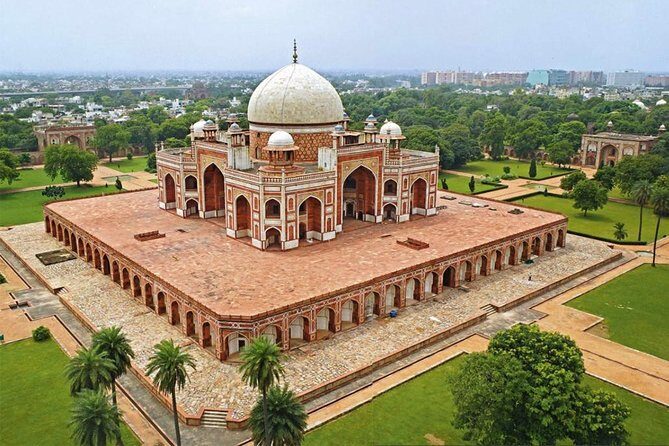
Two standout temple stops close out day two: Swaminarayan Akshardham and the Lotus Temple. The tour gives about 1 hour at Akshardham and says admission isn’t included. Akshardham is described as showcasing 10,000 years of Indian culture with “breathtaking grandeur” and an emphasis on architecture, traditions, and values. Even if you’re not a religious traveler, you’ll still appreciate how much thought goes into the design and visitor experience.
Then you end at Lotus Temple, a Bahá’í House of Worship dedicated to the oneness of humanity and religion. This is one of those places where the concept is as important as the building. The stop is about 1 hour, and admission is listed as free. People from all religious backgrounds are welcome, which makes this a good choice if you want a welcoming atmosphere that still feels distinctive to Delhi.
Tip: dress for comfort and be ready to spend time on foot. Even when admission is free, these sites can require walking and following visitor flow rules. Your guide and driver help keep things moving, but you’ll still want breathable clothing and good shoes.
India Gate, Rashtrapati Bhavan, and Parliament: the New Delhi photo lesson
New Delhi’s landmarks can look perfect in photos, but the real value is understanding what you’re looking at. The tour includes photo stops at India Gate (an Arc-de-Triomphe-like gateway built as a war memorial for 70,000 soldiers of the British Indian Army who died) and at Rashtrapati Bhavan, once the Viceroy’s House and now the official home of the President of India.
You also get a drive-by look at Parliament House, designed by Edwin Lutyens and Herbert Baker. These stops are intentionally shorter—more about orientation than deep study. That’s exactly what you want on a two-day schedule. You’ll leave with the ability to “place” these landmarks when you see them later around the city.
If you’re a history-minded traveler, ask your guide what changed after independence and how that shows up in the buildings’ role. If you’re not, just enjoy the fact that the tour gives you the big city icons without turning the day into a photo marathon.
Price and entry fees: where your $159 really goes
The price is $159 per person for a two-day experience that includes breakfast, a private air-conditioned vehicle, bottled water, and hotel/airport pickup and drop-off. There’s also an option for hotel accommodation in 3/4/5 star properties (depending on what you choose). On top of that, it includes a government-approved professional tour guide, plus a mobile ticket, and it’s described as having group discounts.
Here’s the part to calculate: monument fees are not included and are listed as $30 per person. Some stops show admission as free, but others clearly aren’t. In other words, your total cost is closer to $189 per person once you add monument fees.
Is it good value? For Delhi, yes—because you’re paying for more than entry tickets. You’re paying for someone to manage timing, translation of context, and the transport system that makes Old Delhi and New Delhi manageable in 48 hours. If you tried to do this alone, the guide value would show up quickly the first time you’re stuck in traffic or unsure where to stand for photos and what you’re actually looking at.
One more value note: this tour is private, meaning only your group participates. That can be a big deal in cities where group pacing can feel rushed or where you don’t want to share a car.
The driver and guide: the difference between seeing Delhi and understanding it
Delhi can be overwhelming if you’re moving on your own. That’s why this tour’s structure—private driver, air-conditioned vehicle, and a professional guide—matters so much. You’re not just transported from place to place. You’re also guided through what each site represents.
In feedback tied to this experience, one guide name that comes up is Alveena, and the overall theme is that the guide is friendly and gives helpful context, while the driver keeps the day running smoothly. I like that this tour doesn’t treat guiding as optional fluff. With the right guide, a place like Qutub Minar stops being “a tall tower” and turns into a timeline you can remember.
If you have specific interests—history, religious architecture, or simply getting oriented fast—this tour also comes across as flexible in practice. That helps because weather, energy levels, and your questions can change how a day should feel.
Who this tour suits best
This is a strong fit if you want:
- A two-day orientation to Delhi that includes both Old Delhi and New Delhi icons
- Religious sites across multiple faiths, without turning it into a confusing self-planning puzzle
- Transportation handled for you, especially if you’re not comfortable navigating traffic
- A schedule that stays active but not frantic, with short, well-sized visits like 30 minutes at key points and about 1 hour at the bigger monuments
It’s also a good choice if you enjoy getting “the why” behind famous landmarks. You’ll likely get more from Humayun’s Tomb and Qutub Minar with explanations than you would by just taking photos and moving on.
If you’re the type who needs hours of free time each day to wander or shop without structure, you may find the pace tight. This is a “see a lot, understand a lot” tour, not a slow drip.
Should you book this 2-day Delhi tour?
If you want the essentials of Delhi—Old Delhi’s major mosque and market energy, Mughal heritage, and New Delhi’s big monuments plus temples—this tour is a solid way to do it in 48 hours without stress. I’d especially consider booking if you value a strong guide-led experience and you’d rather pay for good pacing than risk wasting time figuring things out.
I would skip or reconsider if monument entry fees would be a budget stretch or if you prefer a slower, more unstructured trip. Otherwise, this is the kind of plan that helps you get bearings fast and still leave room to enjoy the city after.
FAQ
FAQ
What does the tour price include?
The tour price includes breakfast, an air-conditioned vehicle, hotel/airport pickup and drop-off, packaged drinking water, and a government-approved professional tour guide. Hotel accommodation is also included if you select the hotel option (3/4/5 star).
Are monument entry fees included in the $159 price?
No. Monuments fees are listed as $30 per person and are not included in the base price.
What are the main places you visit?
You’ll visit Old Delhi highlights like Jama Masjid and Chandni Chowk (with a rickshaw ride), plus landmarks such as Raj Ghat, Humayun’s Tomb, and Qutub Minar. On the second day you’ll also see Gurudwara Bangla Sahib, photo stops at India Gate and Rashtrapati Bhavan, and visit Swaminarayan Akshardham and Lotus Temple.
Is pickup included?
Yes. The tour offers pickup and drop-off from your hotel or the airport, and pickup is also offered from Delhi, Gurugram, and Noida.
Is this tour private?
Yes. It’s described as a private tour/activity, so only your group will participate.
What is the cancellation policy?
You can cancel for a full refund up to 24 hours before the experience starts. If you cancel within 24 hours, the amount paid is not refunded.