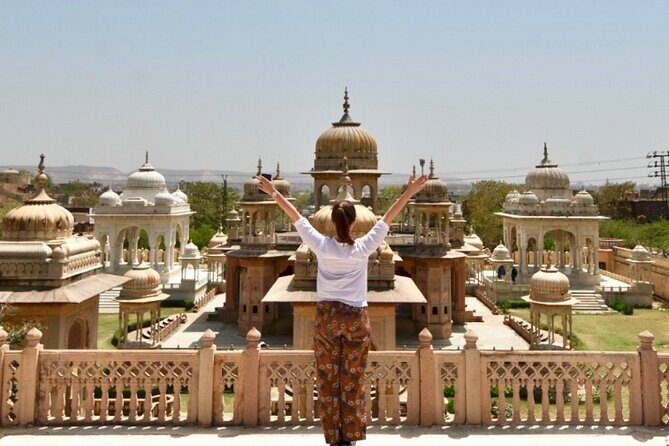
REVIEW · NEW DELHI
Temple Tour-where you Eat, Learn how to Pray and Love.
Book on Viator →Operated by Eat Pray Love India · Bookable on Viator
One city, three faiths, and a meal. That is what makes this New Delhi temple tour click fast. You hit Old Delhi icons, including Sikh gurudwaras, plus Hindu and Jain temples, with stories you normally would not connect on your own. The big idea is simple: learn what you are seeing, then try a sacred experience in a way that feels human, not scripted.
I especially like the small-group attention. You get questions answered, pacing stays calm, and the guide’s explanations help you notice what matters. I also really like the chance to enjoy a langar-style community meal in a volunteer kitchen—food and faith right next to each other.
One drawback to consider: one outlier review mentions a possible guide no-show and poor communication. It is rare, but it is smart to verify your confirmation and be ready to ask a quick question the day of your start.
In This Review
- Key Points I’d Focus On
- How This 4–5 Hour Temple Route Makes Old Delhi Make Sense
- Connaught Place Start: A Quick Orientation Before Tuk Tuk Takes Over
- Khari Baoli Spice Market and Its Famous Rooftop
- Gurudwara Sis Ganj Sahib: Color, Flowers, and a Brutal Turning-Point
- Gurudwara Rakab Ganj: Free Volunteer Kitchen (Langar) You Can’t Fake
- Gauri Shankar Temple and the Rule About Selfies
- Sri Digambar Jain Lal Mandir: Quiet Serenity and the Bird Hospital Twist
- Price and Value: What $55 Buys in Transport, Snacks, and Access
- Who Should Book This Temple Tour (And Who Might Skip It)
- Should You Book Temple Tour Where You Eat, Learn How to Pray and Love?
- FAQ
- How long is the Temple Tour in New Delhi?
- What is the price per person?
- How many people are in the group?
- Where do you meet, and where does the tour end?
- What is included during the tour?
- Is there any food during the tour?
- Are admission tickets required for the stops?
- What are the rules for taking photos in the temples?
- Is the tour affected by weather?
Key Points I’d Focus On
- Small-group pace (max 8) keeps the explanations personal and manageable in crowded Old Delhi streets
- Multi-faith route links Sikh gurudwaras, a Shiva temple, and Jain spaces in one focused loop
- Khari Baoli + rooftop views add sensory payoff beyond the temples
- Free volunteer kitchen meal turns learning into something you can taste
- Jain Bird Hospital stop adds a thoughtful animal-welfare angle you do not usually see on basic temple tours
How This 4–5 Hour Temple Route Makes Old Delhi Make Sense
This is not a long, tiring day tour. It is a tight 4 to 5 hours, built around walking, short transfers, and a sequence of worship sites. That timing matters in New Delhi, because Old Delhi traffic and footpaths can slow you down. A guided route keeps the day from turning into guesswork.
The real value is the way the tour connects religion, daily life, and place. You do not just see a building. You learn why people gather there, what prayers look like, and how specific sites became meaningful. When the guide explains the background of each stop, the colors, symbols, and even the layout start to feel intentional instead of random decoration.
You also get the practical stuff handled: snacks and bottled water are provided, and you move by tuk tuk between areas. Plus, admission is listed as free at the stops, which helps keep your budget predictable. For $55, this is trying to give you more than a photo walk—more context, more access, and at least one sit-down meal.
If you like spiritual travel that is respectful and question-friendly, this style fits well.
A few more New Delhi tours and experiences worth a look



Connaught Place Start: A Quick Orientation Before Tuk Tuk Takes Over
You begin at Connaught Place, right where the tour is easiest to find and where you are likely already oriented. The guide, Rahul, starts with the history of Connaught Place, and that small warm-up helps in a sneaky way: it gives you a framework for how New Delhi’s modern center relates to the older, more layered parts of the city.
After a short walk, you transfer to a tuk tuk for the jump into Old Delhi territory. That matters because it keeps your energy for the key stops. Also, Connaught Place gives you a buffer zone. If you are jet-lagged or just getting your bearings, this is a gentler start than launching straight into temples and crowds.
Picture-wise, Connaught Place is a solid opener. It is built for wide angles and quick photo stops. You get those first shots, then the tour pivots into the more intimate, multi-faith world of the gurudwaras and temples.
Time-wise, this segment is about 20 minutes, with the admission ticket listed as free. The main job here is orientation and setting expectations: you are about to learn stories, not just collect images.
Tip for you: if you have never visited Indian places of worship, start the day in calm mode. These spaces reward patience. Your pace helps you understand what you are seeing.
Khari Baoli Spice Market and Its Famous Rooftop
Khari Baoli is one of those places where your senses do the storytelling. You walk through the spice market and then check out a famous rooftop viewpoint. The tour frames it as history plus views, which is exactly how you should treat it.
The walk through the spice market is where you notice what markets actually are: not just goods, but a system of smells, colors, and trade rhythms. Even if you do not buy anything, you still get a feel for how everyday life and commerce shape the neighborhood.
The rooftop stop adds breathing room. In temple-heavy itineraries, a viewpoint is not just a photo bonus. It also gives you a mental reset. You can step back from the noise of street-level shopping and see the area in context. For many visitors, that makes the rest of the day click: you connect where the spice market sits in the flow of Old Delhi.
The time here is about 40 minutes, and admissions are listed as free. That is a good length. Long enough to absorb the market atmosphere, not so long that you end up feeling lost among stalls.
Practical note: expect this to feel busy. Keep your small items secure and be ready to move with the group.
Gurudwara Sis Ganj Sahib: Color, Flowers, and a Brutal Turning-Point
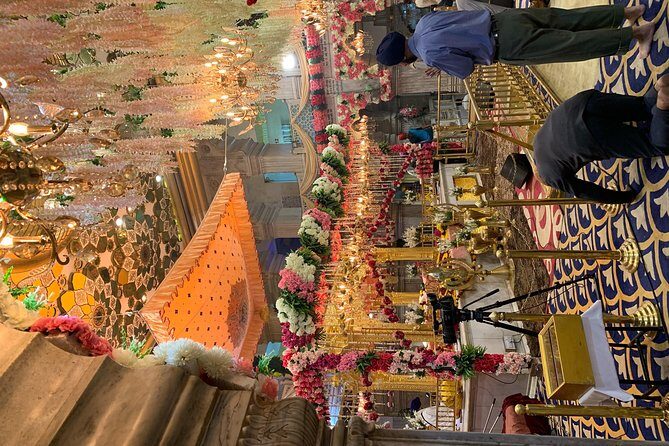
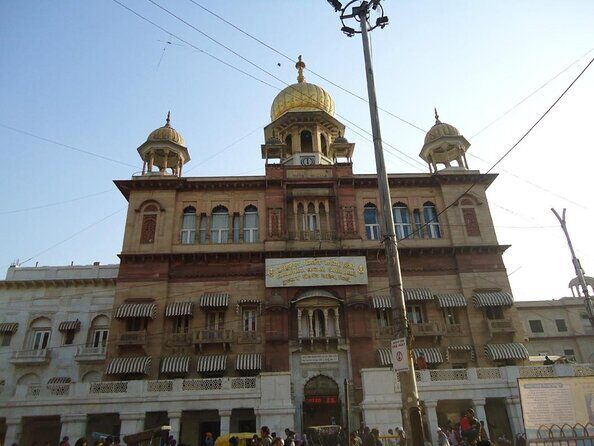
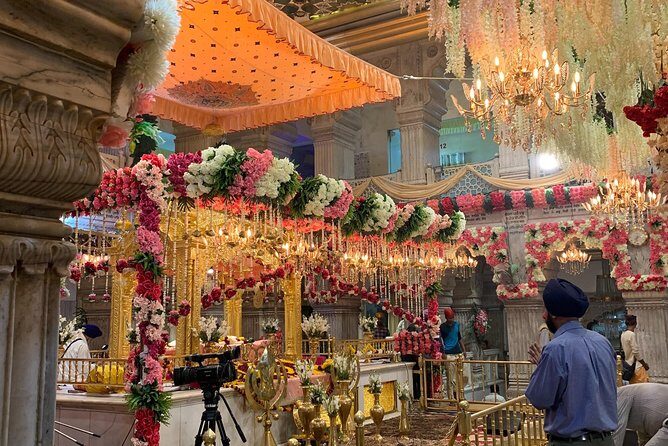
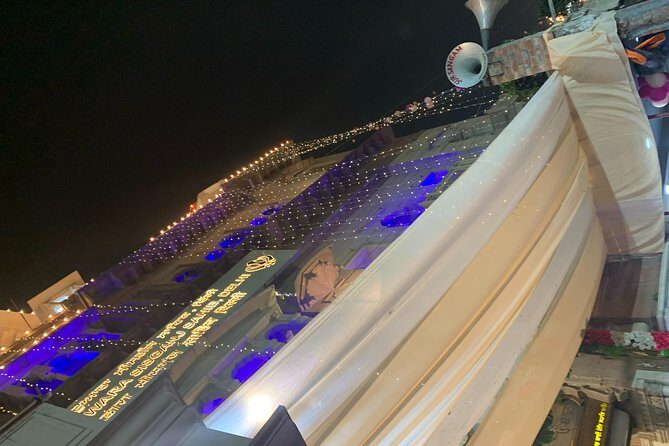
The tour’s first temple stop is Gurudwara Sis Ganj Sahib, a Sikh place of worship with standout visuals. You enter the temple, and the guide explains the history, the religion, and how the story began. Expect lots of color and flowers, plus a reputation as a great photo spot.
But the emotional center of this stop is not the decorations. It is what the guide teaches you to connect to the site’s past. You are learning about a sacred place that sits on top of a real moment in history, when faith, power, and survival collided.
Then comes a second segment connected to the same location: the guide talks about what happened in the square and the details around the beheading of the ninth Sikh Guru, Guru Tegh Bahadur. The tour notes the date as 11 November 1675 and says it was ordered by Aurangzeb. Before his body could be quartered and exposed to public view, the account shared on the tour says it was stolen under the cover of darkness by one of his disciples, Lakhi Shah Vanjara, who then burnt his house to cremate the Guru’s body. The place is marked by another gurudwara, Gurdwara Rakab Ganj Sahib.
Standing in this area is the part that makes many people feel the weight of the day. You are not just reading history on a page. You are at the site where the story happened, and the tour gives you the timeline and names so it does not stay vague.
Time on this whole Sikh segment is short—about 25 minutes for the first entry and about 10 minutes for the beheading-history explanation. That can feel fast, but for first-time visitors, it is often the right pace. You learn the key facts without getting overwhelmed.
Reminder for you: keep your tone respectful. These are active worship spaces, not museum sets.
Gurudwara Rakab Ganj: Free Volunteer Kitchen (Langar) You Can’t Fake
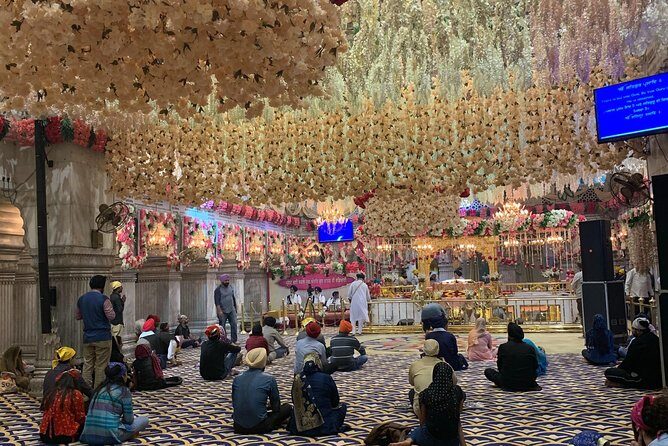
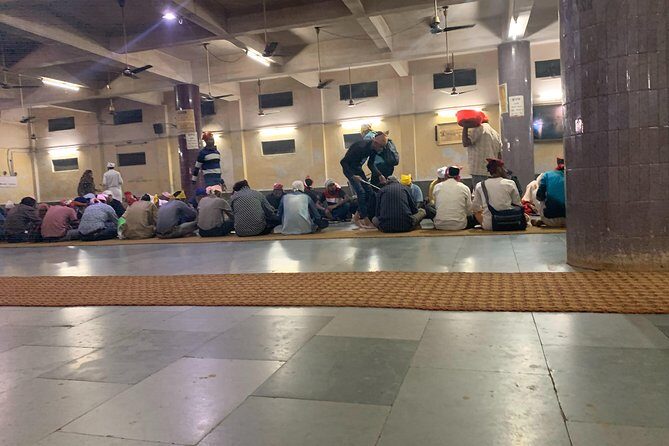
This is one of the most valuable parts of the route. At Gurudwara Rakab Ganj, the focus shifts from history to community, and the tour gives you a seat at the table.
The highlight here is the community kitchen meal. You sit down for a free meal in this volunteer kitchen, described as heartwarming and a must-try. The point is not just eating. The point is meeting people and seeing how the kitchen works as a shared service.
You also get the guide’s chance to answer questions about the religion. That can be surprisingly useful if you come in with basic curiosity. Sikhism can feel unfamiliar until someone explains what community service means in practice. When you eat there, the explanation lands differently.
Time-wise, this stop is about 40 minutes. That is a comfortable window. It is long enough to settle in, eat, and talk, but not so long that you lose the flow of the day.
What to expect: a calm, purposeful atmosphere. You may feel like you are participating rather than observing. For many visitors, that is the difference between a standard sightseeing tour and a real cultural experience.
If you have any dietary restrictions, it’s worth being cautious. The tour says a free meal is provided, but it does not list ingredients. Ask when you arrive, and keep it simple. Most places will try to accommodate basic needs.





Gauri Shankar Temple and the Rule About Selfies
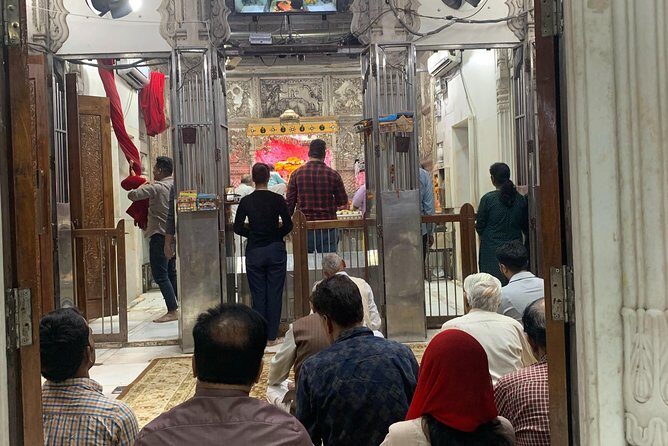
After the Sikh stops, the tour switches gears into Hindu worship at Gauri Shankar Temple. This temple is dedicated to Lord Shiva and his wife. You walk through the temple, learn about Hindu religion, and you can pray if you wish. The tour also notes that chanting is an option if you wish.
This is a nice mid-route change because it is less about a single historical story and more about encountering worship in motion. You will likely notice differences in symbols, posture, and how people interact with the space.
There is also a practical rule: no selfies are allowed in any of the temples. That can be frustrating if you are used to taking quick phone photos, but the guide offers a workaround. Rahul would be happy to capture the moment for you.
That is a subtle detail, but it changes the vibe. A guided photo request can reduce awkwardness, and it respects temple expectations. So, if your goal is memories, plan to ask politely rather than trying to take everything yourself.
Time is about 30 minutes. That is enough for a walkthrough and a short learning segment without turning it into a lecture marathon.
If you are the kind of person who likes to understand religious practice through observation, this temple stop is a good fit. It is interactive in a gentle way: pray if you want, chant if you want, ask questions if you have them.
Sri Digambar Jain Lal Mandir: Quiet Serenity and the Bird Hospital Twist
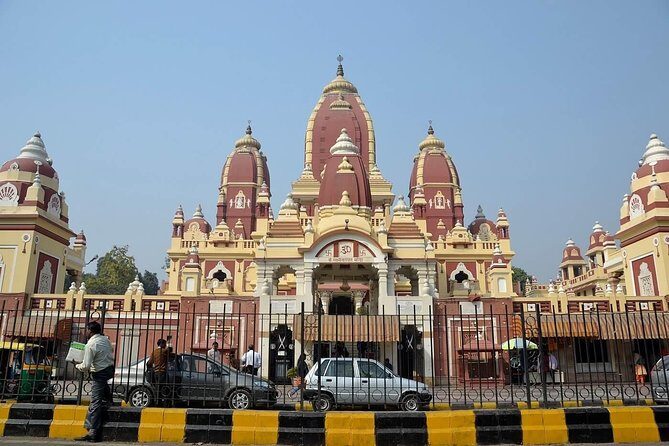
The last temple stops are Jain, centered on Sri Digambar Jain Lal Mandir. The tour frames this as the quietest and calmest temple on the route, and it really matters because it gives your day a landing spot. After louder streets and earlier history-heavy segments, the Jain space feels like a reset.
You learn what Jain religion is and when it started, and you get time to ask questions. The tone is described as serene, which lines up with how many people experience Jain temple visits: a slower rhythm, a focus on conduct, and a sense that the space expects you to lower your voice.
Then comes the part that makes this tour harder to replace elsewhere: the Jain Bird Hospital inside the temple. The tour highlights it as a must-see, something none of the other routes offer. The guide connects it to Jain beliefs about living creatures and equality—where every creature is treated as important.
This is not just a photo stop with cages. It is an explanation-driven encounter with compassion as a religious practice. You see how beliefs can show up in real-world care, even within sacred architecture.
Time for the Jain segment is about 30 minutes for the temple learning portion, then another 30 minutes for the bird hospital. Together, that is an hour of quieter focus, and it likely becomes the most memorable part if you care about animals, ethics, or the intersection of faith and daily responsibility.
For you: be ready to slow down. This is where you get the payoff of the whole day’s pacing.
Price and Value: What $55 Buys in Transport, Snacks, and Access
At $55 per person for about 4 to 5 hours, this tour is priced in a way that feels aimed at value, not luxury. The key question is what you actually get for the money, and the answer is: more than just passing by temples.
Here is what is included based on the tour details:
- Snacks and bottled water
- A guided route through multiple faith sites
- A free meal in the community kitchen at Gurudwara Rakab Ganj
- Transfers that use tuk tuks for at least part of the journey
- Admission tickets listed as free for the stops
- Mobile ticket
- Small group size with a maximum of 8 travelers
If you were trying to recreate this on your own, you would spend time figuring out sequencing, guides, and which sites are connected to which stories. You might also miss the meal opportunity or the bird hospital stop, depending on what you choose to prioritize.
The tour’s strongest value is the “connective tissue”: Rahul’s explanations. Reviews praise the guide as incredible and note that he makes you feel safe and like family. Even with that one negative story in the mix, the positive experiences suggest the guide element is the reason the tour works when it works.
The price is also easier to justify if you care about learning. If you only want a handful of photos and no context, you may feel like you could do this route on your own faster. But if you want the why behind the what, $55 starts to look fair.
Who Should Book This Temple Tour (And Who Might Skip It)
This tour is best for you if:
- You are curious about Sikh, Hindu, and Jain traditions and want them explained in one outing
- You like respectful, question-friendly guides
- You value a real local experience like a volunteer kitchen meal
- You want an Old Delhi highlight that includes Khari Baoli without doing it half-blind
You might consider a different plan if:
- You hate any rules about phones and selfies and need full control over your camera
- You want total flexibility to wander at your own speed
- You are very sensitive to the risk of a trip going off-schedule. One reported issue was a guide no-show and lack of response, so it is smart to keep your day flexible and confirm details.
On the flip side, the overall structure is steady, and the small-group cap helps. That is the kind of comfort that matters when you are managing a city that can feel overwhelming at first.
Should You Book Temple Tour Where You Eat, Learn How to Pray and Love?
I think this is a strong booking if you want a guided, multi-faith Old Delhi experience that goes beyond sightseeing. The biggest reasons to say yes are the combination of a clear route, the free volunteer kitchen meal, and the distinctive Jain bird hospital stop.
Just go in with one practical mindset: verify your booking and communicate early so you do not waste your day. If everything runs smoothly, you will come away with more than photos. You’ll understand why people gather at these places, and you’ll feel the day in a real, human way—especially when you sit down to eat.
FAQ
How long is the Temple Tour in New Delhi?
The tour runs about 4 to 5 hours.
What is the price per person?
The price is $55.00 per person.
How many people are in the group?
This tour has a maximum of 8 travelers, so it stays small-group.
Where do you meet, and where does the tour end?
You start at Connaught Place, New Delhi, Delhi 110001, and the tour ends back at the meeting point.
What is included during the tour?
Snacks and bottled water are provided, and the tour includes a guided visit through the temples and sites on the route. You also receive a mobile ticket.
Is there any food during the tour?
Yes. At Gurudwara Rakab Ganj, you sit down for a free meal in the volunteer community kitchen.
Are admission tickets required for the stops?
Admission is listed as free for the stops included in the itinerary.
What are the rules for taking photos in the temples?
No selfies are allowed in any of the temples. Rahul can capture photos for you instead.
Is the tour affected by weather?
Yes. The tour requires good weather. If it is canceled due to poor weather, you will be offered a different date or a full refund.