REVIEW · JAIPUR
2-Day Jaipur Forts Palaces and Temples Tour
Book on Viator →Operated by Rajasthan India Tour Driver · Bookable on Viator
A Pink City itinerary that moves at your pace. This 2-day Jaipur forts, palaces, and temples tour strings together the biggest landmarks, plus a helpful evening walk to see the city’s monuments after dark. What makes it work is the private AC car with pickup, and a route that balances major stops (Hawa Mahal, City Palace, Amer) with calmer breaks (temples, stepwell, viewpoints).
You’ll enjoy hotel/airport pickup, then a guided circuit that includes the UNESCO-listed Jantar Mantar and major architectural icons across both days. I also like that the plan doesn’t lock you into one style of sightseeing—it mixes palaces, forts, astronomy, religious sites, and local market time.
One thing to keep in mind: entrance fees and food are not included, so you’ll want some extra cash (and a loose plan for meals) while you’re out there.
In This Review
- Key things that make this tour worth your time
- How the Jaipur tour is laid out (and why it feels efficient)
- Pickup, private AC car, and mobile ticket: the comfort wins
- Day 1: Hawa Mahal, City Palace, Jantar Mantar, and the core Pink City loop
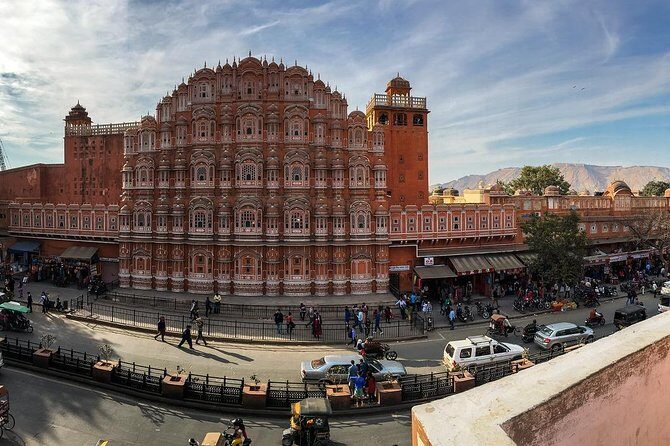
- Hawa Mahal (Palace of Wind): the view-first landmark
- City Palace complex: Mughal-meets-Rajput royal architecture
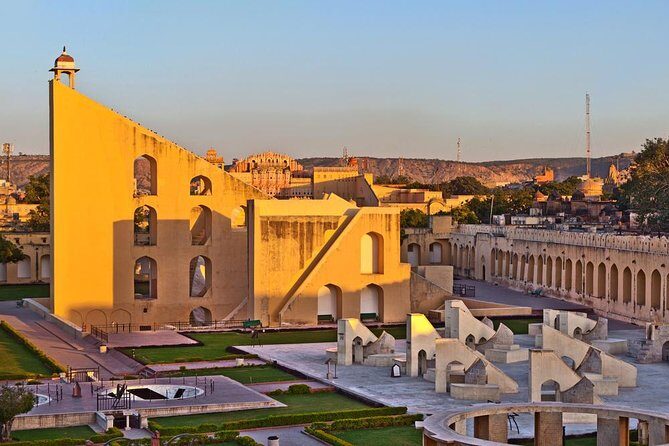
- Jantar Mantar: UNESCO astronomy instruments and a giant sundial
- Isarlat Sargasooli: the tall old landmark near the bazaars
- Albert Hall Museum: arts and collections in one place
- Birla Mandir Temple and the “photo gate” energy
- Pink City market time: Johri Bazar and Bapu Bazar
- Day 2: Amer Palace, Panna Meena stepwell, Jaigarh, Nahargarh, and the fort system feel
- Jal Mahal: the palace in the lake (quick but atmospheric)
- Amer Palace: pale pink and white marble on a hill
- Panna Meena Ka Kund (Panna Meena Stepwell): the calmer counterpoint
- Jaigarh Fort: artillery production and the Jaivana cannon
- Nahargarh Fort: hilltop defense with a view
- Royal Gaitor Tumbas: quieter royal burials
- Galta Ji Temple: temples plus a monkey scene
- The after-dark Old City walk: illuminated monuments without the daytime crush
- What you’re really paying for (and what’s still extra)
- Who this tour is best for
- Should you book this 2-day Jaipur forts, palaces, and temples tour?
- FAQ
- Is hotel or airport pickup included?
- Is this tour private or shared with other groups?
- Are monument entrance fees included?
- Does the tour include transportation and a guide?
- Is food included in the price?
- Do I get a mobile ticket?
- What happens if the weather is bad?
Key things that make this tour worth your time
- Private AC vehicle for two full days with an English-speaking driver, so you’re not stuck with slow transfers
- A guide for 2 days, which helps you make sense of Jaipur’s palace-and-fort logic fast
- Big-ticket landmarks on both days: Hawa Mahal, City Palace, Jantar Mantar, Amer, Jaigarh, Nahargarh
- After-dark Old City walk with illuminated stops like Albert Hall Museum and Hawa Mahal
- Free-time market stop for Johri Bazar and Bapu Bazar so you can shop without rushing
How the Jaipur tour is laid out (and why it feels efficient)
This tour is built like a “greatest hits” playlist, but it’s still practical. You’re not just dropped at random monuments. You get a planned flow with pickup and a private car, which matters a lot in Jaipur where driving time adds up between the Pink City center and the hill forts.
Day 1 leans into the core Jaipur icons: the skyline-famous Hawa Mahal, the royal City Palace complex, and the astronomy wonder of Jantar Mantar. Then you move through quieter landmarks like Birla Mandir Temple, and finish with gate and garden photo stops around Patrika Gate and Toran Dwar, plus a market block for shopping.
Day 2 takes the hill-fort angle seriously: Amer Palace and the Panna Meena Ka Kund stepwell, then Jaigarh Fort and Nahargarh Fort for the bigger defensive-story perspective. After that comes the Royal Gaitor tombs and Galta Ji Temple (with its famous monkey energy), capped by a night walk through illuminated highlights.
If you like seeing a lot without feeling wrecked, this schedule hits a nice balance. You’ll spend time at each place, not just flash through them.
A few more Jaipur tours and experiences worth a look



Pickup, private AC car, and mobile ticket: the comfort wins
Here’s the practical upside: hotel/airport pickup and drop-off are included. So if you’re arriving by flight, you don’t need to figure out local logistics at the start of your trip. You’ll travel in a private AC vehicle with an English-speaking driver, plus bottled water.
Also included is a private guide for 2 days. Even if you’re the sort of person who likes reading on your phone, a guide helps you connect the dots—why Jaipur’s monuments look the way they do, how the forts fit together, and what each site was built to do.
You’ll get a mobile ticket, which is handy when you’re moving around all day and don’t want to hunt for paper.
The one drawback on the “comfort” side: entrance fees are not included. So while your transportation and guidance are handled, you still need to budget for tickets at the sites that charge.
Day 1: Hawa Mahal, City Palace, Jantar Mantar, and the core Pink City loop
Day 1 starts after breakfast, with pickup around 9:00 AM. That early start is smart. Jaipur’s streets and crowds can feel much more manageable before the heat and momentum build.
Hawa Mahal (Palace of Wind): the view-first landmark
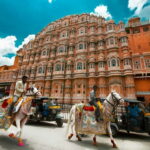
Hawa Mahal is one of those places you recognize even if you’ve never been. The five-story structure with a honeycomb look isn’t just a photo stop. It was designed with many jharokhas (windows) so air could move through and so observers could look down at street life without being fully exposed.
A fun architectural detail: it’s described as standing without a need for a foundation and using an angled pyramidal style. When your guide points out how the design served the palace’s purpose, Hawa Mahal shifts from pretty facade to smart engineering.
Practical note: plan for time to look closely at the exterior and to see how the windows line up. Some views can be better from certain angles, so arriving early helps.
City Palace complex: Mughal-meets-Rajput royal architecture
Next is the City Palace of Jaipur Complex, built by Maharaja Sawai Jai Singh II. This is where royal Jaipur starts to feel more “lived-in” than legend. The complex is described as blending Mughal and Rajput architecture, and a portion remains connected to the last ruling royal family (with private areas inside).
The big value here is perspective. If Hawa Mahal gives you a street-level city view concept, City Palace gives you power, taste, and the city’s royal layout logic.
Drawback to consider: it’s a major site, so you’ll want to pace yourself. If you try to race through every room, you’ll miss what makes the mix of design styles meaningful.





Jantar Mantar: UNESCO astronomy instruments and a giant sundial
Then you hit Jantar Mantar, a UNESCO World Heritage site with nineteen astronomical instruments built in 1738. The highlight is the world’s largest stone sundial.
This is one of the stops I’d call “different.” Jaipur isn’t only forts and temples. This place shows the scientific ambitions of the era. It also works well for mixed-age groups because you can spot shapes, scales, and alignments visually even if you’re not a science person.
Practical note: you’ll likely get the most out of it if you slow down for a few key instruments instead of trying to cover everything in one frantic pass.
Isarlat Sargasooli: the tall old landmark near the bazaars
Isarlat Sargasooli (also known as Sargasuli) is a 140-foot, seven-story structure nicknamed the passage to heaven. It sits at intersections near Tripolia Bazaar and Gangori Bazaar, close to Chhoti Chaupar Chowk and Tripolia Gate.
This one is shorter on time, so it’s best used as a “reset stop” in your Day 1 schedule—quick orientation for the neighborhoods you’ll see while you shop and walk.
Albert Hall Museum: arts and collections in one place
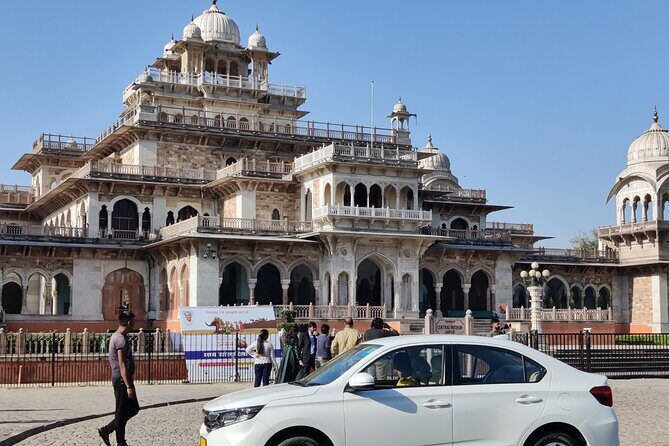
Albert Hall Museum is a solid cultural checkpoint. The museum is described as having collections including painting, jewelry, carpets, ivory, stone sculptures, and crystal. It also has coins from periods such as Gupta, Kushan, Delhi Sultanate, Mughal, and British Raj.
If you care about craftsmanship and how different eras left their marks, this is a great pause. If you’re only chasing architecture, you may find it slightly less essential than the forts and major city landmarks—but it’s still useful for context.
Birla Mandir Temple and the “photo gate” energy
After the museum, you’ll visit Birla Mandir Temple, made of white marble and built in 1988. It’s free to enter per the tour info, and it’s one of those places that feels calm even when the city around it is moving.
Then you get to the Patrika Gate, the famous entrance to Jawahar Circle Garden and one of Jaipur’s most photographed spots. There’s also time for Toran Gate (dwar) near Jaipur Airport.
These gate-and-temple stops can feel a bit “stop-and-go,” but they also help you break up the heavier monument day. If you want photo time without turning it into a full detour day, these work.
Pink City market time: Johri Bazar and Bapu Bazar
Finally, Day 1 ends with Pink City shopping time, including Johri Bazar and Bapu Bazar. This is where you can slow down and actually browse.
If you like buying textiles, handicrafts, jewelry, or small gifts, the market stop is your chance to do it without guessing how to get there. Just keep your budget in mind because Jaipur markets can be a “one more shop” kind of place.
Day 2: Amer Palace, Panna Meena stepwell, Jaigarh, Nahargarh, and the fort system feel
Day 2 is where Jaipur turns into a hill-fort story. You’ll be moving between sites that were built for control and defense, not just beauty.
Jal Mahal: the palace in the lake (quick but atmospheric)
You start with Jal Mahal, a palace in the middle of Man Sagar Lake. The original structure is described as dating to around 1699, with renovation and enlargement by Maharaja Jai Singh II in the early 18th century.
Even with limited time, Jal Mahal gives you a unique Jaipur silhouette—palace architecture framed by water. It also breaks up the day before you go fully into forts.
Amer Palace: pale pink and white marble on a hill
Then you head to Amer (Amer Palace Fort), about 11 km from the main city. Amer is the big one. The palace complex is built with pale yellow and pink sandstone along with white marble, and it sits atop a small hill.
This stop matters because Amer explains why Jaipur’s monuments feel both grand and strategic. It’s not just decorative. It’s built to dominate views and to organize a royal world on the slopes.
Panna Meena Ka Kund (Panna Meena Stepwell): the calmer counterpoint
Right near Amer, you’ll also visit Panna Meena Ka Kund, a 16th-century stepwell described as breathtaking. This is a strong choice because it adds a quieter, more human-scale element.
A stepwell isn’t only a technical feature. It’s also an architectural space people used as a gathering point. If your group likes oddball “how did they build that” places, this one will land well.
Jaigarh Fort: artillery production and the Jaivana cannon
Next up is Jaigarh Fort, historically tied to artillery production for the Rajputs. Today it’s highlighted by the Jaivana, produced in 1720 and described as the largest cannon on wheels from the early modern era, plus the foundry where it was manufactured.
If you want the fort story to feel practical instead of romantic, Jaigarh delivers. You see how the site supported weapon-making, not just defending.
Practical note: this is a fort day. Wear shoes you can trust. Steps and uneven ground tend to be the rule, not the exception.
Nahargarh Fort: hilltop defense with a view
Then it’s Nahargarh Fort, perched atop the Aravalli Hills. It’s described as part of the defensive system with Amer and Jaigarh. That “together” idea is important: the forts weren’t isolated monuments—they worked as a network.
When you stand at fort viewpoints, it helps to imagine the siege logic. Your guide’s explanations here can turn “pretty view” into “why they picked this spot.”
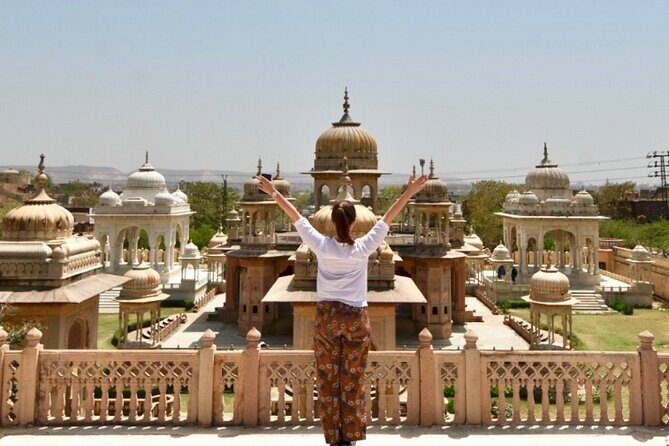
Royal Gaitor Tumbas: quieter royal burials
You’ll also visit Royal Gaitor Tumbas. This stop is described as peaceful and away from city bustle, with many maharajas buried there.
This is a good emotional pacing stop. After artillery-and-defense talk, the tombs shift the mood. You’ll likely appreciate the slower pace.
Galta Ji Temple: temples plus a monkey scene
Galta Ji Temple is described as about 10 km east of Jaipur and is known for a colony of monkeys—hence the nickname Monkey Temple.
This works if your group is comfortable with wildlife around religious sites. If you’re not a fan of surprise encounters, just treat this stop as “watch your belongings and keep a respectful distance” territory.
The after-dark Old City walk: illuminated monuments without the daytime crush
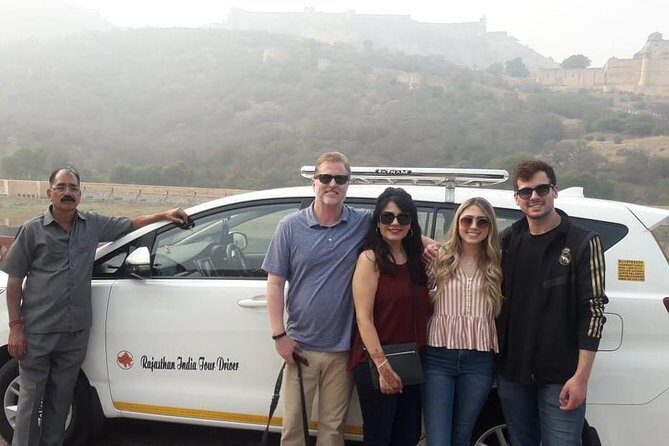
The tour doesn’t just end at sunset. In the evening, you head back out for an illuminated walking tour through Old City.
Even though the Day 2 schedule already includes major landmarks, this night segment changes the atmosphere. The plan includes illuminated stops such as Albert Hall Museum, Hawa Mahal, Isarlat, and more.
This part is valuable for two reasons:
1) Lighting changes how you read architecture.
2) Walking lets you experience the street edges that your car route can miss.
Practical note: you’ll want comfortable shoes. Evening walking sounds easy until you’re adding one more block every few minutes.
What you’re really paying for (and what’s still extra)
At $119.82 per group (up to 3), the big value isn’t just the sites. It’s the “how”:
- pickup and drop-off
- private AC car with an English-speaking driver
- bottled water
- private guide for 2 days
- fuel, parking, tolls, and taxes included
That’s a lot that can cost extra on a DIY plan, especially the guide portion and the car logistics across two days.
What’s not included: food and drinks, plus entrance fees to monuments. Accommodation isn’t included either, which is normal for tours like this.
So my advice is to treat this as a full-service sightseeing package for movement and interpretation, not a fully prepaid museum ticket bundle. If you’re the type who hates surprise costs, set aside money for entry fees and a meal plan.
Who this tour is best for
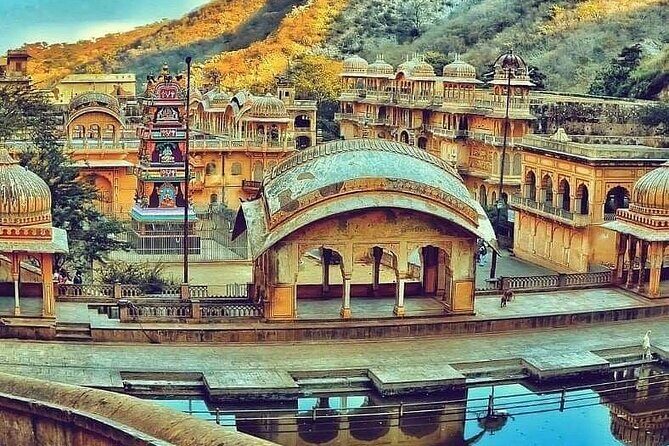
This is a strong fit if you’re:
- traveling as a small group (up to 3) and want privacy
- short on time but want both city icons and fort architecture
- someone who likes having a guide to keep the story straight
It’s also a good choice for families. The reviews point to responsive communication and drivers who adjust day flow. One standout theme from the feedback was how organizers like Vinod stayed quick and hands-on, with drivers such as Pawanji, Shakirbhai, and Nijam praised for cooperation and good driving. One review also highlighted schedule flexibility—if you want more local-market time and less rigid tourist pacing, the setup supports that style.
Should you book this 2-day Jaipur forts, palaces, and temples tour?
Book it if you want a private, guided two-day Jaipur plan that covers the major monuments without turning your trip into a transportation headache. The biggest “yes” is the combination of private AC driving plus two days of guidance, capped with an illuminated Old City walk.
Skip or consider another option if you:
- want everything fully prepaid (entrance fees and meals are extra)
- dislike walking at night (you will do an evening walking tour)
- are only interested in one type of attraction (this tour mixes palaces, forts, temples, and astronomy)
If you’re trying to make Jaipur feel manageable in a short window, this is the kind of itinerary that helps you see more—and understand what you’re seeing.
FAQ
Is hotel or airport pickup included?
Yes. Hotel/airport pickup and drop-off are included.
Is this tour private or shared with other groups?
It’s private. Only your group participates.
Are monument entrance fees included?
No. Entrance fees to the monuments are not included.
Does the tour include transportation and a guide?
Yes. It includes a private AC vehicle with an English-speaking driver and a private guide for 2 days.
Is food included in the price?
No. Food and drinks are not included unless specified.
Do I get a mobile ticket?
Yes. The tour offers a mobile ticket.
What happens if the weather is bad?
This experience requires good weather. If it’s canceled due to poor weather, you’ll be offered a different date or a full refund.