REVIEW · JAIPUR
Take in the Beauty of an Early Morning with Fresh Flowers
Book on GetYourGuide →Operated by Ultimate Urban Adventures Pvt. Ltd. · Bookable on GetYourGuide
Morning in Jaipur feels magic because you get there first. This short walking tour pairs landmark photo stops with a real peek into daily market life—bright flowers, farm sellers, and temple sounds. I especially like the no-traffic morning feel around the Pink City sights and the easy, practical way you’ll learn as you walk. One thing to consider: it’s still a walk, so if you have a back issue or mobility limits, this isn’t the right fit.
You’ll meet your guide just outside Hawa Mahal (next to the ATM), then head out on foot for photo moments at the palace façade, the Blue Gate, and heritage buildings like the Town Hall area. The tour finishes at Chaura Rasta, and along the way you’ll get a masala chai break that feels local, not touristy.
In This Review
- Key highlights worth waking up for
- Morning in Jaipur’s Pink City: why this 1.5 hours is such a smart choice
- Starting at Hawa Mahal: the photo stop that sets the tone
- Walking past the Blue Gate, Town Hall, and temples
- The flower and vegetable market: where Jaipur’s mornings become real
- Temple moments: singing, drums, and flower offerings (when timing lines up)
- Masala chai break at a local tea stall: small pause, big payoff
- The guide factor: how safety and storytelling change everything
- Price and value: is $16 really fair for this morning?
- What to bring, what to expect, and who this tour fits best
- Should you book this Jaipur morning flower walk?
- FAQ
- Where do I meet the guide?
- How long is the tour?
- What is included in the price?
- What should I bring?
- Is this tour available in English?
- Is private transportation included?
- Is the tour wheelchair accessible?
- Can I cancel for a refund?
Key highlights worth waking up for
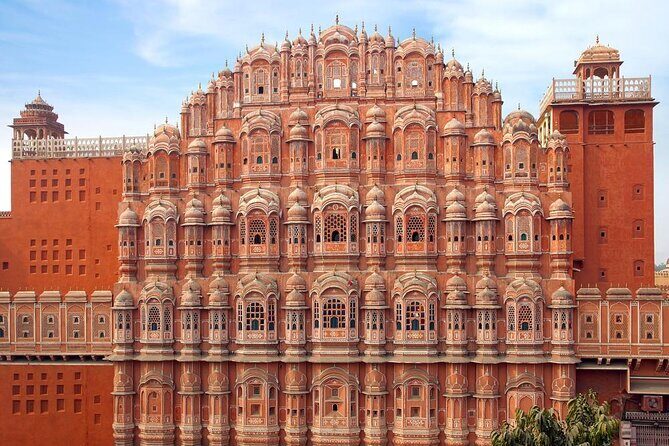
- Hawa Mahal at the start of the day: a classic photo stop before crowds and heat show up
- Blue Gate, Town Hall, and temples on foot: learn the city’s look and flow without rushing
- Flower and vegetable market time: see how farmers’ mornings power Jaipur’s colors
- Masala chai at a local stall: warm, spiced, and perfectly timed for a short tour
- Guides who keep it safe and photo-friendly: expect attentive, practical guidance while you walk
Morning in Jaipur’s Pink City: why this 1.5 hours is such a smart choice

Jaipur is best when you trade speed for small moments. This tour is built around a simple idea: go early, walk through the parts of the city that look great in soft morning light, and use the time to understand what you’re actually seeing.
At $16 per person, the price feels fair because you’re not just viewing monuments from a bus window. You’re getting a guide on foot, access to the local flower and vegetable market, planned stops for photos, and a chai break—all packed into about 1.5 hours. For many visitors, that’s the sweet spot: enough time to feel connected to the city, not so long that the morning turns into a chore.
You’ll also appreciate the pacing. This is not a marathon across Jaipur. It’s a focused walk that helps you get your bearings fast—which matters if you only have a day or two in town.
A few more Jaipur tours and experiences worth a look



Starting at Hawa Mahal: the photo stop that sets the tone
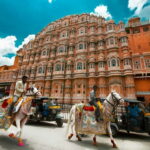
Your day begins right where you want it: outside Hawa Mahal. Even if you’ve seen pictures before, standing near it early changes everything. The façade feels crisp and sculpted, and you get better angles when the street scene isn’t crowded.
This isn’t a slow museum moment. It’s a quick, well-timed stop that lets you photograph the building properly, then move on before Jaipur’s morning momentum becomes full-on.
A practical tip: bring your camera or a fully charged phone. There’s a lot of clean geometry here, so if your battery is low, you’ll regret it later.
Walking past the Blue Gate, Town Hall, and temples
Once you step away from the palace area, the tour turns into what’s honestly the most valuable part: walking the city’s everyday corridors.
You’ll pass the Blue Gate, the Town Hall building, and temples along the way. This matters because Jaipur isn’t only monuments—it’s streets, routines, and layers of old and new living side by side. On foot, you can notice details that you’d miss at a distance: how people move, how shops open, and how religious spaces fit into the urban flow.
There’s also a second benefit: the early timing. A morning walk gives you a calmer street environment, so you can focus on the sights instead of constantly bracing for traffic.
Keep in mind, though: this is still walking time. Wear comfortable shoes and plan on a steady pace. If you’re sensitive to walking distances, treat this as a short walk with real city steps, not a gentle stroll.
The flower and vegetable market: where Jaipur’s mornings become real
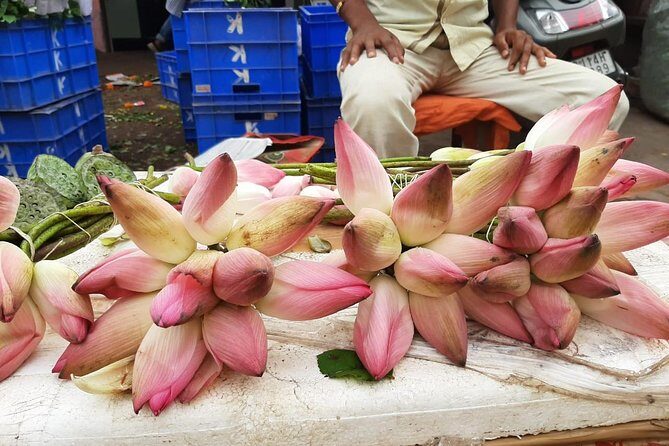
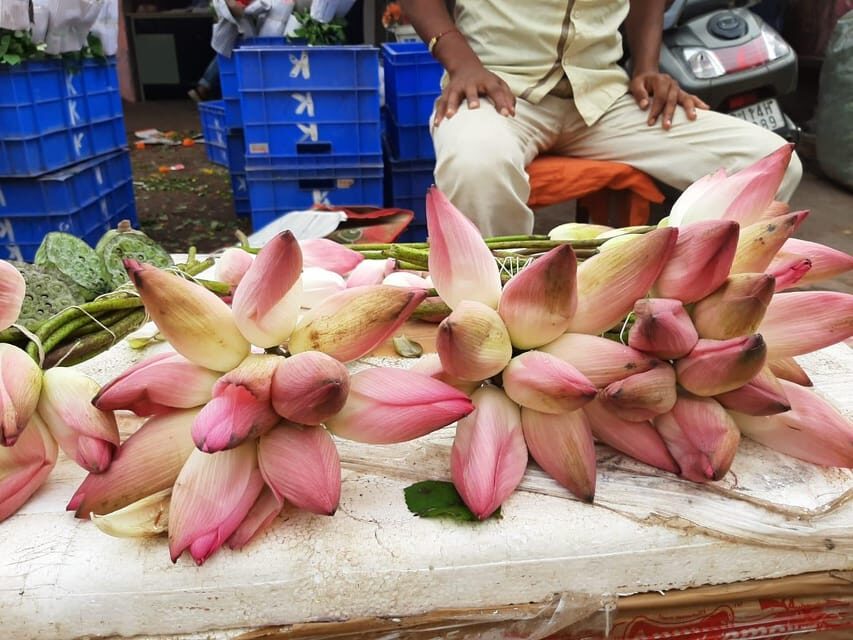
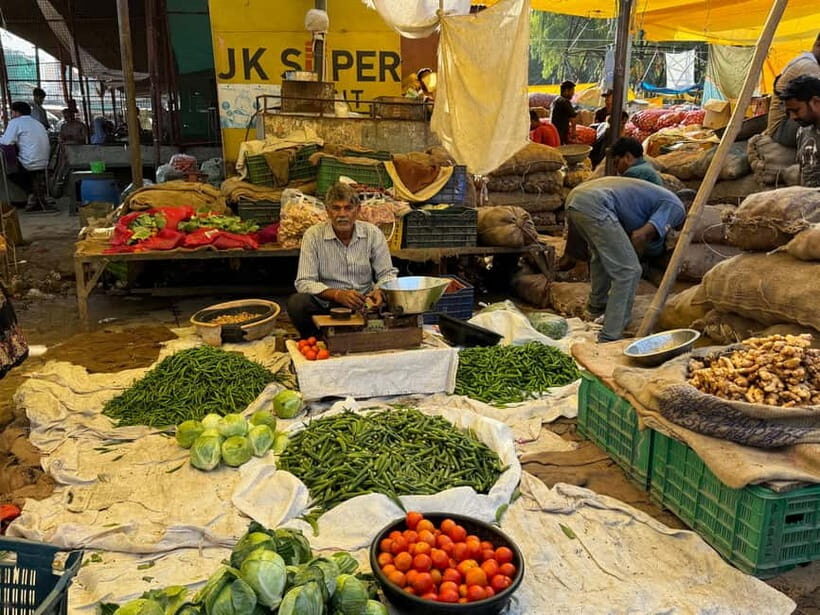
The heart of the experience is the fresh flower and vegetable market. This is where Jaipur stops being a postcard and starts behaving like a place where people live.
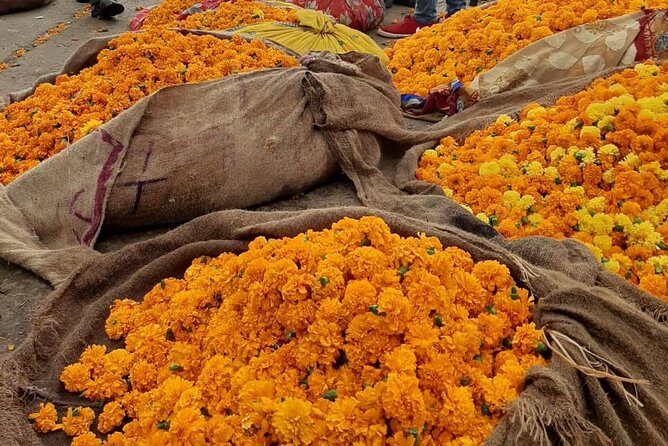
What makes this market visit special is the way it connects color to labor. You’ll see mounds of flowers—including strong stands of marigolds and roses—and you’ll learn about the people who bring them in. Farmers come from villages to sell, and the market is basically a daily checkpoint for livelihoods.
You’ll likely pick up a lot just by watching:
- how sellers arrange and handle bunches
- how shoppers move through stalls with purpose
- how flowers and produce sit side by side in the same trading rhythm
It’s also a photo-friendly zone. The market offers plenty of angles and textures, and because you’re there early, the light is often kinder and you’re not fighting crowds.
One note: markets can be busy in bursts even in the morning. If you’re the kind of person who hates close spacing, keep your camera ready but expect some shoulder-to-shoulder moments while you move through narrow stall areas.
Temple moments: singing, drums, and flower offerings (when timing lines up)
Along your route, you may also encounter a temple gathering. On at least one run, the group walked past a temple full of worshippers—singing, playing drums, and throwing flowers. On another part of the experience, you may catch views like the City Palace perspective seen from a temple area.
Here’s the key: you’re not sent there to sit quietly for hours. This tour treats temples as part of the morning street scene, not an isolated stop. That gives you a more genuine sense of Jaipur’s rhythm.
If you plan to take photos near religious activity, be respectful. Move with care, avoid blocking people, and keep your focus on the atmosphere rather than only on your shot.






Masala chai break at a local tea stall: small pause, big payoff
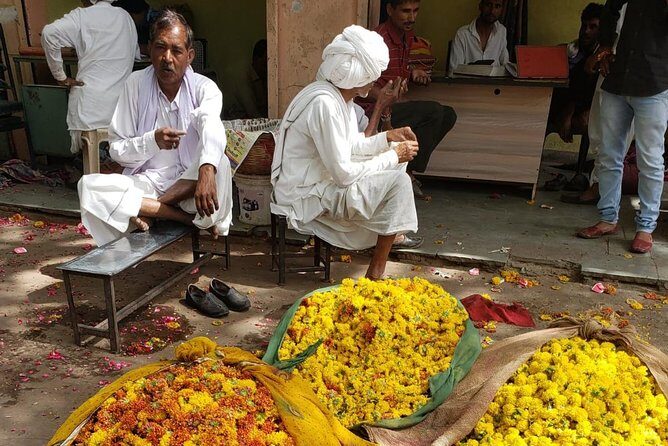
After the market walk, you’ll get masala chai from a local tea stall. It’s a short break, but it works. Tea here isn’t just caffeine—it’s a way to slow down and reset after sensory overload: smells from flowers, sounds from the street, and bright color everywhere.
Many visitors love this part because it feels like Jaipur hospitality in a practical form: warm, spiced, and served where regular life happens.
If you’re curious, ask your guide about what goes into the chai and why this style of tea shows up on mornings like this. Even simple explanations can connect the experience to the broader culture you’re walking through.
The guide factor: how safety and storytelling change everything
A good guide can turn a photo trip into a real understanding of place. In this tour, the best thing you can count on is a competent, English-speaking guide who keeps you moving safely and helps you interpret what you see.
Two names come up often in the feedback tied to this experience—Monty and Ansh—both highlighted for being energetic and professional, with a strong eye for photos and clear explanations. The difference you’ll feel is subtle but important: you’re not just walking from stop to stop; you’re learning why those spots matter.
Safety is a big piece of that. A guide’s job isn’t dramatic; it’s practical—helping you navigate crossing points and keeping you out of trouble while you focus on the sights. If you’re coming solo, this matters even more. This tour is short enough to feel manageable, and the guide keeps the route practical.
Bring your hand sanitizer or tissues too. Markets and street chai stalls are where it’s handy.
Price and value: is $16 really fair for this morning?
Let’s talk value, because Jaipur can get expensive fast if you only do monuments.
At $16, this tour bundles several things you’d otherwise pay for or miss:
- A guided walking route with purposeful stops
- Photo opportunities at major sights like Hawa Mahal and along the heritage stretch
- A real visit to the flower and vegetable market
- A masala chai break
You’re also getting time efficiency. A one-and-a-half-hour morning activity can slot into almost any itinerary. If your day is packed with forts and palaces later, this kind of walk gives you contrast: street-level Jaipur.
What’s not included is private transport—so plan to reach Hawa Mahal on your own (your meeting point is just outside next to the ATM). If you’re already near the palace area, you’ll feel the cost benefits even more.
What to bring, what to expect, and who this tour fits best
Bring:
- Comfortable shoes (you’ll be walking)
- Camera and/or a charged smartphone
- Hand sanitizer or tissues
- A light layer if you’re in the colder months (winter travel months Nov–Feb can feel chilly early)
You should also know what to plan around:
- It’s not suitable for people with back problems
- It’s not suitable for wheelchair users, and electric wheelchairs are not allowed
If you want an easy first morning in Jaipur—especially if it’s your first time in the Pink City—this is a strong option. It’s also great if you like street markets, photography, and short guided storytelling instead of long museum-style tours.
If you hate walking or you’re not comfortable with market crowds and narrow stall spaces, skip this and choose something seated or with easier mobility.
Should you book this Jaipur morning flower walk?
I think you should book it if you want a practical introduction to Jaipur that doesn’t feel like a checklist. The combination of Hawa Mahal photos, a heritage stroll past places like the Blue Gate and Town Hall, and then the sensory jump into the flower and vegetable market is a smart way to understand the city fast.
I’d pass if you need a low-mobility experience or if your comfort depends on avoiding walking. This is short, but it’s still real walking.
If you’re balancing value, authenticity, and a good morning routine, this one is a solid yes—especially on the day you arrive.
FAQ
Where do I meet the guide?
Meet your guide just outside the Hawa Mahal building next to an ATM.
How long is the tour?
The tour lasts about 1.5 hours.
What is included in the price?
You get a guided walking tour, a visit to the fresh flower and vegetable market, photography opportunities at key photo stops, and masala chai at a local tea stall.
What should I bring?
Wear comfortable shoes and bring a camera or charged smartphone. It’s also smart to bring hand sanitizer or tissues.
Is this tour available in English?
Yes, the live guide speaks English.
Is private transportation included?
No, private transfers are not included.
Is the tour wheelchair accessible?
Electric wheelchairs are not allowed, and the tour is not suitable for wheelchair users.
Can I cancel for a refund?
Yes. You can cancel up to 24 hours in advance for a full refund.