REVIEW · NEW DELHI
Skip-the-line Qutub Minar Private Tour with Transfer Option
Book on GetYourGuide →Operated by Sameday Taj Mahal · Bookable on GetYourGuide
Qutb Minar rewards slow, guided attention. This skip-the-line private tour gets you into the Qutb complex fast, then lets you truly read the buildings—especially the Qutb Minar carvings and verses with a guide who turns them into stories. I also like the mix of headline sights and close-up moments, like the Iron Pillar and the Quwwat-ul-Islam Mosque details, handled with a friendly, calm pace by guides such as Ali and Adil.
The only real catch is time: it’s 3 hours, so you’ll hit the key stops (Alai Darwaza, Quwwat-ul-Islam Mosque, Qutb Minar, Iron Pillar, Tomb of Iltutmish) without long detours. If you want an extra wandering day, you may feel a bit rushed, especially if you arrive far from the meeting point near the Qutub Minar Ticket Centre.
In This Review
- Key things that make this tour worth it
- How the 3-hour Qutb Minar Private Tour Keeps You From Missing the Point
- Meeting Near the Qutub Minar Ticket Centre (and Why Getting Started Fast Helps)
- Alai Darwaza: Indo-Islamic Gateway Details You’ll Notice Only If Someone Points Them Out
- Quwwat-ul-Islam Mosque: The First Mosque in the Delhi Sultanate Period
- Qutb Minar at 73 Meters: How the Minaret’s Materials and Carvings Make Sense
- Iron Pillar and Tomb of Iltutmish: Two Stops That Turn This Into Real Understanding
- Timing, Pace, and Private-Group Comfort in a 3-hour Window
- Price and Value: What $5 Buys You in the Real World
- Who This Tour Fits Best (and Who Might Prefer DIY)
- Should You Book This Qutub Minar Private Tour?
- FAQ
- How long is the Qutub Minar Private Tour?
- Where do I meet the guide?
- Is skip-the-line access included?
- Which sites are included in the visit?
- Are entry tickets included?
- Is hotel pickup and drop-off available?
- What drop-off areas are offered with the transfer option?
- What languages are available for the live tour guide?
- What’s included besides the guide?
- Can I cancel for a refund?
Key things that make this tour worth it
- Skip-the-line entry via a separate entrance, so you spend less time queued up and more time looking closely
- A strong guide focus: the best tours are the ones that explain what you’re seeing, and this one does
- Qutb Minar at 73 meters with a walkthrough of its red sandstone and marble details
- Quwwat-ul-Islam Mosque basics you’ll remember as the first mosque built in the Delhi Sultanate period
- Iron Pillar up close with the rust-resistant metallurgical marvel angle
- Alai Darwaza as a standout gateway with Indo-Islamic latticework you’ll want to stare at
How the 3-hour Qutb Minar Private Tour Keeps You From Missing the Point
Qutb Minar complex is one of those places where a photo can’t explain scale, materials, or meaning. That’s why I like doing it with a private guide and skip-the-line access. You’re not just checking boxes. You’re learning how the site fits into Indo-Islamic architecture and why certain elements matter.
The tour is built around major stops that connect to each other. You start at the Qutub complex area, then move through the major structures in a way that helps you compare design choices. That matters because the difference between red sandstone carvings on the minaret, the mosque’s early Sultanate-era look, and the gateway’s Indo-Islamic style can feel confusing when you’re solo.
I also appreciate the practical touches: mineral water is included and shoe cover is provided. In a place where surfaces and courtyards can be dusty or uneven, that small help saves your day from becoming a chore.
The other piece that drives the value is the guide style. In past groups, guides have included people like Ali, Adil, Bhanupratap Singh, Manoj ahirwar, Adin, and Gurfan (and even a helpful driver named Narendra kumar). What you’ll likely get is the kind of explanation that makes carvings feel less like random decoration and more like intentional design.
You can also read our reviews of more private tours in New Delhi


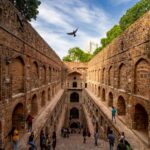
Meeting Near the Qutub Minar Ticket Centre (and Why Getting Started Fast Helps)
You meet your guide near the Qutub Minar Ticket Centre. That’s good news because it puts you right where the action is, instead of forcing a long walk with your camera and hat. Once you’re matched up with your guide, the plan is straightforward: enter quickly, then focus on understanding.
The tour also includes skip-the-line access through a separate entrance. In Delhi, that can be the difference between having energy for details and spending your first hour watching other people inch forward. With skip-the-line, your guide can start explaining earlier—right when your attention is fresh.
If you choose the transfer option, hotel pickup and drop-off are available through the driver option. The drop-off areas listed include Ghaziabad, Dwarka, Noida, Aerocity, New Delhi, and Gurugram, plus a drop near Qutub Minar Ticket Centre. That matters if you’re trying to stack your day efficiently and don’t want to fight metro timing and last-mile walking after.
Practical tip: if you’re using the transfer option, build in a little buffer for traffic. Even a perfect tour plan can’t control Delhi rush hour.
Alai Darwaza: Indo-Islamic Gateway Details You’ll Notice Only If Someone Points Them Out
The first big architectural moment you’ll see is Alai Darwaza, described as the main entrance gate to the Quwwat-ul-Islam Mosque. This is where the tour earns its “private” label. From ground level, gateways can look impressive but confusing. A guide helps you spot what makes the style recognizable—especially the Indo-Islamic character and the intricate latticework details.
Why it’s worth your time: gateways aren’t just pretty frames. They signal arrival and set expectations for the site’s transition from outside city life to sacred space. When someone explains how elements like latticework function visually and how the gate fits the broader complex, you end up looking differently for the rest of the route.
Also, this is a strong starting point for photos, but not in a frantic way. You’ll get a chance to look at proportions and the pattern work before you move into the mosque area.
One caution: if you’re very short on time and hate stopping for explanations, gateways can feel like “just a photo stop.” But if you like learning while you walk, this is one of the most satisfying parts of the tour.
Quwwat-ul-Islam Mosque: The First Mosque in the Delhi Sultanate Period
Next you’ll visit the Quwwat-ul-Islam Mosque, identified as the first mosque built in Delhi after the Islamic conquest of India. That headline matters because it turns the site into more than architecture spotting. It becomes an early statement of power, belief, and design language.
You’ll spend time admiring the architectural details and connecting them to the complex around it. For many first-timers, the mosque area is where the site stops being a single monument and becomes a layered environment. That shift is exactly what a guided tour helps you do quickly.
This portion of the tour also ties into the courtyard area where you’ll encounter the Iron Pillar. Seeing the mosque first makes the courtyard feel less random and more intentional, like the buildings are part of one planned space.
A useful expectation to set: this is not a “sit and lecture” experience. It’s a walking tour designed for you to look, pause, and understand. If your guide is the talkative type, you might want to bring headphones for your own quiet moments, but the explanations are usually short and practical.
Qutb Minar at 73 Meters: How the Minaret’s Materials and Carvings Make Sense
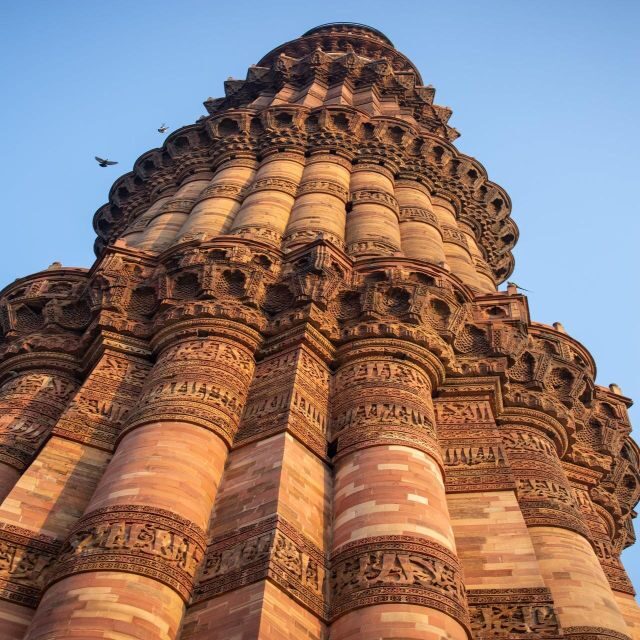
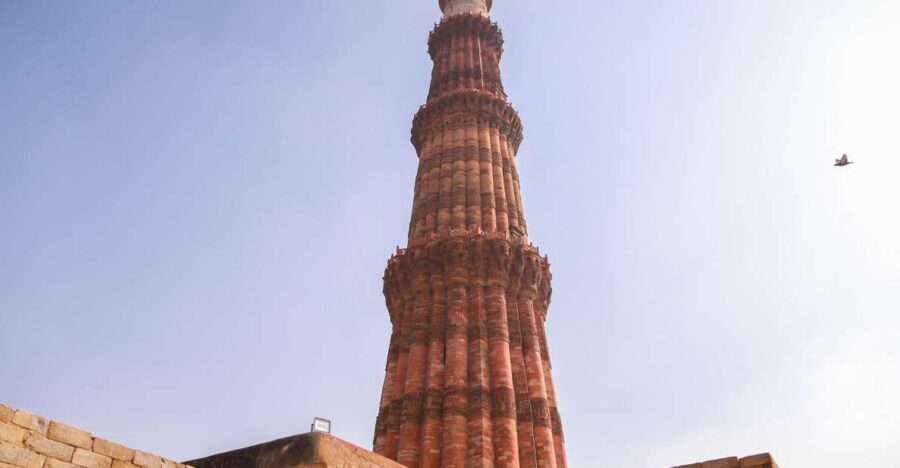
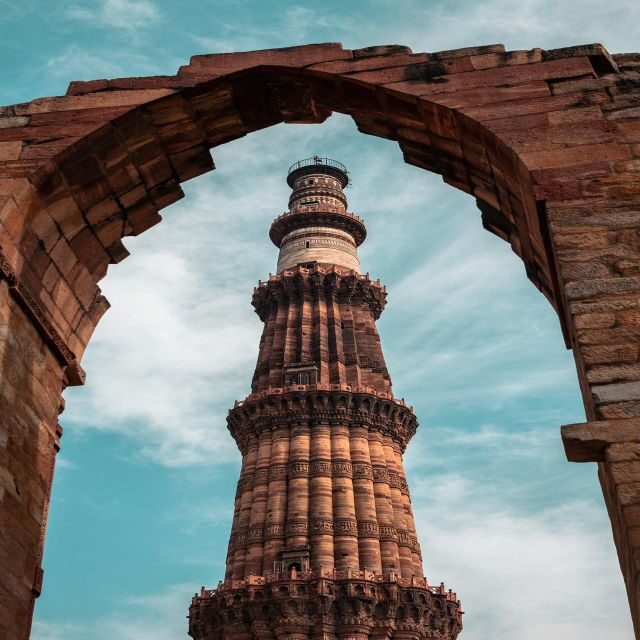
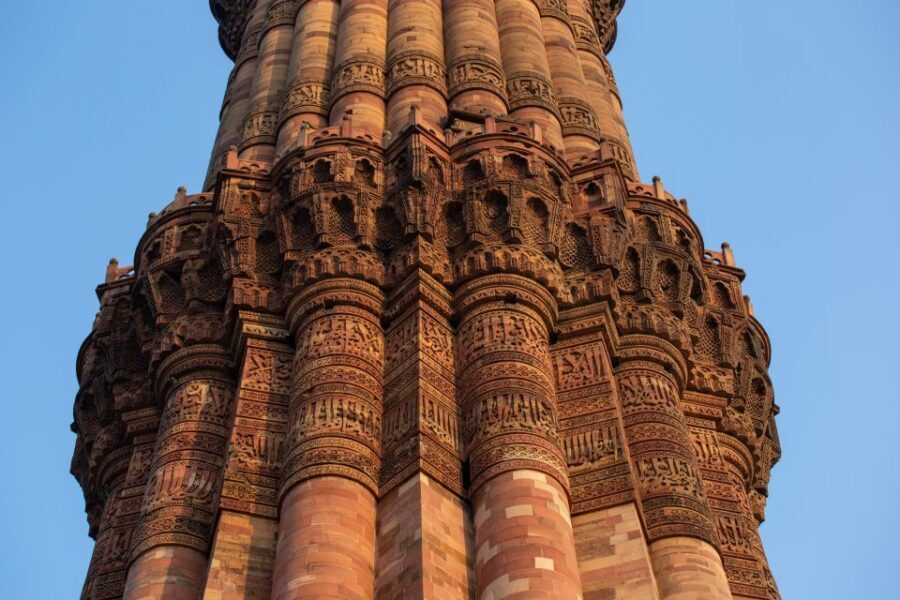
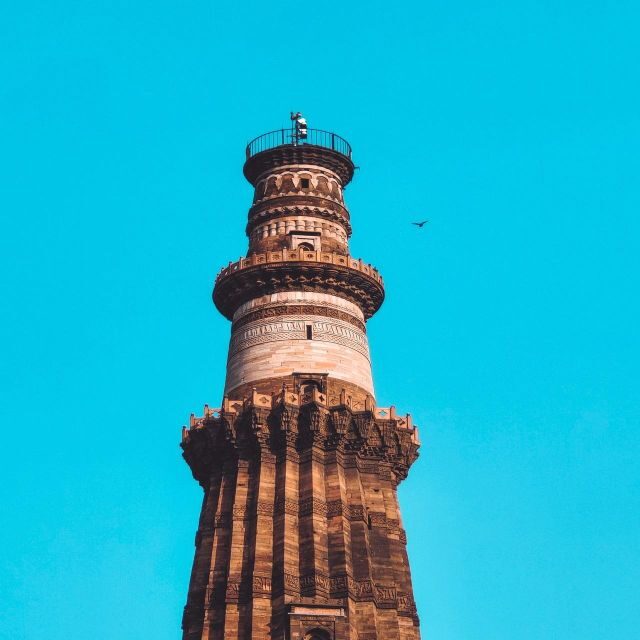
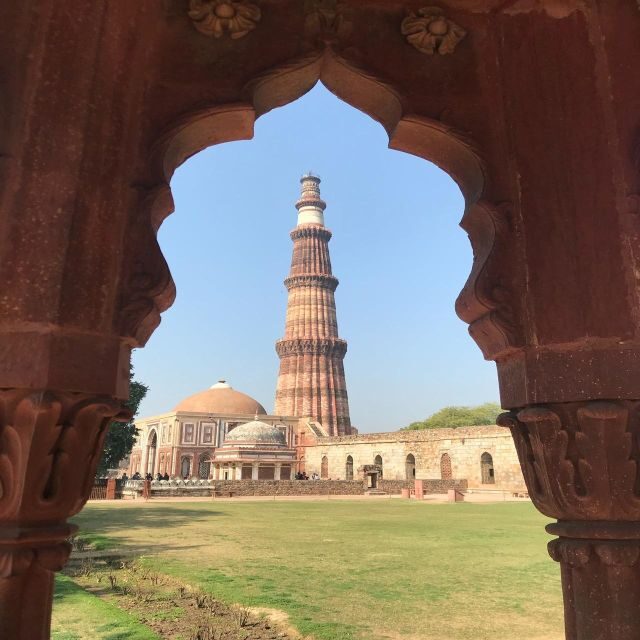
Of course, the centerpiece is Qutb Minar, listed as 73 meters high. You’ll see how it’s built from red sandstone and marble, and you’ll get guidance on the intricate carvings and Quranic verses that decorate it.
This is the moment most people come for, but it can also be the moment where solo visitors feel lost. The minaret is impressive, yes. But without context, it can feel like you’re only admiring from a distance.
A good guide fixes that. The strongest feedback from previous groups highlights exactly this: guides explained the carvings and culture in a way that made the place click. Names like Ali, Adin, and Gurfan show up in feedback for being friendly, patient, and willing to help even with practical needs (one group notes assistance with carrying a pram). That kind of guide makes the tour feel smooth, not stressful.
What to do during this section:
- Focus on reading the surfaces, not just the overall height
- Ask your guide what to look for in the carvings you’re seeing
- Take a few minutes to let the minaret’s layers sink in before moving on
Small reality check: a minaret is a tower, so you can’t expect a museum-style “touch and examine” experience. The value here is what you learn from looking.
A few more New Delhi tours and experiences worth a look






Iron Pillar and Tomb of Iltutmish: Two Stops That Turn This Into Real Understanding
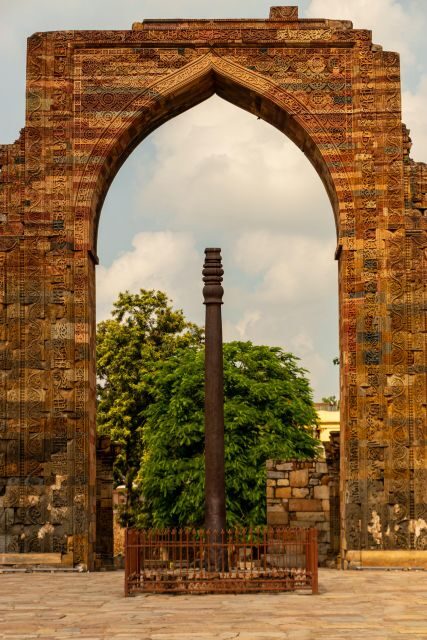
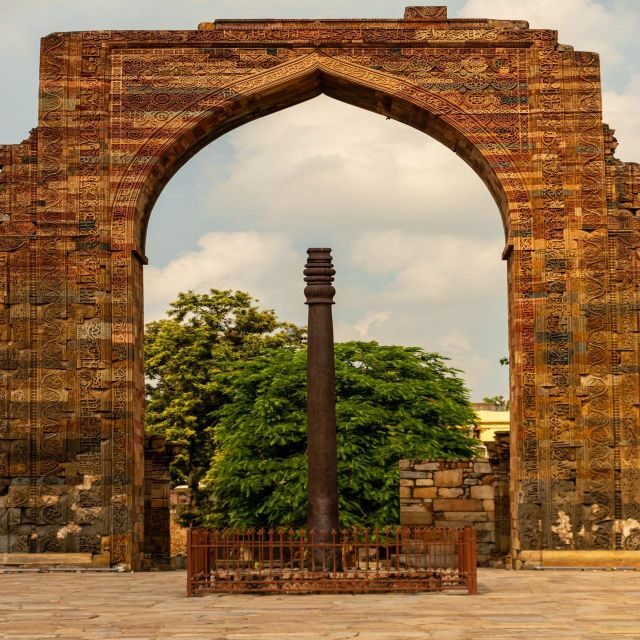
After Qutb Minar, the tour brings you to the Iron Pillar, a famous ancient iron structure in the courtyard. The detail that matters (and that your guide can explain) is its rust-resistant composition. Seeing it up close changes how you think about the complex. This isn’t only religious architecture. It’s also proof that engineering and materials knowledge were part of the story.
Next comes the Tomb of Iltutmish, located adjacent to Qutb Minar. You’ll visit it and explore its Indo-Islamic architectural style. When you see the tomb after the minaret and mosque, the complex starts to feel like a timeline of building traditions in one space rather than separate monuments.
Why these two stops are worth your attention:
- The Iron Pillar gives you a “wow, how” moment with materials science
- The tomb connects architecture style to a specific ruler’s legacy in the complex
If you like details that make you feel smarter after your trip home, these are the parts most likely to stay with you.
Timing, Pace, and Private-Group Comfort in a 3-hour Window
This tour runs about 3 hours. That’s short enough to fit into a busy Delhi itinerary, but long enough for a real walk-through of the key buildings. The itinerary flow is designed to avoid backtracking, which helps you keep focus.
You’re in a private-group setup, which generally means:
- you can keep a comfortable pace
- you can ask questions when something doesn’t make sense
- you’re not stuck waiting for a large group to move
The tour is also offered in multiple languages: English, Spanish, French, and Italian. If you’re traveling as a family or with mixed-language companions, that’s a big plus for avoiding the usual awkward translation gap.
For anyone sensitive to heat or walking distances, 3 hours can be very manageable if you plan your timing. If you’re going in warmer months, aim for a cooler time of day. One guide-favoring tip from past feedback is that early morning visits feel more private and comfortable.
Price and Value: What $5 Buys You in the Real World
At about $5 per person, this tour is priced like a “value grab,” but you’re not buying a bare-bones walk. You’re getting:
- a private tour guide
- skip-the-line access
- mineral water and shoe cover
- entry tickets if you select the option that includes them
- optional pickup and drop-off depending on your selected transfer option
In practical terms, the guide component is what turns the complex from scenery into learning. At this price point, you’re not paying to simply stand near monuments. You’re paying for interpretation and time-saving access.
That said, I’d think of it as a “focused highlight tour,” not an in-depth archaeology seminar. If you want every carved panel explained and every corner photographed, you might still want to add solo time after. But if you’re trying to make the most of one morning or afternoon, this is strong value.
Who This Tour Fits Best (and Who Might Prefer DIY)
This tour is a great match if you:
- want skip-the-line convenience at the Qutb complex
- enjoy learning how architecture works (materials, design language, meaning)
- like the feeling of a guide who can answer questions while you walk
- want an easy, organized route through Alai Darwaza, Quwwat-ul-Islam Mosque, Qutb Minar, Iron Pillar, and the tomb
It may not be the best fit if you:
- hate guided explanations and prefer a fully independent photo-and-wander style
- want several hours beyond 3 hours just to soak in the atmosphere without stopping
For most people, though, the private guide format is the sweet spot. It saves you confusion and it gives you a story to carry home.
Should You Book This Qutub Minar Private Tour?
If you want the Qutb Minar complex to feel understandable—not just impressive—this is an easy yes. The skip-the-line access protects your time, and the guide-led approach helps you notice details like the Qutb Minar carvings and the Quwwat-ul-Islam Mosque design choices.
Book it when you have limited time and want the “most meaning per hour.” Book it even more confidently if you appreciate guides who explain in a clear, helpful way and who don’t make you feel rushed.
I’d skip booking only if you’re determined to do everything on your own with zero stopping. Otherwise, this tour is built for visitors who want to look carefully and leave with real understanding.
FAQ
How long is the Qutub Minar Private Tour?
The duration is 3 hours.
Where do I meet the guide?
Meet your guide near the Qutub Minar Ticket Centre.
Is skip-the-line access included?
Yes. The tour includes skip-the-line access through a separate entrance.
Which sites are included in the visit?
You’ll visit Qutb Minar, Quwwat-ul-Islam Mosque, Alai Darwaza, the Iron Pillar, and the Tomb of Iltutmish.
Are entry tickets included?
Entry tickets are included if you select the option that includes them.
Is hotel pickup and drop-off available?
Pickup and drop-off are available if you choose the transfer option. A driver can pick you up from your desired location.
What drop-off areas are offered with the transfer option?
Drop-off locations listed include Ghaziabad, Dwarka, Noida, Qutub Minar Ticket Centre, Aerocity, New Delhi, and Gurugram.
What languages are available for the live tour guide?
The guide is available in English, Spanish, French, and Italian.
What’s included besides the guide?
Mineral water and shoe cover are included.
Can I cancel for a refund?
Yes, free cancellation is available up to 24 hours in advance for a full refund.
If you want, tell me your hotel area (or nearest metro stop) and the time of day you’re aiming to go, and I’ll suggest the smoothest way to schedule it.