REVIEW · NEW DELHI
Private tour of Must visit places in Rajasthan with Taj Mahal
Book on Viator →Operated by 5 Senses Walks · Bookable on Viator
Agra’s marble morning sets the pace. This private, 5-day route links Taj Mahal with Rajasthan’s forts and palaces, then hands you enough time to enjoy each place instead of racing through it. With a private car and a guide, you’re not stuck decoding logistics or timetable puzzles while you’re trying to take in big sights.
I really like two things about this trip: the pace (it’s organized, but not exhausting) and the way the guide adds specific context at the headline monuments. For example, Taj Mahal includes time for explanations beyond the postcard view, and Fatehpur Sikri is treated as more than a quick stop, with key Mughal structures pointed out as you go.
One consideration: you start early, and you should plan for additional costs for meals and a couple of ticketed sites. Also, while the tour is private, the driving days can feel long if you prefer minimal time on the road.
In This Review
- Key points before you go
- Why this Delhi-to-Rajasthan route feels efficient
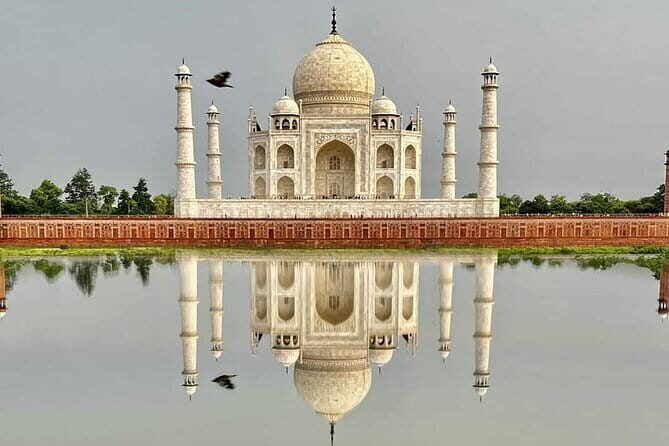
- Agra morning: Taj Mahal with the stories behind the marble
- Fatehpur Sikri: Mughal power in red sandstone
- Jaipur’s palace sequence: Amber, Jal Mahal, Hawa Mahal, City Palace
- Amber Palace (the fortress-palace viewpoint)
- Jal Mahal (quick, serene, and sometimes ticket confusion)
- Hawa Mahal (953 jharokas and engineered airflow)
- City Palace (where Rajput and Mughal styles meet)
- Jodhpur: Mehrangarh Fort and the marble-and-stone highlights
- Mehrangarh Fort (120 meters above the ground)
- Rao Jodha Desert Rock Park (ecology instead of just architecture)
- Jaswant Thada (white marble memorial)
- Ranakpur Jain Temple: a marble forest of repeating-and-not-repeating pillars
- Udaipur: City Palace and Lake Pichola’s slow, scenic payoff
- City Palace of Udaipur (granite, marble, and multi-king contributions)
- Lake Pichola: a boat ride framed by palaces and temples
- Day 5: Jagdish Temple and a flight back to Delhi
- Jagdish Temple (Vishnu, marble steps, and Garuda)
- Price and value: what $1,626.67 buys you (and what it doesn’t)
- Who this private Rajasthan with Taj Mahal tour is best for
- Should you book this tour?
- FAQ
- How many days and nights is this tour?
- What does the price include, and what should I budget for separately?
- Is pickup offered, and what time does the tour start?
- Is this tour private, or will I share it with strangers?
- Are all Jaipur attraction tickets included?
- What is the cancellation policy and what if weather is poor?
Key points before you go
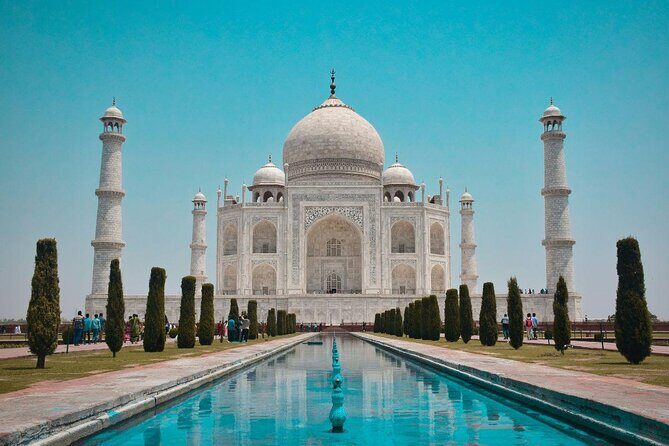
- Early start, smart timing: you leave Delhi around 6:00 am and reach the Taj Mahal in time for a full visit
- A real circuit, not a checklist: Agra, Fatehpur Sikri, Jaipur, Jodhpur, Ranakpur, and Udaipur stay connected by road
- Major monuments include key admissions: Taj Mahal, Amber Palace, Mehrangarh Fort, Ranakpur Jain Temple, and more are covered
- Some add-on tickets are not included: plan to pay on-site for Jal Mahal and Hawa Mahal
- Udaipur-to-Delhi flight saves time: your last day ends with a flight instead of another long drive
- Family-friendly flexibility: the experience is built for groups with different ages and comfort levels
Why this Delhi-to-Rajasthan route feels efficient
This is a classic north-India flow: start in Delhi, head to Agra for the main event, then sweep into Rajasthan’s palace-and-fort belt, finishing in Udaipur. What makes it work well for you is that it’s built around short, guided visits at each stop, with driving planned in between so the day doesn’t feel chopped up.
It’s also private, which changes the feel. Instead of joining a crowded bus, you get a guide and a car for your group only. That means you can slow down at a viewpoint, spend extra minutes on details like marble carvings or frescoes, and still keep the overall schedule.
Two practical notes that matter on the ground:
- You begin around 6:00 am, so set expectations for an early start—especially on the Taj Mahal day.
- Your price includes 4 nights in hotel, a guide, a private car, entrance charges, and breakfast for 4 mornings. Meals are not included, so bring a simple plan for lunch and dinner budget.
You can also read our reviews of more private tours in New Delhi


Agra morning: Taj Mahal with the stories behind the marble
Your first big morning is built around the Taj Mahal, with departure from Delhi around 6:30 am and arrival around 10:00 am. The visit is about 1 hour 30 minutes, which is just enough to see the symmetry, walk in for a closer look, and still have time to absorb the meaning without feeling rushed.
What I like here is that you’re not only staring at the building—you’re getting the kinds of details that help you read it. The guide covers the usual themes (royal commission, love story), but also the kind of architectural mystery people talk about, like the idea of an additional Taj Mahal concept using black marble that was planned adjacent to the white structure.
Practical tip: if you’re sensitive to sun and heat, plan your photos early in the visit. The Taj Mahal area can be bright quickly, and comfortable pacing helps you avoid rushing through the best angles.
Fatehpur Sikri: Mughal power in red sandstone
After Agra, you head to Fatehpur Sikri, the Mughal-era city built near Agra by Akbar. The stop is about 1 hour, and the value is in the concentrated focus on major sites rather than a long, tiring walk through an empty-feeling landscape.
Here’s what makes it interesting for you:
- It’s described as one of the best-preserved Mughal heritage sites, so you’re seeing details that survive.
- The architecture reflects Persian court influence, shaped by Akbar’s inspiration from Timur’s Persian connections.
- You’ll notice a mix of styles too—red sandstone with elements of Hindu and Jain architecture alongside Mughal forms.
The guide points you toward highlights such as Diwan-i-Am, Diwan-i-Khas, Panch Mahal, Buland Darwaza, and Jama Masjid. One more piece of context that helps: Fatehpur Sikri stayed the Mughal capital for only around 10 years, after which Akbar moved the capital to Lahore. That short reign adds weight to what you see—this is a planned statement of power that didn’t last.
Then you finish the day with the road trip to Jaipur, arriving around 6:30 pm. That timing matters: you’ll have enough energy to enjoy the first evening in the Pink City rather than arriving too late.
Jaipur’s palace sequence: Amber, Jal Mahal, Hawa Mahal, City Palace
Day 2 is the kind of day you’ll remember because the palaces feel different from each other. Jaipur isn’t just one stop; it’s a set of visuals that change every hour.
Amber Palace (the fortress-palace viewpoint)
You start with Amber Palace, where the stop is about 1 hour and includes admission. Amber’s story hits on strength and beauty at the same time: it’s connected to Raja Man Singh I, built from red sandstone and white marble, and protected by formidable walls.
What makes Amber more than a pretty palace is the setting. There’s Maota Lake as a backdrop, and the description focuses on intricate decorations like wall paintings and frescoes, even noting precious gems and jewels used in the artwork. When you see that level of craftsmanship, you understand why it’s such a popular stop.
Consideration: it’s a structured visit. If you’re the type who loves long hours inside museums, you may want extra time later on your own—but as part of a multi-city tour, this duration keeps the day manageable.




Jal Mahal (quick, serene, and sometimes ticket confusion)
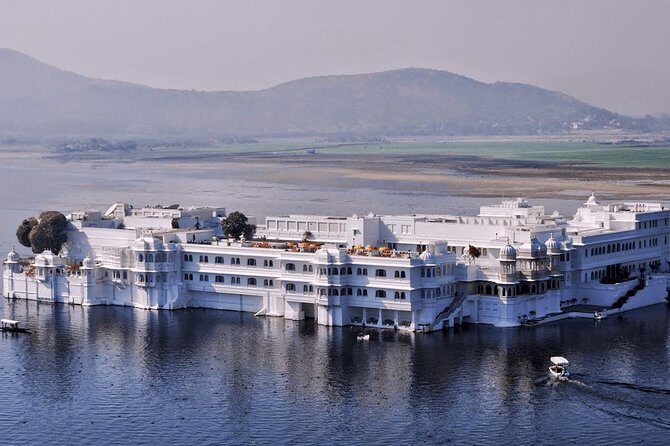
Next is Jal Mahal, the Water Palace on Sagar Lake. The visit is around 30 minutes, and the important detail is that the admission ticket is not included.
That means two things for your planning:
- You should expect to pay on-site if you want to go in or do the associated entry.
- You’re treating this as a visual stop where the contrast between the pale stone and deep blue water matters.
Even if you keep it short, the palace’s stillness feels like a reset after the intensity of Amber.
Hawa Mahal (953 jharokas and engineered airflow)
Then comes Hawa Mahal, the Palace of Wind, built in 1798. You get about 30 minutes, and again the admission ticket is not included.
This building is a feast for detail: it’s a five-storey structure with a honeycomb shape and 953 small windows, called jharokas, decorated with intricate lattice work. The guide also frames the palace in religious symbolism—representing the crown of Lord Krishna—and points out the practical idea of cooling breezes designed into the windows.
Tip: if you’re photo-focused, go slowly at the lattice details. That’s where the building earns your attention, not just from far away.
City Palace (where Rajput and Mughal styles meet)
You finish Jaipur with the City Palace of Jaipur, visited for about 1 hour with admission included. This is where architecture becomes readable: the palace reflects a fusion of Mughal and Rajput influences.
You’ll explore gardens, buildings, courtyards, a temple, and a museum. This stop tends to work best if you like understanding how power and culture showed up in everyday royal spaces, not only in battle forts.
By the end of Day 2, you’ll likely feel the Jaipur heat and the day’s momentum. The structure of the stops helps because each palace changes your viewpoint without turning the day into a long grind.
Jodhpur: Mehrangarh Fort and the marble-and-stone highlights
Day 3 moves to Jodhpur by road, departing around 7:30 am and arriving around 1:30 pm. Once you land, the day is all about iconic fort drama and memorial detail.
Mehrangarh Fort (120 meters above the ground)
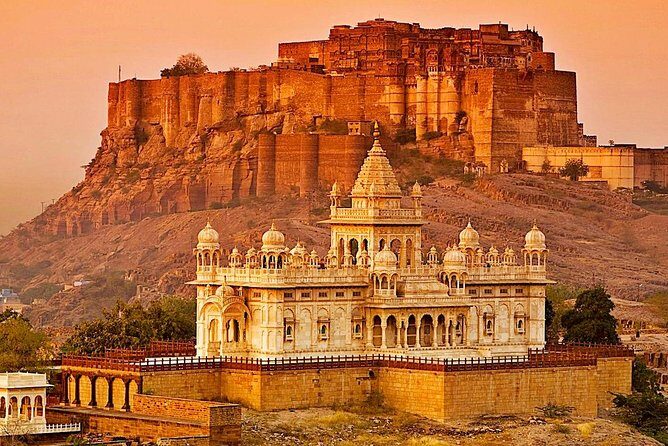
Mehrangarh Fort is the main event: about 1 hour, admission included. It sits on rock perched 120 meters above the ground, built in 1438 by Rao Jodha, the founder of the city.
You’ll get plenty of viewpoints, but the real value is how the fort feels like a living boundary between power and the city below. The description also notes that scenes from the Hollywood movie The Dark Knight Rises were shot here, which can make the scale easier to imagine quickly.
Practical note: fort staircases and uneven ground are part of the experience. Comfortable shoes are worth it.
Rao Jodha Desert Rock Park (ecology instead of just architecture)
After the fort, you visit Rao Jodha Desert Rock Park, about 45 minutes with admission included. This one is a breather. The park was created in 2006 to restore natural ecology by removing thorny shrubs and creating conditions for native rock-loving plants.
If you like seeing a different side of a city—one that isn’t only forts and temples—this stop adds balance.
Jaswant Thada (white marble memorial)
Finally, Jaswant Thada takes about 45 minutes, with admission included. It’s a Rajput memorial made of white marble, built in the 19th century by Maharaja Sardar Singh in memory of his father, Maharaja Jaswant Singh II, the 33rd Rathore ruler of Jodhpur.
This place works because it’s quiet and detailed at the same time. The paintings and portraits inside tell the story of the rulers of Jodhpur, so the experience becomes part architecture, part memory.
Ranakpur Jain Temple: a marble forest of repeating-and-not-repeating pillars
On Day 4, you drive to Ranakpur, leaving around 8:00 am and arriving around 11:00 am. Then you step into one of the most visually surprising stops on the whole trip.
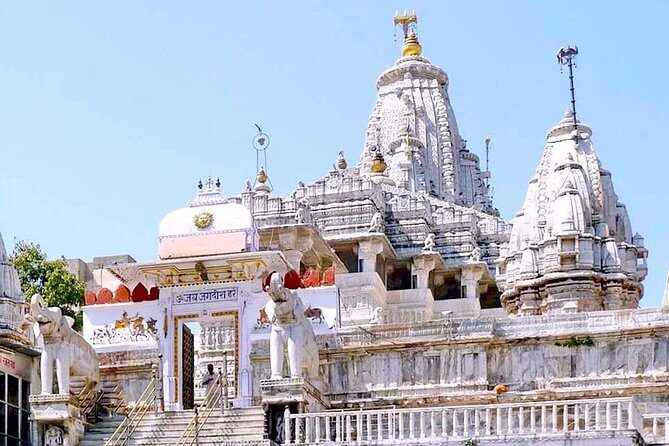
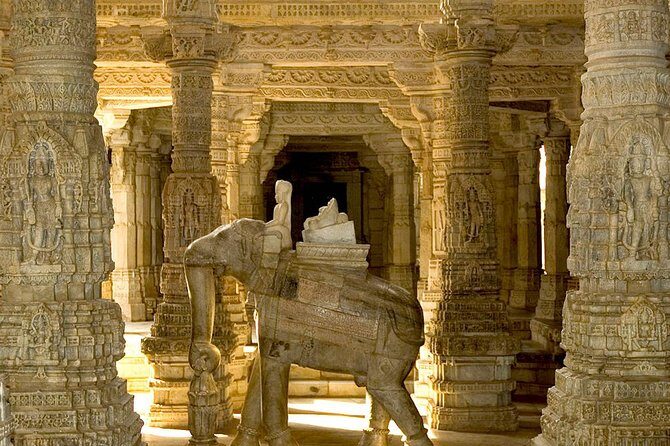
The Ranakpur Jain Temple is about 1 hour, with admission included. It’s described as a complex with 29 halls and 80 domes, supported by 1444 marble pillars. The most memorable detail: no two pillars are alike.
That’s what makes it special for you. You’re not just looking at one grand object. You’re looking at a whole system of craftsmanship where repetition is broken on purpose—each pillar has its own personality.
If you’ve been thinking of Rajasthan only as forts and royal palaces, Ranakpur adds a different kind of wealth: spiritual wealth shown through meticulous labor.
Udaipur: City Palace and Lake Pichola’s slow, scenic payoff
After Ranakpur, you head to Udaipur with a 2-hour drive. The City Palace stop comes next, then you end the day by the lake.
City Palace of Udaipur (granite, marble, and multi-king contributions)
You’ll visit the City Palace of Udaipur for about 1 hour, with admission included. The palace was built in 1559 by Maharana Udai Singh to commemorate the new capital.
The description emphasizes that the palace is not a single-era build; it’s been shaped by many kings of the Mewar dynasty over roughly 400 years. It also blends medieval European and traditional Indian architectural styles, made with granite and marble, and featuring towers, domes, and arches.
This is one of those stops where a guide matters. Without context, you might just see walls and rooms. With context, you can understand how different rulers’ tastes and political needs changed what you’re seeing.
Lake Pichola: a boat ride framed by palaces and temples
Next is Lake Pichola, visited for about 1 hour, with admission included. The tour includes a boat ride, and you’ll learn a neat origin story: the lake was built by Pichhu Banjara, a gypsy tribesman who transported grain in the late 14th century.
On the water, you look at the lake as a stage for multiple kinds of architecture: palaces, marble temples, family mansions, and bathing ghats. It’s a slower moment after forts and temple interiors, and it’s a good time to reset your eyes.
Day 5: Jagdish Temple and a flight back to Delhi
Your final morning is dedicated to the old-school spiritual core of Udaipur.
Jagdish Temple (Vishnu, marble steps, and Garuda)
You visit the Jagdish Temple around 1 hour. Admission is listed as free. It’s dedicated to Lord Vishnu and built in 1651 by Maharana Jagat Singh.
The approach includes a marble flight of 32 steps leading to the main shrine. One standout detail: a brass structure of Garuda, Vishnu’s celestial bird and guardian. Even if you’re not a temple-spotter, these physical details help you understand the craftsmanship and the symbolism.
After that, you fly from Udaipur to Delhi at 2:10 pm, arriving around 3:40 pm. That flight is included, and it’s a practical way to end the trip without adding another full driving day.
Price and value: what $1,626.67 buys you (and what it doesn’t)
This tour is priced at $1,626.67 per person and includes:
- 4 nights in hotel
- Guide
- Private car
- All fees and taxes
- Entrance charges
- Flight from Udaipur to Delhi
- Breakfast (4)
It does not include:
- Food and beverages
- Activities like elephant ride or boating, etc.
Here’s how I’d think about value. You’re paying for three big things that are hard to DIY smoothly:
- Time savings from guided, timed entry (especially for Taj Mahal and key forts/temples).
- Transportation across multiple cities without you coordinating trains, taxis, and route changes.
- Entrance charges and a guide so you’re not making 10 separate decisions on the spot.
Also note a useful detail for planning your own budget: Jal Mahal and Hawa Mahal tickets are not included. Everything else listed as included tends to cover major admissions. So the extra costs you might face are mainly meals and those specific entries.
If you prefer privacy, you’re also paying for that comfort. A private car + private guide is exactly what makes a multi-day Rajasthan trip feel calm instead of chaotic.
Who this private Rajasthan with Taj Mahal tour is best for
This tour fits well if you:
- want Taj Mahal plus the Rajasthan classics in one trip, without switching travel modes constantly
- like having a guide help you interpret what you’re seeing at each stop
- travel in a group with mixed ages and want a day plan that doesn’t feel like a sprint
It’s especially sensible for people who value a sense of control over pacing. Since it’s private, you can adjust within reason—stay a bit longer at a viewpoint or step out of the main flow if you need a break.
If you’re the type who wants a lot of free time to wander alone every single day, you might find the structure helpful but not fully open-ended. The stops are timed, and the driving days mean you’ll spend more hours in transit than on a slow, one-city vacation.
Should you book this tour?
If your goal is a smooth, private, big-sight Rajasthan circuit that starts with Taj Mahal and ends with Udaipur, I’d say this is a strong option. The best sign is how the plan is built around time you can actually use: early morning for the Taj, then palace and fort stops that don’t feel like a blur.
Book it if:
- you want entrance charges handled and a guide to connect the dots
- you’re okay paying extra mainly for meals and the two ticketed add-ons in Jaipur
- you like the comfort of private transport across cities
Skip it (or at least rethink it) if:
- long driving days feel like your worst nightmare
- you need lots of unscheduled wandering time each day
- you want every ticket included with no on-site payments at all
FAQ
How many days and nights is this tour?
The tour runs for about 5 days and 4 nights, starting in the Delhi area and moving through Agra and Rajasthan.
What does the price include, and what should I budget for separately?
The price includes 4 nights in hotel, a guide, private car, all fees and taxes, entrance charges, a flight from Udaipur to Delhi, and breakfast for 4 days. Food and beverages are not included, and some activities like elephant rides or other boating-type extras are also not included (though the Lake Pichola stop includes its listed experience).
Is pickup offered, and what time does the tour start?
Pickup is offered, and the start time is listed as 6:00 am.
Is this tour private, or will I share it with strangers?
This is a private tour/activity. Only your group participates.
Are all Jaipur attraction tickets included?
No. For Jaipur, the admission ticket is not included for Jal Mahal and Hawa Mahal.
What is the cancellation policy and what if weather is poor?
You can cancel up to 6 days in advance for a full refund, with a 50% refund for cancellations made 2–6 days before the start. The experience requires good weather, and if it’s canceled due to poor weather, you’ll be offered a different date or a full refund.