REVIEW · NEW DELHI
Private Luxury 4 Days Golden Triangle Tour of Delhi, Agra & Jaipur
Book on Viator →Operated by Treasure Trip India · Bookable on Viator
Three cities, one smooth plan.
This private luxury Golden Triangle tour ties together Delhi, Agra, and Jaipur with a car that’s comfortable, guides who work in English, and key admission fees handled—so you can spend less time figuring things out and more time looking at the monuments. It runs on a tight sightseeing rhythm, but the handoff between places feels built for convenience.
What I really liked were two practical things. First, you get local, English-speaking guides city by city, and the reviews show names like Sanju (driver) plus guides such as Deepak, Bobby, and Dheeraj leading the storytelling. Second, most big-ticket sights on the route are covered with admission tickets included, which helps you avoid the small friction of lining up or guessing costs at each stop.
The main consideration is pace. This is a lot of famous architecture packed into limited hours, and it can feel rushed if you like to linger or take things slowly—especially with road time between cities and a long day of walking inside major complexes. Also, lunch and dinner are not included, so you’ll want a simple daily budget for food stops.
In This Review
- Key things that make this tour work
- Why the Golden Triangle feels easier in private luxury
- Delhi day: Humayun’s Tomb, India Gate, and the quick history intro
- Red Fort timing: the monument, plus the cultural moment
- Agra day: Taj Mahal first, then the forts and the quieter Mughal “Baby Taj”
- Jaipur day: City Palace, Jantar Mantar, and Hawa Mahal in a single arc
- Guides and drivers: where the luxury feeling actually shows up
- What’s included (and why it helps your budget)
- How long is this, really? 4 days vs 3 days 12 hours
- Who should book this tour
- Should you book this Private Luxury Golden Triangle?
- FAQ
- FAQ
- Is this tour private or shared with other groups?
- What cities are covered on this Golden Triangle tour?
- Are pickup and transportation included?
- Are entrance fees included for the main attractions?
- Does the tour include meals?
- What’s included in the comfort and onboard experience?
- How long is the tour in practice?
- What is the cancellation rule if weather turns bad?
Key things that make this tour work
- Private logistics, not a crowded shuffle: your group travels together with a dedicated driver and guide.
- Major monuments with tickets included: you’re not constantly paying or worrying about entry fees for the listed highlights.
- Comfort upgrades that matter: air-conditioned vehicle, WiFi on board, bottled water, and hygiene basics like hand sanitizer and masks.
- Guides that explain more than dates: reviews highlight guides such as Deepak and Bobby turning sights into clear, memorable stories.
- A real hotel base with breakfast: accommodation is included, so you can focus on sightseeing rather than daily planning.
- Optional shopping time at the right place: the Agra area includes a stop associated with Mughal-inspired art and jewelry.
Why the Golden Triangle feels easier in private luxury
The classic Golden Triangle route can be overwhelming when you’re doing it on your own. Distances are real, tickets add up, and it’s easy to lose time negotiating transport or searching for the right entrance. This tour’s biggest value is that it turns those moving parts into a single plan: private transportation, a guide, and entry fees for the named highlights.
Even better, the tour is set up so you’re not repeating the same kind of sightseeing all day. You’re mixing Mughal-era Delhi with imperial Agra monuments and then Jaipur’s royal architecture and astronomy—so the days don’t blur together.
Also, the word luxury here is less about champagne and more about stress reduction. Air-conditioning for long drives, onboard WiFi, and a clean, comfortable vehicle make a big difference in India, especially when the days are hot and you’re doing repeated entrances and exits.
You can also read our reviews of more private tours in New Delhi


Delhi day: Humayun’s Tomb, India Gate, and the quick history intro
Delhi is the kind of city where it helps to get your bearings fast. This day starts at Humayun’s Tomb, a Mughal monument that sets the tone for what you’ll see later in Agra. You’ll get time to look closely, and this is where the trip’s guiding theme starts to click: architecture that’s meant to be both beautiful and symbolic.
From there, you head to India Gate to pay homage to martyrs and spend some time in the area’s gardens. It’s a calmer moment after the tomb, and it also helps you understand how modern Delhi memory and Mughal grandeur coexist.
Next come the government and mosque landmarks. You’ll stop at Rashtrapati Bhavan (the Indian President’s residence). The plan lists it as a very short stop, so treat it as a quick landmark moment rather than a long museum-style visit.
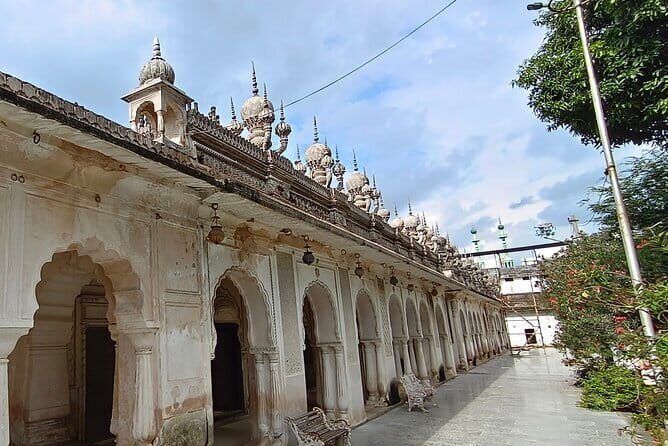
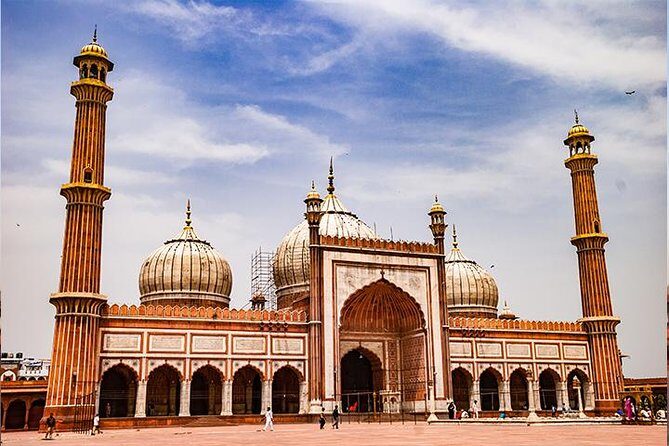
Then the route moves to Jama Masjid, built by Shah Jahan. This is where the experience can feel more alive: big scale, lots of activity around the mosque area, and a chance to understand the role of religion in city life. The day ends with transfers back to the hotel.
What I like here: the flow. Delhi day isn’t just a list of random stops. It’s designed to move from Mughal legacy to city-level landmarks and then into a major religious site.
Red Fort timing: the monument, plus the cultural moment

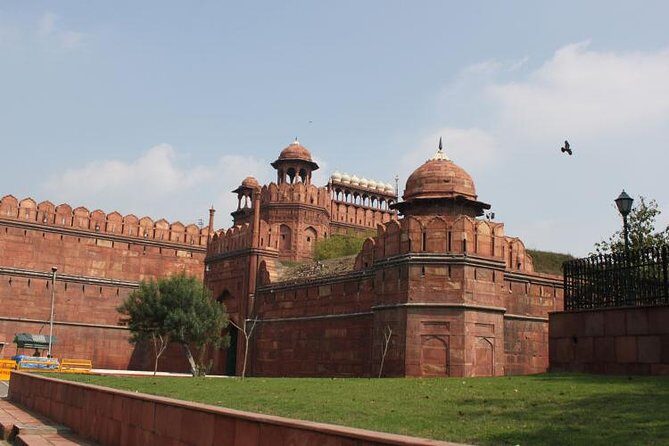
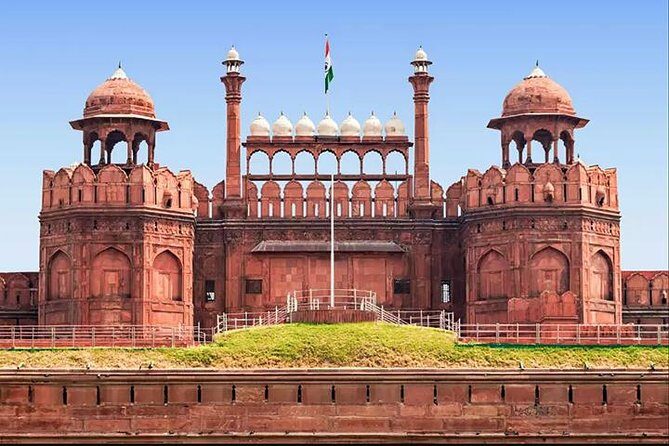
Red Fort is the day’s headline in Delhi’s second half. It’s politically and historically important, and it’s also one of those places where visuals do half the explaining for you. You get about two hours listed for the stop, which is enough time to take in the fort layout without turning it into a marathon.
A neat detail in the plan: it calls out that the Red Fort area is linked to a sound-and-light show that can help connect the history, tradition, and culture for foreign visitors. I’d see this as an optional extra to watch for when you arrive, if your schedule allows. Even if you skip it, the fort itself gives you plenty to work with.
The practical upside of adding Red Fort here: it gives structure to the day. By the time you reach it, you’re already primed to notice how rulers used space, walls, and public monuments to project power.
Agra day: Taj Mahal first, then the forts and the quieter Mughal “Baby Taj”
Agra is the star for most people, and this plan starts with the Taj Mahal. You’re given a couple hours on-site, which is a workable amount for seeing the main views and understanding the symbolism behind Mumtaz Mahal and Shah Jahan’s memorial. The key value is that you go first, not last—so your energy is still good when you arrive.
If you want photos, you’ll do better when you’re not rushing. Even with a guided schedule, I recommend you take a moment before you begin to decide what you want most: wide shots of the main marble facade, close-up details, or a slower walk for perspective.
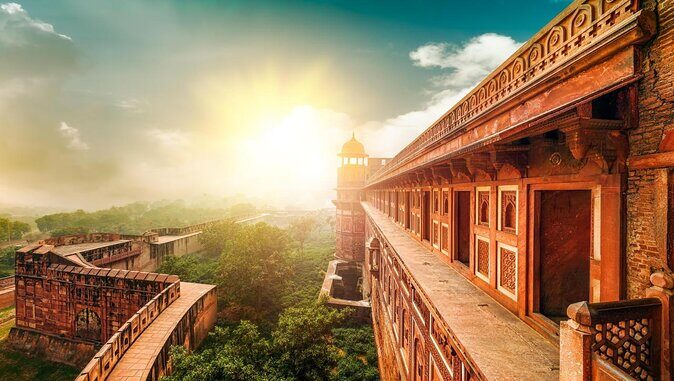
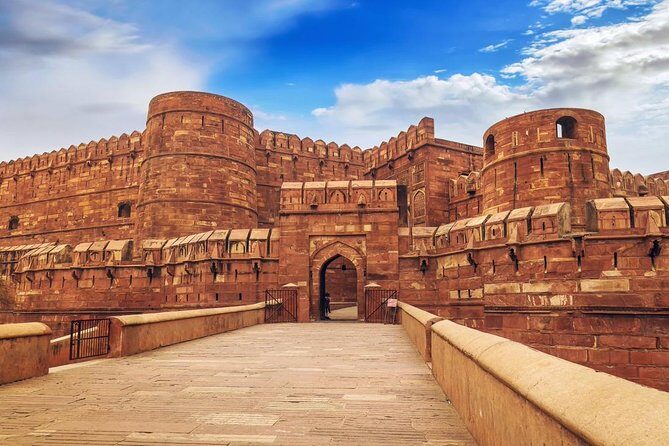
After Taj, you move to Agra Fort, built under Akbar. This stop matters because it adds the context that Taj doesn’t cover by itself. Forts were the command centers; mausoleums were the memory. Together, they tell more complete ruler-stories.
Next is Itimad-ud-Daulah, often called the Baby Taj. This is a smart move on a route like this because it gives you a second architectural experience that’s related, but not identical. You’ll also spend time with the Sanskriti museum stop, which is tied to Mughal-inspired jewelry and art. The plan even notes you can buy pieces there—so if shopping is part of your idea of a trip, this is one of the only structured opportunities on the itinerary.
What I like here: Taj Mahal can make everyone a little numb, like, yes, it’s stunning. The follow-ups keep you from losing the thread. Agra Fort and Itmad-ud-Daulah help you understand the wider Mughal world instead of treating Taj as a one-off miracle.
Jaipur day: City Palace, Jantar Mantar, and Hawa Mahal in a single arc
Jaipur is where the route gets fun in a different way. The day starts with City Palace, a royal museum and the residence of the royal family of Jaipur. The visit is built around the idea of seeing the living museum: armory, costumes, and artifacts tied to the royal household. Even if you’re not a museum person, this stop is useful because it gives you the background to interpret what you’ll see later in the city.
Then you head to Jantar Mantar, a solar observatory and astronomy site. This is a rare type of attraction for the Golden Triangle, and I like that. It’s not just a pretty building; it’s a set of instruments. The plan notes dozens of astronomical tools and highlights the sun dial as the largest in the world—good info to keep in your head while you look.
Next is Hawa Mahal (Palace of Wind). It’s crown-shaped, with hundreds of windows made to allow cool breezes to move through. The plan frames it as something Rajput rulers built for their queens’ summer retreat, which helps you see it as a practical structure, not just a photo backdrop.
After Hawa Mahal, the plan includes a lunch stop at a local restaurant where Rajasthan cuisine is mentioned. Just remember: lunch itself is not listed as included, so it’s a budget item. Then you continue after lunch.
A few more New Delhi tours and experiences worth a look





Guides and drivers: where the luxury feeling actually shows up
The “private luxury” label is only as good as the humans running the day. The feedback you provided repeatedly praises smooth coordination, friendly professionalism, and guides who can explain what you’re seeing in plain English.
I saw names show up again and again: drivers like Sanju and Bobby, and guides like Deepak, Dheeraj, and Nikhil. In some cases, people mention a feeling of VIP service, and one review describes a friendly hotel upgrade from 4-star to 5-star. I’d treat that as a nice possibility rather than a guarantee, but it’s still a good sign that the company tries to make the trip feel more comfortable than the baseline.
What matters most to you is how the day stays on track. With private transportation and a dedicated guide, you’re less likely to waste time on confusion at entrances or spending half the day trying to find where to go next. That’s the practical luxury.
What’s included (and why it helps your budget)
This package includes a lot of the things that typically create surprise costs on the Golden Triangle:
- Air-conditioned private transportation and bottled water
- WiFi on board (useful for messaging, maps, and keeping your itinerary organized)
- A tour guide for the sightseeing portion
- All fees and taxes, plus admission tickets included for the listed sights
- Accommodation and breakfast
- Hygiene items like hand sanitizer and masks
This is where the value math gets real. When entry fees and transfers are rolled in, you’re paying for convenience and time savings, not just a vehicle. For many people, that’s the difference between an affordable trip and a trip that feels manageable.
What’s not included is also clear: lunch and dinner are on you, and anything not explicitly mentioned stays excluded. So build a simple daily food plan. If you want to spend money on one meal, you’ll still have room because the big attractions are handled.
Also, if you care about hotel quality, the inclusion of accommodation plus breakfast is a baseline win. Some reviews mention upgrades, but even without that, you’re not searching every night for a place to stay.
How long is this, really? 4 days vs 3 days 12 hours
The name is Private Luxury 4 Days Golden Triangle, but the duration listed is about 3 days and 12 hours. In practice, you should think of it as a short-break style itinerary: multiple sightseeing blocks plus hotel overnights, rather than four full, separate sightseeing days.
That matters when you’re packing. You’ll want to wear comfortable shoes for repeated monument walking and plan for a couple of long segments of driving between cities.
If you like to build in rest time, this schedule can work, but you’ll probably need to pace yourself at each stop—especially at Taj and the forts, where you can easily burn time if you’re not paying attention.
Who should book this tour
This fits best if you want:
- Private, guided sightseeing without the hassles of arranging transport and tickets
- A short, high-impact route (Delhi highlights, Agra icons, Jaipur’s royal and science sites)
- A comfortable setup: AC car, onboard WiFi, and a schedule that moves you efficiently
It may not be ideal if you hate tight timing, or if you want to spend half a day drifting around one site. This itinerary is built for efficient coverage, not for slow wandering.
Should you book this Private Luxury Golden Triangle?
If your priority is convenience and expert guidance for the big names—Humayun’s Tomb, Jama Masjid, Red Fort, Taj Mahal, Agra Fort, Itmad-ud-Daulah, City Palace, Jantar Mantar, and Hawa Mahal—this is a strong pick. The included admissions, hotel base with breakfast, and private transportation make the price feel less like a premium for comfort and more like a package for time savings.
My call: book it if you want the Golden Triangle without the usual stress. Consider a different style tour if you want long unstructured time at each site. And if you’re picky about pacing, plan to treat the itinerary as a fast highlight reel and add your own slower moments outside the included windows.
FAQ
FAQ
Is this tour private or shared with other groups?
It’s a private tour/activity, so only your group participates.
What cities are covered on this Golden Triangle tour?
The tour covers New Delhi, Agra, and Jaipur.
Are pickup and transportation included?
Pickup is offered, and private transportation is included in an air-conditioned vehicle.
Are entrance fees included for the main attractions?
Yes. The tour lists admission ticket included for the named stops, and it also includes all fees and taxes.
Does the tour include meals?
Breakfast is included. Lunch and dinner are not included.
What’s included in the comfort and onboard experience?
You’ll have bottled water, WiFi on board, and an air-conditioned vehicle. Hand sanitizer and masks are also listed as included.
How long is the tour in practice?
The duration is listed as approximately 3 days and 12 hours, even though the tour is named a 4-day package.
What is the cancellation rule if weather turns bad?
This experience is non-refundable and cannot be changed for any reason. If it’s canceled due to poor weather, you’ll be offered a different date or a full refund.