Delhi in one day feels like a movie. This private tour strings together Old Delhi street life and major New Delhi landmarks, with a guide who helps you read what you’re seeing and why it matters.
I love the rickshaw ride through Chandni Chowk and the spice-market stops that turn Delhi’s history into something you can smell, hear, and photograph. I also like how the plan hits major landmarks tied to the Mughal era and India’s modern story, including UNESCO-listed sights like Humayun’s Tomb.
One drawback: you’re on the move for about 5 to 6 hours, with walking plus heat and crowd levels that can feel intense, especially mid-day. Wear comfortable shoes and plan to take breaks when you need them.
In This Review
- Key Highlights You’ll Care About
- Old Delhi by Rickshaw: Chandni Chowk and Khari Baoli
- Red Fort, Raj Ghat, and Parliament Views: Big Moments Without the Fuss
- Red Fort
- Raj Ghat
- Parliament House (Sansad Bhavan)
- Agrasen Ki Baoli: Stepwells, Scale, and a Little Mystery
- New Delhi Icons: India Gate and the Peace of Lotus Temple
- India Gate
- Lotus Temple (Note: Monday closure)
- Qutub Minar and Humayun’s Tomb: UNESCO Stops Where Tickets Matter
- Qutub Minar
- Humayun’s Tomb
- A small but important planning tip
- The Pace, Pickup, and Comfort Stuff That Actually Changes Your Day
- How Much Is It, Really: Value at $101 per Person
- Who This Tour Fits Best
- Should You Book This Old and New Delhi Private Day?
- FAQ
- FAQ
- How long is the Private Full Day New and Old Delhi City Tour?
- What time does the tour start?
- Do you get pickup and drop-off?
- Is this tour private?
- Is the rickshaw ride included?
- Are monument entrance fees included for every stop?
- Is there an English-speaking guide?
- Is Lotus Temple open every day?
- What should I wear or bring?
- Do I need ID for monument entry?
Key Highlights You’ll Care About
- A true Old + New Delhi mix in one private day, instead of choosing only one side of the city
- Chandni Chowk by rickshaw, plus a stop at Khari Baoli, Asia’s largest spice market
- UNESCO World Heritage sights timed for a logical flow, including the Mughal highlights
- A safety-first, calm-guide approach, with lots of practical help in traffic and busy lanes
- Comfort details included like an air-conditioned vehicle and bottled water (2 x 500 ml per person)
- Good photo energy, since the guide is known for spotting angles and moments
Old Delhi by Rickshaw: Chandni Chowk and Khari Baoli
If you only do Delhi’s “big monuments,” you’ll miss the part that makes the city feel like Delhi. This day starts in Old Delhi around Chandni Chowk, where you’re dropped into lanes that look like they’ve been squeezed between old houses and nonstop trade.
You’ll take a rickshaw ride in Old Delhi, which is one of the quickest ways to get your bearings. It’s not just transport. It’s a front-row seat to how the market works: where people stop, how merchants display goods, and how the streets shape the flow of daily life.
Right after that, you’ll move into the spice scene at Khari Baoli, described as Asia’s largest spice market. Expect hundreds of shops selling everything from black salt and tamarind to turmeric and red chilies. You’ll also see spices stored in big sacks packed tight along narrow paths. It’s sensory tourism in the best way: you’re not reading about trade routes. You’re watching spices get packed, weighed, and carried out.
Practical note: this is a place where dust and strong scents hang around. If you’re sensitive, consider bringing sunglasses or a light mask. You’ll still get the experience, just with less discomfort.
You can also read our reviews of more city tours in New Delhi



Red Fort, Raj Ghat, and Parliament Views: Big Moments Without the Fuss
After the market intensity, the day pivots toward India’s major political and spiritual landmarks. This is where your guide earns their keep—helping you understand what you’re looking at in plain language, instead of turning every stop into a memorization contest.
Red Fort
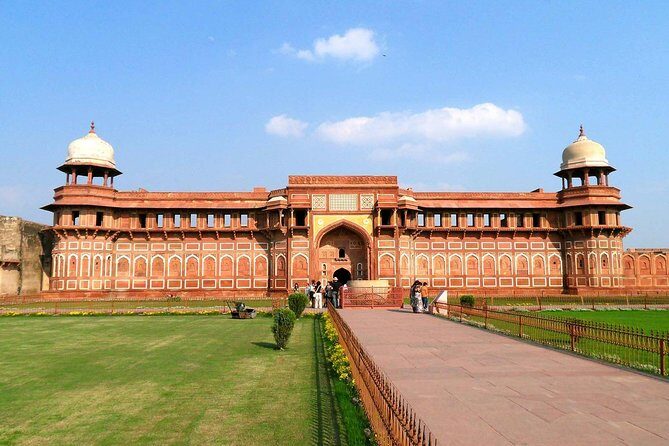
You’ll see the Red Fort, a UNESCO site tied to the Mughal rulers. It took nearly ten years to build, and the fort’s sandstone and Islamic-influenced design reflect how power expressed itself in stone. One reason this site feels especially “India now” is the annual Republic Day tradition: the Prime Minister hoists the tricolor from the ramparts.
A realistic consideration: Red Fort is popular. You’ll want to keep an eye on timing and not rush through photo spots, because crowds can make the best views harder than they look on a map.
Raj Ghat
Next is Raj Ghat, Mahatma Gandhi’s memorial. It’s a black marble platform marking the cremation site, open to the sky, with an eternal flame burning at one end. This stop tends to hit people differently because it’s quiet in the middle of a city day.
This is also a good moment to slow down. If you want a little breathing room for photos and reflection, Raj Ghat is your best bet.
Parliament House (Sansad Bhavan)
Then comes the Parliament House area. You won’t go inside—visitors are not allowed inside—but the exterior is still worth seeing. It’s tied to the moment in 1947 when Britain handed over power to newly independent India.
If you like civic architecture and national symbolism, you’ll enjoy this stop. If you prefer inside access, just treat it as an exterior-and-area visit and keep your energy for the UNESCO sites later.
You can also read our reviews of more private tours in New Delhi





Agrasen Ki Baoli: Stepwells, Scale, and a Little Mystery
Agrasen Ki Baoli is the kind of stop that makes your Delhi day feel more personal. It’s an older, quieter structure compared to the huge-ticket monuments, and it has a specific visual rhythm: a long step-well descending with around 103 steps.
The site dates back to the 14th century. It’s also described as a 60-meter long, 15-meter wide protected monument. When you stand near it, you can feel how people in earlier centuries managed water needs with design that also created a lasting public space.
You might hear eerie stories around the place. Even if you don’t go looking for ghost lore, it’s still a fascinating break from big courtyards and crowded avenues. It’s also a nice change of pace if the market-to-fort intensity started to wear you down.
New Delhi Icons: India Gate and the Peace of Lotus Temple
Once you cross into New Delhi, the tone changes from “trade streets” to “monument zone.” This is where Delhi shows off its 20th-century planning and national memorial design.
India Gate
You’ll stop at India Gate, the 42 m tall memorial arch. It’s often compared to the Arc de Triomphe in spirit and layout. Here, the meaning is tied to World War I losses—commemorating about 20,000 Indian soldiers who fought for the British Army, with names listed on the memorial for those killed in the Northwestern Frontier in the Afghan war of 1919.
If you care about how countries remember war, this one lands. It also gives you a wide-open feel compared to Old Delhi lanes, so it’s a good photo reset.
Lotus Temple (Note: Monday closure)
Then there’s the Lotus Temple, famous for its lotus-like shape and calm atmosphere. It’s a Baha’i faith temple focused on equality and oneness of all religions, and you can sit in the hall in quiet meditation.
Important timing detail: Lotus Temple remains closed on Mondays. If your day falls on a Monday, ask your guide about what the swap plan might look like.
Qutub Minar and Humayun’s Tomb: UNESCO Stops Where Tickets Matter
These are the heavy hitters for many people: Mughal architecture and UNESCO recognition in a single day. The key thing to know is that entrance to Qutub Minar and Humayun’s Tomb is listed as not included in the package price. So budget for those tickets separately, and carry the identity details you’ll need for online entry.
Qutub Minar
At Qutub Minar, you’ll see the tallest minaret in India. The site is also tied to a fascinating reuse story: it’s said that there used to be 27 temples and materials from those temples were used in constructing a mosque. The monument’s fame is so big it even shows up on Delhi Metro travel cards.
If you’re into architecture details, spend real time here. The height and close-up craftsmanship can feel more impressive than the distance views from street level.
Humayun’s Tomb
Then you’ll reach Humayun’s Tomb, the Mughal mausoleum for Humayun, built using red sandstone. It’s often described as the first garden-tomb on the Indian subcontinent and an architectural model that influenced later Mughal designs, including the Taj Mahal.
This stop rewards patience. Try to slow down and look at the garden layout and the structure’s symmetry instead of only chasing quick photos.
A small but important planning tip
Because ticket rules can vary, bring whatever identity proof you’re asked for. The tour information specifically flags that online monument tickets require ID to get the correct ticket type (foreigners and others can have different pricing). If you don’t have the right document on hand, you can lose time at the gate.
The Pace, Pickup, and Comfort Stuff That Actually Changes Your Day
This tour is private, meaning it’s just your group. You start at 9:00 am, and the full day runs about 5 to 6 hours depending on traffic and timing.
You’ll get pickup and drop-off from your Delhi hotel, railway station, or airport. That matters more than it sounds, because Delhi driving and meeting points can be chaotic, and losing time before you even start sightseeing is the easiest way to end up exhausted.
Comfort details included are also worth noticing:
- Air-conditioned vehicle for transfers
- Bottled water (2 x 500 ml per person)
- An accompanied English-speaking guide
You’ll still want to bring the “real-world” items: comfortable walking shoes and a plan for sun (goggles and sunscreen were specifically suggested). During summer, the heat can turn a reasonable day into a miserable one fast.
Also, the route includes walking around monuments and sites, so don’t pack this day like you’re strolling a museum. Think of it as a structured walk with gaps when you can breathe.
How Much Is It, Really: Value at $101 per Person
At $101 per person for a private full-day tour, the value is mainly about three things:
First, you’re not just seeing one neighborhood. You’re crossing between Old Delhi and New Delhi and hitting major sights in a single schedule. If you tried to piece this together with separate cabs and separate guides, the price often rises fast.
Second, the tour includes transfers in an air-conditioned vehicle plus pickup/drop-off, which saves you the headache of coordinating meeting points and dealing with traffic on your own.
Third, many admissions are listed as included across the day (with the notable exception of Qutub Minar and Humayun’s Tomb). That means you’re paying for a smoother flow rather than stopping repeatedly to manage cash, tickets, or multiple vendors.
So the only “cost surprise” risk is the ticket part for Qutub Minar and Humayun’s Tomb. If you plan for that up front, this can be a good deal for the amount you cover.
Who This Tour Fits Best
This experience is ideal if you want a fast, complete Delhi introduction that mixes street life with big monuments. It’s also a smart pick for people who prefer not to negotiate logistics in a busy city.
Based on repeated feedback about guide style, it’s especially suitable if:
- you want a guide who helps you feel safe and steady in hectic areas
- you’re traveling with family members who need a pace that can flex
- you care about explanations that connect history to what you’re physically standing in front of
If you dislike crowds, if you’re very heat-sensitive, or if you strongly prefer fewer walking stops, you might feel rushed. In that case, you could consider a slower plan that focuses on just one side of Delhi.
Should You Book This Old and New Delhi Private Day?
I’d book it if your goal is a single-day overview that doesn’t feel generic. The Chandni Chowk rickshaw + spice market combo is a high-impact start, and pairing it with UNESCO Mughal landmarks like Humayun’s Tomb keeps the day from becoming only “shopping streets.”
Book with confidence if you’re okay with a packed schedule, comfortable shoes, and spending extra for Qutub Minar and Humayun’s Tomb entrances. If your trip is on a Monday, double-check the Lotus Temple closure so you’re not counting on that exact moment.
One more practical note: the experience lists free cancellation up to 24 hours in advance and offers a weather-based reschedule or refund. That flexibility helps if your Delhi dates are still a little shaky.
If you want Delhi in one strong day, this tour is a solid way to do it.
FAQ
FAQ
How long is the Private Full Day New and Old Delhi City Tour?
It runs about 5 to 6 hours, depending on traffic and the time of day.
What time does the tour start?
The start time is 9:00 am.
Do you get pickup and drop-off?
Yes. Pickup and drop-off are available from your Delhi hotel, railway station, or airport.
Is this tour private?
Yes. It’s a private tour/activity, and only your group participates.
Is the rickshaw ride included?
Yes. The package includes a rickshaw ride in Old Delhi and a visit to the spice market.
Are monument entrance fees included for every stop?
Most admissions are listed as included, but monument entrances for Qutub Minar and Humayun’s Tomb are listed as not included.
Is there an English-speaking guide?
Yes. An accompanied English-speaking guide is included. A language guide may be available on request, subject to availability.
Is Lotus Temple open every day?
No. Lotus Temple remains closed on Mondays.
What should I wear or bring?
Wear comfortable walking shoes. The tour info also recommends sunscreen and goggles if you’re not used to Delhi’s sun, especially in summer, and suggests having a fully charged camera.
Do I need ID for monument entry?
Yes. The tour info says online monument tickets require identity proof so tickets can be issued correctly.