REVIEW · NEW DELHI
Golden Triangle With Taj Mahal Sunrise – All INCLUSIVE
Book on Viator →Operated by Amazing India Tours · Bookable on Viator
Sunrise at the Taj sets the tone. This Golden Triangle tour is built to squeeze Delhi, Agra, and Jaipur into about 6 days, with a special focus on the big-ticket moment at dawn. You get the convenience of pickup coordination plus a tight plan that keeps you moving without feeling totally rushed.
I also like the way the itinerary stacks major sights in Delhi, especially Qutub Minar and Humayun’s Tomb. Based on guest feedback, the on-the-ground team shows up prepared, with guides and drivers who know their way around and can explain what you’re seeing as you go.
One thing to plan around: the Taj Mahal sunrise is subject to weather, and the whole schedule runs on momentum. If you’re the type who wants long, lazy hours in one place, this style of tour will feel compact.
In This Review
- Key highlights worth your attention
- Golden Triangle in six days: why this route makes sense
- Day 1 in Delhi: airport pickup and getting situated
- Delhi’s UNESCO hits: Qutub Minar, Humayun’s Tomb, and Red Fort
- The Agra transfer: Agra Fort and the lead-in to the Taj
- Taj Mahal sunrise: what it means for your photos and your mood
- Fatehpur Sikri en route: Akbar’s dream capital stop
- Jaipur’s big four: Amber Fort, City Palace, Jantar Mantar, Hawa Mahal
- Day 6: leaving Jaipur for Delhi by drive or flight
- Price and value: is $235 reasonable for this plan?
- Who should book this tour, and who should rethink it
- Should you book the Golden Triangle with Taj Mahal sunrise?
- FAQ
- What cities are included in this Golden Triangle tour?
- How long is the tour?
- What time does the tour start and where is the meeting point?
- Is airport pickup included?
- Do you visit the Taj Mahal at sunrise?
- Which sights are included in Delhi?
- What happens at the end of the tour in Jaipur?
- Is the tour private?
- Can I cancel and get a refund?
Key highlights worth your attention
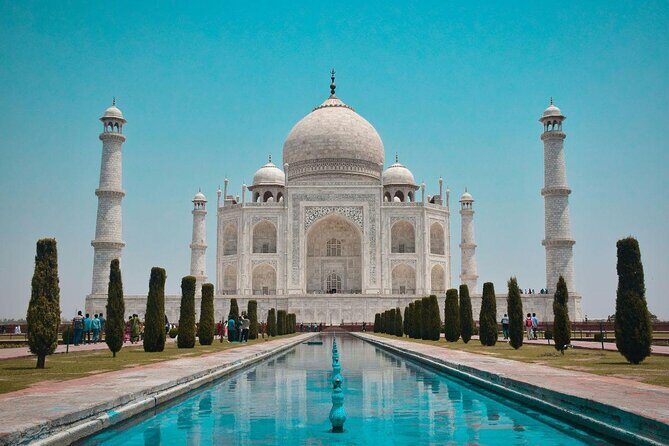
- Taj Mahal at sunrise (weather dependent), so you’re not waiting until later in the day
- UNESCO stop-fare in Delhi with Qutub Minar and Humayun’s Tomb plus Red Fort
- Fort-heavy sightseeing: Agra Fort in the middle, Amber Fort in Jaipur
- Fatehpur Sikri en route to Jaipur, linked to Akbar’s era
- Private group format so the pace is controlled for just your party
- Service quality called out in reviews, including a standout driver named Deepak
Golden Triangle in six days: why this route makes sense
The Golden Triangle is popular for a reason. You’re hitting three core cities that cover a lot of India’s big themes: imperial Delhi, Mughal Agra, and royal Rajasthan in Jaipur. Doing it in one loop is often the fastest way to get your bearings before you go deeper on another trip.
This specific program is also organized around timing. Day 4 includes an early visit to the Taj Mahal at sunrise (weather permitting), which is the kind of detail that changes the feel of the day. Instead of showing up when tour crowds are peaking, you’re aiming for that calmer, softer light.
The trade-off is that you’re not living in any one city for long. You’ll see a lot, but you’ll also have to accept that some sights feel like highlights rather than long stays. If you like structure and efficient sighting, that’s a plus. If you prefer slow travel, you might want to add extra days after the tour.
A few more New Delhi tours and experiences worth a look



Day 1 in Delhi: airport pickup and getting situated

The tour starts with pickup from Indira Gandhi International Airport and transfer to your Delhi hotel. It’s a smart first move because it removes the biggest early-trip headache: figuring out transport while you’re tired and jet-lagged.
After that handoff, the plan gives you an overnight rest in Delhi. That matters because the next day is a full sightseeing run, and you’ll be better off if you’re not trying to play catch-up right away. Also, starting in Delhi makes sense logistically since both Agra and Jaipur are easier to reach once you’ve already sorted out arrival basics.
A small practical point: the meeting time listed is 8:00 am, so if you’re planning flights, try to avoid schedules that leave you scrambling in the morning. If your arrival is late, you may still be okay, but your best bet is to align your flight times with a smooth pickup.
Delhi’s UNESCO hits: Qutub Minar, Humayun’s Tomb, and Red Fort
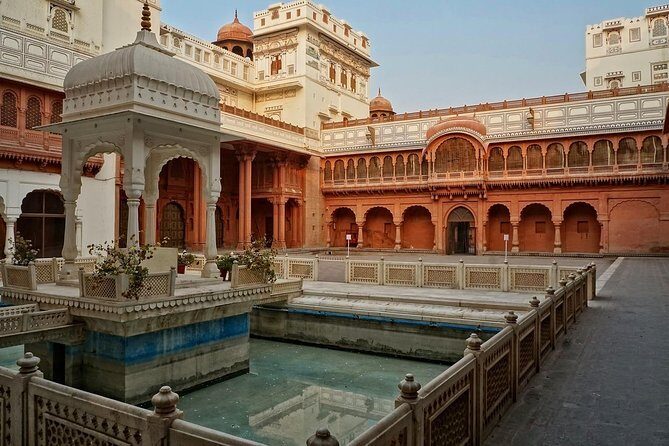
Delhi day 2 is a classic mix of Mughal-era grandeur and earlier imperial power. The stops are concentrated, so you get momentum without bouncing around too much.
Qutub Minar is part of the Qutb complex, and the minaret itself is a major visual anchor. It’s tall, tapering, and built in a way that makes the architecture feel both monumental and precise. Even if you’re not a hardcore architecture person, you’ll likely find it easy to understand why it’s on UNESCO lists.
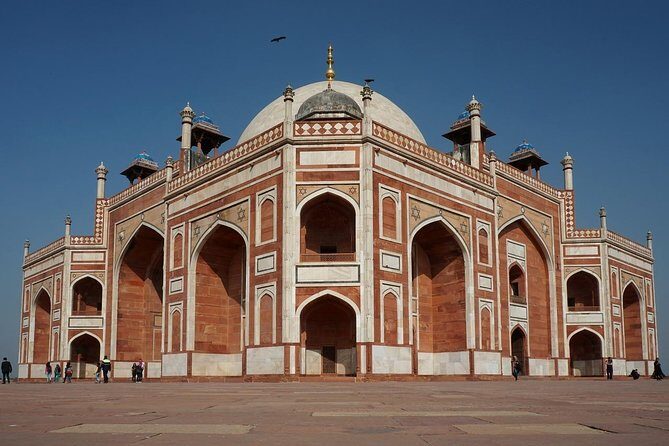
Next up is Humayun’s Tomb, the Mughal emperor’s tomb complex. It’s known for its design and influence, and you’ll feel that Mughal sense of symmetry and planning as you walk through the space. If you’re learning India by layers, Humayun’s Tomb helps you connect the dots between later Mughal building and earlier foundations.
Then there’s Red Fort. You’ll see it as a symbol of power and court life, and it closes the Delhi day with a strong, central landmark. The only consideration here is timing and walking comfort. This day is listed as about 1 hour per stop for some major sites, so you’ll want comfortable shoes and the expectation that you’re moving efficiently rather than lingering for hours.
The Agra transfer: Agra Fort and the lead-in to the Taj
Day 3 is essentially your bridge day: after breakfast, you drive to Agra. Once you arrive, you visit Agra Fort, described as the main residence of Mughal emperors until the capital shifted away in 1638.
This stop works well because it gives you context before the Taj Mahal spotlight. The Taj is often seen as an isolated masterpiece, but seeing Agra Fort first reminds you that this was a political and administrative heart, not just a place where big monuments happened by accident.
The listed time for Agra Fort is around 2 hours, which is a decent amount for seeing the fort’s major areas without turning the day into a full-day endurance test. Still, forts can involve uneven ground and stairs, so pace yourself.
If you’re coming from Delhi that morning, hydration helps. The route is typically busiest earlier in the day, and your schedule may depend on road conditions. Bottom line: use Agra Fort as your warm-up so the Taj sunrise day doesn’t feel like your brain is overloaded.
Taj Mahal sunrise: what it means for your photos and your mood
Day 4 is built around the early Taj visit at sunrise, subject to weather. That single line changes how the Taj feels. Sunrise light makes the marble tones look different, and the cooler early air is a real comfort if you’re sensitive to heat later in the day.
It also shifts the experience from crowded landmark viewing to something more like a moment. Even if you’ve seen pictures a hundred times, seeing the Taj in early light makes the building’s scale feel more human. You notice details you’d miss later, like surface texture and how the structure catches light.
The drawback is obvious but worth stating: weather can affect access and timing. If fog, rain, or low visibility disrupts sunrise conditions, the practical experience may differ from the ideal plan. That’s not something you can control, so it’s best to treat the sunrise as a goal, not a guarantee.
After breakfast, the plan moves on to drive to Jaipur. There’s no time to fall back into sightseeing fatigue. You’ll check out and travel, which means you should pack like you’re going to be on the move for most of the day.




Fatehpur Sikri en route: Akbar’s dream capital stop
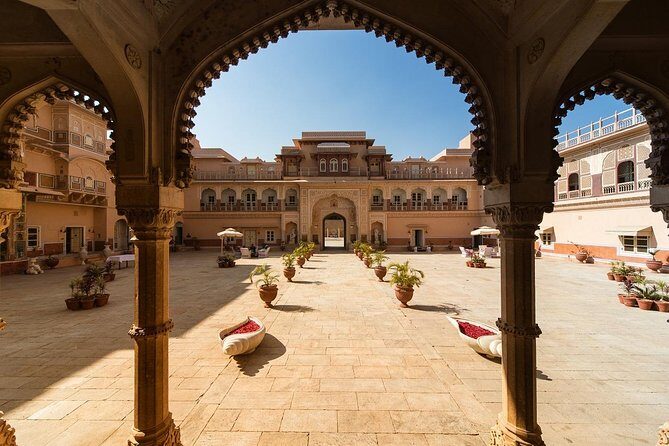
On Day 4, after the Taj and the drive toward Jaipur, there’s a stop at Fatehpur Sikri. It’s described as the dream capital of Akbar, which is a helpful framing. This isn’t just a random detour; it’s tied to a specific imperial ambition.
Fatehpur Sikri is the kind of place where you quickly understand why rulers invested in city-building. Even during a shorter visit, the setting gives you a sense of planned grandeur and symbolic power. For many people, it provides a mental break from marble-mania and fort culture by adding a city-in-one-shot feeling.
The itinerary doesn’t list a specific duration for this stop, so treat it as a flexible window. Use it like this: arrive with curiosity about what it represented politically, and don’t try to treat it like a slow museum tour. If you’re moving fast, you still walk away with a story.
Jaipur’s big four: Amber Fort, City Palace, Jantar Mantar, Hawa Mahal
Day 5 is Jaipur power hour. It starts with Amber Fort (listed as about 2 hours). Amber Fort is one of the most famous Rajasthan forts, and it’s located in Amer, about 11 kilometers from Jaipur. The itinerary calls out that Amer was originally the capital of the region, which helps you connect the fort to royal governance, not just defense.
From there you visit the City Palace of Jaipur, described as sitting at the center of a planned city divided into nine blocks. The palace being at the city’s core matters. It’s not an isolated monument; it’s integrated into how the city was laid out. Even if you only have about 1 hour, this stop gives you a sense of why Jaipur became a planned capital in the medieval period.
Next comes Jantar Mantar, a collection of nineteen astronomical instruments built by Sawai Jai Singh II. The practical takeaway here: you’re not only looking at art; you’re looking at tools for measuring the sky. It’s one of those experiences where, if you pay attention for a few minutes, the whole complex clicks.
Then there’s Hawa Mahal, the Palace of Wind, listed as a stop on the itinerary. You’ll see its famous facade character right away. It’s a place people photograph endlessly, but it also makes sense when you think about how royal life required visibility without constant exposure.
The schedule on Day 5 is packed, so consider pacing your energy. If you’re prone to overheating, take small breaks when you can. If you love photography, prioritize shots that show scale and layout, since you won’t have unlimited time at each point.
Day 6: leaving Jaipur for Delhi by drive or flight
Day 6 is departure day. The plan says you depart from Jaipur to Delhi around 5 hours by drive based on your flight schedule, and it notes that you can also take a flight from Jaipur.
This is good because it gives you options. If you’re closer to departure time and don’t want to sit in transit, flying can reduce stress. If you prefer to stay with the land route and keep everything simple, the 5-hour drive can work well.
The practical question is your flight timing. The tour is structured around it, so if you schedule a late-day flight, you may have more buffer time. If you have an early flight, you’ll want to be ready for a quicker end to the sightseeing portion.
If you don’t love travel days, use the last day to keep things low-key. Don’t plan extra personal excursions that could cut into the transfer window.
Price and value: is $235 reasonable for this plan?
At $235 per person for about 6 days, the value depends on what you need most: a structured route, transport coordination, and a team that handles timing. Based on the program name and what’s explicitly included in the outline, you’re getting organized pickup, private group format, and a mobile ticket. You also have the mention of group discounts.
What you’re likely paying for here is not just access to sights. It’s the friction removal. Golden Triangle tours work because someone else handles the big pieces—getting you from Delhi to Agra to Jaipur, and keeping your day flow logical enough that you can focus on the monuments, not the logistics.
The main consideration is that the itinerary is monument-heavy with limited time buffers. If you want more unstructured hours, you may feel you’re paying for intensity rather than comfort. On the other hand, if you’re on a first trip and want the essentials done right, $235 can feel like a fair trade.
Also, reviews highlight professionalism and positive service experiences. That matters here because sunrise days and multi-city drives punish poor coordination.
Who should book this tour, and who should rethink it
This tour fits best if you want a first taste of India’s major highlights without building a plan from scratch. You’ll like it if you enjoy forts, big architectural landmarks, and the idea of learning through a fast sequence of must-see heritage sites.
It’s also a good match if you prefer a private group setup. That can mean a more controlled pace for your party and less waiting around. The route is listed as suitable for most travelers, and it’s noted as near public transportation, which can be comforting if you like to understand your options on the ground.
I’d rethink it if you’re the type who needs lots of downtime. The days are packed, and Day 4 transitions from sunrise Taj time to driving toward Jaipur. If you’re traveling with someone who gets cranky from early mornings or long sit-down transit, you’ll want to plan ahead.
Should you book the Golden Triangle with Taj Mahal sunrise?
Yes, consider booking if your priority is seeing the Golden Triangle highlights in a sensible order, with a sunrise plan for the Taj. This itinerary is designed for people who want structure, clear stops, and a route that hits Qutub Minar, Humayun’s Tomb, Agra’s Mughal centerpiece, and Jaipur’s royal landmarks in a single sweep.
I’d book with realistic expectations about two things: sunrise is weather dependent, and the schedule is intentionally efficient. If you can handle an early start and you’re comfortable doing shorter, focused visits, you’re likely to come away with a big sense of accomplishment.
If you’d rather linger, or if you’re sensitive to tight timing, you might want to add extra days in one city after the tour. The best strategy is often: do the essentials now, then return later with more time where you felt the strongest pull.
FAQ
What cities are included in this Golden Triangle tour?
The tour covers three cities: New Delhi, Agra (for the Taj Mahal), and Jaipur.
How long is the tour?
The duration is listed as 6 days (approximately).
What time does the tour start and where is the meeting point?
Pickup starts at 8:00 am at Indira Gandhi International Airport, New Delhi, Delhi 110037, India.
Is airport pickup included?
Yes. The first day includes a driver pickup from the airport and transfer to a Delhi hotel.
Do you visit the Taj Mahal at sunrise?
Yes, the itinerary includes an early visit to the Taj Mahal at sunrise, and it notes it is subject to weather conditions.
Which sights are included in Delhi?
Delhi day includes Qutub Minar, Humayun’s Tomb, and Red Fort.
What happens at the end of the tour in Jaipur?
You depart from Jaipur to Delhi around 5 hours by drive (based on your flight schedule), or you can take a flight from Jaipur.
Is the tour private?
Yes. It’s described as a private tour/activity, meaning only your group will participate.
Can I cancel and get a refund?
No. The experience is listed as non-refundable and cannot be changed for any reason.