REVIEW · NEW DELHI
Private Delhi Tour: Full Day Tour of Delhi with Pickup & Drop off
Book on Viator →Operated by The Vision Holidays · Bookable on Viator
Delhi can feel like a lot. This tour makes it manageable. You’ll move between Old Delhi’s Mughal landmarks and New Delhi’s grand government sites with a private guide and car, so you can spend your energy looking, not figuring out buses and rickshaws.
I like that it’s truly private—just you and your party—so the pace and stops can match your group. I also like the English-speaking guide, which matters in Delhi where signage and street directions can be… optimistic. One thing to plan for: monument entrances and lunch aren’t included, so your day may cost a bit extra once you’re on-site.
In This Review
- Key highlights at a glance
- Why a private full-day Delhi route makes sense
- Pickup, transport, guide, and the comfort details that matter
- Jama Masjid: India’s biggest mosque courtyard first
- Red Fort: Shah Jahan’s Mughal residence, in one quick hit
- India Gate: a free stop with real emotional weight
- Agrasen Ki Baoli: short, strange, and worth the story
- Humayun’s Tomb: the UNESCO garden-tomb model
- Lotus Temple: modern faith in a flower-shaped form
- President House (Rashtrapati Bhavan) and Parliament House: New Delhi’s power axis
- Gurudwara Bangla Sahib: healing stories around the sarovar
- Chandni Chowk by tuk-tuk, then Qutub Minar’s UNESCO height
- Timing, ticket costs, and how to plan the budget
- Price and value: $35 per person for a private day that actually runs
- Who this private Delhi tour suits best
- Should you book this private Delhi tour?
- FAQ
- What’s the duration of the private Delhi tour?
- Is pickup and drop-off included?
- Will I have an English-speaking guide?
- Is mineral water included?
- Are monument entrance fees included?
- Is lunch included?
- What happens if the weather is poor?
Key highlights at a glance
- Private transportation with hotel/Airport pickup so you start strong and don’t waste time getting oriented
- English-speaking professional guide to connect the dots between Old and New Delhi
- Mineral water in the car, a small thing that becomes a big deal in a long day
- Old Delhi to New Delhi rotation hitting major sights in a logical, efficient order
- Stops you can actually pause at—Courtyard walks, tomb gardens, and major viewpoints without sprinting
Why a private full-day Delhi route makes sense
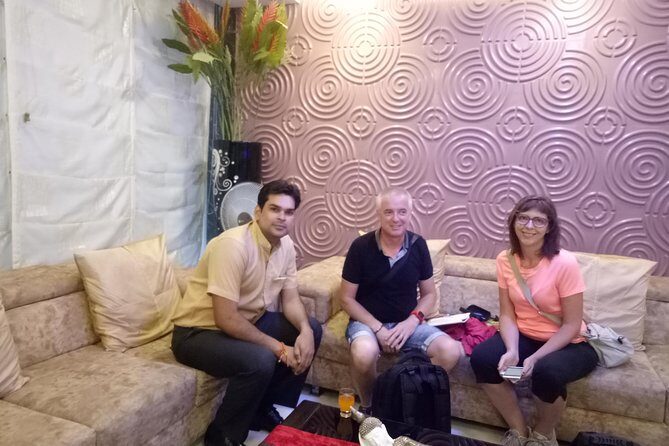
Delhi is a city of layers—Mughal power, British-era planning, and modern life all pressed together. A private full day like this works because it reduces the friction. You get a car and a guide, and suddenly the city becomes readable.
The big win is time. In about 8 hours, you’re in the thick of iconic places that would normally take multiple trips. That means fewer “we’ll come back later” moments. You’ll also get continuous commentary, which helps you understand what you’re seeing instead of just collecting photos.
The tour includes pickup and drop-off, so you’re not stuck at the end of the day trying to claw your way back to your hotel area while Delhi traffic decides to do Delhi traffic things.
You can also read our reviews of more private tours in New Delhi



Pickup, transport, guide, and the comfort details that matter
This is set up as a full-day car tour with pickup and drop-off from your hotel or the airport. There’s also fuel and parking covered, plus mineral water provided in the car. That last bit sounds small until you realize you’ll be out walking in the open between major sites.
You’ll ride with an English-speaking professional guide for the complete tour. That’s the difference between wandering and learning. Even if you already know the basics, you’ll pick up the local context—why certain monuments sit where they do, and how Old Delhi and New Delhi express different eras of power.
You should expect a long day on the move. It’s not a “stay 2 hours at one museum” style itinerary. You’ll get meaningful time at each stop, but you’ll still be traveling between them.
Jama Masjid: India’s biggest mosque courtyard first

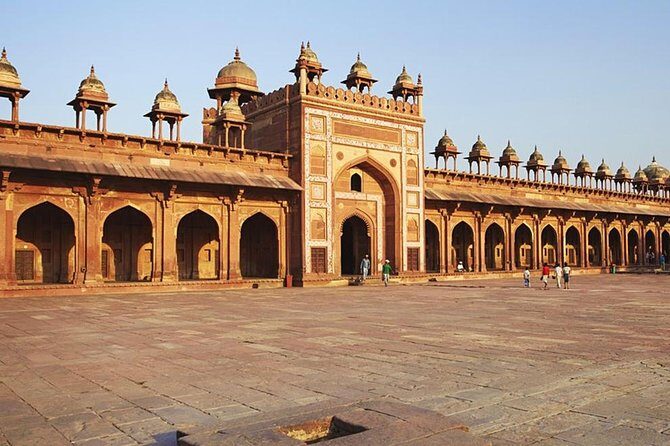
Your first major stop is Jama Masjid, described as India’s largest mosque. It’s a dramatic start because you enter a huge red-sandstone courtyard and feel the scale right away. It was built in 1656, with help from 5,000 workers, and it sits in front of the Red Fort area in the Chandni Chowk zone.
This is a great place to go early in the day because the courtyard walk sets the tone. You’ll see people moving in and out for prayers and everyday life around the mosque. Even with a short visit, you’ll get a strong sense of how this space functions—not just how it looks.
Time here is about 45 minutes, and admission ticket costs are not included. That means you’ll want to budget for entry if you’re planning to go inside areas that require it.
Practical tip: wear comfortable shoes. Courtyards and approaches can be uneven, and you’ll want your legs ready for the rest of the day.
Red Fort: Shah Jahan’s Mughal residence, in one quick hit
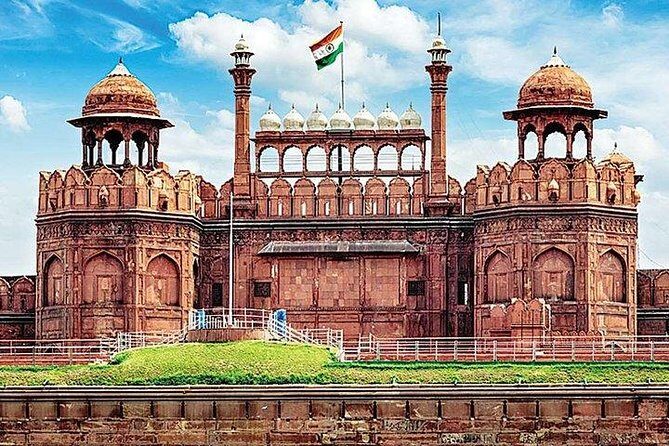
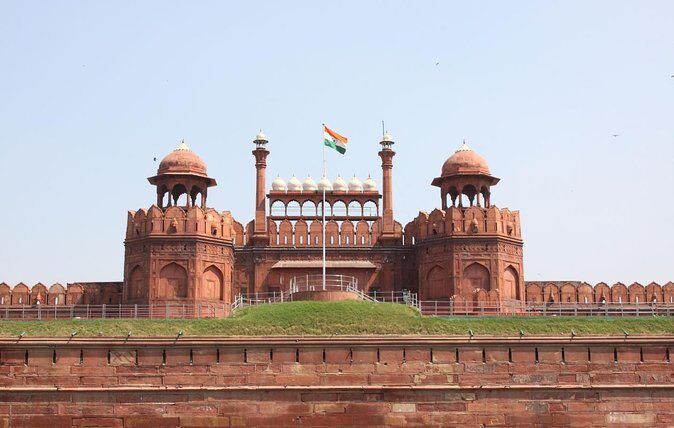
Next comes the Red Fort, the massive Mughal structure built by Shah Jahan between 1639 and 1648. The fort served as the main residence for Mughal emperors, and architecturally you’ll notice Indo-Islamic and Mughal influences working together.
Your time is about 30 minutes, and admission is not included. That means you’ll get to see the fort and its overall mood, but this is not a deep architectural study in that time slot.
If you’re the type who likes photos with context, ask your guide what to look for in the style. The key here is to treat it like a “big picture” stop: scale, materials, and the sense of state power that still hangs around the complex.
India Gate: a free stop with real emotional weight
India Gate is a strong contrast—ceremonial, open, and easy to access. It’s tied to the 1921 Tomb of the Unknown Soldier, with names of 13,300 Indian army servicemen carved into the wall who died during the First World War.
This stop is about 30 minutes and the admission is free. If you’re trying to manage costs, this is one of the easiest wins in the day.
A good move is to spend a few minutes just standing and reading the names. It changes the atmosphere from sightseeing to remembrance. And since it’s free, you can afford to slow down here.
A few more New Delhi tours and experiences worth a look






Agrasen Ki Baoli: short, strange, and worth the story
Then there’s Agrasen Ki Baoli, famous for urban legends—hauntings and incidents, with plenty of paranormal talk surrounding the site. For a lot of people, that’s exactly why it’s interesting: you’re not just seeing a structure, you’re hearing the stories Delhi attaches to certain places.
Your time is about 30 minutes, and admission is not included.
This is a “check it off” stop unless you’re especially into local folklore. If you prefer straightforward facts only, you might find it a bit quick. But if you enjoy the way cities carry myths, it’s a fun break in the middle of heavier historical monuments.
Humayun’s Tomb: the UNESCO garden-tomb model
Humayun’s Tomb is a UNESCO World Heritage Site and is known as the first Garden Tomb of India. It’s built as a place shaped for memory, not just power, and the story given here is that it was commissioned by Humayun’s wife after his death.
You’ll spend about 45 minutes, with admission tickets not included. Even if you don’t go in deeply, the garden setting changes the feel of the site. It’s quieter than the rush of Old Delhi streets, and it gives your legs a chance to recover between climbs and crowds.
In a day full of forts and big statements, this stop offers a different kind of grandeur: symmetry, landscape planning, and a sense of crafted calm.
Lotus Temple: modern faith in a flower-shaped form
Next is the Lotus Temple, a Bahá’í House of Worship dedicated in December 1986. The most noticeable thing is the flower-like shape, and it has become one of the city’s most recognizable spiritual buildings.
Your time is around 30 minutes, and admission is free. This is one of those stops where even if you aren’t a temple person, the architecture pulls you in. It’s also a relief valve in the schedule—less “historical battlefield,” more “quiet reflection space.”
If you visit, keep your voice down and dress respectfully. These spaces tend to have rules, and following them makes your visit smoother for everyone.
President House (Rashtrapati Bhavan) and Parliament House: New Delhi’s power axis
After the religious and historical stops of Old Delhi, you shift into New Delhi’s grand government layout.
First is President House, originally built as the residence for the Viceroy of India—called the Viceroy’s House—and it has become Rashtrapati Bhavan. Then you visit Parliament House, which houses Lok Sabha and Rajya Sabha, the two houses of India’s bicameral parliament.
This part of the day is more about exterior viewing and the feeling of planning. It’s not a museum-type stop in the way the tombs and forts are. But it’s important context. You’re watching Delhi evolve from imperial and religious centers into a political capital built for modern governance.
Gurudwara Bangla Sahib: healing stories around the sarovar
A highlight for many people is Gurudwara Bangla Sahib, known for its link to the eighth Sikh Guru, who stayed here in 1664 and is associated with healing people during a cholera epidemic. The site also features a holy pond called the Sarovar, where the water is believed to have healing properties.
Admission is free, and you’ll spend about 30 minutes.
This stop is worth more than a quick photo. It’s living faith in action, with people coming for worship and community. Even if your visit is short, you’ll feel the difference in tone compared with monument interiors. It’s calmer, more human-scale.
Basic etiquette helps a lot here: follow staff guidance, be respectful, and give others space to move.
Chandni Chowk by tuk-tuk, then Qutub Minar’s UNESCO height
After meeting your guide at Sunheri Masjid, you’ll take a tuk-tuk ride past the Old Delhi bazaars of Chandni Chowk. This is a practical way to get a sense of the neighborhood without trying to physically cross every busy lane on foot. Your guide will explain the important role these markets play for locals.
Time is about 30 minutes. Admission is listed as free for this segment.
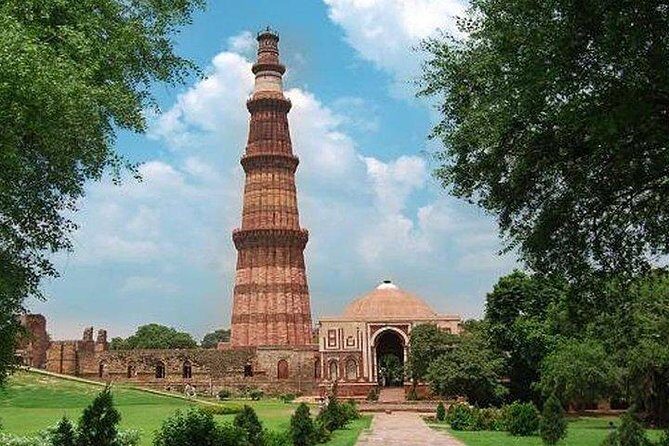
Then you head to Qutub Minar, part of the Qutb complex, which is also a UNESCO World Heritage Site in the Mehrauli area. Qutub Minar itself is the famous minaret, and you’ll spend about 1 hour here. Admission tickets are not included.
This is one of the stops where you’ll really appreciate having a guide. The complex isn’t just “a tall tower.” It’s a whole setting that helps you see how Delhi’s early architecture developed.
Practical tip: comfortable shoes matter again. Even with an hour, you’ll walk enough to feel it at the end of the day.
Timing, ticket costs, and how to plan the budget
This day is built to cover a lot, which is great for first-timers and time-crunched schedules. The trade-off is that you’ll hit many major sights for relatively short windows—often 30 to 45 minutes per stop.
Here’s what to plan for based on what’s included and not included:
- Included: private transport, English-speaking guide, mineral water in the car, hotel/airport pickup and drop-off
- Not included: monument entrances, and lunch
- Not included: tips to driver and guide
Your actual spending will depend on how many of the stops you enter rather than just view from outside. For example, some places are listed as free, like India Gate, the Lotus Temple, and Gurudwara Bangla Sahib. Others say admission ticket not included, including Jama Masjid, Red Fort, Agrasen Ki Baoli, Humayun’s Tomb, and Qutub Minar.
If you want a smooth day with fewer surprises, I’d mentally add a modest amount for entrances plus a lunch plan.
Also remember this experience requires good weather. If conditions are rough, you’ll be offered a different date or a refund.
Price and value: $35 per person for a private day that actually runs
At $35 per person for an approximately 8-hour private tour, the value is mainly in the structure: pickup and drop-off, private transportation, and a guide that keeps you moving efficiently.
If you’re comparing this to the cost of piecing things together yourself—cabs, multiple drivers, and the time lost negotiating routes—having it packaged can be a bargain. It’s especially good if you want Old and New Delhi in one day and you’d rather spend your time seeing than planning.
But treat it like a base package. Monument entrances and lunch are extra. So the smartest way to judge value is: do you want to spend the money you save on transport toward entries and a decent meal? If yes, this fits well.
Who this private Delhi tour suits best
This tour is a strong match for:
- First-time visitors who want Old Delhi and New Delhi highlights in one go
- People who like getting stories and context from a guide, not just photos
- Anyone who prefers a comfortable car and fewer navigation headaches
- Short-stay travelers working within a single day window
It may be less ideal if you want long, slow museum-style visits or you hate short stops. This is a “see a lot, learn a lot” plan.
Should you book this private Delhi tour?
If your goal is a confident, guided highlights day without fighting traffic logistics, I’d book it. The private car, pickup/drop-off, and English-speaking guide make the schedule realistic. Plus, you get the nice touch of mineral water in the car, which keeps the day from feeling like punishment.
I would only hesitate if:
- You’re trying to keep the day strictly budget-only, since several key monuments have entrances not included
- You don’t enjoy folklore-style stops like Agrasen Ki Baoli
- Weather is uncertain for your dates, because the experience depends on good conditions
Overall, this is a practical way to get oriented fast—Old Delhi’s monumental power, New Delhi’s government axis, and a mix of religious sites and UNESCO landmarks in one organized loop.
FAQ
What’s the duration of the private Delhi tour?
The tour runs for about 8 hours (approx.).
Is pickup and drop-off included?
Yes. Pickup and drop-off are included from your hotel or the airport.
Will I have an English-speaking guide?
Yes. The tour includes an English-speaking professional guide for the complete tour.
Is mineral water included?
Yes. Mineral water is provided in the car.
Are monument entrance fees included?
No. Monument entrances are not included. Some stops are listed as admission free, but others are not.
Is lunch included?
No. Lunch at a restaurant or hotel is not included.
What happens if the weather is poor?
This experience requires good weather. If it’s canceled due to poor weather, you’ll be offered a different date or a full refund.