REVIEW · NEW DELHI
Old & New Delhi Full or Halfday Guided Tour with Street Food
Book on GetYourGuide →Operated by Taj Explore Tourism · Bookable on GetYourGuide
Old Delhi, new sights, one smart day. This private tour links modern landmarks like India Gate with ancient stops such as Humayun’s Tomb, plus street-food time in Old Delhi. It’s a fast way to see how Delhi’s eras sit on top of each other, from Mughal power to today’s daily life.
I love the value of a private air-conditioned car and a live guide who can explain what you’re actually looking at. You’ll also appreciate the practical “less waiting” setup, since the tour uses separate entrances to help you skip the line at key sights.
The main consideration: the day runs 4 to 8 hours and the route is packed, so plan on a steady pace rather than a slow, linger-all-day kind of visit.
In This Review
- Key highlights worth planning around
- Price and value: getting a lot for about $11
- The smooth start: pickup, meet-and-greet, and photo-friendly driving
- India Gate to Rashtrapati Bhavan: the official Delhi photo circuit
- Swaminarayan Akshardham and Humayun’s Tomb: big contrasts, big meaning
- Lotus Temple or Qutub Minar: how the tour lets you choose your focus
- Old Delhi by tuk-tuk: getting your bearings fast
- Jama Masjid and lunch: the biggest first stop, then food
- Khari Baoli spices and Chandni Chowk: shopping lanes with a purpose
- Red Fort pass-by: still useful even without a long visit
- Gurudwara Bangla Sahib: the kitchen-scale stop you’ll remember
- Monday swap: what changes and why
- Languages, guides, and the private-group advantage
- Practical tips before you go
- Who should book this tour?
- Should you book this Old and New Delhi guided street food tour?
- FAQ
- How long is the Old & New Delhi guided tour with street food?
- Where do I get picked up, and is drop-off included?
- Is transportation provided?
- Are entrance tickets included?
- Can I skip the line at busy attractions?
- Which Old Delhi landmarks are included?
- What happens on Mondays?
- What should I bring to join the tour?
Key highlights worth planning around
- Separate-entrance skip-the-line access to reduce waiting at popular sites
- Private air-conditioned transport with a driver and live guide, not a seat on a bus
- Old Delhi tuk-tuk ride paired with guide explanations of how locals use the streets
- Jama Masjid + Chandni Chowk + Khari Baoli spices in one logical loop
- Optional choices like Raj Ghat, Lotus Temple, and Qutub Minar depending on your timing
- Gurudwara Bangla Sahib kitchen experience focused on scale (food for 10,000 people daily)
Price and value: getting a lot for about $11
At around $11 per person, this tour is one of those Delhi deals that feels almost too good—until you look at what’s actually included. You’re not just getting a driver. You’re getting a private live guide, hotel/airport pickup and drop-off, air-conditioned car service, entrance tickets, bottled water, and all taxes.
That matters in Delhi because time is expensive and lines can eat it. The separate-entrance setup is a real benefit on days when sights are busy. And because the group is private, you can ask questions, adjust priorities, and keep the day from turning into a check-the-list sprint.
One small “value reality” note: the price sounds simple, but the exact amount of street food can vary by how long you spend and how your guide structures the lunch stop. Expect lunch as part of the plan after Jama Masjid, then decide how adventurous you want to be in Old Delhi’s food and snack scene.
You can also read our reviews of more food & drink experiences in New Delhi



The smooth start: pickup, meet-and-greet, and photo-friendly driving
The tour begins with pickup from your hotel or the airport in Delhi, and the guide and driver do the meet-and-greet. That’s a big deal when you’re arriving to a city that’s loud, busy, and sometimes chaotic—your first job shouldn’t be figuring out directions.
From there, you head into New Delhi. A lot of this portion is “drive-past with explanation,” which is practical if you want landmark photos without losing half the day to parking and long walks. You’ll also get photo opportunities while your guide shares context, so you’re not photographing a building with zero idea why it matters.
If you want to make this portion even easier, keep your camera/phone charged and ready. This is one of those tours where a few good stops can set the tone for the whole day.
India Gate to Rashtrapati Bhavan: the official Delhi photo circuit
Your New Delhi loop typically starts with India Gate. You’ll drive past and take pictures while your guide explains the historical background of the monument. Even if you’ve seen India Gate in photos online, it hits differently in person—tall, ceremonial, and framed by the government district around it.
Next comes a drive past Parliament House. You don’t linger there in the schedule, but the guide’s explanation helps you see how the architecture and placement reflect political power and the idea of a modern nation-state.
Then you move to Rashtrapati Bhavan, also called the President’s House. This stop comes with a standout fact: it may refer to a 340-room main building, and construction took 17 years to complete. Facts like that turn a quick photo stop into something memorable, because you’re no longer just looking at walls—you’re picturing the effort behind them.
Swaminarayan Akshardham and Humayun’s Tomb: big contrasts, big meaning

After the official zone, the tour hits a major spiritual landmark: Swaminarayan Akshardham. It’s one of the biggest Hindu temple complexes in Delhi. The plan notes it was constructed in 2005, but the architecture gives it a much older feel, almost like it was built over a thousand years ago. That contrast is part of the attraction—Delhi can make new look ancient.
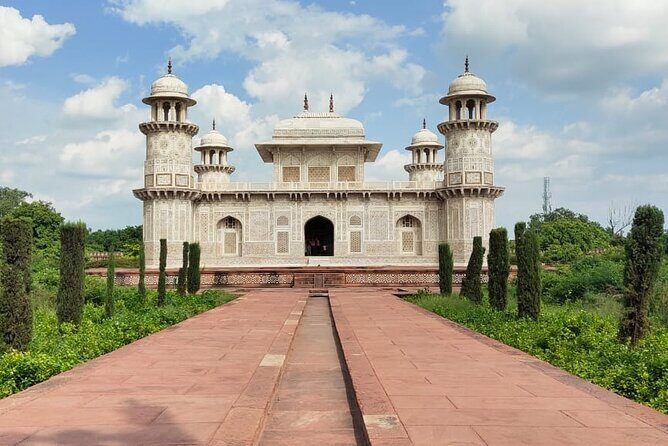
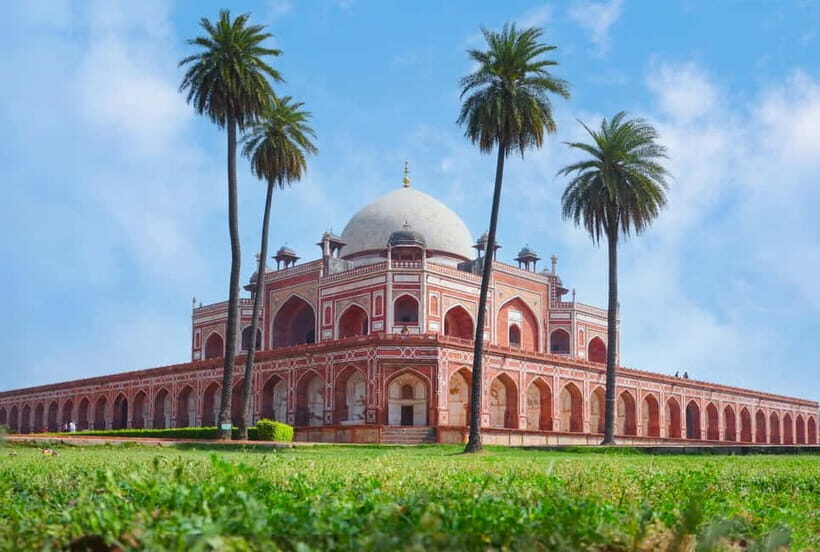
Then you’re guided to Humayun’s Tomb, which is described as the first garden tomb in India and a UNESCO World Heritage Site. A particularly useful detail here: it was built by Humayun’s wife. That “who built it” piece matters because it shifts the story from dates and stone to people and power.
If you’re the kind of visitor who likes your photos to mean something, this is a strong segment of the day. You’ll get visual drama plus concrete context, without needing to research beforehand.
Lotus Temple or Qutub Minar: how the tour lets you choose your focus
Later in the New Delhi portion, you’ll reach a decision point depending on your day and preferences.
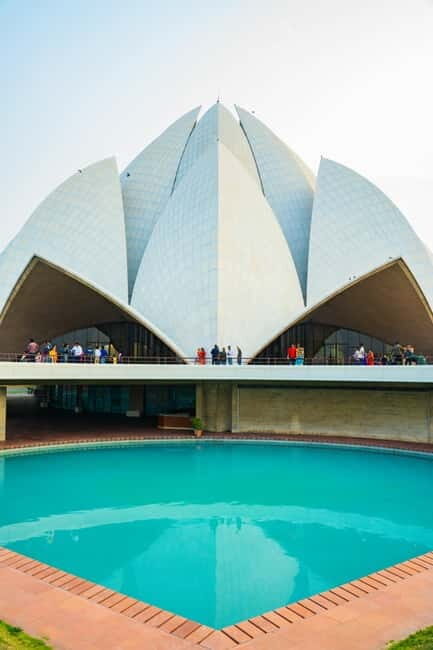
Lotus Temple is often the last Delhi stop if you choose to skip Qutub Minar. It’s a Bahá’í House of Worship dedicated in December 1986, shaped like a flower, and it’s become one of the city’s recognizable attractions. If you want something calmer and more modern-feeling in design, this is a good fit.
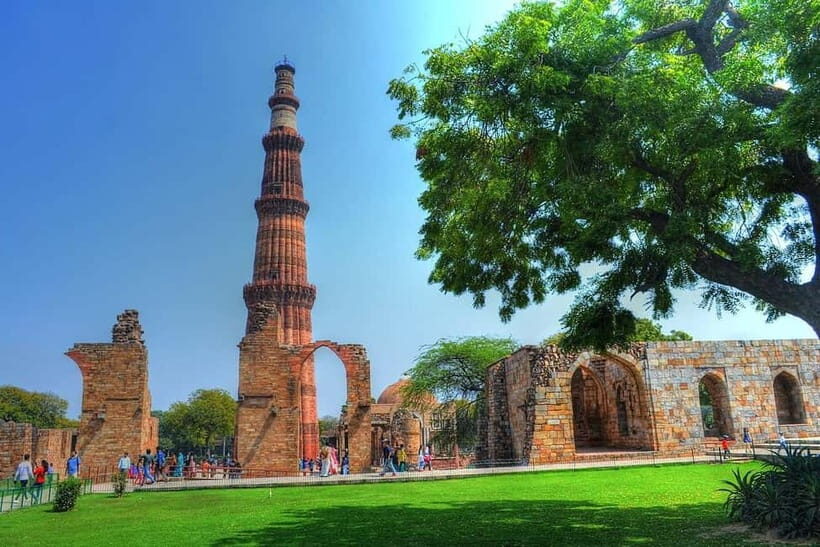
Then there’s Qutub Minar, which you can opt into. The tour frames it as the highest brick tower in India, built in 1192, and it’s linked to the first Muslim empire in India. It’s also part of a UNESCO World Heritage Site.
Practically, your choice can help you control the pacing. If your energy is high and you want UNESCO + monumental scale, add Qutub Minar. If you’d rather keep the day lighter and move efficiently toward Old Delhi, Lotus Temple alone is already a memorable finish to the New Delhi section.
A few more New Delhi tours and experiences worth a look





Old Delhi by tuk-tuk: getting your bearings fast

Old Delhi is where the day becomes real. The tour includes a tuk-tuk ride through the oldest part of the city, with your guide explaining the role the streets play for locals. This is not just a scenic ride. It’s how you understand why places like markets, mosques, and food areas cluster where they do.
A quick tip: the best way to enjoy the ride is to stay present. Phone scrolling is tempting, but listening to the guide’s explanation helps you connect what you’re seeing with how people actually live their day.
Also, based on experience shared by one Francophone guide and previous bookings, you may see short shopping stops offered during the Old Delhi portion. If shopping isn’t your thing, you can keep it short and steer the day back toward food and sights. You’re in control of the pace because it’s private.
Jama Masjid and lunch: the biggest first stop, then food

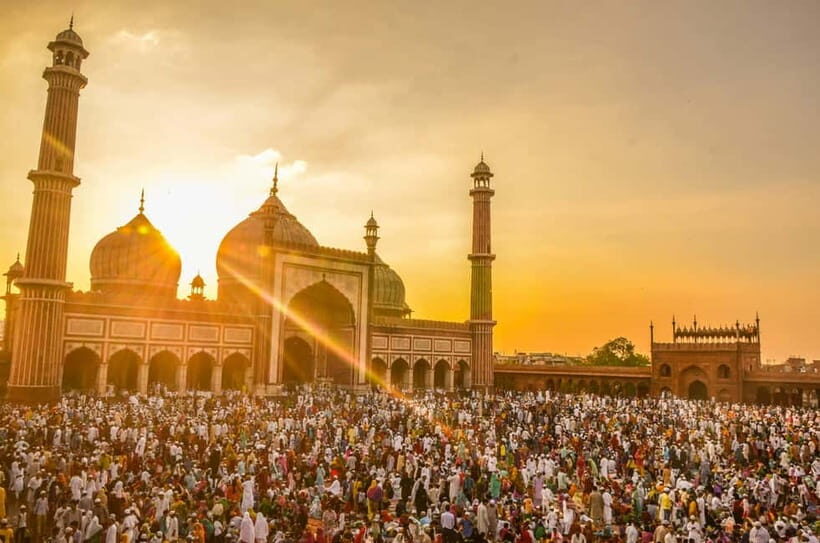
Your Old Delhi route typically starts with Jama Masjid, described as India’s largest mosque. It was built by Mughal Emperor Shah Jahan between 1644 and 1656, at a cost of 1 million rupees. That kind of detail helps you understand the scale immediately, because you’re not just admiring a big mosque—you’re imagining the investment behind it.
Right after Jama Masjid, the plan includes lunch built into the day. The tour calls it tasting and eating famous Delhi dishes as lunch. This is where the tour earns its name. Rather than treating street food as an optional add-on, it’s scheduled at the moment you’re already surrounded by the flavors and the market context.
If you’re picky, don’t panic. A good strategy is to try one or two dishes you’re comfortable with and let the spice and variety do the rest of the work. You’ll get the feel of Delhi food without overcommitting.
Khari Baoli spices and Chandni Chowk: shopping lanes with a purpose
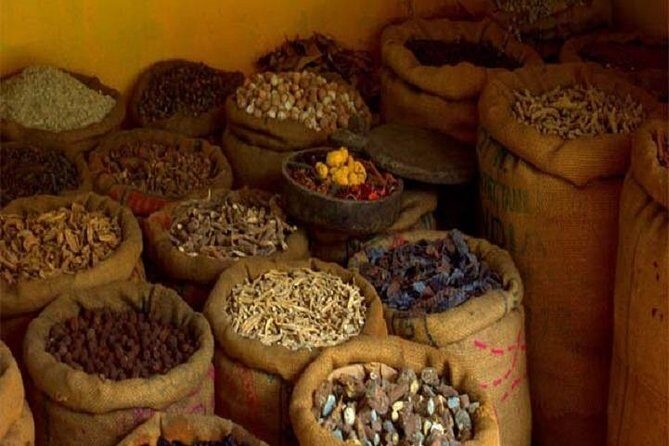
Next up is Khari Baoli, a spice market where you’ll learn interesting facts about spices, including uses. This is one of the best ways to “unlock” street food without needing a culinary background. When you know what spices are used for, you taste with more attention.
Then you move into Chandni Chowk. The tour focuses on exploring narrow lanes with shops selling everything from spices and sweets to jewelry and textiles. This stop is valuable because it explains Delhi as a working city, not a museum.
One practical consideration: the lanes are tight. Keep your valuables secured, wear shoes you can walk in comfortably, and plan for stops to take longer than you think—Old Delhi doesn’t move on your timetable.
Red Fort pass-by: still useful even without a long visit

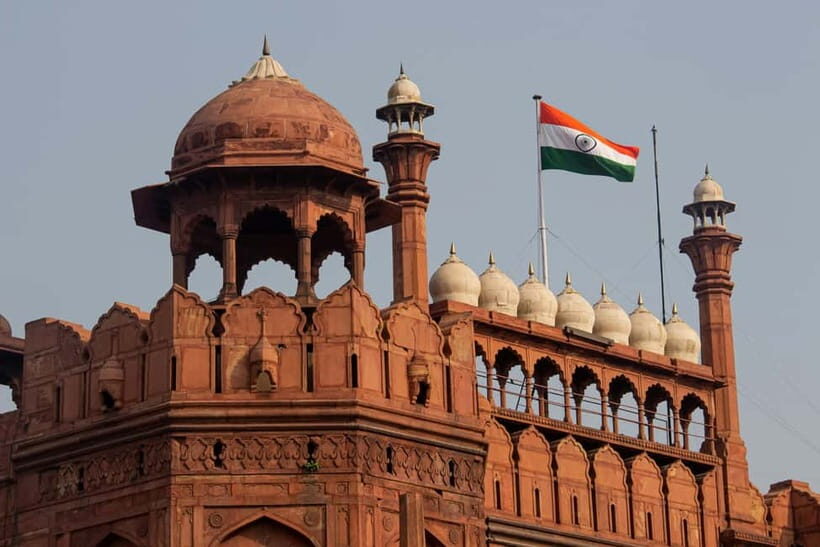
Red Fort is included as a pass-by stop in the schedule. It’s a massive structure built by Shah Jahan between 1639 and 1648, and it served as the main residence for Mughal emperors. Even without a long visit, the pass-by works because your guide can frame what you’re seeing before you reach other Old Delhi landmarks.
If you’re specifically chasing Red Fort inside-and-out photos and time for galleries, you might want an additional stop. But as part of this guided circuit, the quick view helps you connect the dots between the Mughal era and today’s street-level energy.
Gurudwara Bangla Sahib: the kitchen-scale stop you’ll remember
After Old Delhi, you’ll reconnect with your driver and head to Gurudwara Bangla Sahib. This is a major spiritual stop, and the tour highlights its kitchen—described as the largest kitchen of India preparing food for 10,000 people every day.
That number lands. It’s one thing to hear about food in Delhi; it’s another to see the scale of food as a system of service. Even if you’re not religious, you can appreciate the orderly purpose behind it.
This stop often becomes a natural palate reset after the sensory intensity of markets. It’s a good moment to slow down slightly and take in how different types of places coexist in the same city.
Monday swap: what changes and why
The tour notes an important adjustment for Mondays: Lotus Temple and The Red Fort are closed on Mondays. On those days, the plan says you can go to Raj Ghat and Jantar Mantar instead.
So if your schedule lands on a Monday, you’re not stuck. You still get meaningful landmarks, and the day simply shifts to match what’s open.
Raj Ghat itself is optional in the standard plan. It’s the memorial dedicated to Mahatma Gandhi in Delhi. If you like political and modern-history context, this can be a strong add-on that keeps the day moving forward even when specific major sites are closed.
Languages, guides, and the private-group advantage
This tour is offered as a private group, with a live guide available in multiple languages: English, Spanish, French, Italian, Arabic, Chinese, Japanese, and Faeroese.
One detail that’s helpful if you speak French: a guide named Vansh is mentioned in past bookings as a Francophone guide. That doesn’t guarantee you’ll get the same person, but it’s a reassuring sign that French-language service has shown up successfully.
Private-group touring isn’t just comfort—it changes how you experience Delhi. You can ask about architecture while standing under it, ask about food when you’re holding a snack, and request changes to fit your flight timing. The schedule can also be adjusted to suit flights, which helps a lot when your Delhi hours are limited.
Practical tips before you go
Bring a passport or ID card, since that’s what the tour requests. Also, the tour is marked not suitable for pregnant women, so if that applies, you’ll want a different style of sightseeing plan.
Timing-wise, plan for 4–8 hours. That range matters because Delhi travel time and site pacing can change depending on the day’s crowd levels. If you have only one day and you want Old + New Delhi in one shot, this is designed for that.
And yes, wear comfortable shoes. Even with a car, you’ll walk at multiple stops and spend time in Old Delhi lanes where you want good footing.
Who should book this tour?
Book it if you:
- Want Old Delhi street food + major landmarks in one day
- Prefer a private guide over jumping between sites solo
- Like having a simple route that explains what you’re seeing while you move
- Want the flexibility of optional stops like Raj Ghat, Lotus Temple, and Qutub Minar
Skip it (or consider another format) if you want:
- A slow, no-rush day with lots of downtime
- A totally flexible route with no scheduled landmarks
- A plan that fits pregnancy-related needs
Should you book this Old and New Delhi guided street food tour?
If your goal is a well-paced first-time overview with real Delhi street-food energy, this tour is an easy yes. The biggest win is the mix: New Delhi monuments you can photograph and understand, plus Old Delhi areas where the food and market streets explain the city’s daily rhythm.
For best results, decide upfront what you care about most—UNESCO scale at Humayun’s Tomb and Qutub Minar, spiritual landmarks like Lotus Temple and Gurudwara Bangla Sahib, or the food-and-spices core around Jama Masjid, Khari Baoli, and Chandni Chowk. Then let the guide do what they’re meant to do: translate the sights into stories you can actually remember.
FAQ
How long is the Old & New Delhi guided tour with street food?
It runs for 4 to 8 hours, depending on the starting time and how your day is paced.
Where do I get picked up, and is drop-off included?
You can be picked up from your hotel or the airport in Delhi, and the tour includes hotel pickup and drop-off.
Is transportation provided?
Yes. You get a private air-conditioned car with a driver for the tour.
Are entrance tickets included?
Yes. Entrance tickets for the included stops are part of the package.
Can I skip the line at busy attractions?
Yes. The tour includes skip-the-line access through a separate entrance at participating sites.
Which Old Delhi landmarks are included?
The Old Delhi portion includes tuk-tuk ride, Jama Masjid, Khari Baoli (spices), Chandni Chowk, and Red Fort as a pass-by.
What happens on Mondays?
On Mondays, Lotus Temple and The Red Fort are closed, so the plan notes alternatives like Raj Ghat and Jantar Mantar.
What should I bring to join the tour?
Bring a passport or ID card.