REVIEW · NEW DELHI
Old & New Delhi City Tour-Half Day or Full Day Delhi Tour
Book on Viator →Operated by Bagga India Tour · Bookable on Viator
Delhi in eight hours, without the guesswork. This private tour strings together Mughal-era landmarks, Sikh and Hindu places of worship, and British-colonial sights into one practical day. You also get a real guide and hotel transfers, so you’re not stuck figuring out timing in a city that loves traffic.
Two things I like a lot: the Old Delhi cycle rickshaw ride that helps you feel the scale of the historic lanes, and the way the route covers multiple faiths and time periods without turning it into a rushed checklist. There’s also room to adjust what you focus on, which matters when you only have one shot at Delhi.
One thing to think about before you book: the headline price can climb a bit once you add lunch and any entrance-fee option you didn’t choose.
In This Review
- Key highlights that make this tour worth your time
- What you’re really paying for at $28.50
- Hotel pickup and the rhythm of an 8-hour Delhi day
- Old Delhi and Jama Masjid: the “big moment” start
- Chandni Chowk and the spice market: short stop, big sensory impact
- From Red Fort to Lotus Temple: moving through Delhi’s time periods
- Gurudwara Bangla Sahib: the calm contrast in a busy day
- Qutub Minar and Humayun’s Tomb: UNESCO power in two stops
- Connaught Place lunch break: choose your own restaurant
- Agrasen Ki Baoli and India Gate: weird stories and a landmark reset
- Rashtrapati Bhavan and the reality of security limits
- Who this tour fits best (and who should think twice)
- Tips to make the most of your day
- Should you book this Delhi city tour?
- FAQ
- How long is the Old & New Delhi City Tour?
- Where does hotel pickup and drop-off happen?
- Is the tour private?
- Does the price include monument entrance fees?
- Is lunch included?
- Is Lotus Temple open every day?
- Is there a cycle rickshaw ride?
- What transport do you use during the tour?
- What is the cancellation policy?
Key highlights that make this tour worth your time
- Cycle rickshaw in Old Delhi for an up-close look near Jama Masjid
- Faith sites in one loop: Jama Masjid, Lotus Temple, Gurudwara Bangla Sahib
- UNESCO stops included at Qutub Minar and Humayun’s Tomb (with paid-entry option)
- Chandni Chowk spice-market time to see how people actually shop
- Hotel pickup and drop-off across Delhi, Noida, Gurugram, and Faridabad
- Guides with real city context, including names like Gaurav Soni and the Hitesh and Suresh team
What you’re really paying for at $28.50
On paper, $28.50 per person for an 8-hour Delhi day sounds like a steal. What makes it work is that you’re not just buying a sightseeing ticket—you’re buying logistics: an air-conditioned car, a driver, parking, fuel, taxes, unlimited bottled mineral water, and a government-approved guide. Those pieces add up fast in Delhi, especially if you’re traveling independently.
That said, check how you choose the monument-entrance option. The tour notes that monuments entrance fees are included only if you book with entrance fees, while there’s an $21 per person figure if you’re on the option without entrance fees. Lunch is separate too: it’s $10 per person and the break is built into the day.
So I’d look at the real value like this: if you’re the type who hates ticket lines, hates planning, and wants a guided route that connects religious and historic sites logically, this price can feel very fair.
You can also read our reviews of more city tours in New Delhi



Hotel pickup and the rhythm of an 8-hour Delhi day
This tour is designed around convenience. Your pickup runs from hotels in New Delhi, Noida, Gurugram, and Faridabad, using an air-conditioned car. The standard start time is around 9:00am based on your booked time option, and the full day runs about 8 hours.
In practice, that timing matters. Delhi’s traffic can steal hours. The value here is that your day is built with enough movement to hit big sights without turning into a frantic sprint. You’ll also get drop-off back at your hotel once the main landmarks are done.
Because it’s private—only your group participates—you don’t get that uncomfortable feeling of being dragged along by other people’s plans. If you want more time at a market or want fewer photo stops, you have a better chance of making the day fit you.
Old Delhi and Jama Masjid: the “big moment” start
The day typically begins at Jama Masjid, one of Delhi’s most famous Mughal-era mosques. You get about an hour here, with an admission ticket included in the described package. It’s a powerful stop because it sets the tone for Old Delhi: religious architecture, crowds, and the lived-in feeling of a neighborhood that’s been active for centuries.
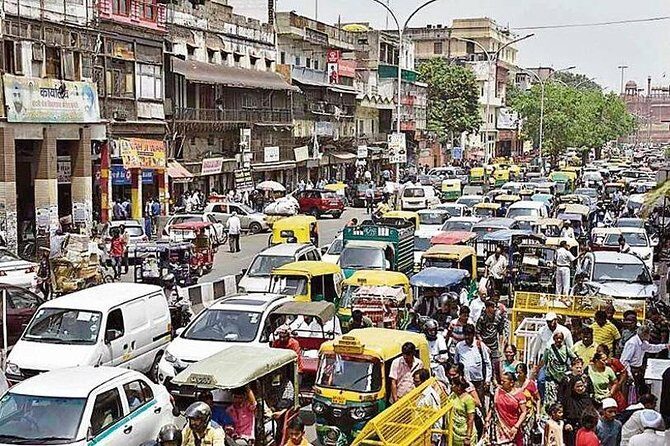
What I especially like is the way this tour transitions from the mosque into the lanes. You’re also included in a cycle rickshaw ride in Old Delhi, which is a smart move if you’re not used to how narrow streets can get. Even if you don’t love rickshaws, it helps you understand where you are faster than walking alone.
Practical tip: wear something comfortable for an active hour and be ready for mosque-visitor rules. The guide can help you navigate what to do when you arrive.
Chandni Chowk and the spice market: short stop, big sensory impact
Next comes Chandni Chowk, with time carved out for one of Delhi’s best-known experiences: a shopping walk through the historic market. You get about 30 minutes, and the stop is described as a major 17th-century market and a place where spices are famous.
This part is worth it because it’s not just “look at the buildings.” It’s the everyday Delhi version—people bargaining, vendors calling out, and shelves packed with spices that smell like you walked into a pantry.
The trade-off is time. Thirty minutes goes by fast. If shopping is your priority, I’d lean into it early in the market walk and bring a small budget for snacks or spice purchases so you’re not scrambling later.
From Red Fort to Lotus Temple: moving through Delhi’s time periods
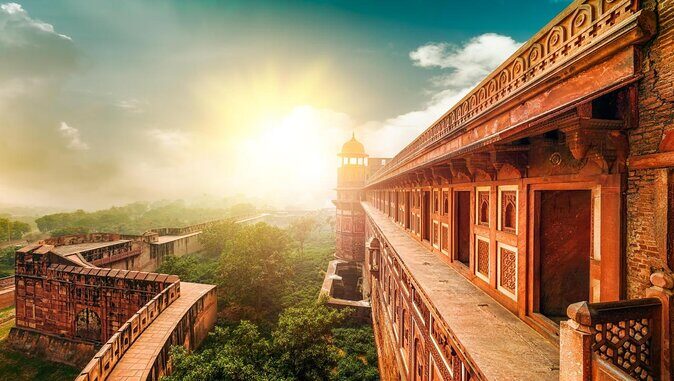
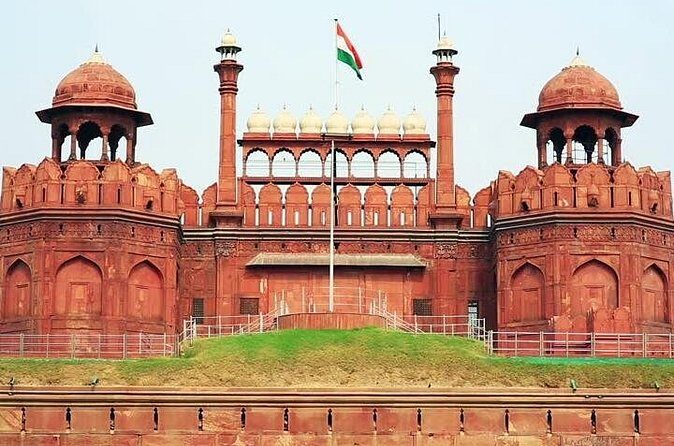
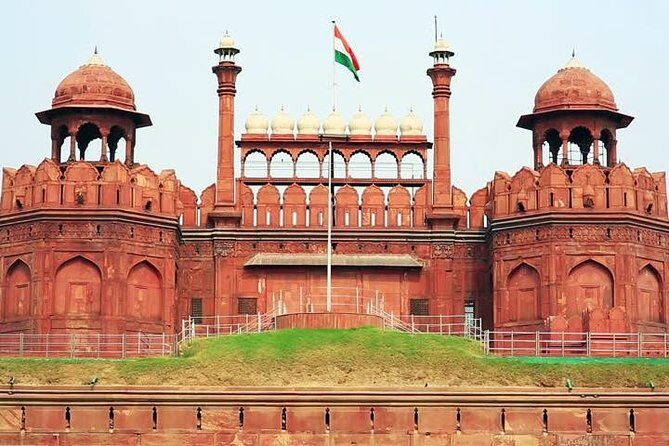
After Old Delhi, you shift into a broader sweep of landmarks. The route includes the Red Fort, described as a Mughal royal residence built in the 1600s, known for its long defensive walls and iconic presence in the city. Even when you don’t spend a full chunk of time inside every major site, this stop helps you connect the Mughal story to what you’re seeing elsewhere on your route.
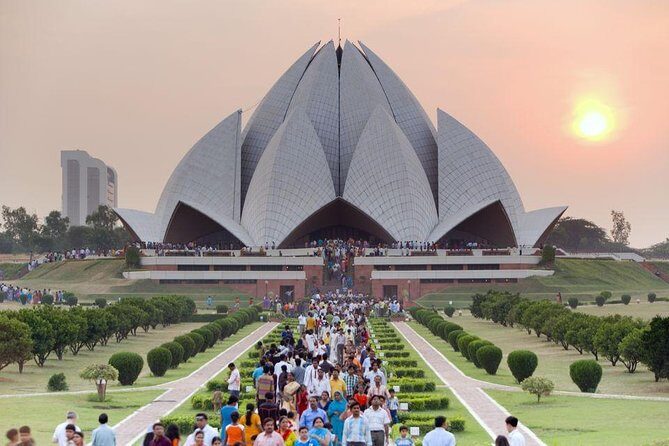
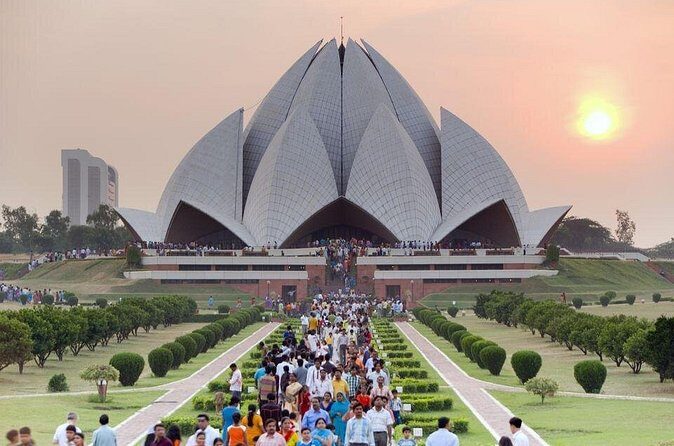
Then you pivot to a modern religious landmark: Lotus Temple. You get about an hour, and admission is listed as free. The temple is notable for its flower-like shape and for being a prominent Bahá’í House of Worship, dedicated in December 1986.
Two things to keep in mind:
- Lotus Temple is closed every Monday. If your tour day lands on Monday, the information says you can visit Birla Temple instead.
- Some temple visits can include quiet time and visitor flow, so it’s not the place to rush.
A few more New Delhi tours and experiences worth a look



Gurudwara Bangla Sahib: the calm contrast in a busy day
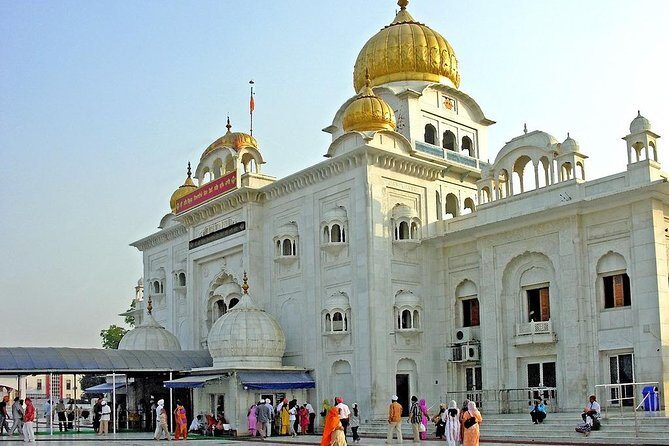
From Mughal and modern architecture, you head to Gurudwara Bangla Sahib, a major Sikh place of worship in central Delhi. The stop includes about an hour, and admission is free.
What makes this stop compelling is how it adds another layer to Delhi’s religious life. The description calls out the golden dome and the sacred healing pool, plus community service with a free meal. Even if you don’t time it for the meal portion, the building setting gives you a different kind of experience than the forts and mosques.
If you’re someone who likes to understand how a culture lives today—not only how it looked in the past—this is the kind of stop that makes your day feel grounded.
Qutub Minar and Humayun’s Tomb: UNESCO power in two stops
South Delhi adds two UNESCO-listed hits: Qutub Minar and Humayun’s Tomb. You get about an hour at each, with Qutub Minar’s admission ticket included and Humayun’s Tomb admission ticket included (again, assuming you’ve chosen the entrance-fee option).
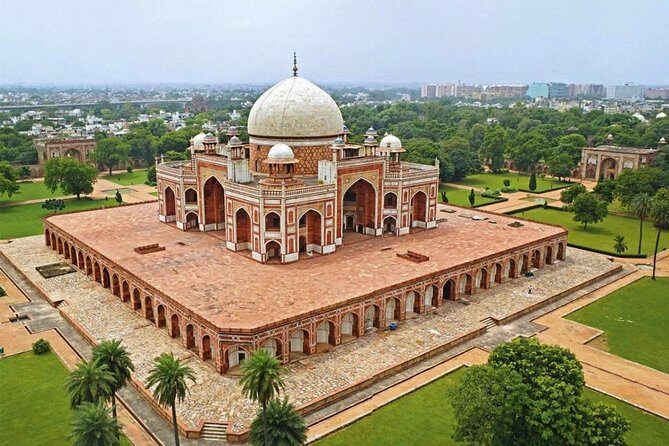
Qutub Minar is described as a towering 73-meter victory minaret, part of a UNESCO World Heritage Site area. Humayun’s Tomb is described as the tomb of the Mughal emperor Humayun, built in the mid-1500s by Haji Begun for Humayun’s Persian wife—an immediate reminder that Delhi’s history is not just one empire, but shifting layers.
Why this matters for your schedule: UNESCO sites can eat time if you’re self-guiding. Here, the day gives you dedicated time blocks so you don’t end up sprinting through big monuments like you’re in an airport terminal.
Connaught Place lunch break: choose your own restaurant
Lunch is built into the day at Connaught Place. You get about an hour here for a meal at a famous Indian restaurant area, with the info stating that lunch price is not included and is about $10 per person.
This “one hour at Connaught Place” is useful because it’s not a forced buffet or one set restaurant. You can pick what fits your pace—quick and simple, or a more sit-down meal if you’ve been walking and riding all morning.
Practical advice: use this stop to reset. Drink water, step away from the heat, and come back to the afternoon sights with your energy intact.
Agrasen Ki Baoli and India Gate: weird stories and a landmark reset
After lunch, you visit a site with folklore baked in: Agrasen Ki Baoli. It’s described as famous for urban legends and “hauntings,” plus paranormal activity stories. The stop is about 30 minutes.
I like this kind of stop because it’s not only about architecture—it’s about local storytelling. Even if you treat the legends as legends, the site gives you a different flavor of Delhi: the city as told by rumor, not only by textbooks.
Then you move to India Gate, a major landmark and war memorial in central Delhi. The stop is short—about 10 minutes—so it’s ideal for photos and a quick read of the setting rather than a long stay.
Rashtrapati Bhavan and the reality of security limits
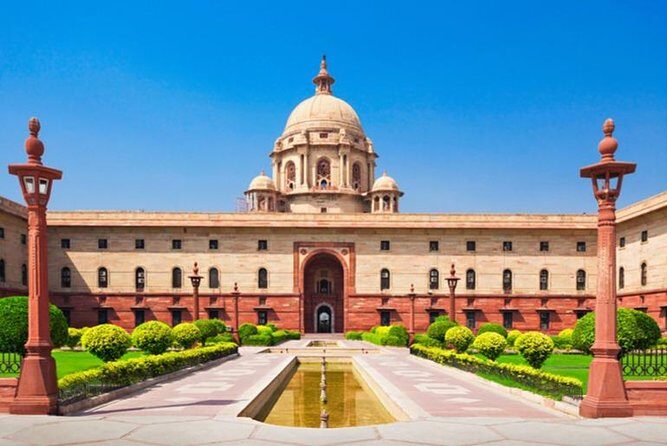
You also pass Rashtrapati Bhavan, described as the official residence of the President of India and an architectural symbol of democracy. The info is clear that due to security reasons, tourists are not allowed to visit inside, so your time here is brief and focused on viewing.
That’s actually pretty normal for Delhi’s major government sites, and it’s useful to know ahead of time. If you were imagining an interior visit, you’ll want to shift your expectations to exterior views and street-level appreciation.
Who this tour fits best (and who should think twice)
This tour works well if you:
- Have limited time and want a structured day of Old Delhi + UNESCO + modern landmarks
- Like seeing how multiple religions and cultures show up in the city (mosque, Sikh gurdwara, Bahá’í temple, etc.)
- Prefer hotel pickup/drop-off over figuring out transport across Delhi’s neighborhoods
- Want a private guide who can help shape the pacing
You might think twice if you:
- Want long stays at a few sites. This is a “cover a lot” day, and some stops are brief by design.
- Are traveling on a Monday and strongly want Lotus Temple specifically (it’s closed on Mondays, and Birla Temple is suggested instead).
- Are on a tight budget and didn’t choose the entrance-fee option, since the entrance-fee add-on and lunch cost can change the final total.
One extra note from past guide experiences: names like Gaurav Soni, plus the Hitesh and Suresh pairing, show up with praise for giving the day structure and still letting you steer your preferences. That’s a good sign for anyone who hates being steamrolled by a rigid schedule.
Tips to make the most of your day
- Wear comfortable shoes for a lot of walking plus market time.
- Plan for a mid-day meal at Connaught Place since lunch is not included.
- If you care about entrance sites, decide early whether you want the entrance-fee option so you’re not doing math on the fly.
- Bring a little cash for optional purchases in Chandni Chowk—spices are the obvious target, but you may also find snacks and small souvenirs there.
Should you book this Delhi city tour?
I’d book this tour if you want a one-day overview that covers Delhi’s big themes: Mughal power, modern faith architecture, Sikh community life, and the British-colonial timeline all in one line. At this price point, the value is in the practical package: guide, transport, water, and time blocks that keep the day from turning into chaos.
I’d skip it or look closely at the options if your main goal is deep time inside a single monument, or if Lotus Temple on a Monday is non-negotiable for you. Otherwise, this is a strong choice for first-timers, stopover travelers, and anyone who wants to get oriented fast without sacrificing the fun parts of Delhi.
FAQ
How long is the Old & New Delhi City Tour?
The tour runs for about 8 hours (approx.), starting around 9:00am based on your selected time option.
Where does hotel pickup and drop-off happen?
Hotel pickup and drop-off are included from New Delhi, Noida, Gurugram, and Faridabad.
Is the tour private?
Yes. It’s a private tour/activity, and only your group participates.
Does the price include monument entrance fees?
It depends on the option you book. Monuments entrance fees are included if you book the tour with entrance fees; if you book without entrance fees, the listed additional amount is $21.00 per person.
Is lunch included?
Lunch is not included. The lunch price is listed as $10.00 per person, and there’s a lunch break around Connaught Place.
Is Lotus Temple open every day?
No. Lotus Temple is closed every Monday. On Mondays, the information says you can visit Birla Temple instead.
Is there a cycle rickshaw ride?
Yes. A cycle rickshaw ride in Old Delhi is included.
What transport do you use during the tour?
You travel in an air-conditioned car with a friendly driver.
What is the cancellation policy?
You can cancel for a full refund up to 24 hours in advance of the experience start time. If you cancel less than 24 hours before, the amount paid is not refunded.