REVIEW · NEW DELHI
Old Delhi Walking Tour
Book on Viator →Operated by Tour with Anu · Bookable on Viator
Old Delhi moves fast; this tour keeps up. You get a guided route through classic sights, with a rickshaw ride and stops that are hard to piece together on your own. The best part is having someone explain what you’re seeing as you move through crowds and narrow lanes, starting near Jama Masjid and working toward the spice market.
I especially like the small-group feel (up to 20 people). And I like the way the tour builds in breaks—there’s tea and snacks along the way—so you’re not just walking until you’re fried.
One possible drawback: a walking tour depends on the guide showing up on time. I did see one very negative report about a guide not arriving, so if this is your one chance in Delhi, message your organizer and plan to arrive a few minutes early at the meeting point.
In This Review
- Key Things That Make This Old Delhi Walk Worth Your Time
- Old Delhi by Foot: What You Really Gain for $13
- Meeting Point at Delhi Gate: Getting Oriented Before You Step In
- A Smooth Route Plan: How the Walk Fits Together
- Stop at Red Fort Area: First Anchor, Fast Context
- Jama Masjid: The Mosque Area and Respectful Viewing
- Tea and Snacks Break: Not a Pause, a Reset
- Rickshaw Ride Included: One Classic Shortcut, No Planning Hassle
- Spice Market Finish: Why the Ending Matters
- Who This Tour Fits Best (and Who Might Skip It)
- About the Guide: Anu’s Storytelling and Local Perspective
- Price and Value: Where the Money Actually Goes
- Practical Tips Before You Go
- Should You Book This Old Delhi Walking Tour?
- FAQ
- How long is the Old Delhi Walking Tour?
- Where do I meet for the tour?
- What does the tour include?
- What stops are part of the route?
- Is it easy to reach by public transport?
- What’s the cancellation and weather situation like?
Key Things That Make This Old Delhi Walk Worth Your Time
- Anu as your guide: a local leader who tells stories and helps you understand what you’re looking at
- Jama Masjid to spice market flow: you’re guided through major landmarks plus markets, not random wandering
- Rickshaw ride included: you get a classic Old Delhi transport moment without hunting for one
- Tea and snacks break: built-in comfort for a 2.5-hour walk
- Up to 20 travelers: small enough to ask questions while still seeing the action
- Weather matters: it’s listed as requiring good weather, so have a backup day in mind
Old Delhi by Foot: What You Really Gain for $13
For $13, the value is in how the tour packages the essentials: a guide, a ride, and a snack break, all wrapped into about 2 hours 30 minutes. That’s a lot of problem-solving removed from your day. In Old Delhi, the hard part isn’t just seeing famous places—it’s getting from one “wow” moment to the next without getting turned around.
You’re also not stuck doing a checklist. The point of a guided walk here is context. You’ll learn why certain places pull people in—mosque area rhythms, market logic, and the little reasons vendors and shoppers cluster where they do. And because the guide is with you, you can ask practical questions on the spot instead of guessing later.
Price-wise, the tour also makes sense if you’re trying to do Old Delhi as a first-timer. A guide plus a rickshaw is normally the stuff that costs extra once you’re already there. This bundles it up up front, which keeps your day predictable.
You can also read our reviews of more walking tours in New Delhi



Meeting Point at Delhi Gate: Getting Oriented Before You Step In
You’ll meet at the Office Of Deputy Commissioner, OPG House area near Delhi Gate Metro Station, Gate No. 3. The listed meeting point details are long, but the key is the landmark: Delhi Gate Metro Station, Gate No. 3. Old Delhi can feel like a maze if you’re arriving cold, so arriving early helps. Give yourself a cushion to find the exact gate and match your group up with your guide.
There’s also a metro hint: it’s a good way to get around Delhi, and you’ll want to take the Violet line and get off at the Jama Masjid area. If your brain wants a clear rule, use this: take the Violet line toward the Jama Masjid area, then treat Gate No. 3 at Delhi Gate as the “anchor” for meeting.
What I like about starting with a set meeting point is that it reduces stress. The tour is only about 2.5 hours, so wasting time at the front erodes the whole experience.
A Smooth Route Plan: How the Walk Fits Together
The tour is described as starting from Jama Masjid and ending at the spice market. Along the way, you’ll cover major stops that include Red Fort and Jama Masjid, plus you’ll pass through a spice market, flower market, and a temple, with a tea stop in the mix.
Here’s the practical takeaway: you’re not doing one big landmark and calling it a day. You’re getting a sequence—monument area to mosque area to markets—so your sense of place grows with each step. That matters in Old Delhi, where the “story” is in the street layout, not in a single building.
Duration is about 2 hours 30 minutes, so expect a real walk. You’ll want comfortable shoes and a calm pace. If you’re the type who likes to stop for photos every 30 seconds, you can do it, but keep an eye on the group flow so you don’t slow everything down.
Stop at Red Fort Area: First Anchor, Fast Context
One of the listed stops is the Red Fort. Even if you only see it briefly from street level, this is a smart first major reference point because it frames the rest of the walk. It gives you an orientation marker for Old Delhi—then you move into the denser, more human-scaled parts of the area.
What makes this kind of stop valuable on a walking tour is timing. A guide can point out how the area changes as you move from big landmark scale into market scale. Without that, you tend to view everything as separate sights. With a guide, you start seeing connections: where people go, how streets funnel, and why certain corners feel busier than others.
A drawback to keep in mind: if you’re expecting a long, deep visit with tickets and a full interior experience, this is a walking tour format. You’re there to see and understand, not to spend hours inside.
Jama Masjid: The Mosque Area and Respectful Viewing
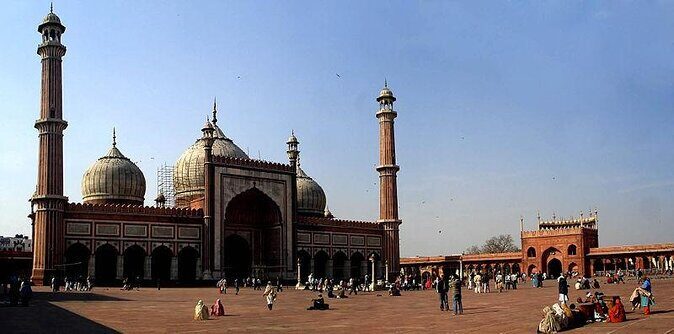
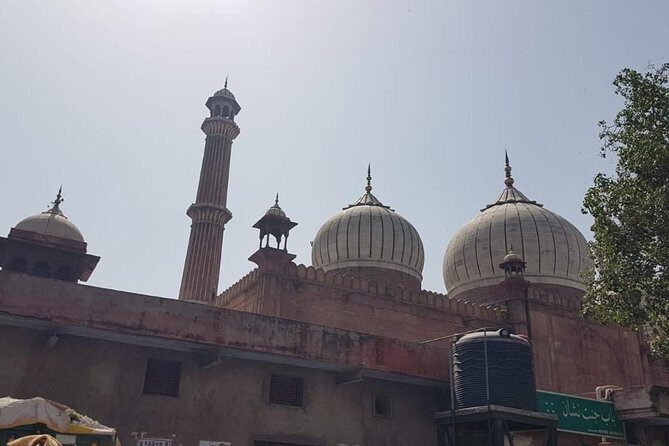
Jama Masjid is one of the key stops, and it’s also the thematic start point for the tour’s route. This matters because it shapes the whole day: you’re entering Old Delhi’s energy through a place that people treat as meaningful—not just a photo spot.
A walking guide helps you navigate in a way that’s more respectful and less chaotic. You’ll also get a better read on what’s going on around you—how the crowd moves, what areas are comfortable to view from, and how to stay aware while you’re taking photos.
The practical value here is simple: if you’ve never been in a working religious space with intense foot traffic, guidance keeps you on the safe and polite side. You also get a chance to ask questions as you go, which turns “I saw a mosque” into “I understand what I’m looking at.”





Tea and Snacks Break: Not a Pause, a Reset

You’ll get tea and snacks during the walk. This is more than a nice perk—it changes the whole feel of a 2.5-hour experience. Old Delhi walking is sensory. If you’re walking on an empty stomach, fatigue sneaks in fast, and then everything feels harder than it should.
A tea stop also gives you a moment to slow down and regroup. You can ask your guide about what’s next, what to notice in the markets, and how to move through the spice area without getting overwhelmed. Even if you’re not a big talker, tea makes the tour feel human, not like a rushed sightseeing line.
Rickshaw Ride Included: One Classic Shortcut, No Planning Hassle

A rickshaw ride is included, and that’s a big part of why this tour feels like more than a basic walking route. In Old Delhi, walking is the main action—but a short ride adds variety and gives you a break from constant foot-level navigation.
The value here is practical. You don’t need to figure out how to hire a rickshaw, negotiate, or guess where a good pickup point would be. The tour builds this into the schedule, which keeps you from losing time in the middle of the day.
Also, a ride changes your perspective. You see street rhythm differently when you’re moving, even if it’s only for part of the experience. It’s a nice contrast to the market walking moments.
Spice Market Finish: Why the Ending Matters
The tour is designed to end at the spice market area. That’s a smart choice because it places the most intense sensory part near the end, when you’ve already learned how the streets and crowds work.
By the time you reach the spice market, you’ve had the mosque and landmark context. So you can focus on the details that matter: the feel of the market, how vendors present goods, and how the area functions as a hub rather than just a set of stalls.
This ending also gives you an easy path for your next move. If you want to keep exploring after the tour, the spice market area is a natural place to roam—your bearings will already be better because you’ve walked the route with your guide.
A consideration: spice markets can get crowded and hot. Plan for slower browsing and expect strong smells. If you’re sensitive to scent or dust, keep your pace gentle and take breaks when needed.
Who This Tour Fits Best (and Who Might Skip It)
This is a good match if you want a guided Old Delhi experience without spending extra time arranging transport and pacing. It’s also a good fit for people who like stories—especially if you enjoy hearing how a place feels through local eyes.
Small-group size helps too. With a maximum of 20 travelers, the experience doesn’t feel like you’re stuck in a herd. It’s easier to ask questions and get the guide to slow down when you’re at a key point.
Who might not love it:
- If you need a mostly seated or low-walking plan, this is a walking tour.
- If you’re extremely time-sensitive and can’t risk waiting for a guide, the one serious no-show report should be taken seriously in your decision.
About the Guide: Anu’s Storytelling and Local Perspective
The tour provider is listed as a local guide company with Anu. The standout feedback point is how Anu connects what you see with what it means—especially through storytelling. You’ll likely notice how he points out details you would miss on your own.
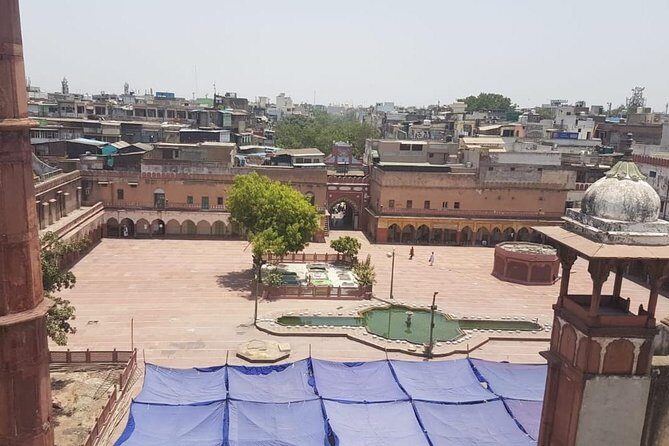
One piece of positive feedback highlights that the tour includes secret-feeling spots like courtyards and rooftop viewpoints that you wouldn’t normally find. That kind of add-on is exactly why a guide can be worth it even if the route looks simple on paper. In dense areas like Old Delhi, “where to look” is half the battle.
On the flip side, there was also one report about a guide not showing up after booking, with waiting and repeated messages. That’s the kind of problem that can derail a day. If you’re booking, treat the meeting time seriously. Arrive early, double-check where you’re supposed to meet, and message ahead so you’re not stuck wondering.
Price and Value: Where the Money Actually Goes
$13 for about 2 hours 30 minutes includes:
- a professional guide
- a rickshaw ride
- tea and snacks
That’s strong value if you’d otherwise pay separately for a guide, a snack stop, and a ride. In major cities, the “free” part of cheap tours can be tempting, but here the included items matter. You’re not just paying for someone to walk beside you—you’re paying for structured movement through landmarks and markets, plus a small comfort buffer.
It also helps that the tour capacity is limited (max 20). More people usually means more noise and fewer chances to ask questions. Here, the smaller size supports a better flow.
Practical Tips Before You Go
- Wear comfortable shoes. Old Delhi walking adds up fast.
- Expect good weather to matter. If weather is poor, the tour may be offered on a different date or refunded.
- Bring basic patience. Old Delhi is lively, and the route is in a high-activity area.
- Keep your meeting point details handy. Gate No. 3 at Delhi Gate Metro Station is your anchor.
- If this is time-critical, message your guide or organizer the day before so you’re not waiting around.
Should You Book This Old Delhi Walking Tour?
I’d book it if you want an efficient, guided Old Delhi day that mixes major landmarks with real street-market atmosphere—without turning your trip into logistics. The included rickshaw ride and tea/snacks make it feel thoughtfully planned for a 2.5-hour slot, and Anu’s storytelling (plus the possibility of rooftop/courtyard moments) is the kind of detail that can’t be replicated by walking alone.
I’d hesitate only if you’re booking at the very last minute, can’t spare time, or you’re the kind of traveler who needs absolute certainty. The one no-show complaint is rare, but it exists—and in a walking tour, timing is everything.
If your schedule allows flexibility and you’re comfortable walking, this is a solid value way to experience Old Delhi’s core scenes in a single afternoon.
FAQ
How long is the Old Delhi Walking Tour?
It runs for approximately 2 hours 30 minutes.
Where do I meet for the tour?
The meeting point is at Office Of Deputy Commissioner, OPG House area by Delhi Gate Metro Station, Gate No. 3 (Chatta lal Miya, Chandni Mahal, Chandni Chowk, Delhi 110002).
What does the tour include?
The tour includes a guided walking experience, a rickshaw ride, and tea and snacks.
What stops are part of the route?
The tour includes stops at Red Fort and Jama Masjid, and it also covers a spice market, a flower market, and a temple, with the tour ending at the spice market area.
Is it easy to reach by public transport?
Yes. It is listed as near public transportation, and it suggests using the Delhi Metro (Violet line) and getting off around the Jama Masjid area.
What’s the cancellation and weather situation like?
You can cancel for a full refund up to 24 hours in advance. The experience requires good weather, and if it’s canceled due to poor weather, you’ll be offered a different date or a full refund.