REVIEW · NEW DELHI
Old and New Delhi city tour with Live tour guide
Book on Viator →Operated by Chaman Duggal Private Tours · Bookable on Viator
Delhi feels huge; this tour helps you focus. This Old and New Delhi city tour strings together major sights with a live English-speaking guide, plus hotel pickup and drop-off so your day runs with fewer hassles. You’ll go from Mughal-era landmarks to New Delhi’s famous government-and-monument zone, with time for the kind of street-level watching that’s hard to do on your own.
Two things I’d seriously prioritize: the small group feel (maximum 4) and the fact you get a proper rickshaw ride through textile and food market areas. That combo makes the city feel personal, not like a stop-and-shuffle. And because your guide is on the ground, you’re not just seeing names on signs—you get facts and small human details that help the places click.
One thing to plan for: entrance tickets aren’t included for some of the big sights (notably Jama Masjid, Humayun’s Tomb, and Qutub Minar), and the tour doesn’t include a meal. If you’re the type who hates extra stops for cash or ticket lines, you’ll want to budget a little time and money.
In This Review
- Key highlights you’ll feel right away
- Why this Old and New Delhi route works in one long day
- Price and value: what $29.21 buys you (and what it doesn’t)
- Hotel pickup, AC comfort, and how the transport saves your day
- Jama Masjid: Mughal scale, prayer spaces, and what to watch for
- Old Delhi rickshaw ride: textile and food market realism
- India Gate on Rajpath: war memorial optics and photo timing
- Humayun’s Tomb: the Mughal burial idea in a garden-tomb setting
- Raj Ghat: a short, meaningful break
- Qutub Minar: the victory tower and the details that matter
- Lotus Temple: modern worship space with a free, easy pace
- Who this tour is best for (and who should skip it)
- My quick booking call: should you book it?
- FAQ
- How long is the Old and New Delhi city tour?
- Is hotel pickup and drop-off included?
- Is this a private tour?
- Do I need to pay for entrance tickets?
- Is the rickshaw ride included?
- Is there an English-speaking guide?
- What’s included in the price besides the guide?
- Can I cancel and get a refund?
Key highlights you’ll feel right away
- Max 4 travelers = a calmer, more personal pace with real back-and-forth with your guide
- Hotel round-trip transport in an AC car so you spend your energy sightseeing, not negotiating rides
- Rickshaw ride through textile and food markets for that Old Delhi street texture
- UNESCO-area heavy hitters in one loop including Humayun’s Tomb and Qutub Minar
- Free stops sprinkled in like Raj Ghat and Lotus Temple, so you’re not paying at every turn
- Bottled/mineral water included—small detail, big help in Delhi heat
Why this Old and New Delhi route works in one long day
Delhi can overwhelm you fast: big roads, heavy traffic, and neighborhoods that feel like different cities. This tour’s logic is simple. It pairs Old Delhi’s Mughal-era pulse (Jama Masjid and the walled-city vibe) with New Delhi’s monumental lines (think Rajpath and the big memorials). That means you don’t spend the day just sightseeing—you spend it learning how the city grew and how power and religion left their fingerprints in different eras.
The best part is the flow. You start with a landmark that gives you scale and atmosphere (Jama Masjid), then you slide into Old Delhi for the rickshaw-and-market experience. After that, the tour shifts into a more open, planned grid of New Delhi sights, where you can breathe for a moment and take photographs without the same crowd pressure. It’s a practical arc for a first trip.
And because it’s a private day tour format, you’re less likely to feel rushed by a large coach group. Your guide can adjust where to spend a bit more time based on what you find interesting—architecture, religion, street food culture, or memorials.
You can also read our reviews of more guided tours in New Delhi



Price and value: what $29.21 buys you (and what it doesn’t)
At about $29.21 per person, this is priced like a budget-friendly guided day rather than a premium private experience. For that money, you get a lot of “day-trip protection”: AC car with driver, parking and permits covered, mineral water included, and a live English-speaking guide who manages navigation and timing.
But here’s the clear balance: some major monuments require separate entrance fees. Jama Masjid, Humayun’s Tomb, and Qutub Minar are marked as admission not included. Meal is also not included. So your total day cost may go up depending on which paid entries you choose to do.
Still, if you add up what you’re avoiding—hiring separate guides, managing transport across several distant areas, and losing time figuring out routing—this looks like a strong value play. It’s especially good if you’re short on time, new to Delhi, or just don’t want to spend your vacation day in traffic planning.
Also, it’s capped at 4 travelers, which matters. Even if the price is low, the small size keeps the experience from turning into a noisy itinerary drill.
Hotel pickup, AC comfort, and how the transport saves your day
Delhi’s distances are real. Without a plan, your day can shrink into waiting time. This tour is designed to prevent that. You’re picked up from your Delhi hotel area and brought back at the end, which is a big deal if you’re staying outside the most central zones.
The car includes fuel, parking, and state taxes, and you get mineral water. That sounds like paperwork, but it translates into something you’ll actually feel: you don’t have to worry about small fees or who pays the driver while you’re trying to stay on schedule.
One practical note: the start point is listed around Karol Bagh. Even with hotel pickup, it’s good to double-check what that means for your specific hotel location, so you don’t get surprised by a meet-point shift. The tour also ends back at the meeting point, which keeps logistics straightforward.
Jama Masjid: Mughal scale, prayer spaces, and what to watch for
Jama Masjid is one of the largest mosques in India, built by Mughal Emperor Shah Jahan between 1650 and 165? (the timing is part of why the architecture feels so confident). The tour window here is about 30 minutes, with admission not included.
In that short time, you’ll get the most out of it by focusing on three things:
1) Scale: it’s not just a building; it’s designed to hold people in a sweeping court space.
2) Details at ground level: look for the symmetry and the way the entrances frame the approach.
3) Respectful behavior: in a functioning religious place, you’ll want to follow your guide’s cues.
If you’re sensitive to crowds, this is the kind of stop where the crowd can vary a lot by time of day. That’s exactly why a guide helps—you don’t just arrive, you arrive with context on how and when to move.
Old Delhi rickshaw ride: textile and food market realism
Next comes the Old Delhi rickshaw ride, about 45 minutes, and it’s free as listed. This is where Delhi shifts from monument viewing to street-life understanding.
Old Delhi, often associated with Shahjahanabad (founded in 1639 by Shah Jahan), is still a walled-city environment where daily life happens right alongside tourist routes. The tour includes a rickshaw through areas linked to textile and food markets, which is a smart match. Textiles tell you about trade history and everyday craft. Food markets tell you about what people actually do now.
Practical tips for this part:
- Dress for close-up street movement. You’ll be seeing shops and stalls up close.
- Expect noise and motion. This is the point of the ride.
- If you’re prone to motion sickness, go slow when you climb in and ask your driver to move steadily.
Also, don’t confuse this with a “sit back and take photos” ride. You’ll get more value by letting your guide explain what you’re passing—why a market looks the way it does, how neighborhoods grew, and what locals consider normal.
You can also read our reviews of more city tours in New Delhi





India Gate on Rajpath: war memorial optics and photo timing
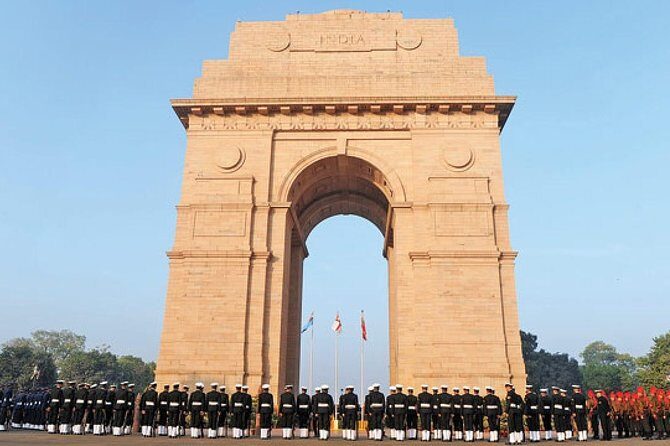
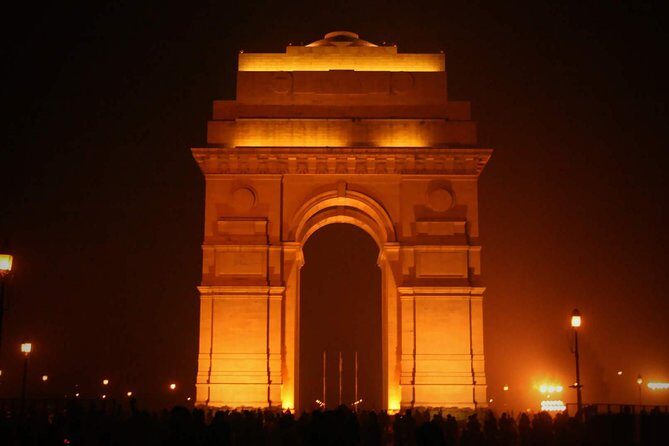
The itinerary includes the iconic India Gate, the sandstone arch-style war memorial in the Rajpath area. Even when you’re not entering anything, it’s a great visual anchor for New Delhi. This is where you understand how Delhi’s British-era planning and later memorial culture shaped the city’s most photographed axis.
The key here is timing and expectations. India Gate is a place you experience with your eyes—wide views, a long perspective, and an easy-to-navigate area for quick photos and a short reset before the next monument.
If you’re a photo-first person, I’d pay attention to the light and the crowd density. If it’s busy, take your shots quickly and move with the guide rather than getting stuck in the same corner.
Humayun’s Tomb: the Mughal burial idea in a garden-tomb setting
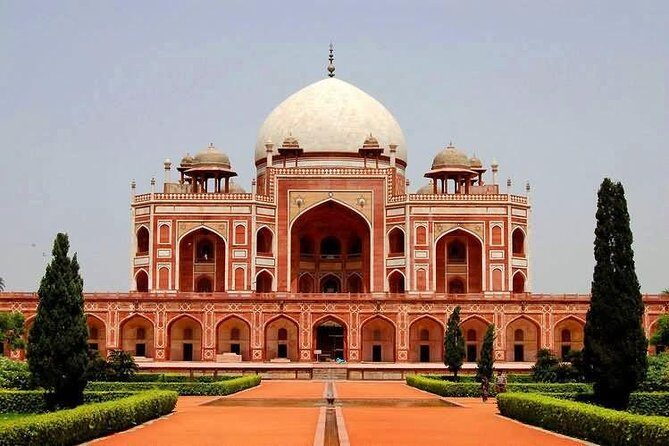
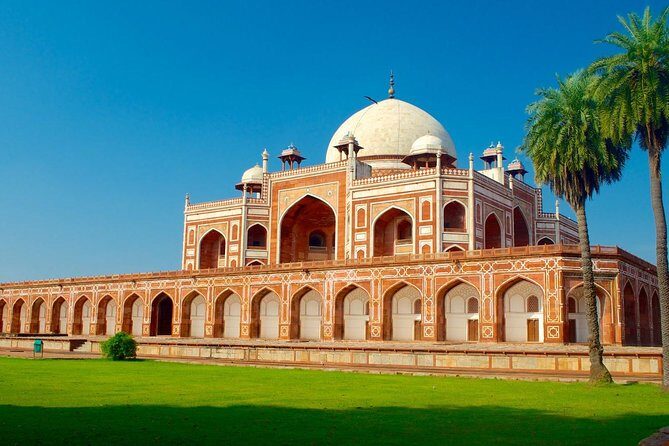
Humayun’s Tomb is on the list as the “dormitory of the Mughals,” based on how many Mughal family members are buried in its complex. The tour gives you about 1 hour, and admission is not included.
Why this stop is worth your time: it’s architecture that teaches you about beliefs and power. The name “garden-tomb” matters because it suggests design as a form of order—symmetry, paths, and a layout that shapes movement like a quiet script. And the burial concentration (150+ family members) adds weight beyond aesthetics.
What I’d watch for during your hour:
- How the garden structure guides your eye.
- The way the tomb sits within the overall planned complex.
- The sense of layered space: you’re not just seeing one object; you’re moving through an idea.
This is also a good stop if you want a calmer pace compared with Old Delhi. It’s still a major site, but it tends to feel more spacious as you move through the grounds.
Raj Ghat: a short, meaningful break
Raj Ghat, dedicated to Mahatma Gandhi, is included as a 30-minute stop, listed as free. This is one of those places where a guide’s context can matter more than extra time. A memorial works differently than a monument you climb, so the point isn’t “how long,” it’s “how present.”
Raj Ghat is tied to both the memorial site and the broader old-gate/ghat geography of Delhi (it’s noted as a historic ghat name and near Raj Ghat Gate). In practice, that means you’ll likely get a quick explanation of why this exact spot is significant in the city’s story.
If you’re tired from walking or street motion, this is a good moment to slow down. It also helps break up the day so the next two large monuments feel more doable.
Qutub Minar: the victory tower and the details that matter
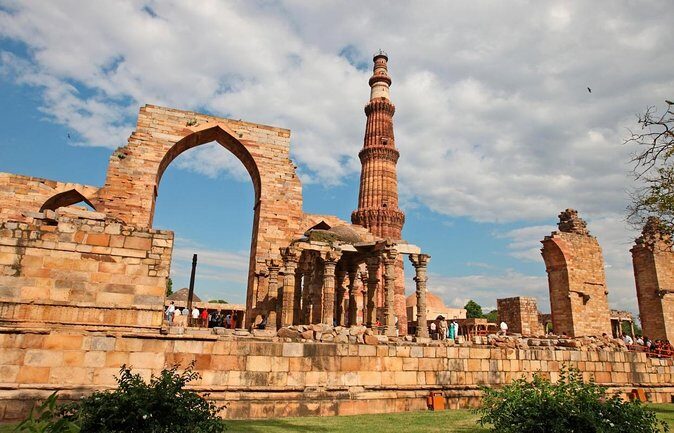
Qutub Minar is listed as about 1 hour, with admission not included. At around 73 meters tall, it’s described as the tower of victory and built in 1193 by Qutab-ud-din Aibak after the defeat of Delhi’s last Hindu kingdom (the guide can help interpret what you’re seeing in that political context).
Five distinct storeys, each marked by projection styles—these are the kinds of architectural clues that make this stop more than just a tall tower in the background. If you spend a minute looking for how the tower’s design changes by level, it becomes more understandable and way more interesting than a single “wow, it’s tall” moment.
A practical consideration: because entry isn’t included, you’ll want to plan for extra cost if you choose to go inside or pay for access. If you’re okay with just the outside views, you can keep your spending tighter, but you’ll miss some of the full on-site experience.
Lotus Temple: modern worship space with a free, easy pace
The Lotus Temple is included for about 1 hour and listed as free. It’s described using the national flower symbolism: beauty, purity, and knowledge. The architecture is based on a lotus form, with the round-leaf, water-flower idea used as a mental model for the structure.
This stop is a great counterweight to the older forts-and-tombs feeling. After Jama Masjid, Humayun’s Tomb, and Qutub Minar, the Lotus Temple gives you something calmer and more contemporary.
What to expect in a practical way:
- It’s a manageable stop length for photos and a slow walk-around.
- Since it’s free as listed, it’s one of the easiest “add-on” wins in the day’s budget.
- Your guide’s job here is to connect the symbolism to what you see, without turning it into a long lecture.
If your day is running hot or crowded, Lotus Temple is also a good place to regroup and let the day’s pace feel kinder.
Who this tour is best for (and who should skip it)
This tour is a strong match for:
- First-timers who want Old Delhi + New Delhi without building a route
- People who prefer a live guide to explain what they’re seeing while they move
- Travelers who like a mix of monuments and real city texture, including the market rickshaw piece
- Short-time visitors who want a structured day around major stops in about 8 hours
It may be less ideal if:
- You strongly dislike paying separate entrance fees for major sites
- You need a meal included (meal is not provided)
- You want a fully flexible day with no fixed stop timing (this tour is planned for smooth coverage)
My quick booking call: should you book it?
I’d book this tour if you want a guided, efficient day that covers Delhi’s big contrasts—Mughal spirituality and street markets on one side, memorials and planned monument spaces on the other—without the burden of transport planning.
If you’re budget-conscious, the price is attractive, but do a quick mental check: entrance tickets aren’t included for some of the biggest draws. If that extra cost is fine for you (and you’ll likely save time and stress by going this route), then this is a smart value way to see a lot with a guide doing the work.
FAQ
How long is the Old and New Delhi city tour?
It’s about 8 hours.
Is hotel pickup and drop-off included?
Yes. The tour includes convenient round-trip transport from Delhi hotels, and it ends back at the meeting point.
Is this a private tour?
It’s described as a private tour experience, with a maximum of 4 travelers.
Do I need to pay for entrance tickets?
Entrance is not included for some stops (Jama Masjid, Humayun’s Tomb, and Qutub Minar are marked as admission not included). Other stops are listed as admission free.
Is the rickshaw ride included?
Yes. The Old Delhi rickshaw ride is included and listed as free, and it goes through textile and food market areas.
Is there an English-speaking guide?
Yes. The tour includes a live English-speaking guide.
What’s included in the price besides the guide?
Included items are an AC car with driver, mineral water, fuel, parking, state tax, permit fees, and the live English-speaking guide.
Can I cancel and get a refund?
Yes. Free cancellation is available up to 24 hours in advance for a full refund. Cancellation within 24 hours does not receive a refund.