REVIEW · JAIPUR
Learn to make a Pichwai Painting
Book on Viator →Operated by Colorbox Art Academy · Bookable on Viator
Learning Pichwai feels oddly calming. This Jaipur workshop lets you create a devotional Pichwai painting inspired by Lord Shrinathji, with step-by-step tutor guidance. I like that the session is hands-on and focused, and that you finish with something you can actually carry home.
The only watch-out is the timeframe: it’s about 3 hours, so you’ll get a guided version of the craft, not a months-long deep study. You’ll also want to check the weather, since the experience needs good conditions.
In This Review
- Key things to know before you go
- What Pichwai Painting Really Is (and why it matters)
- Colorbox Art Academy and the Vaishali Nagar meeting point
- Inside the 3-hour workshop: how the session flows
- The motifs: cows, lotus, and Srinathji’s devotional world
- Taking your painting home: your Jaipur souvenir, not just a photo
- Price and value: why $8 is a smart deal
- Who this workshop suits best (and who might want another option)
- Practical timing and weather: plan your day like a local
- Should you book the Pichwai painting workshop at Colorbox Art Academy?
- FAQ
- Where is the Pichwai painting workshop in Jaipur?
- How long does the workshop take?
- How much does it cost?
- Are art supplies included?
- Is the workshop beginner-friendly?
- What if the weather is bad or I need to cancel?
Key things to know before you go
- A true devotional art form: Pichwai means backdrop, originally made for Lord Shrinathji idol displays.
- Nathdwara roots in the lesson: Pichwai traditions trace back roughly 400 years, near Udaipur at Nathdwara.
- Common motifs you’ll recreate: cows and lotus are the big repeat patterns in Pichwai art.
- All materials provided: brushes and paints are supplied at the venue, so you can travel light.
- Small group size: capped at 20 travelers, so you’re not lost in a crowd.
What Pichwai Painting Really Is (and why it matters)
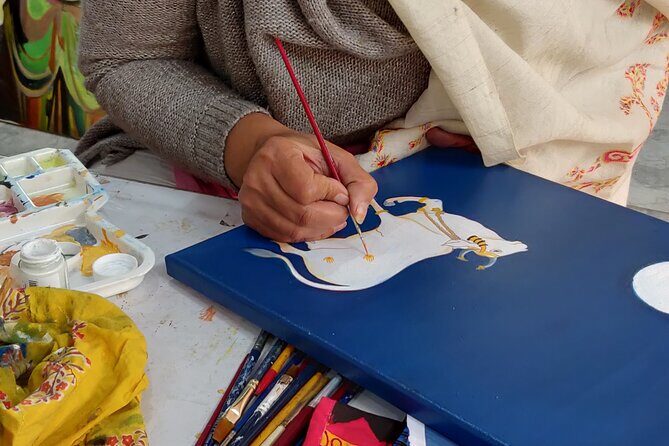
Pichwai is devotional art from Rajasthan, often described as the art of god. In practical terms, it’s not just a picture on paper. It’s a kind of visual mood-setting: scenes and symbols built to surround a worship space—historically as a backdrop for the Lord Shrinathji idol.
A lot of Pichwai focuses on Srinathji, a form of Lord Krishna. When you make your own version, you’re stepping into that same idea: expressing a spiritual presence through pattern, repetition, and emotion—not through realism. That difference is what makes this workshop feel special, even if you’ve never painted before.
You’ll also hear the name’s meaning in plain language: backdrop. That tiny detail helps you understand why the motifs feel so intentional. Cows aren’t random. Lotus motifs aren’t decoration only. They’re part of the world-building that Pichwai is known for. The goal is to create your own devotional canvas that still respects the tradition’s core symbols.
And yes, the lesson traces back to around 400 years ago, with origins in Nathdwara (near Udaipur). You don’t need to be an art historian to appreciate that timeline. The value is in learning the patterns and purpose behind them, then making something personal within that framework.
You can also read our reviews of more tours and experiences in Jaipur.

Colorbox Art Academy and the Vaishali Nagar meeting point
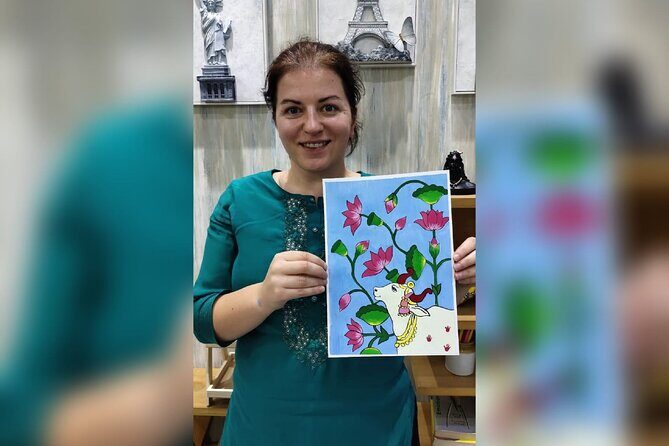
Your workshop starts at Colorbox Art Academy in Vaishali Nagar, Jaipur, at B-1/555, 302021. The experience ends back at the same meeting point, which is helpful when you’re planning the rest of your day in Jaipur.
This is also the kind of activity that fits well into a normal travel schedule. It runs Monday to Saturday, from 11:00 AM to 6:30 PM, and it’s built for a short, guided session (about 3 hours). That matters because you don’t need to carve out a half-day tour with lots of moving pieces.
One more small advantage: it’s near public transportation. That’s not flashy, but it’s the difference between a smooth day and one where you’re sweating over last-mile directions.
You’ll also get a mobile ticket, and confirmation is provided at booking. Together, these details mean less admin and more time for the actual craft.
Inside the 3-hour workshop: how the session flows
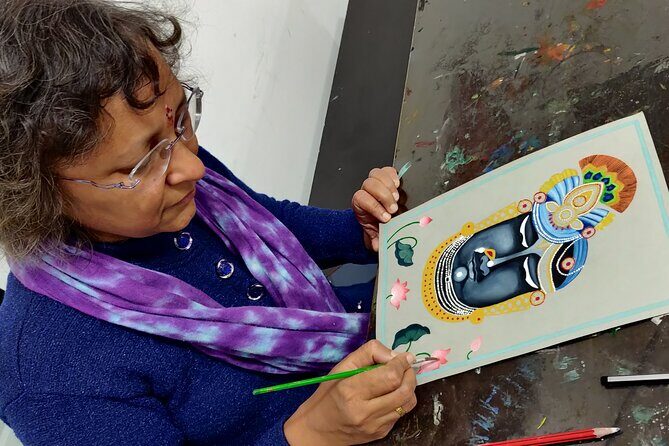
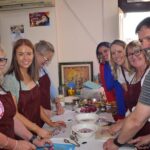
The workshop is structured around step-by-step instructions from trained tutors. That’s the heart of it: you’re not left to wing it. Instead, you follow a guided process designed so beginners can participate and still feel progress.
Here’s what this usually means for you as a participant. You’ll start with the basics of getting your artwork going, then work through the painting process with guidance at each stage. The tutors help you move from blank surface to finished look, while keeping the session paced for a group.
The workshop is limited to a maximum of 20 travelers. In a room like that, you can usually ask quick questions and get correction early, which helps a lot when you’re learning something new. It also supports the vibe of a class, not a show.
Also, all required materials are provided at the venue, including brushes and paints. For travelers, that’s a big practical win. Jaipur is full of tempting shopping stops. Knowing you won’t need to buy supplies first means you can keep your hands free and your schedule simple.
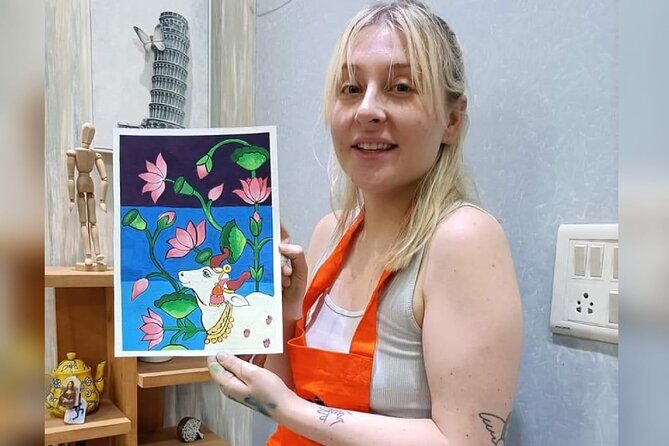
By the end of the session, you’ll have your own completed Pichwai painting as a souvenir. That take-home element is what turns the workshop from a nice afternoon into a real artifact of your trip.
The motifs: cows, lotus, and Srinathji’s devotional world
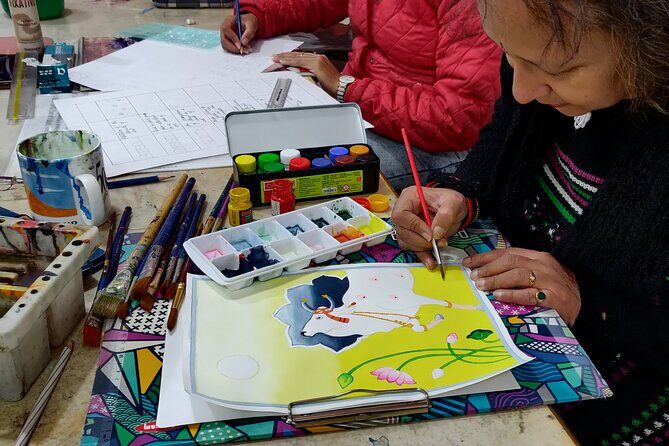
Pichwai art is known for certain motifs that show up again and again, and in this workshop those themes are front and center. The most common motifs include cows and lotus.
Why those motifs matter: they carry symbolic weight in the devotional setting. Cows are tied to Krishna-related pastoral imagery, while lotus motifs often connect to purity, devotion, and spiritual atmosphere. When those motifs are repeated in a Pichwai-style composition, you’re not just painting objects. You’re assembling a set of visual cues that communicate a mood.
This is where the workshop becomes more than a craft lesson. Even if you don’t know the deeper theology, you can feel the pattern logic. Pichwai tends to rely on structured repetition. That can actually make the painting easier for beginners, because you’re working with recognizable forms rather than inventing everything from scratch.
You’ll be recreating the heritage style through your own version. The tutor guidance keeps you aligned with the traditional look, while still letting your hand contribute something personal. Think of it as learning the rules of a local visual language—then writing your own short message in it.
Taking your painting home: your Jaipur souvenir, not just a photo
At the end of the session, you can take your painting home. That’s a simple detail, but it changes the entire value of the experience.
A souvenir photo is nice, but it doesn’t age well. A painting on your wall does. It also becomes conversation material: when someone asks where you got it, you can talk about Rajasthan devotional art and what you learned about Pichwai’s purpose as a backdrop.
Because all the materials are provided at the venue, you’re not scrambling for storage ideas the moment you finish. Still, when you leave the studio, plan for safe transport of your artwork in your bag or through whatever baggage setup you use. You’ll thank yourself later.
Also, remember the goal is recreating a traditional art form. The finished piece is yours, but it’s also rooted in a practice that’s meant to connect viewers with Srinathji’s presence. Even a beginner’s attempt carries that meaning.


Price and value: why $8 is a smart deal
The workshop costs $8 and lasts about 3 hours. That price is strikingly low for a guided, materials-included creative class.
Here’s how I think about value for this kind of experience:
- You’re paying for tutor time and step-by-step guidance.
- You’re also paying for the use of brushes and paints, instead of bringing your own supplies.
- And you’re leaving with an actual finished artwork, which you can’t really replicate with a quick photo stop.
So the price isn’t just for entertainment. It’s for a structured learning moment that produces something tangible.
There’s one more value angle: a small group cap of 20 travelers can help preserve quality. It doesn’t guarantee private tutoring, but it does reduce the chance you’ll feel like a number. For $8, that combination is hard to beat.
Who this workshop suits best (and who might want another option)
This is a great match if you want hands-on culture without needing advanced art skills. The experience notes that most travelers can participate, which usually means the class is designed for a wide range of comfort levels.
It also fits well for:
- Families looking for a creative activity they can finish together
- Couples who want something calmer than a typical sightseeing loop
- Friends who like making things with their hands
- Anyone who wants a Rajasthan art souvenir that’s rooted in actual tradition
If you’re the type who wants to spend hours refining every brushstroke, you might feel a little pressure with the 3-hour format. You’ll still learn and create, but it’s a guided session rather than a studio residency. Think of it as a well-paced introduction you can be proud of.
Practical timing and weather: plan your day like a local
The workshop runs Monday through Saturday, from 11:00 AM to 6:30 PM. That gives you flexibility for building a day around Jaipur’s sights and markets.
You also need good weather. The experience explicitly notes that it requires good weather, and if it’s canceled due to poor weather, you’ll be offered a different date or a full refund.
So before you commit, check the forecast for the time window you’re booking. This is especially relevant in Jaipur when weather can shift. If you’re traveling with tight plans, choose a time that’s not your absolute last option of the day.
Finally, since the meeting point is in Vaishali Nagar and near public transportation, you can plan an easy route without complicated transfers. That’s the kind of convenience that makes a workshop like this feel effortless.
Should you book the Pichwai painting workshop at Colorbox Art Academy?
If you like art, even a little, and you want a meaningful Jaipur souvenir that goes beyond a shop purchase, I’d book this. For $8, with materials included and tutor-led step-by-step help, it’s one of the most straightforward “do something creative” options in the city.
I’d also recommend it if you’re curious about how Rajasthan devotional traditions show up in everyday visual culture. Pichwai isn’t just a style name—it’s a backdrop tradition tied to Srinathji, with signature motifs like cows and lotus. You’ll walk away with a clearer understanding of why those patterns matter.
Skip it only if you strongly prefer unstructured free painting time, or if you need something longer and deeper than a 3-hour guided class. And don’t forget the weather factor. A smooth session depends on good conditions.
Overall, this is a low-cost, high-satisfaction workshop: you learn the basics of a classic devotional art form and you leave with a piece of it you can hang on your wall.
FAQ
Where is the Pichwai painting workshop in Jaipur?
It starts at Colorbox Art Academy, located at B-1/555, Vaishali Nagar, Jaipur, Rajasthan 302021, India. The activity ends back at the same meeting point.
How long does the workshop take?
The class lasts about 3 hours.
How much does it cost?
The price is $8.
Are art supplies included?
Yes. Brushes, paints, and other materials required to complete the traditional art work are provided at the venue.
Is the workshop beginner-friendly?
Most travelers can participate, and the class includes step-by-step instructions from trained tutors.
What if the weather is bad or I need to cancel?
The experience requires good weather. If it’s canceled due to poor weather, you’ll be offered a different date or a full refund. You also get free cancellation up to 24 hours in advance for a full refund. If you cancel less than 24 hours before the start time, you won’t receive a refund.