REVIEW · MUNNAR
Kerala Traditional village cooking class (Munnar)
Book on GetYourGuide →Operated by Amazing Munnar Adventure Tourism Society · Bookable on GetYourGuide
Cooking Kerala at a real village home is a treat. You get market produce plus hands-on cooking, taught by Mr Raveendra kumar and Mrs selvi, so the flavors feel lived-in, not staged. The main drawback is timing: it runs about 4 hours, but it can run an extra hour or more depending on the dishes.
What I like most is how the class connects food to daily village life—tea estate, local fruits, vegetables, and spices—and how they explain ingredients like coconut milk, curry leaves, mustard seeds, turmeric, coriander, and cumin before you start cooking. Just know it is not set up well for everyone: it is not suitable for visually impaired or hearing-impaired people, and it is a private group in a home kitchen (so plan for a little moving around).
In This Review
- Key Highlights You’ll Want to Know Before You Go
- A Munnar Village Kitchen With Real People: Meet Raveendra and Selvi
- Planning Your 4-Hour Feast: When “4 Hours” Really Means 4–5+
- Market Visit, Tea Estate Time, and Picking Ingredients the Local Way
- Kerala Ingredient Basics: Spices, Coconut, Curry Leaves, and Mustard Seeds
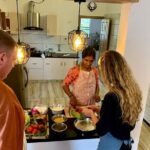
- Live Cooking Demonstrations to Group Cooking: How the Lesson Works
- What’s for Dinner: Snacks, Welcome Drinks, and the Tasting Session
- The Dishes You’ll Learn: Veg Staples, Non-Veg Comfort, and Avial/Fish Curry Energy
- Language, Q&A, and the Extra Travel Guidance That Helps Your Whole Trip
- Logistics That Matter: Pickup Radius, Private Group, and Where Confusion Can Happen
- Who Should Book This Munnar Cooking Class?
- Is $21 Good Value for 4 Hours of Kerala Cooking?
- Should You Book This Munnar Traditional Village Cooking Class?
- FAQ
- How long is the Kerala village cooking class in Munnar?
- What is included in the price?
- Is pickup from my hotel included?
- What languages are the instructors speaking?
- What kinds of food and dishes are part of the class?
- Is this class wheelchair accessible?
- Is free cancellation available?
Key Highlights You’ll Want to Know Before You Go
- Meet Mr Raveendra kumar and Mrs selvi: a couple running this Munnar kitchen experience since 2001
- Market visit included: pick ingredients, see local produce firsthand, then cook what you buy
- Medicinal-supplement context: they pair village dishes with traditional uses of certain ingredients
- You cook with guidance: groups make assigned dishes after the step-by-step demo
- Meal + snacks + dessert: you finish with everything you helped prepare
- Language support: instruction is available in English, Tamil, and Malayalam
A Munnar Village Kitchen With Real People: Meet Raveendra and Selvi
This class is built around hospitality, not performance. Mr Raveendra kumar and Mrs selvi host you at their home, and you can feel the confidence that comes from doing this work for years (they’ve been serving this kind of experience since 2001). The tone stays friendly and practical: you’re there to learn how Kerala food is put together in real homes.
You’ll likely notice that the class isn’t only about recipes. They want you to understand why certain ingredients matter—especially the ones that show up again and again in Kerala cooking like coconut milk, curry leaves, and the spice mix that creates that unmistakable comfort-food aroma.
One more detail I appreciate: the teaching usually happens with language support. Instruction is offered in English, Tamil, and Malayalam, which helps you actually follow what’s going on when techniques get specific.
You can also read our reviews of more cooking classes in Munnar
Planning Your 4-Hour Feast: When “4 Hours” Really Means 4–5+
The stated duration is 4 hours, and that’s a solid estimate for planning your afternoon. But the class can extend an hour or more depending on the dishes chosen and how quickly everyone finishes hands-on cooking. That flexibility isn’t a problem if you build buffer time into your day.
In the real flow, you’ll spend time on:
- a market visit (included),
- an ingredient intro (also included),
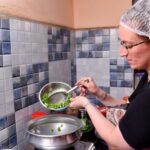
- cooking demonstrations and then cooking in groups,
- and finally a full tasting session where you sample what you made.
If your schedule is tight—like you’re counting minutes to catch a bus—this is the one thing to watch. I recommend treating it like a small meal-focused event, not a quick workshop.
Market Visit, Tea Estate Time, and Picking Ingredients the Local Way
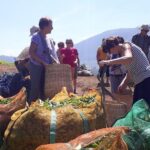
The experience starts with shopping and looking around—this is where the class gains credibility. You don’t just learn a spice list from a page; you see and select local items as part of the session.
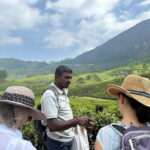
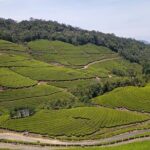
You can also expect time tied to the local landscape and food sources. The class includes guidance around the tea estate, plus local fruits, vegetables, and spices. Even if you don’t go deep into farming techniques, that context helps you understand why Kerala meals taste the way they do: ingredients are chosen for how they behave in curries, stews, and snack preparations.
Practical tip: wear comfortable shoes. You’ll likely be walking in areas that feel more like everyday errands than a museum tour.
Kerala Ingredient Basics: Spices, Coconut, Curry Leaves, and Mustard Seeds
Before the stove gets busy, they walk you through the essential ingredients that form the core of many Kerala dishes. This part matters because Kerala flavor is built in layers, not in one secret sauce.
You’ll get clear explanations of ingredients such as:
- coconut milk (and why it changes texture and richness),
- curry leaves (used early to build aroma),
- mustard seeds (tempering for flavor release),
- turmeric, coriander, and cumin (the spice backbone).
This is also where the class connects food to traditional village knowledge, including mentions of medicinal supplements. I wouldn’t expect this to turn into clinical nutrition advice, but it does help you appreciate why certain ingredients are treated with respect in everyday cooking.
If you love to cook back home, this intro is where you’ll get the most lasting value. You’re not memorizing a single recipe; you’re learning the logic.
Live Cooking Demonstrations to Group Cooking: How the Lesson Works
The session follows a rhythm that’s easy to understand:
1) a step-by-step demonstration,
2) ingredient-adding procedures and technique tips,
3) questions during the cooking,
4) then hands-on cooking in small groups.
The demonstration stage covers how dishes are built—from when to add spices to how textures develop. You’ll be encouraged to ask questions, and the hosts often share cultural context along the way.
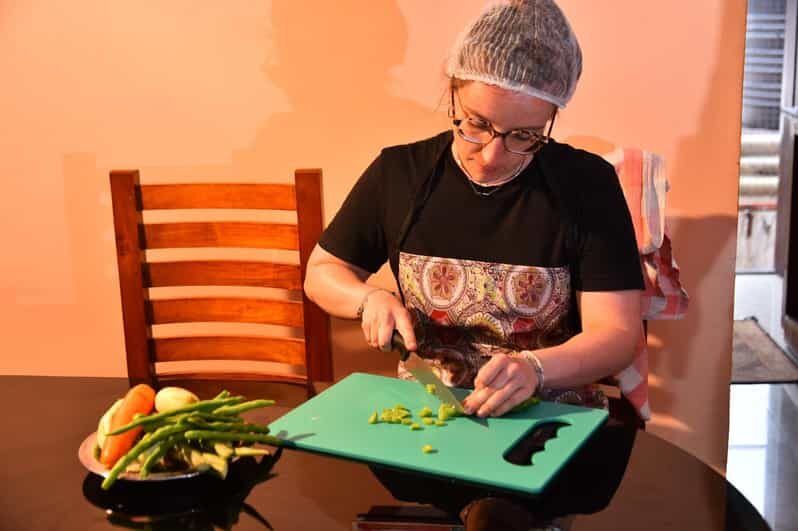
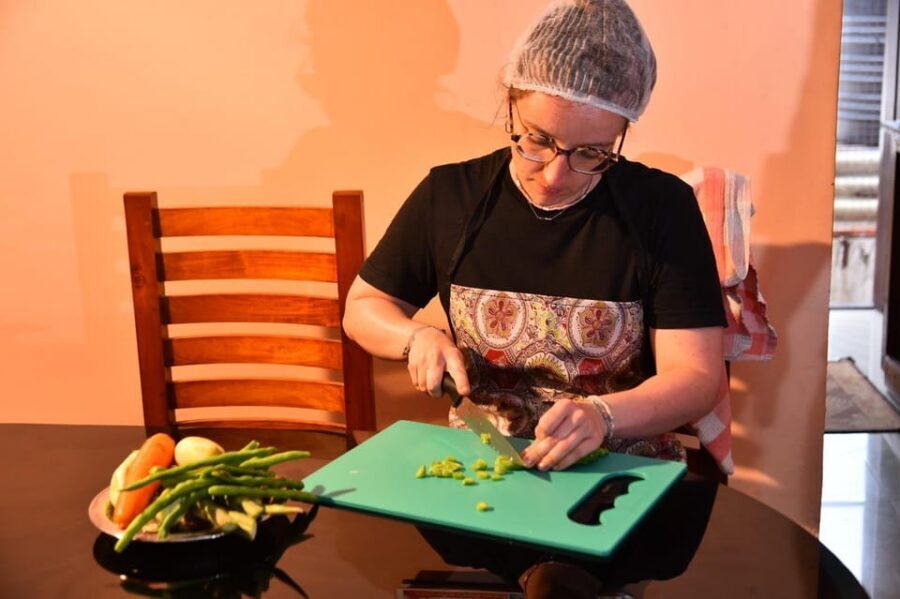
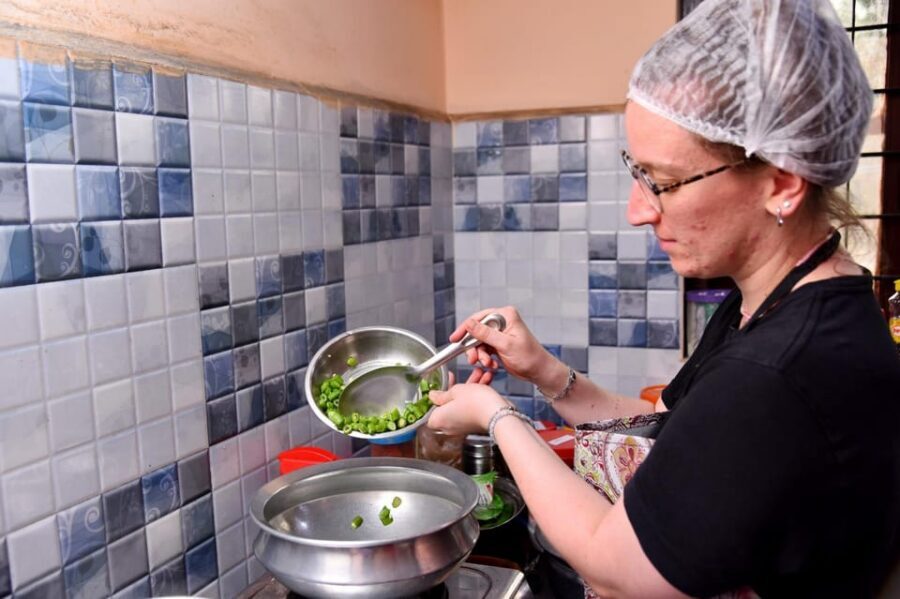
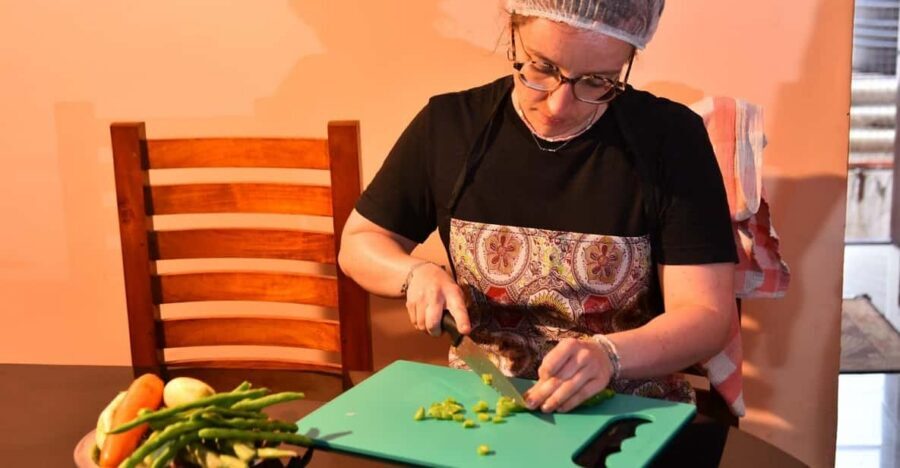
Then you shift into group work. Each group is assigned a dish, and you cook under guidance. They also provide the essentials: knife, apron, and a cutting board. That removes a common headache in cooking classes: you don’t show up and realize you have to improvise kitchen tools.
What you might cook depends on the menu finalized in advance (at least 12 hours before class). The menu can include a mix of:
- Veg and non-veg dishes,
- snacks,
- welcome drinks,
- dessert.
Examples that may appear include appam and stew, fish curry, avial, and puttu and kadala curry. In some sessions, you’ll also see snack and tea elements like fried banana and masala chai.




What’s for Dinner: Snacks, Welcome Drinks, and the Tasting Session
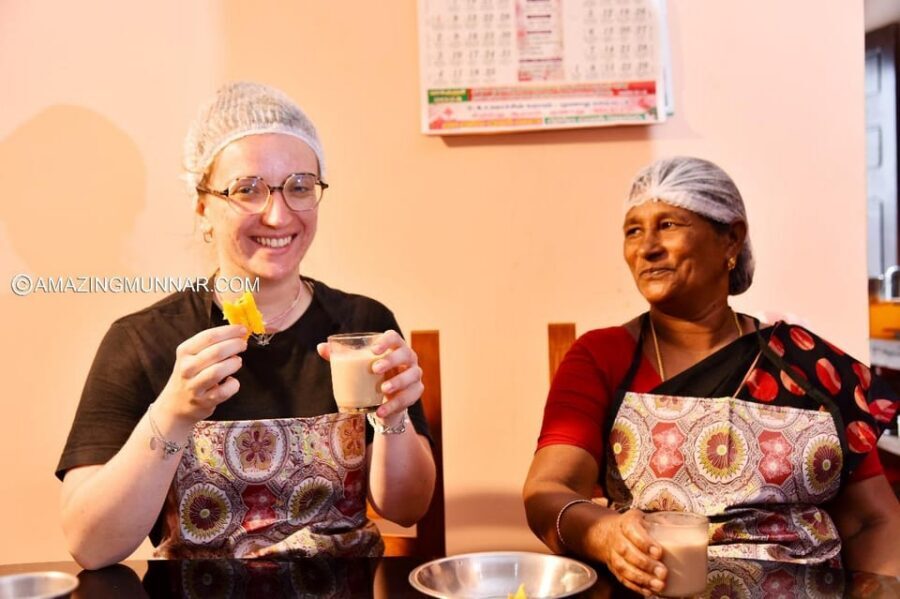
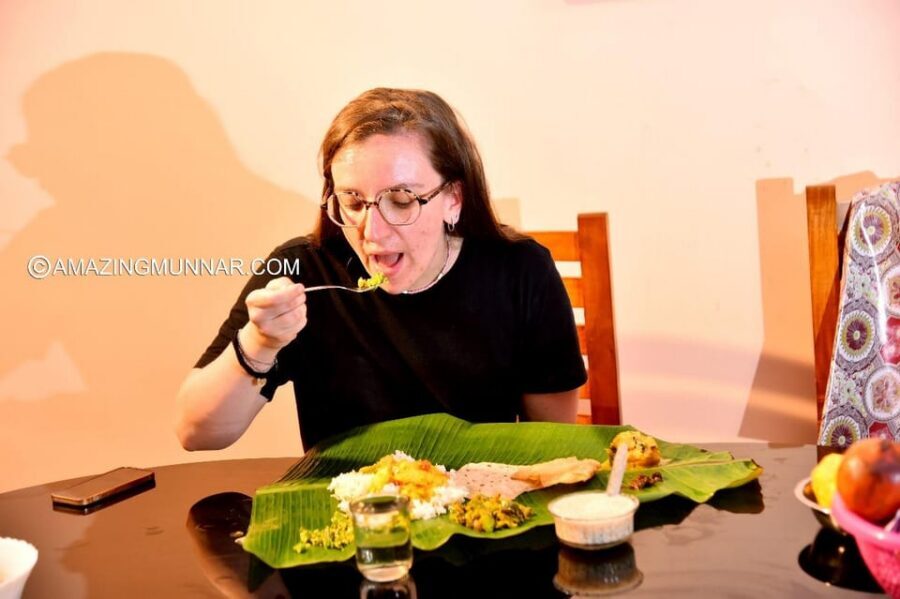
The class is meal-forward. You don’t just make food and then watch it disappear—you eat. The included meal typically includes multiple courses and at least a few rounds of tasting.
Expect a tasting session after dishes are prepared. This part is surprisingly useful because it trains your palate. You’ll compare flavors, textures, and aromas across dishes and get a clearer sense of how spice level, coconut richness, and herb notes change the final bite.
Welcome drinks are part of the menu too, and in some classes, masala chai shows up alongside a snack like banana. Dessert is also included, so you finish with something sweet after savory dishes.
I like how the tasting isn’t treated as a formality. It’s a chance to understand what you nailed and what you might adjust next time—like how much spice to temper, or how long to cook aromatics before liquids go in.
The Dishes You’ll Learn: Veg Staples, Non-Veg Comfort, and Avial/Fish Curry Energy
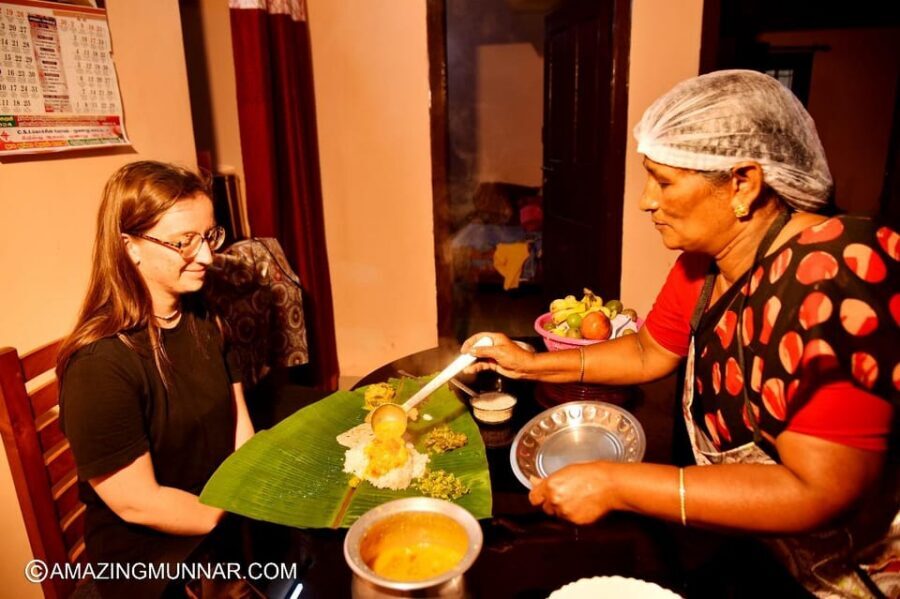
Kerala cooking varies a lot by village style and ingredient availability, but the class is designed around practical variety. You’re likely to cover:
- vegetable dishes that showcase coconut and spice balance,
- hearty curries and stews,
- and possibly non-veg options like fish curry depending on the day’s menu.
Some of the most memorable Kerala flavor comes from dishes like avial, where vegetables and coconut-based seasoning create a comfort-food texture, and fish curry, where spice heat and tang land in a way that feels both sharp and soothing. Even if you’re vegetarian, you can still learn a lot from how Kerala cooks build depth.
If you’re sensitive to spice, ask questions early. The hosts explain techniques and ingredients before cooking, which makes it easier to ask what tends to be mild versus punchy in the menu.
Language, Q&A, and the Extra Travel Guidance That Helps Your Whole Trip
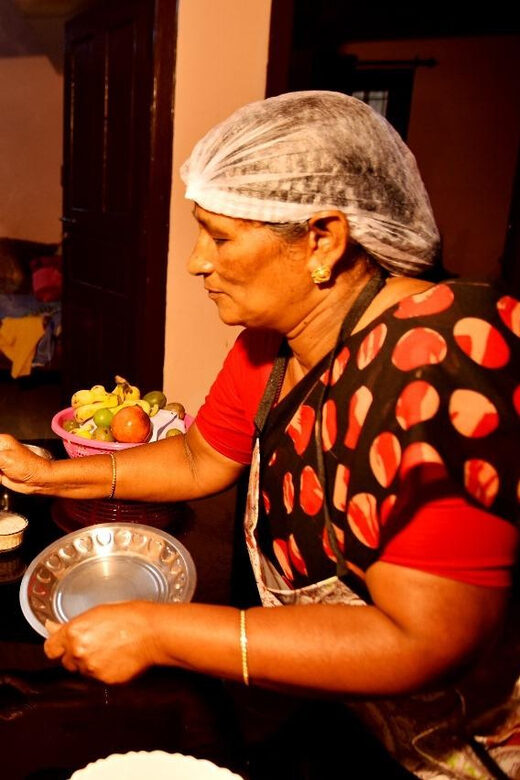
This isn’t a silent cooking class. Instruction is available in English, Tamil, and Malayalam, and you’ll get a chance to ask questions during the process. That matters because kitchen confusion usually comes from one small missing step.
The class ends with a Q&A session, so you can clarify technique questions like:
- when a spice tempering is ready,
- how to adjust consistency in a stew,
- what ingredient swaps might work later.
One more value-add: travel guidance is included. It’s not a full tour package, but it helps you connect your cooking session to other local experiences. You might receive suggestions like tea plantation treks, and ways to fit nearby attractions into your day.
Also, your host may help with translation during the cooking. In past sessions, Raveendra has been helpful as a guide who translates and steers the class through the menu.
Logistics That Matter: Pickup Radius, Private Group, and Where Confusion Can Happen
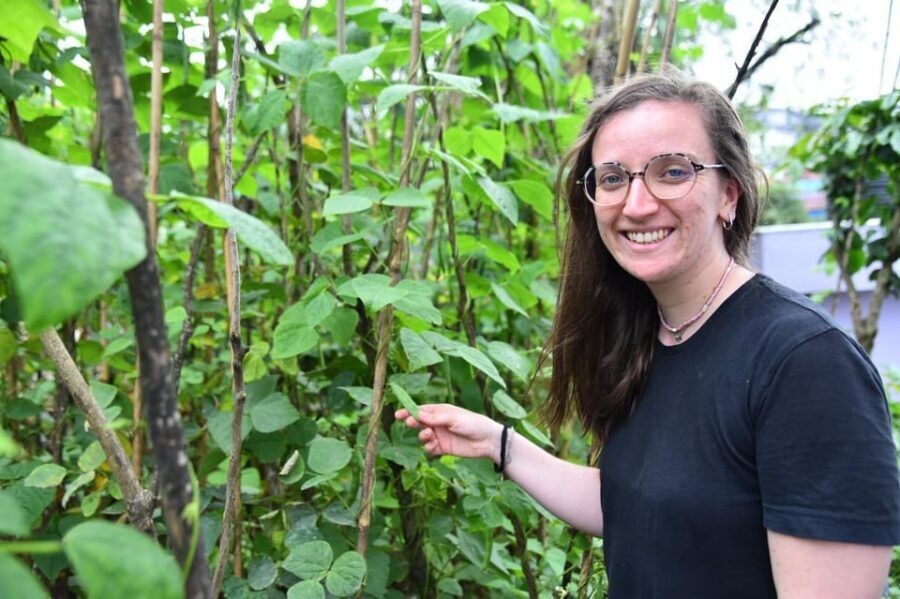
This is a private group experience, and that’s a big deal if you want to ask questions without competing with a large crowd.
Pickup and drop are included with limits: they offer free pick up and drop up to 2 km radius from Munnar town. If you’re staying farther out or need hotel pickup beyond that radius, additional charges apply.
If you’re meeting at a pickup point, confirm the exact location the day before (or even the same day). One booking experience described confusion about the meeting point, so I’d rather you avoid that small hassle by messaging early.
Good news: some guests reported quick booking confirmations by WhatsApp, and they also arranged pickup when their hotel location was outside the default radius.
Who Should Book This Munnar Cooking Class?
Book this if:
- you want a home-style Kerala cooking experience, not a cafeteria workshop,
- you enjoy ingredient stories as much as recipes,
- you like eating what you cook, with a tasting session at the end,
- you’re okay with the possibility of a slightly longer day than 4 hours.
You might skip it if:
- you need experiences designed for visual or hearing impairments (this one is not suitable for those needs),
- you have a strict timeline with no buffer,
- you prefer a purely classroom style lesson without group cooking in a home kitchen.
Also keep the vibe sensible. The experience doesn’t allow pets, intoxication, alcohol and drugs, fireworks, or nudity. Alcoholic drinks in the vehicle are also not allowed. If you’re planning a day that includes alcohol elsewhere, factor that into your schedule.
Is $21 Good Value for 4 Hours of Kerala Cooking?
At $21 per person for about 4 hours, this is strong value when you look at what’s included. You’re getting far more than a ticket to taste a few bites:
- lecture and demonstrations,
- a full meal & snacks (not just a sample),
- a market visit,
- water bottle,
- travel guidance,
- and the tools for cooking: knife, apron, cutting board,
- plus pen and paper for notes.
That tool list sounds small, but it saves effort. You’re not trying to figure out what to bring or how to manage it on the day. The biggest value, though, is learning the process: how ingredients are handled, how dishes are assembled, and how the flavors are built step by step.
The one cost catch is pickup outside the 2 km radius. If you’re staying close to Munnar town, you’re likely fine. If not, budget a little extra or plan to meet at the arranged pickup point.
Should You Book This Munnar Traditional Village Cooking Class?
I’d book it if you’re the kind of traveler who likes to go beyond photos and actually learn how people cook and eat day to day. The combination of market shopping, ingredient explanations (including spices and coconut-based essentials), and group cooking makes this feel like a real village-home experience.
Do book with a buffer in your day. Because it can run longer, you’ll have a much better time if you’re not rushing immediately afterward.
If you want a Kerala meal you can recreate later, this is one of the better ways to get there. I’d say yes—especially if you’re happy to cook a little, taste a lot, and ask questions at the stove with Raveendra and Selvi guiding the whole process.
FAQ
How long is the Kerala village cooking class in Munnar?
The duration is listed as 4 hours, but the activity may extend by 1 hour or more depending on the dishes.
What is included in the price?
The class includes lecture and demonstration, meal and snacks, a water bottle, market visit, travel guidance, knife, apron, cutting board, and pen and paper.
Is pickup from my hotel included?
Pickup and drop are included free within a 2 km radius from Munnar town. If you need hotel pickup outside that radius, additional charges apply.
What languages are the instructors speaking?
Instruction is offered in English, Tamil, and Malayalam.
What kinds of food and dishes are part of the class?
The menu is split into veg, non-veg, snacks, welcome drinks, and dessert. Dishes can include items like appam and stew, fish curry, avial, and puttu and kadala curry (depending on the menu for your session).
Is this class wheelchair accessible?
Yes, the activity is wheelchair accessible.
Is free cancellation available?
Yes. You can cancel up to 24 hours in advance for a full refund.