REVIEW · JAIPUR
Jaipur: Private Full Day City Sightseeing Tour with Guide
Book on GetYourGuide →Operated by Janu Private Tours · Bookable on GetYourGuide
Jaipur is a feast for your camera roll. A private, full-day loop through the Pink City keeps the pace realistic while you get real context for what you’re seeing—why Hawa Mahal looks the way it does, how Amber Fort mixes Hindu and Muslim design, and what makes Jantar Mantar a serious science site. I like that you get the highlights—Hawa Mahal and Amber Fort—without feeling rushed, and I also like how the guide explains the architecture layer by layer as you walk. One thing to consider: it’s a long day with moderate walking, plus you’ll be out in the heat, so plan for comfort first.
What makes this outing worth your time is the structure: an 8-hour sightseeing day in an air-conditioned vehicle, with a live English guide and built-in photo stops. In past bookings, guides such as Krishna, Surya, Akram, Jacki, Subya, Kamal, and Ayub Khan have been singled out for making sites feel understandable (and not like a checklist). You’ll also drive past the city’s main visual landmarks at a pace that lets you actually notice details, rather than just snap and sprint.
The only real drawback is that your day includes an afternoon shopping stop. It can be useful if you want textiles, bangles, gems, silver jewelry, or blue pottery, but if you’d rather spend every minute sightseeing, tell your guide early so the day stays your day.
In This Review
- Key reasons this tour works so well
- Pink City, Private Pace, and What You Actually Get
- Hawa Mahal and City Palace: Jaipur’s Royal Design Logic
- Jantar Mantar: The World’s Giant Stone Sundial
- Amber Fort and Sheesh Mahal: Hindu-Muslim Blend, Red Sandstone, and Mirror Magic
- Jal Mahal and Gaitor Ki Chhatriyan: Icon Photos with a Human Pace
- The Afternoon Shopping Hour: Textiles, Jewelry, and How to Keep Control
- Price and Logistics: How $38 Adds Up for a Full Day
- What to Wear, Bring, and Watch Out for
- Who This Jaipur Tour Suits Best
- Should you book this private full-day Jaipur tour?
- FAQ
- How long is the Jaipur city sightseeing tour?
- What time does the tour start?
- Is pickup from my hotel included?
- Can the tour pick me up from the airport or train station?
- Is the tour private or shared?
- What language is the guide?
- Does the price include monument entrance tickets and lunch?
- Is there a lot of walking?
- What should I wear?
- Is free cancellation available?
Key reasons this tour works so well

- Hawa Mahal without the guesswork: You’ll see the palace of winds and understand who it was built for and how it was used.
- City Palace context on a timeline: You’ll get the “why” behind the layout and art rather than only the “what.”
- Jantar Mantar as astronomy, not just monuments: The day helps you see it as the world’s largest stone astronomical observatory.
- Amber Fort + Sheesh Mahal craftsmanship: Red sandstone and white marble design, plus the mirror-work focus at Sheesh Mahal.
- Jal Mahal’s lake setting plus short walk time: You get the iconic water views without swallowing your whole afternoon.
- A guide who can adjust your pace: Several guides in past experiences helped people take their time for photos and offered flexibility around shopping.
Pink City, Private Pace, and What You Actually Get
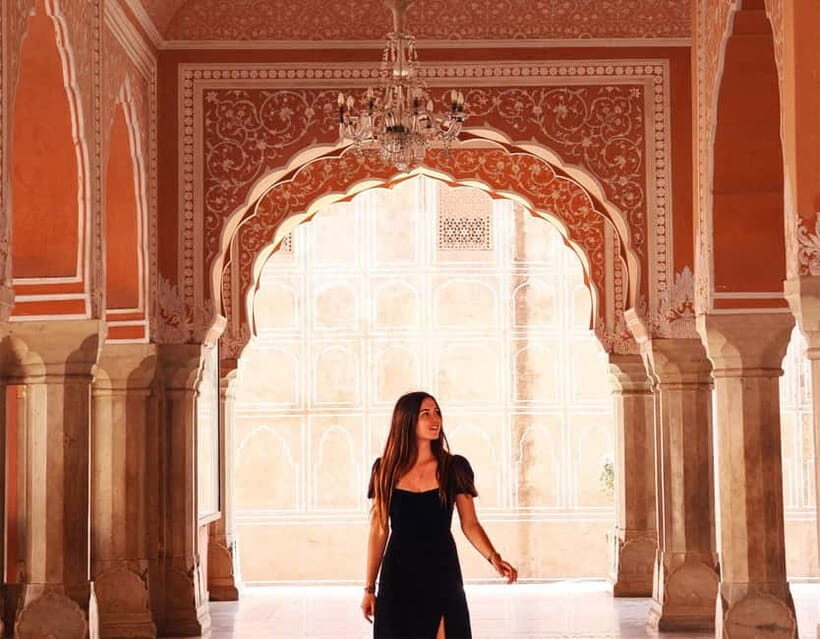
Jaipur earns the Pink City label, and you feel it fast. The color isn’t just pretty from a distance—it shows up across gateways, facades, and palace fronts that were meant to be seen from specific angles. The private format matters because it keeps you from losing time to group logistics. You move when it makes sense, stop where you’ll benefit from a viewpoint, and ask questions without waiting for someone else.
At the center of the day is your guide’s job: translating architecture into something you can understand. A fort isn’t just a fort. A palace isn’t just a palace. In Jaipur, design decisions were tied to climate, royal life, and astronomy. So when your guide points out details in the buildings, you start seeing patterns: symmetry, purposeful openings, materials chosen for heat, and sightlines that were practical.
You also get air-conditioned transport for the driving portions. That sounds basic until you remember that Jaipur’s sun can turn a “quick photo stop” into a sweaty ordeal. Here, you’re not stuck baking between sights.
You can also read our reviews of more guided tours in Jaipur


Hawa Mahal and City Palace: Jaipur’s Royal Design Logic
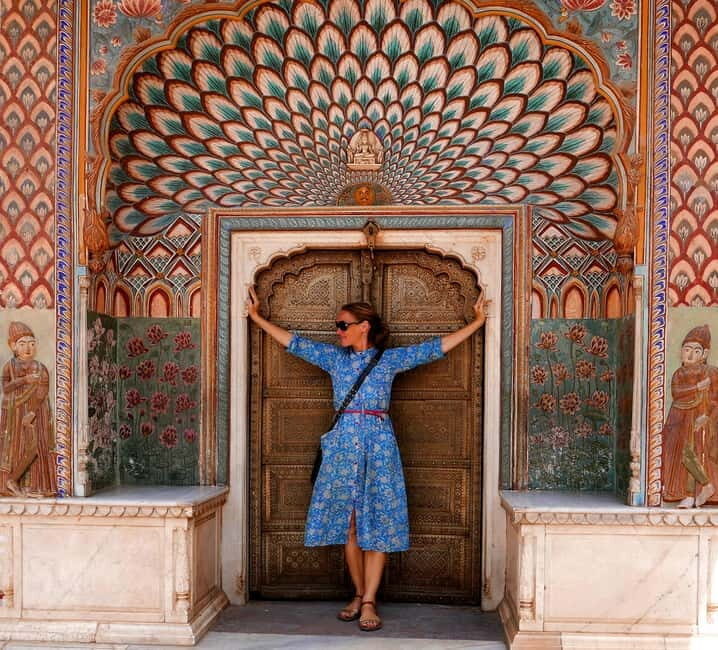
Your day often starts with Hawa Mahal, the palace of winds. It’s famous for the honeycomb façade—hundreds of small windows aligned up the exterior. The point of those openings isn’t only decoration. In a guided visit, you’ll learn how Sawai Pratap Singh planned the structure so the royal household could observe street life and daily activity. That changes how you look at it: you stop treating it like a postcard and start seeing it like a tool.
Expect time for a photo stop and a guided walk. The walk section helps because you’ll likely notice how the façade relates to the surrounding streets and viewpoints. If you’re sensitive to tight spaces or crowds, keep your camera ready but don’t rush. Jaipur’s best views usually come from the calm moments when you pause and look at angles.
Next is City Palace, Jaipur. This stop feels like stepping from “icon building” into “working royal complex.” You’ll be there about two hours, with time for guided viewing and walking. The value here is interpretation: art, structural features, and how different parts fit together. City Palace isn’t trying to impress you with one flashy moment. It’s built to show how power lived in everyday spaces—courtyards, halls, and ordered layout.
Practical note: City Palace and its surroundings can mean some uneven walking and standing for explanations. Comfortable shoes matter more than you think.
Jantar Mantar: The World’s Giant Stone Sundial

Then comes one of Jaipur’s most surprising stops: Jantar Mantar. Yes, it’s a UNESCO World Heritage site. But what makes it memorable is the purpose. This is where you see the largest stone astronomical observatory—the sort of place where people once measured time and celestial movement with stone instruments.
A good guide turns it from confusing shapes into readable science. You’ll see major structures and learn how they function as tools for observing the sky. Even if you’re not a science person, it helps to get the “why” behind each piece: these aren’t random monuments, they’re precision instruments built in stone.
You’ll also appreciate the photo-stop rhythm. Jantar Mantar works best when you can step back and look at instrument layout in relation to the open sky above it. If you enjoy learning by looking, this stop tends to be a highlight.
Amber Fort and Sheesh Mahal: Hindu-Muslim Blend, Red Sandstone, and Mirror Magic
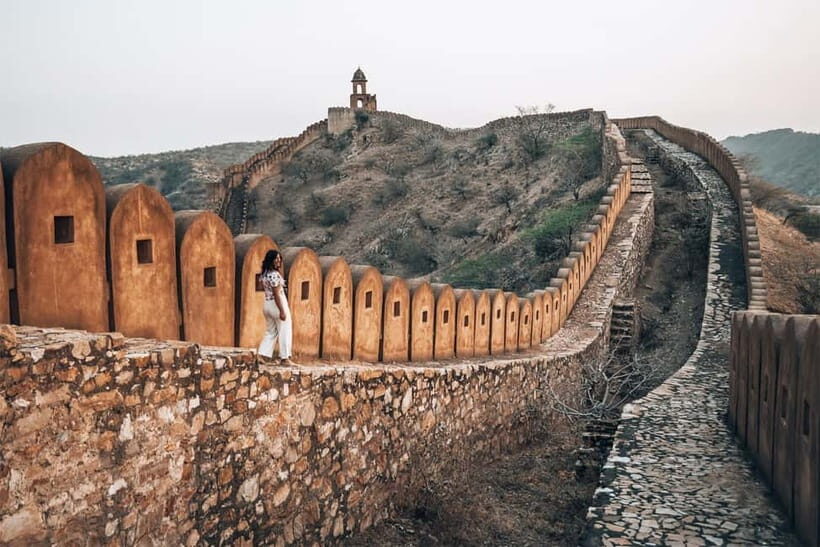
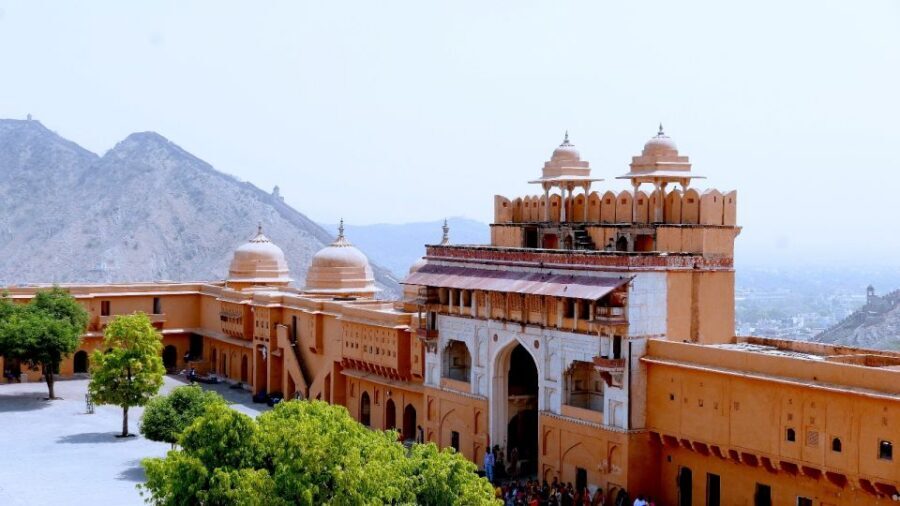
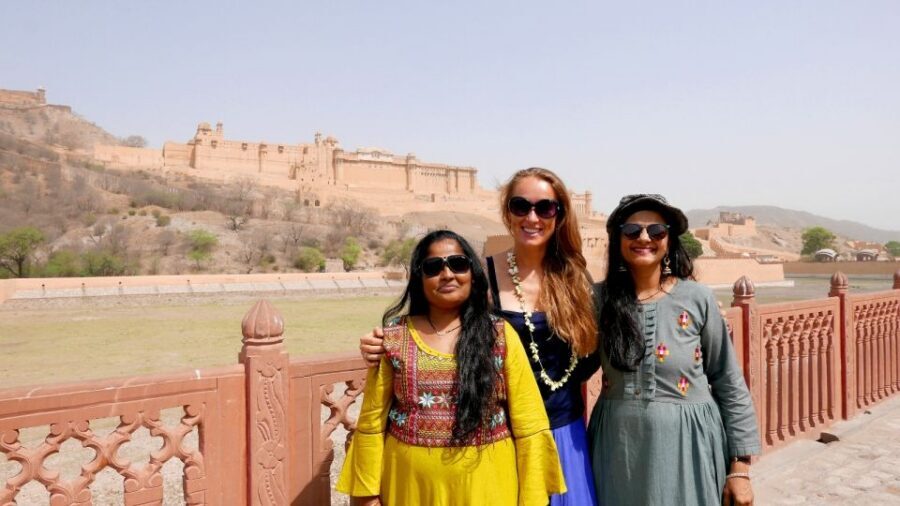
Most people come to Amber Fort for the views. Smart move. The fort sits on rugged hills outside the city, and the surrounding landscape creates that classic “royal fortress above the world” feeling.
But the real reason Amber Fort earns so much attention is architectural blending. In a guided visit, you’ll learn how Hindu and Muslim design elements show up together in the fort’s built form, made using red sandstone and white marble. It’s not just pretty materials—it’s a style mixture that tells a story about the region’s cultural overlap.
The highlight is Sheesh Mahal (Mirror Palace). This is where the craftsmanship takes over. Mirror-work changes how light moves. The effect isn’t just decorative; it’s part of how the space functioned as a palace interior—designed to shimmer, reflect, and amplify the atmosphere.
You’ll have a couple hours here for guided viewing and walking. That’s enough time to cover the important zones without feeling like you’re rushing through walls and arches. Still, be honest with yourself: you’ll climb, you’ll stand, and you’ll want to spend extra minutes on details. Planning for comfortable walking is the difference between enjoying the fort and just surviving it.
Jal Mahal and Gaitor Ki Chhatriyan: Icon Photos with a Human Pace
After Amber, you’ll head to Jal Mahal (Water Palace). This is one of Jaipur’s most photogenic sights because it sits in the middle of Man Sagar Lake. The dramatic part is that the palace doesn’t read as a typical fortress from every angle—you see it as a silhouette and a layered reflection effect rather than a straight-on building.
You’ll have a shorter stop here (around 30 minutes), with photo opportunities and guided context. That short duration actually makes sense: Jal Mahal is a viewpoint and composition moment. It’s not a “spend hours inside” location in this kind of itinerary. So plan to get your photos quickly, then listen to what your guide explains about the location and how it fits into Jaipur’s water-and-power story.
Then the itinerary often includes Gaitor Ki Chhatriyan. Think of it as royal cenotaphs—important memorial structures that help you broaden beyond the main palace-and-fort mindset. The time at this stop is about an hour, which gives you enough space to look slowly and understand symbolism through the structure layout and placement.
If you like monuments with atmosphere, this portion can feel calmer than the bigger-ticket stops. It’s a good “reset” between the major sites.
You can also read our reviews of more city tours in Jaipur





The Afternoon Shopping Hour: Textiles, Jewelry, and How to Keep Control
Jaipur is famous for shopping, and this day typically includes an afternoon block that can focus on items like gemstones, silver jewelry, bangles, clothes, blue pottery, and textiles. I like including shopping in a tour only when it’s guided and not chaotic. Here, you’re not wandering alone; you’re with your guide who can point you toward what’s worth your attention.
Still, you should treat shopping as optional time. If you’re not interested in buying, don’t force it. You can keep your energy for photos and explanations. Some guides in past experiences were willing to work around shopping and let people skip souvenir stops when the focus was sightseeing.
If shopping is your goal, go in with two simple rules:
- Decide your top one or two categories before you arrive (for example, textiles and blue pottery).
- Ask the guide what’s reasonable quality versus what’s mostly show.
That way, you don’t drift into decision overload.
Price and Logistics: How $38 Adds Up for a Full Day

A private full-day tour at around $38 per person for an 8-hour outing is often better value than you might expect, mainly because of what’s bundled: an air-conditioned sedan/SUV, parking, fuel, tolls, and an English-speaking private guide. If you choose the option that includes monument entrance tickets and buffet lunch, the value gets even stronger.
The hidden cost in big cities is time. Time lost to ticket lines, uncertain opening points, and guessing how to move between sights can eat up your day. The tour’s structure—scheduled stops, guide-led timing, and skip-the-ticket-line handling where offered—reduces that waste.
One more value point: the day isn’t just sightseeing transport. It’s guided interpretation. When you understand what you’re seeing at Hawa Mahal or why Jantar Mantar functions like an astronomical tool, the same buildings feel like they’re speaking instead of just posing.
The main practical consideration is trade-off: you’re spending a full day doing a lot of high-profile sights. If you want slower, deeper time in one place, this may feel packed. If you want a strong first look at Jaipur’s key monuments with smart pacing, it’s a solid fit.
What to Wear, Bring, and Watch Out for
This is an outdoor-heavy day, so dress for comfort. The dress guidance is smart casual, but short shorts and sleeveless tops aren’t recommended for temple areas. Even if a stop isn’t inside a temple, it’s still wise to be respectful and covered enough for any religious spaces you encounter.
Bring:
- A passport or ID card
- Comfortable shoes (you’ll do moderate walking)
- Sun protection you’ll actually use (hat/sunscreen/water)
You should also know what’s not allowed: pets, luggage or large bags, and unaccompanied minors aren’t part of the plan. If you have pre-existing medical conditions, this may not be a good match based on the tour’s overall activity level.
Who This Jaipur Tour Suits Best
This tour is a great match if you want:
- A first-time, high-impact Jaipur overview with minimal guesswork
- A private guide to explain the design and purpose behind each major site
- A structured day that includes Amber Fort, Jantar Mantar, and Hawa Mahal without turning into a sprint
It’s also a good pick if you care about comfort. Air-conditioned transfers plus a guide-led pace helps, especially when the sun is doing its thing.
If you’re the type who hates shopping stops, you can still make it work—just communicate your preference early so your guide can adjust the time.
Should you book this private full-day Jaipur tour?
I’d book it if you want a smart, efficient Jaipur day where the highlights make sense and the architecture has an explanation attached. The combination of private guiding, A/C transport, multiple UNESCO-level and major monuments, plus a realistic schedule is the core value behind this tour.
Skip the booking if your priority is slow travel with lots of downtime, or if you know you’ll feel uncomfortable with moderate walking and a full day schedule. For many people, though, this is exactly how to get oriented in Jaipur: you see the main sights, you learn what they’re for, and you leave with a clearer mental map of the Pink City.
FAQ
How long is the Jaipur city sightseeing tour?
It’s listed as an 8-hour experience.
What time does the tour start?
The day begins at 9:00 AM.
Is pickup from my hotel included?
Yes, hotel pick-up and drop-off are included in Jaipur (you provide your hotel details).
Can the tour pick me up from the airport or train station?
An airport pick-up is available on request, and you can also be picked up from Jaipur Railway Station or Jaipur Bus Station if you provide your travel details.
Is the tour private or shared?
This is a private group tour.
What language is the guide?
The live guide is in English.
Does the price include monument entrance tickets and lunch?
Monument entrance tickets and a buffet lunch are included only if you choose the option that includes them.
Is there a lot of walking?
There is a moderate amount of walking, so comfortable shoes are recommended.
What should I wear?
Smart casual is the guidance. Short shorts or sleeveless tops aren’t recommended for temple areas.
Is free cancellation available?
Yes. You can cancel up to 24 hours in advance for a full refund.