REVIEW · JAIPUR
Jaipur: City Palace Museum – Direct Official Ticket
Book on GetYourGuide →Operated by City Palace Museum, Jaipur · Bookable on GetYourGuide
City Palace hits you in the face—in a good way. I like that this is an official City Palace Museum ticket issued directly for entry, and I love how it lets you move through seven interconnected courtyards instead of seeing just one highlight room and rushing on. The big silver urns called Gangajalis add a memorable moment that makes the palace feel real, not staged.
One consideration: a small number of people have reported trouble with the ticket working at entry, and the palace conditions can be inconsistent, so I’d give yourself extra buffer time and keep an eye out for help at the ticket counter if anything doesn’t scan.
You’ll start at the ticketing counter near Baradari Restaurant, then follow a route that flows courtyard to courtyard, gallery to gallery. Plan for a lot of walking and a strong dose of Jaipur history—told through spaces, objects, and the way the Kachwaha rulers ran court life.
In This Review
- Key things to know before you go
- Where you enter: the ticket counter near Baradari Restaurant
- Pritam Niwas Chowk: the palace gates and the deities theme
- Sarvato Bhadra / Diwan-e-Khas: ceremonies, celebrations, and Gangajalis
- Sabha Niwas / Diwan-e-Aam: hearing from the public
- Mubarak Mahal (1902): guest-house origins and the textile collection
- Sileh-Khana: arms and armor in a royal weapons gallery
- MSMS II Museum: how four courtyards become one museum experience
- Painting & Photography Gallery: maps and historic photographs
- Rath-Khana: royal transports across three centuries
- Price and value: what $16 buys you on a Jaipur palace day
- Practical tips that make your walk easier (and your photos better)
- Should you book the City Palace Museum official ticket?
- FAQ
- How long should I plan for the City Palace Jaipur official ticket?
- Where is the meeting point for the ticket counter?
- What does the ticket include?
- Is photography allowed?
- Are there restrictions on what I can bring?
- Can I cancel and get a refund?
Key things to know before you go
- Official entry ticket from the City Palace so you’re not relying on a third-party desk
- Seven connected courtyards that work like rooms of one big complex
- MSMS II Museum access because four of those courtyards are part of the museum experience
- Diwan-e-Khas (Sarvato Bhadra) details like the religious and cultural celebration spaces
- Sileh-Khana + Mubarak Mahal for arms/armor and the textile collection
- Rath-Khana royal transport displays showing ceremonial vehicles across three centuries
Where you enter: the ticket counter near Baradari Restaurant
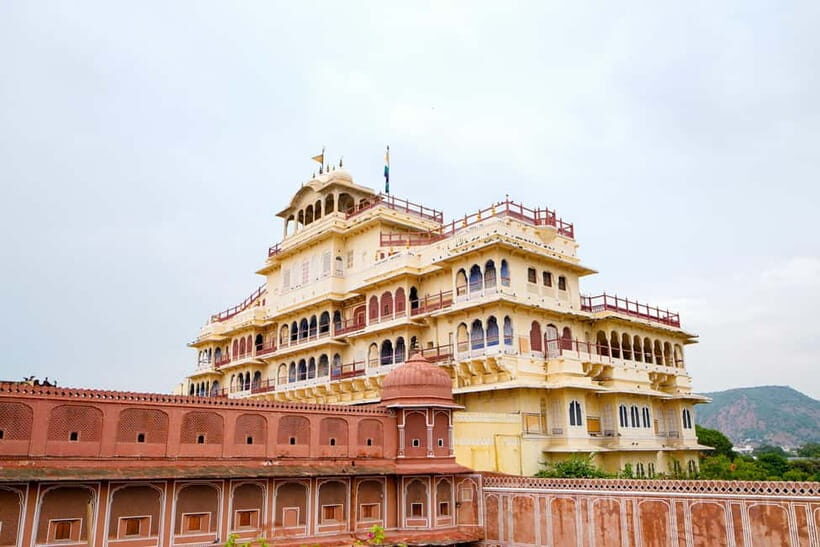
Your day starts right at the City Palace entry flow—enter the gate to the ticketing counter near Baradari Restaurant. That matters more than it sounds. Jaipur sites can be confusing at the first bend in the road, and getting your bearings at the actual ticket point keeps you from wasting time circling.
This is also the point where you’ll want to be ready for the on-the-ground rules. You can take photos, but flash photography may be restricted in certain areas. Professional cameras aren’t allowed. If you’re bringing camera gear, plan to use a phone or a simple camera setup you can quickly stow.
Also, dress for walking. The palace is a set of courtyards and buildings linked by gates, stairs, and corridors. In hot weather, water is a must. Even if you think you’ll only stay an hour or two, the palace route tends to “pull” you forward because every courtyard leads to something different.
Finally, note the house rules: pets aren’t allowed (assistance dogs are allowed). No alcohol or drugs. It’s a museum setting, so keep everything respectful and calm.
A few more Jaipur tours and experiences worth a look


Pritam Niwas Chowk: the palace gates and the deities theme
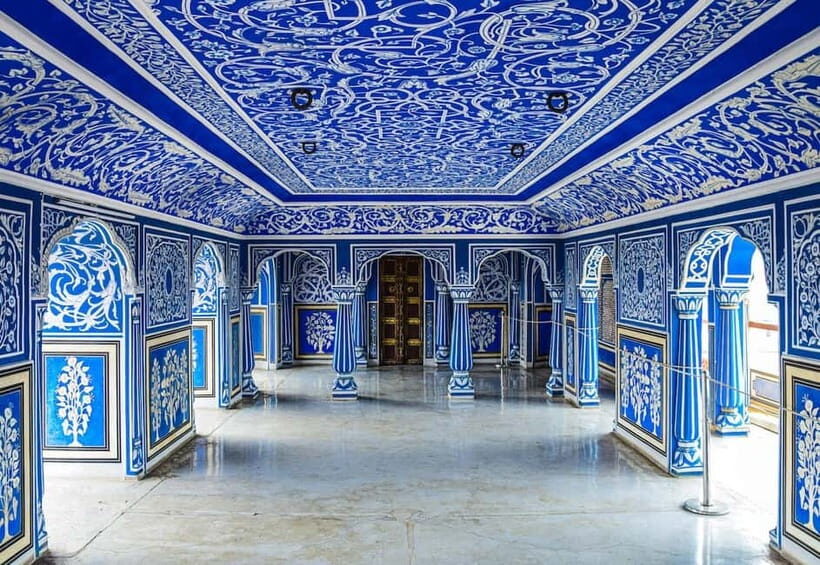
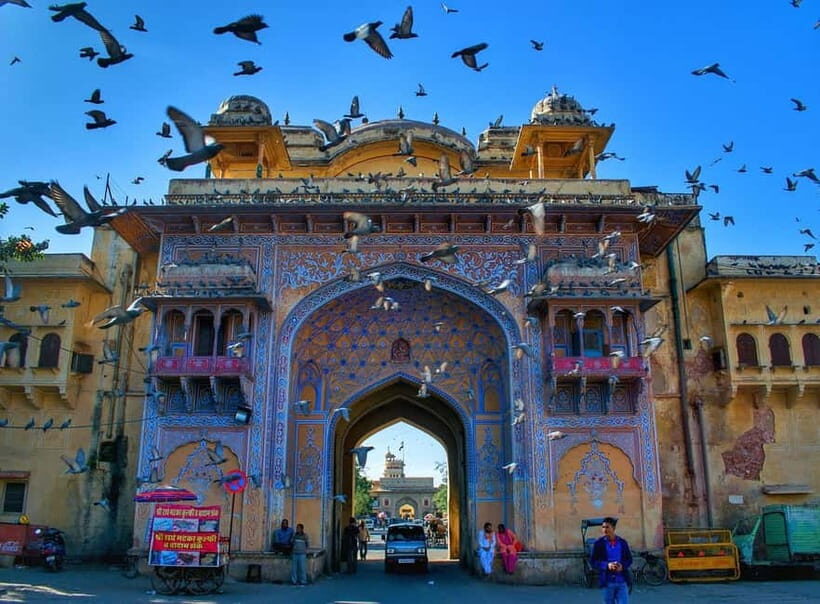
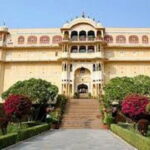
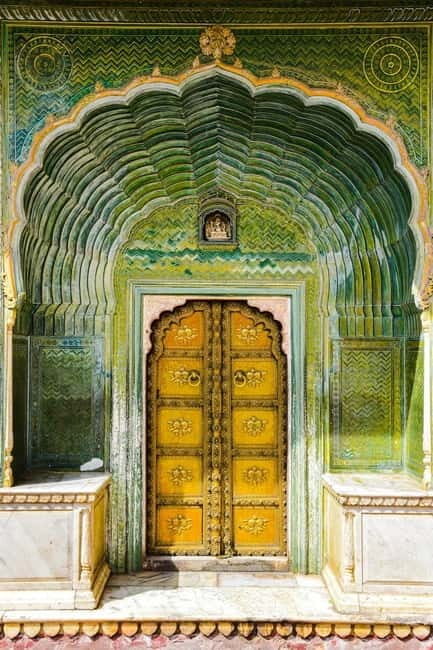
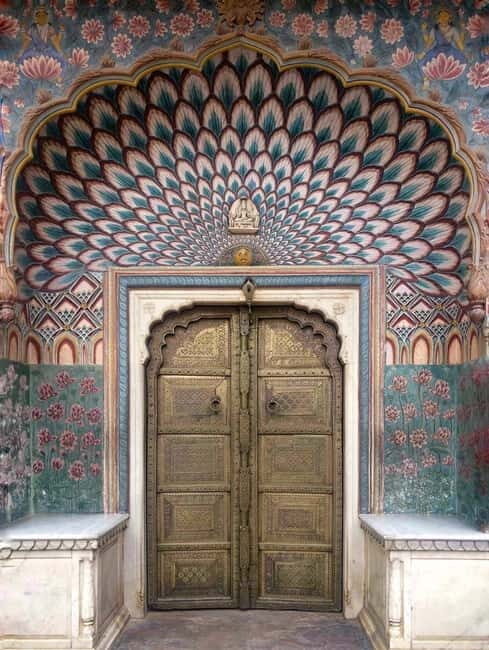
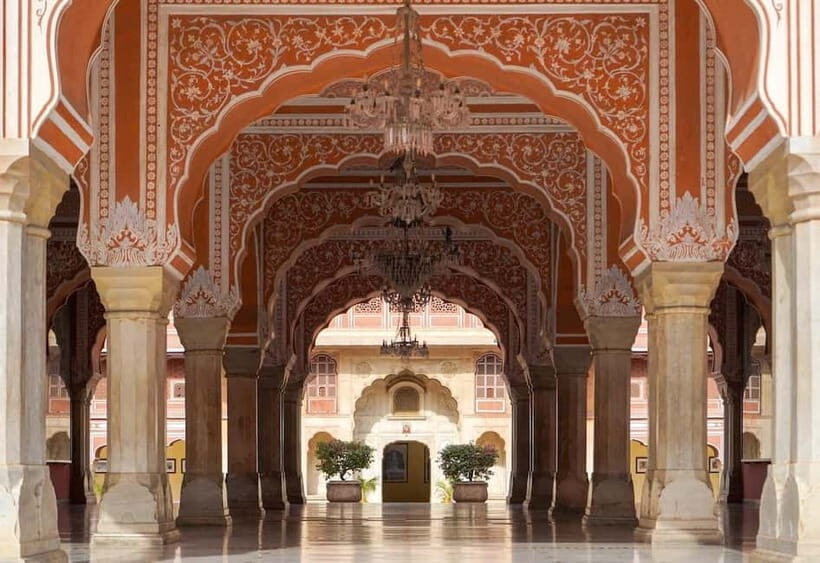
Once you’re through the entry area, your route begins at Pritam Niwas Chowk, and this is where you get your first real sense of Jaipur court style. This courtyard is built around four decorated gates, called deories, each tied to a deity theme.
I like this start because it gives context fast. Before you get lost in rooms and names, you understand the palace as a space designed for ceremony and meaning. The gates aren’t just decoration; they’re signals that this is a royal complex meant to impress visitors and manage rituals.
If you’re a photo person, this courtyard is where you’ll probably want to take the first set of pictures. Just remember: you can’t assume flash is okay everywhere, so shoot without it if you’re unsure.
One practical tip: don’t rush straight through. In palaces like this, the best “wow” happens when you notice how the arches, gates, and sightlines line up. You’ll walk past angles that look normal at first, then suddenly look dramatic once you step into the right spot.
Sarvato Bhadra / Diwan-e-Khas: ceremonies, celebrations, and Gangajalis
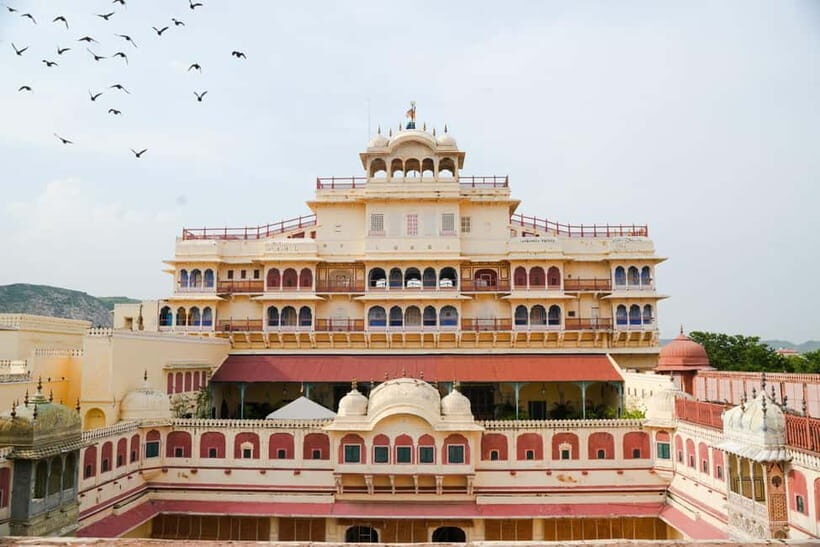
Next comes Sarvato Bhadra, also known as Diwan-e-Khas. This is the kind of area that helps you picture court life—not just the building, but the events that happened inside it. The space hosted religious and cultural celebrations, so when you stand in the courtyard and hall areas, try to imagine the rhythms: people entering through gates, announcements, public acts, then quieter moments.
Don’t miss the Gangajalis—two gigantic silver urns when you enter this courtyard. Even if you’re not a serious history buff, you’ll feel the intention behind them. Silver urns aren’t random decoration; they’re tied to the ceremonial atmosphere the palace is known for.
In terms of pacing, I’d treat this as your “slow moment.” Sarvato Bhadra is one of those places where stopping makes the history click. If you keep moving too fast, you’ll know the names but miss the feeling.
Sabha Niwas / Diwan-e-Aam: hearing from the public
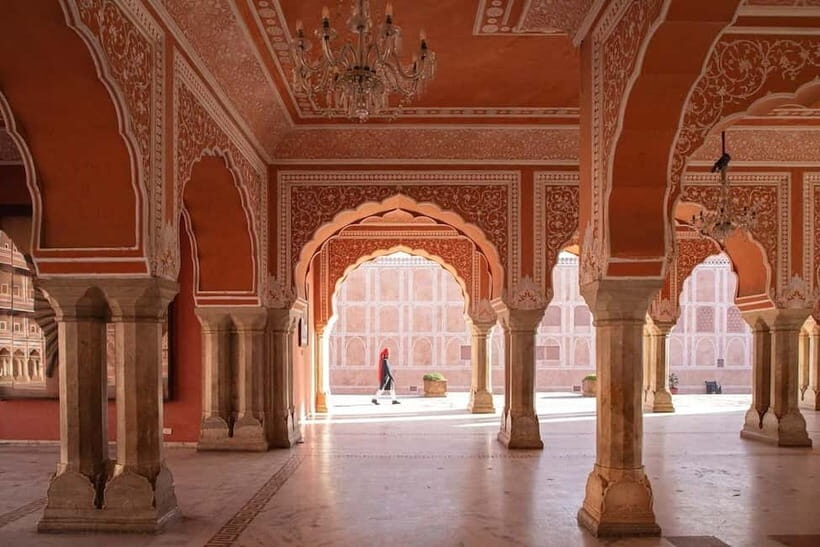
From there, head to Sabha Niwas, also called Diwan-e-Aam. This is described as a hall where the Maharaja would hear from his public and greet foreign dignitaries.
This is important because it shows the palace wasn’t only about private royal living. It was an administrative headquarters of the rulers of the erstwhile Jaipur State, and that means power flowed through these rooms in everyday ways—requests, audience meetings, diplomatic encounters.
As you walk through, watch for how the space is organized for people moving in and out. You can’t re-create the exact events, but you can still grasp the function: this was a “talk to the ruler” zone, not a storage room or a private retreat.
If you’re short on time, prioritize this area over minor galleries. It’s one of the clearest “why this building exists” moments on the route.
Mubarak Mahal (1902): guest-house origins and the textile collection
Next up is Mubarak Mahal, built in 1902 as a guest house for foreign dignitaries. Today it houses the textile collection.
This stop is where the palace changes tone. You move from court-facing halls into objects—cloth, patterns, and the material culture that’s usually invisible when you only focus on buildings. If you like seeing how status shows up in everyday things, textiles are a smart choice.
I also like this as a break from heavy walking. Courtyard-to-courtyard movement can be relentless, and a gallery with textiles gives you a different kind of focus. You’ll still be inside the palace story, but with a calmer pace.
One thing to watch: textile displays can be easy to overlook if you speed-run. Give yourself a little time to look closely at the arrangements. The value here isn’t just the fact that textiles exist; it’s how museums use objects to explain who visited, who owned what, and how the palace welcomed important guests.
You can also read our reviews of more city tours in Jaipur


Sileh-Khana: arms and armor in a royal weapons gallery
Then head to Sileh-Khana, the arms and armor gallery. This is where Jaipur palace history becomes blunt and physical.
The palace route often balances “soft power” (religion, textiles, ceremonies) with practical power. Weapons help explain that balance. You’re seeing the tools of rule, defense, and prestige—objects that were part of ceremony, not only warfare.
If you’re sensitive to violence themes, just know this gallery is about arms and armor. But if you’re curious about design and craftsmanship, it’s one of the more fascinating stops because arms have engineering and artistry built into them.
Again, pace yourself. Weapon displays can be dense. If you keep walking nonstop, you’ll miss the differences across pieces. Take a few moments to look at the shapes, materials, and how the museum presents categories.
MSMS II Museum: how four courtyards become one museum experience
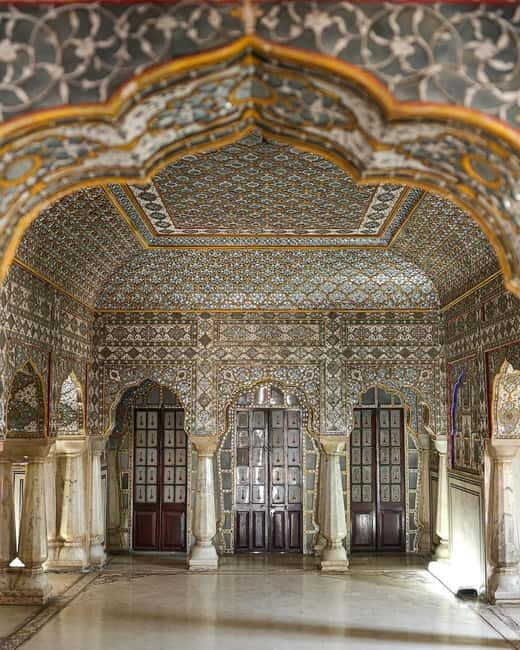
A key detail for planning: MSMS II Museum is tied to the City Palace courtyards. The ticket experience includes access to the courtyards and galleries, and MSMS II Museum is home to four of these courtyards.
That means you shouldn’t think of this as a separate “add-on” that you might skip. The museum structure is actually built into the palace movement. Practically, it helps you avoid decision fatigue. You follow the route, and the museum component is already threaded through it.
If you like structured visiting, this is a good setup. If you hate being rushed, it’s also fine: you can slow down at one courtyard and catch the museum content tied to that section.
Just remember: with only one day, the museum-courtyard blend can add up fast. I’d treat the palace as one main loop with a few “deep stops,” not as a checklist of ten tiny rooms.
Painting & Photography Gallery: maps and historic photographs
Next, go to the Painting & Photography Gallery, dedicated to paintings, maps, and historic photographs.
This gallery adds a different kind of context. Buildings tell you about architecture; maps and photos help you understand geography and how the place changed over time. Even if you’re not into art analysis, historic photographs can be surprisingly effective at grounding the palace in real years and real visitors.
This is also a good section for anyone who gets burned out by too much palace-only storytelling. It breaks the pattern with visual documents—places and faces and scenes—so you can connect the palace to the wider story of Jaipur.
Since flash may be restricted in certain areas, keep your phone or camera ready for regular-light shots. If you see low light, don’t fight it—shoot normally or just enjoy the visuals without taking every picture.
Rath-Khana: royal transports across three centuries
Finally, don’t miss Rath-Khana, a special display of royal transports spanning three centuries.
This is one of those museum areas that’s fun even if you usually skip transport galleries. A transport display tells you how ceremony moved. It shows what power looked like when it rolled into a city event, not just when it sat in a hall.
Since these transports are connected to ceremonies, some objects are still part of annual festivals of the city. That detail matters because it means this isn’t only museum-theory. It connects past and present in a visible, ongoing way.
If you’re leaving the palace with one memory, make it this. Palaces can feel abstract. Vehicles feel physical. The craftsmanship and scale make the royal world easier to picture in motion.
Price and value: what $16 buys you on a Jaipur palace day
At $16 per person, this ticket is priced like a straightforward museum admission—cheap enough that you don’t have to treat it as a big risk.
What makes the value work is not just the price. It’s the variety: courtyards, key halls, a textile collection, arms and armor, and two galleries (paintings/maps/photos plus royal transports). You’re buying a full day of palace content, not just a single room.
And because the ticket is issued directly and focuses on the palace courtyards and galleries, you’re paying for access to the complex itself. That’s different from “ticket plus a rushed highlight tour.” Here, the route structure helps you build your own pace.
That said, the low rating means you should go in with your eyes open. If you encounter any entry friction—ticket scanning or maintenance condition—don’t panic. Stay calm, ask at the ticket counter, and keep your day schedule flexible. A palace day is worth it, but it’s not a tech-forward experience.
Practical tips that make your walk easier (and your photos better)
Here’s how to make the day smoother:
- Wear comfortable shoes. The palace is made of courtyards linked by multiple indoor/outdoor transitions.
- Bring water, especially in hot weather. There’s a lot of walking and standing.
- Plan your camera rules. Photography is allowed, but flash photography may be restricted. Professional cameras aren’t allowed.
- Don’t bring pets. Assistance dogs are allowed, but standard pets aren’t.
- Start at the official ticketing point near Baradari Restaurant so you don’t lose time hunting entrances.
One more practical thought: if you’re sensitive to cleanliness or dislike seeing ongoing work, keep expectations realistic. At least one person has raised concerns about palace condition and rubbish left behind. You can’t control that. You can control how early you arrive and how patient you stay if staff are fixing things as you walk in.
Should you book the City Palace Museum official ticket?
I’d book this if you want a self-paced, palace-focused day in Jaipur that covers the major “royal life” categories. The best reason is the structure: seven interconnected courtyards plus the MSMS II Museum content inside four of them. You’re not just ticking boxes—you’re walking through the building as it was meant to function.
Skip or think twice if you need an ultra-reliable, low-friction ticket experience. One problem reported involves a ticket not working at entry. If that would stress you out, arrive earlier and keep a simple plan B (like asking staff at the ticket counter for help).
Overall: for a first visit to Jaipur’s palace core, this ticket is a strong value. It’s a day of walking, but the stops are the kind that stick—Gangajalis, court halls, textiles, arms and armor, and Rath-Khana transports across centuries.
FAQ
How long should I plan for the City Palace Jaipur official ticket?
The activity is listed as valid for 1 day. The experience includes access to multiple courtyards and galleries, so plan for a full palace-style walking day.
Where is the meeting point for the ticket counter?
Enter the gate to the ticketing counter near Baradari Restaurant.
What does the ticket include?
It includes access to City Palace courtyards & galleries and platform booking fees.
Is photography allowed?
Photography is allowed, but flash photography may be restricted in certain areas. Professional cameras are not allowed.
Are there restrictions on what I can bring?
Pets are not allowed (assistance dogs are allowed). Alcohol and drugs are not allowed. Professional cameras are not allowed.
Can I cancel and get a refund?
Yes. It offers free cancellation up to 24 hours in advance for a full refund.