REVIEW · NEW DELHI
8-Days Golden Triangle on Bicycle – Premium Private Tour
Book on Viator →Operated by The Bike Tribe · Bookable on Viator
Pedal through India, not just past it. This 8-day private Golden Triangle bike tour strings together Delhi, Jaipur, and Agra with guided visits, smart breaks, and a bike-first way to see big landmarks without feeling stuck in a bus line. I really like that you ride with premium equipment (a Trek Marlin 4) plus helmet and safety jacket, and that the plan mixes famous Mughal sights with less predictable corners of the cities.
I also like how the day-by-day pacing builds in flexibility. Some time is structured with major monuments, and other blocks are free or optional, so you can match the trip to your energy and interests instead of being locked into one pace all day. A real consideration: it’s still India—heat, crowds, and the physical mix of cycling plus stairs and walking at forts can add up, especially if you’re new to riding.
In This Review
- Key things to know before you ride
- Why the Golden Triangle makes sense on two wheels
- Price and what you actually get for $2,010
- Delhi start day: check-in at 2pm plus choose-your-own pace
- Old Delhi on foot: Chandni Chowk, Jama Masjid, Khari Baoli
- The “new” monuments: India Gate and Rashtrapati Bhavan
- Jaipur’s big hitters: Amber Fort, Hawa Mahal, City Palace, Jantar Mantar
- Jaipur by cycle: the Pink City ride plus Albert Hall area
- Bharatpur’s bird sanctuary break: Keoladeo for cranes and slow mornings
- Fatehpur Sikri and Agra: Mughal power scale in two days
- Morning cycling around Agra, then back to Delhi
- Safety, comfort, and equipment: how this tour reduces stress
- Who should book this Golden Triangle bicycle tour
- Should you book it?
- FAQ
- How long is the Golden Triangle bike tour?
- Where do you meet, and what time does the tour start?
- Is this tour private?
- What bike is included?
- What safety gear is provided?
- Are meals included?
- Are admission tickets included for the sights?
- Is airport pickup and drop-off included?
- What is the cancellation window for a full refund?
Key things to know before you ride
- Private group pace: only your group goes, so you’re not squeezed into a big crowd rhythm.
- A proper bike package: Premium Geared Trek Marlin 4 (2021 model) plus helmet and safety jacket.
- More than postcard stops: Delhi options can include Qutub Minar/Mehrauli/Sanjay Van, heritage walks, or an old-city food walk.
- Tickets and fees are mostly handled: many admissions are listed as included, and all fees and taxes are covered.
- Transfers are supported: an air-conditioned vehicle handles parts of the day, with airport pick up and drop.
- Hydration tools included: water jars to refill bottles during the ride.
Why the Golden Triangle makes sense on two wheels
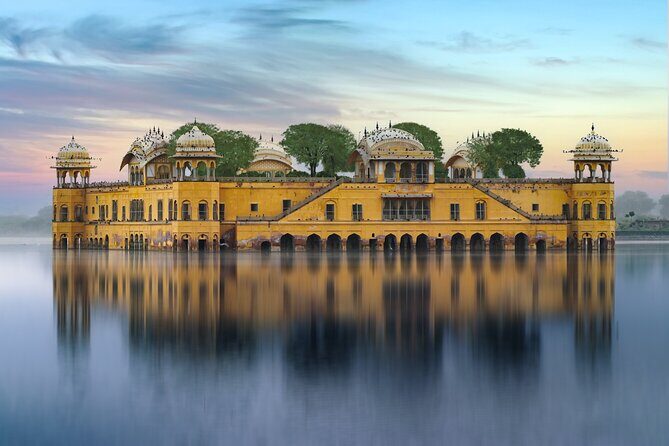
The Golden Triangle is famous for a reason: you get three different “sides” of India—government-and-history Delhi, royal Rajasthan Jaipur, and Mughal masterpieces in Agra. Doing it as a bicycle tour changes how the route feels. Instead of arriving, taking photos, and moving on, you spend real time with the urban texture: street life, market energy, and the way monuments sit inside neighborhoods rather than off to the side.
You’ll also benefit from the built-in logic of the route. Delhi is a big starting point, Jaipur adds color and fort views, and Agra closes with the most iconic sights of the triangle. The cycling moments (plus the guided sightseeing) help you keep momentum, so the trip doesn’t feel like three separate vacations duct-taped together.
You can also read our reviews of more private tours in New Delhi

Price and what you actually get for $2,010
At $2,010 per person, you’re paying for a premium private setup, not just a standard sightseeing itinerary. What makes this price feel more reasonable is what’s bundled:
- Your bike is included, not a generic rental.
- Safety gear is included (helmet + safety jacket).
- You get a cycle tour leader & guide, plus all fees and taxes.
- There’s an air-conditioned vehicle on the trip, plus airport pick up and drop.
- Meals are covered: dinner and breakfasts (7).
- Water jars are provided so you can refill during rides.
In other words, you’re not constantly “adding up” costs for transportation, guiding, or entry fees that pop up mid-trip. And because it’s private, your schedule stays yours—even if the day includes a mix of walking and cycling, the group size won’t turn your sightseeing into a slow-moving traffic jam.
Delhi start day: check-in at 2pm plus choose-your-own pace
Day one is built for arrival comfort. You check in at 2pm, which is helpful if you’re landing earlier in the day or just need a breather before exploring. The program then gives you optional ways to shape your Delhi.
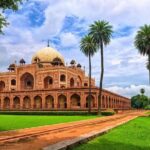
You can choose a more focused monument route with Qutub Minar, Mehrauli Archaeology Park, and Sanjay Van—a good mix if you want history with some breathing room. Or go for a heritage-style sweep around Humayun’s Tomb, Lodhi Art District, Lodhi Gardens, and Safdarjung Tomb, which feels a bit more “local Delhi” than the usual checklist. If you’d rather understand the city through taste, an old Delhi food walk is listed as an option.
This is one of those smart tour design choices: Delhi can overwhelm you. Offering options lets you start calmer and build from there, instead of forcing every person into the same first-day rhythm.
Old Delhi on foot: Chandni Chowk, Jama Masjid, Khari Baoli
Day two leans deep into Old Delhi’s Mughal-era core. You begin at Chandni Chowk, often described as one of India’s oldest and busiest markets. Even without trying to “shop,” it’s the kind of place that teaches you how the city thinks—goods move, people flow, and landmarks sit at the end of sightlines.
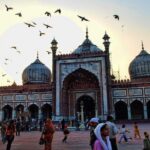
Then you head to Jama Masjid, one of India’s largest mosques, built by Shah Jahan in the mid-1600s. It’s still active, which matters: you’re not just viewing history behind glass. The experience is about scale and daily life sharing the same space.
Next comes Khari Baoli, famous for wholesale groceries and spices—especially the spice market atmosphere near the historic Red Fort area. If you like sensory travel, this stop is where Delhi goes from impressive architecture to real-world aromas and textures.
You also visit Gurdwara Sis Ganj Sahib in Chandni Chowk. It marks a specific Sikh historical moment and is set in distinctive Mughal architectural style (sandstone rather than white marble). This gives the Old Delhi story more angles than just Mughal power.
Possible drawback: Old Delhi mornings and middays can be crowded and warm. Even if the tour includes breaks and an organized flow, expect some walking and standing time. If you’re heat-sensitive, plan to keep your hydration and pace steady.
The “new” monuments: India Gate and Rashtrapati Bhavan
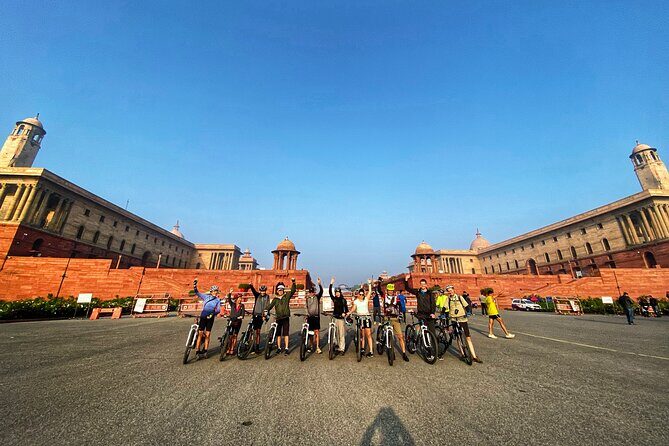
After the older streets, the tour shifts to New Delhi’s grand planning. India Gate is a war memorial along Rajpath, tied to the British Indian Army and First World War remembrance. It’s quick, but it helps balance the trip: you see a different kind of “monumental” India than forts and tombs.
Then you visit Rashtrapati Bhavan, home to India’s President. Even for people who don’t read every plaque, the scale is the point: the building’s layout, corridors, and garden estate are part of its impact. It was originally designed as the Viceroy’s residence, so it carries that layered colonial-to-modern transition in its bones.
This day’s mix—Old Delhi intensity and New Delhi formality—keeps you from getting stuck in one mood for too long.



Jaipur’s big hitters: Amber Fort, Hawa Mahal, City Palace, Jantar Mantar
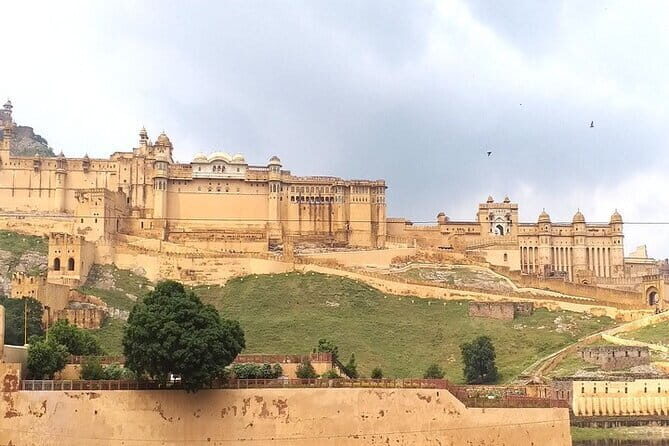
The Jaipur section gives you a “highest concentration” day: forts, palaces, and an observatory. You start with Amber Fort, perched above the landscape and built around strong defensive design. It overlooks Maota Lake, which is one reason the fort feels dramatic beyond its walls.
Then there’s Hawa Mahal, the Palace of Wind: red and pink sandstone, shaped by hundreds of jharokhas (small lattice windows). It’s the kind of structure that looks like it’s made for photo angles, but up close it’s also about craftsmanship and the way the building turns light and shadow into texture.
The tour continues with the City Palace, once the Maharaja’s seat of court and administration. It still connects to the royal family today, and it houses the Maharaja museum space. Even if you’re not a museum person, the palace setting helps you understand that Jaipur wasn’t built as a backdrop—it was built as a living system.
Finally, Jantar Mantar brings a different flavor: an astronomical observatory with instruments meant for naked-eye sky observation. It’s UNESCO-listed and famous for its stone sundial scale. This stop is a nice reminder that royal India wasn’t only about palaces; it was also about science, planning, and long-term observation.
Practical note: Jaipur sights often include steps and uneven surfaces. If you’re cycling by day and walking by night, bring shoes that grip well and socks that don’t mind the heat.
Jaipur by cycle: the Pink City ride plus Albert Hall area
One of the best “tour design” moments is when Jaipur shifts from stop-to-stop sightseeing into a real cycle around the Pink City. You start with Hawa Mahal and then ride the areas around Jaipur’s iconic pink-toned streets. This is the kind of route where the cycling format helps: you can keep your eyes up instead of only watching where your feet land.
The plan also includes passing Albert Hall Museum and other nearby areas. If museums are your thing, Albert Hall is there as a familiar anchor; if museums aren’t your thing, the surrounding streets still give you that “city feel” that buses often flatten.
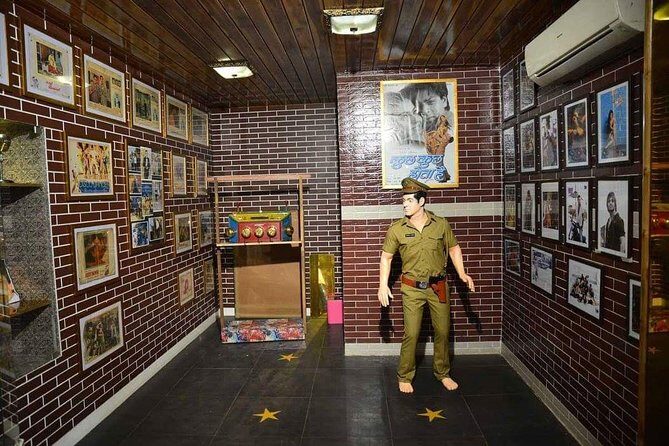
The evening is intentionally lighter. It’s free for optional activities like a Bollywood movie at Raj Mandir (a historic, well-known theatre) and other choices such as hot air ballooning, dance class, or yoga. Even if you skip the options, having the evening open is a win in a city that can be busy.
Bharatpur’s bird sanctuary break: Keoladeo for cranes and slow mornings
Day five slows the tempo in a smart way. You go to Bharatpur Bird Sanctuary, also known as Keoladeo National Park. This is a break from the palace-and-monument theme, and it’s built around birdlife: you can see (or have seen, depending on season) a wide range of species, including the Siberian Crane during winter.
The park is a major birding site with protected status and UNESCO recognition. If you like nature travel, this stop gives you a reset for your body after forts and big crowds.
Consideration: bird sanctuaries can still involve walking outdoors. Dress for sun and bring something light but protective. Your cycling days will make you appreciate shade.
Fatehpur Sikri and Agra: Mughal power scale in two days
Agra is where the trip’s big “wow” factor lands, but it starts with Fatehpur Sikri. Built as the Mughal capital by Akbar in the late 1500s (and later abandoned), it’s one of those places where the ruins feel like a story rather than a backdrop. You see how quickly political centers can shift—and how architecture records those changes.
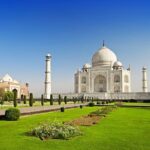
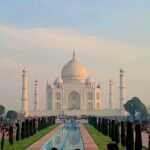
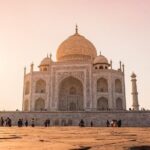
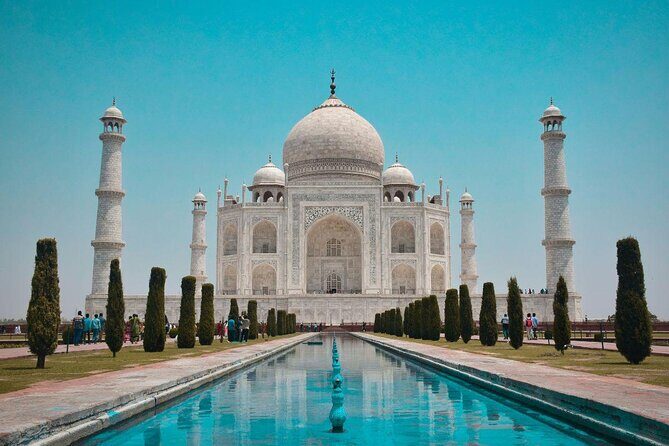
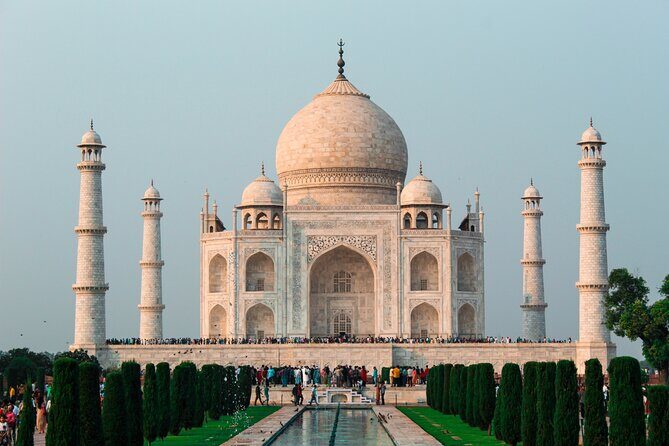
Then you move to Taj Mahal, the signature monument of the Golden Triangle. It’s an ivory-white marble mausoleum commissioned in 1631 by Shah Jahan for Mumtaz Mahal, and completed in stages. It’s UNESCO-listed and globally iconic, so your best bet is to treat it like a lived masterpiece: arrive prepared to stand and look, not just snap and sprint.
After that, you visit Agra Fort, a massive walled-city fort tied to Akbar’s era and later Mughal residence. It’s about 2.5 km from the Taj Mahal, and visiting it after Taj helps because your brain gets to compare two kinds of grandeur: white-marble symbolism versus defensive-era scale.
Morning cycling around Agra, then back to Delhi
On the final full day in Agra, you get cycle time around the city in the morning. This works because mornings are often cooler and because it gives you one last way to experience Agra beyond monuments.
Then the tour transitions back to New Delhi for check-out at 11am on the last day. You finish with options that mirror your first Delhi day: more hidden-off-the-beaten-path Delhi choices like Qutub Minar and Mehrauli, heritage stops around Humayun’s Tomb and Lodhi gardens, or an old Delhi food walk again—useful if you didn’t do those earlier.
Safety, comfort, and equipment: how this tour reduces stress
This is one of the reasons the private-bike format feels worthwhile. You’re provided with a helmet and safety jacket, and you ride a premium geared bike (Trek Marlin 4, 2021 model). The tour also includes an air-conditioned vehicle, plus water jars to refill bottles during rides.
Could you still sweat? Yes. India’s weather and street conditions don’t vanish because your bike has good gears. But having the right gear and support means you spend less time worrying and more time actually seeing.
If you’re new to cycling, the biggest key is your expectations. This trip is best for people who want to ride regularly enough to feel the route, but who are also okay with sightseeing days that mix walking, stairs, and monument time.
Who should book this Golden Triangle bicycle tour
You’ll probably love this if you:
- Want Delhi, Jaipur, and Agra with real guidance and a private group pace.
- Like the idea of cycling as transportation, not just a few souvenir rides.
- Appreciate having tickets, transfers, bike, and safety gear handled.
- Want optional flexibility for food walks, Bollywood, and heritage choices.
You should think twice if you:
- Have very limited mobility or know you struggle with stairs at forts and palaces.
- Hate cycling in crowded city conditions or get anxious on busy streets.
- Expect a pure “only cycling” trip with zero walking.
Should you book it?
If you’re aiming for a Golden Triangle trip that feels active and organized—without turning every day into a transport-only blur—this one is a strong bet. The value comes from the bundle: private guiding, a real bike, safety gear, meals, and transfers, plus major sights that have admissions handled. The optionality in Delhi and the free evening in Jaipur help you tailor the trip instead of just following a script.
My decision checklist is simple: if you can handle heat, some standing, and monument stairs, you’ll get a lot out of the bicycle format and the guided access.
FAQ
How long is the Golden Triangle bike tour?
It lasts 8 days (approximately), covering Delhi, Jaipur, and Agra.
Where do you meet, and what time does the tour start?
The meeting point is near public transportation, and the start time is 12:00 pm.
Is this tour private?
Yes. It’s listed as a private tour/activity, so only your group participates.
What bike is included?
You receive a Premium Geared Trek Marlin 4 (2021 Model).
What safety gear is provided?
The tour includes a safety jacket and helmet.
Are meals included?
Yes. The tour includes dinner and breakfast (7). It also provides water jars to refill bottles during rides.
Are admission tickets included for the sights?
Many stops list admission as included, and some are listed as free. The tour also states that all fees and taxes are included.
Is airport pickup and drop-off included?
Yes. The tour includes airport pick up and drop.
What is the cancellation window for a full refund?
You can cancel up to 6 days in advance for a full refund. To get a full refund, you must cancel at least 6 full days before the experience start time.