REVIEW · NEW DELHI
India Himalayas foothills & Golden Triangle 12 Days
Book on Viator →Operated by Amazing India Tours · Bookable on Viator
You get a lot of India in one calm package. This route pairs Golden Triangle icons with the cool Himalayas foothills, and it keeps the busy parts handled by a private car, driver, and guide.
I especially like the way they build in full sightseeing time—so Delhi is more than just a stop-and-go blur, and Agra is timed for an early Taj Mahal visit, plus Fort and Mehtab Bagh. The main trade-off: this is a city-hopping schedule, so you’ll spend meaningful hours on the road even though the car is comfortable.
In This Review
- Key things that make this tour worth considering
- A smart route: Golden Triangle plus the Himalayas foothills
- Airport meet-and-greet and private car comfort (the real stress reducer)
- Delhi in two focused days: markets, mosques, tombs, and the classic landmarks
- Jama Masjid and Chandni Chowk: the Old Delhi hit
- Rajghat and Humayun’s Tomb: quieter, powerful stops
- Qutub Minar: a quick but memorable classic
- Practical note for Delhi
- Amritsar: Golden Temple morning energy and Wagah Border drama
- Golden Temple: the main reason most people come
- Wagah Border ceremony: plan for the show
- Chandigarh: Le Corbusier planning plus Sukhna Lake and Rock Garden
- Shimla and Kufri: cool heights, Mall Road walks, and lookout points
- Kufri: nature and trekking culture
- Jakhoo Hills and the temple viewpoint
- Vice Regal Lodge, Ridge, and Chadwick Falls
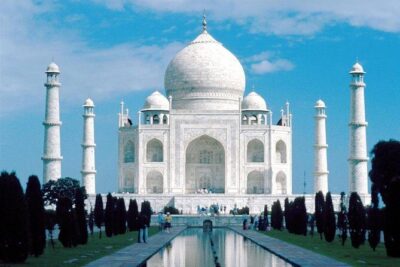
- Taj Mahal at the right time: sunrise, Agra Fort, and Mehtab Bagh
- Agra Fort: the power side of Mughal architecture
- Mehtab Bagh: the river-side perspective
- A practical tip for Agra
- Fatehpur Sikri on the way to Jaipur: Mughal ambition in an abandoned city
- Jaipur day: Amber Fort, City Palace, Jantar Mantar, and Hawa Mahal
- Amber Fort: the big opening act
- City Palace: royal residence turned museum
- Jantar Mantar: astronomy in architecture form
- Hawa Mahal and the surrounding sights
- Price and logistics: what you really get for about $1,917
- Who this tour is best for (and who should rethink it)
- Should you book it?
- FAQ
- Does the tour include a private vehicle and guide?
- Is pickup included?
- Where does the tour start and end?
- How long is the experience?
- Are monument entry fees included?
- What about meals—does it include breakfast?
- What kind of hotel stay is included?
- Does it include the Taj Mahal?
- Are flights included?
- Is there any extra dinner requirement for holidays?
- Is the experience refundable if I cancel?
Key things that make this tour worth considering
- Private planning muscle: meet-and-greet in Delhi, plus an English-speaking guide and chauffeur handling the route
- Comfort all day: air-conditioned private car with bottled water and wet tissue
- Sightseeing you can actually enjoy: Delhi and Agra get proper time blocks instead of frantic rushing
- Big-hits, balanced days: Golden Temple and Wagah Border, then Chandigarh’s design side, then Shimla’s hill-station pacing
- Entry fees included: monument ticket costs are handled as part of the program
- Coordinators get called out: people mention smooth coordination by names like Garima and strong team work including Manish
A smart route: Golden Triangle plus the Himalayas foothills

This tour stitches together two very different sides of India. You’ll start in Delhi, sweep through the Golden Triangle core (Delhi–Agra–Jaipur), then branch north and cool off in the foothills around Shimla and Kufri. Along the way, Amritsar and Chandigarh add a big cultural and architectural change of pace.
What I like about this approach is that it’s not just a list of monuments. Each jump has a purpose: Delhi gives you layered Mughal and earlier-era landmarks; Agra and Jaipur focus on Mughal power and Rajasthan’s royal-era grandeur; then the northern leg slows your eyes down with temple crowds, mountain air, and planned-city design.
The one thing to watch is pacing. Days like Amritsar to Chandigarh, or Chandigarh to Shimla, mean you’ll lose part of your day to travel. If you hate moving hotels and watching the clock, this may feel like too much. If you’re okay with that trade, you’ll get a full sampling of India’s textures in one trip.
You can also read our reviews of more tours and experiences in New Delhi.



Airport meet-and-greet and private car comfort (the real stress reducer)
On arrival in Delhi International Airport, you’ll get a representative meet-and-greet and a transfer to your hotel. That matters more than it sounds. After a flight, figuring out local transit is a tax on your energy. Here, you start the trip already in motion without mental overhead.
For the sightseeing days, you travel in a comfortable air-conditioned private car with a professional chauffeur. Bottled water and wet tissue are provided in the vehicle, which is a small thing that helps on long driving days—especially in warm weather. Parking fees for the monuments and airports are included, so you’re not paying extra just to get access.
You also get both:
- a private professional English-speaking chauffeur
- a private professional English-speaking tour guide
That combo is why this feels smoother than many budget multi-city trips. The guide handles the story and the sequencing. The chauffeur handles the driving. You just show up.
Delhi in two focused days: markets, mosques, tombs, and the classic landmarks
Delhi can be overwhelming fast. This plan gives you structure: one day for Old Delhi and key Mughal-era landmarks, then a second day that adds major points with enough time to look and wander.
Jama Masjid and Chandni Chowk: the Old Delhi hit
You start with Jama Masjid, India’s largest mosque. It’s a big visual statement, and the tour pairs it with a walk through Chandni Chowk, Old Delhi’s oldest and one of its biggest bazaars. This is where you’ll likely feel the city’s everyday rhythm—narrow lanes, dense market energy, and local shoppers moving with purpose.
They also include time to taste local food in Delhi. I’m not saying you’ll love every single bite, but building in food time is smart. Delhi isn’t just monuments. It’s the street-life around them.
Rajghat and Humayun’s Tomb: quieter, powerful stops
Next, you visit Rajghat, the memorial where Mahatma Gandhi was cremated. Even if you’re not a history deep-dive person, the eternal flame element gives the stop a strong emotional anchor.
Then you move to Humayun’s Tomb, often described as the first garden-style tomb of India. The tour frames it clearly: Persian-inspired design and the four garden squares with water channels around the tomb. This is one of those places where design details help you slow down and actually see what you’re standing in front of.




Qutub Minar: a quick but memorable classic
You’ll also visit Qutub Minar. Even with short time in the stop list, it’s worth it. The scale of the structure and the way it dominates the area makes it a fast, satisfying photo-and-impression stop.
Practical note for Delhi
Chandni Chowk-style areas can mean crowds and uneven walking surfaces. Wear shoes you don’t mind getting scuffed. And if you’re sensitive to strong smells, you may want to pace your market walking instead of trying to scan every storefront.
Amritsar: Golden Temple morning energy and Wagah Border drama

Amritsar day is built around spiritual awe and a historic memorial, then ends with a border ceremony that’s part pageantry, part show, and part modern-day ritual.
You begin with Shree Durgiana Temple, a 16th-century temple built in a similar fashion to the Golden Temple. It gives you a preview of architectural mood before you reach the main event.
Then you stop at Jallianwala Bagh, a memorial linked to the Amritsar massacre in 1919. This stop is heavy. The tour keeps it respectful by treating it as a memorial rather than a quick photo break.
After that, you visit Rambagh Gardens, which houses the summer palace of Ranjit Singh, founder of the Sikh Empire. It’s a change of tone—green space and royal legacy.
Golden Temple: the main reason most people come
The tour takes you to the Golden Temple and the surrounding Amritsar city area. This is the emotional center of the day. Even if you’ve seen photos, being there in person is different. The crowds and the reflective surfaces can make everything feel a little larger than life.
Wagah Border ceremony: plan for the show
You’ll also visit Wagah Border and watch the elaborate ceremony near the road border crossing and goods transit terminal between Pakistan and India. The key here is timing and attention: it’s short in the schedule, so arrive ready to focus and don’t treat it like background viewing.
Chandigarh: Le Corbusier planning plus Sukhna Lake and Rock Garden
Chandigarh is a hard city to describe quickly because it’s both modern and outdoorsy. This tour frames it well for first-timers.
The plan includes Sukhna Lake, a man-made water body set within green foothills of the Shivalik range. You’re not going for a long hiking day; you’re going for views and a calmer pause from temple crowds and city motion.
Then there’s Rock Garden of Chandigarh, a popular attraction made using discarded industrial and urban waste. If you like clever reuse and art made from scraps, this stop tends to click. It’s also a nice contrast to the grand stone architecture you’ll see later in Rajasthan.
If you’re the type who enjoys design and layout, Chandigarh is one of the best ways to add variety without adding extra travel days.
Shimla and Kufri: cool heights, Mall Road walks, and lookout points

Shimla sits at 7,467 ft (2,276 m), and Kufri rises even more (8,630 ft / 2,630 m). The tour uses those facts for a reason: the air feels different here, and the views are a big part of why people come.
After driving to Shimla, you check into the hotel and get free evening time. You can walk the Mall, a promenade with mansions and curio shops. This is a good moment to reset your legs before the next day’s viewpoints.
Kufri: nature and trekking culture
You’ll visit Kufri, about an hour from Shimla. It’s known for trekking and hiking trails, plus skiing activities. Even if you don’t hike far, the location itself gives you the Himalayan-feelings without needing technical climbing.
Jakhoo Hills and the temple viewpoint
Later, you’ll return for Shimla town sightseeing, including Jakhoo Hills, the highest point in town with panoramic views, and the Jakhoo Temple there. If you love viewpoints, this is where your camera use might get a little too enthusiastic.
Vice Regal Lodge, Ridge, and Chadwick Falls
The tour includes the Vice Regal Lodge area and walk down the Mall Road, then the Ridge—an open space at the heart of Shimla—and finally Chadwick Falls at 1,586 m through Summer Hill.
The value here is pacing: this isn’t just driving past scenic areas. It’s a walk-based structure that lets you absorb what hill stations do best—views, strolling, and layered scenery.
Taj Mahal at the right time: sunrise, Agra Fort, and Mehtab Bagh
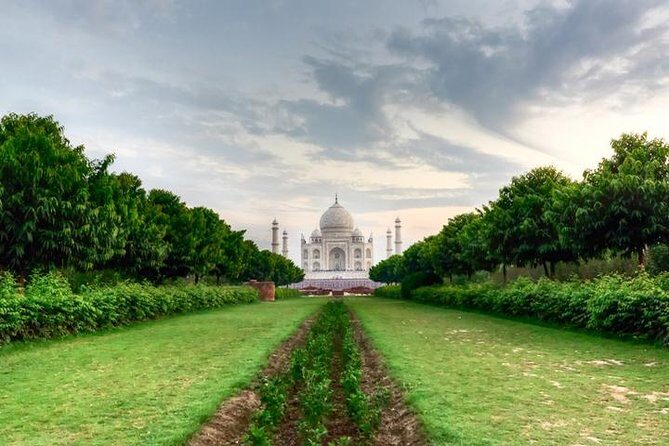
Agra can be chaotic. This tour aims to make your Taj visit feel less like a race by timing it for an early visit, with the highlight specifically calling out Taj Mahal at sunrise. Even if you don’t care about the colors shifting, early hours often mean better conditions to take in the scale.
You’ll visit the Taj Mahal, a UNESCO World Heritage Site, described as a monument built over almost 22 years. It’s also tied to Shahjahan and Mumtaz Mahal, and the tour notes how the marble can change appearance through the day—pinkish in the morning, milky white in the evening, and golden at night under moonlight. That’s not trivia for trivia’s sake. It helps you know what to look for when you’re standing there.
Agra Fort: the power side of Mughal architecture
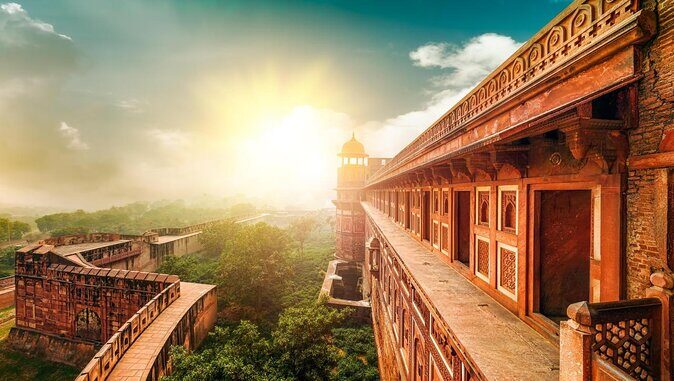
Later, you visit Agra Fort, also UNESCO-listed and compared in style to Delhi’s Red Fort. This is the Mughal authority section of your Agra experience—the place where power lived, not just love.
Mehtab Bagh: the river-side perspective
The tour highlights Mehtab Bagh as part of the Agra plan. This garden area by the river is often about perspective and atmosphere, giving you another angle on the Taj Mahal area rather than repeating the main view only.
A practical tip for Agra
Bring something light to cover up early morning, since conditions can feel cooler before the heat kicks in. Comfortable shoes matter too—marble and courtyards can be smooth, and you’ll walk more than you think.
Fatehpur Sikri on the way to Jaipur: Mughal ambition in an abandoned city
Your route from Agra area to Jaipur includes a stop at Fatehpur Sikri. The tour calls it an abandoned city of the Mughal Empire during Akbar’s reign and frames it as a place with major monuments.
You’ll see key named pieces in the plan, including Jama Masjid, Panch Mahal, and Buland Darwaza, noted as the highest gateway built by Akbar in 1601. This stop is great if you like imperial-scale architecture and don’t need modern-city amenities right now.
Why I like this move: it breaks the drive. Instead of just traveling from one hotel to the next, you get a real historical stop with a distinct atmosphere.
Jaipur day: Amber Fort, City Palace, Jantar Mantar, and Hawa Mahal
Jaipur is your full-on Rajasthan day, with royal forts, courtly architecture, and a dose of science-in-stone.
Amber Fort: the big opening act
You start with Amber Fort, then you continue through major Jaipur highlights. Amber is one of the places where you feel the aesthetic of the region right away—massive stone, built drama, and a sense of power.
City Palace: royal residence turned museum
Next, you visit City Palace. The tour plan includes this as a core stop, and it tends to work well for first-timers because it ties together the rest of the day: why the fort matters, how the palace functioned, and what the city looked like for rulers.
Jantar Mantar: astronomy in architecture form
You also visit Jantar Mantar, the astronomical site. Even if you don’t read every label, the structure tells a story. You see how people measured sky patterns without the tools we take for granted now.
Hawa Mahal and the surrounding sights
You’ll drive past Hawa Mahal, the Wind Palace, and the tour plan also mentions Jal Mahal (water palace). That combo makes Jaipur feel complete: red-pink city identity on the outside, then built purpose in the forts and observatories.
You’ll also have evening free time for shopping in Jaipur Bazaar. This is useful for practical purchases—scarves, spices, small gifts—without being forced into a pre-set shopping stop.
Price and logistics: what you really get for about $1,917
At $1,917 per person, this isn’t a cheap trip. But it’s also not just a couple of city tours stitched together. You’re paying for multi-city movement across north India plus:
- hotels as per the program (3-star or 4-star option)
- air-conditioned private car and a professional chauffeur
- a private English-speaking guide
- monument entry fees included
- parking fees for monuments and airports
- meet-and-greet in Delhi
- bottled water and wet tissue in the vehicle
- breakfast included (listed as 11 breakfasts)
So the value equation looks like this: you pay to reduce friction. That means fewer ticket hassles, fewer navigation problems, and less time lost in decision-making—especially in places like Agra and Amritsar where timing matters.
Where your spending might still show up is outside the inclusions: any international or domestic flights, and any mandatory gala dinner on Christmas and New Year Eve (if applicable). The tour also doesn’t list lunch or dinner as included, so plan on that budget.
Also, keep in mind that cancellation is non-refundable and can’t be changed. If your dates might shift, this matters.
Who this tour is best for (and who should rethink it)
This fits best if you:
- want a private, guided trip with fewer planning headaches
- like seeing big icons without having to manage tickets and timing yourself
- are okay with moving hotels across multiple cities over roughly 13 days
- want both Golden Triangle highlights and the cooler hill-station feel of Shimla/Kufri
It may not fit if you:
- want a single-city vacation with slow days and zero road time
- dislike early mornings (since the Taj Mahal timing is a highlight)
- prefer fully independent travel with no guide
Should you book it?
I’d book this if your dream trip includes the Taj Mahal and you also want the northern add-ons—Amritsar, Chandigarh, and Shimla—without stitching everything together yourself. The included monument fees, private car comfort, and English-speaking guide help you spend your energy on the sights, not on logistics.
I’d hesitate only if you know you’re sensitive to travel days and hotel changes. This itinerary is full. You’ll see a lot, but you won’t have long, empty afternoons to do nothing.
If your goal is variety with strong structure, it’s a good match.
FAQ
Does the tour include a private vehicle and guide?
Yes. The tour includes an air-conditioned private car with a professional chauffeur and a private professional English-speaking tour guide.
Is pickup included?
Pickup is offered, and the tour includes meet-and-greet assistance at Delhi International Airport.
Where does the tour start and end?
It starts in New Delhi, Delhi, India, and ends back at the meeting point.
How long is the experience?
The tour is listed as approximately 13 days.
Are monument entry fees included?
Yes. Entrance fees of monuments as per the program are included.
What about meals—does it include breakfast?
Yes. Breakfast is included 11 times, as listed in the inclusions.
What kind of hotel stay is included?
Accommodation is included as per the tour program, with a 3-star or 4-star hotel option.
Does it include the Taj Mahal?
Yes. The itinerary includes a visit to the Taj Mahal, and the tour highlights mention Taj Mahal at sunrise.
Are flights included?
No. Any airfare (international or domestic) is not included.
Is there any extra dinner requirement for holidays?
Mandatory gala dinner on Christmas and New Year Eve is not included, if applicable.
Is the experience refundable if I cancel?
No. This experience is non-refundable and cannot be changed for any reason.