Old Delhi hits your senses fast. This 3.5-hour walk strings together spice lanes, wedding shopping streets, and classic food stops, with food sampling built into the route. I also like the small group size (up to 14 people), because you can actually ask questions and keep moving without getting lost in the crush.
One thing to consider: you’re walking a lot along narrow lanes, so comfy shoes matter, and you should be ready for busy street energy for most of the morning.
In This Review
- Quick Highlights
- Old Delhi on Foot: What This 3.5-Hour Walk Really Gives You
- Where You Meet and How the Timing Works (No Hotel Pickup)
- Chandni Chowk’s Market Pulse at Pasar Chandni Chowk
- Khari Baoli Spice Market: Dry Fruits and the Bulk Pantry Mindset
- Kinari Bazar for Wedding Supplies: Shop Street Energy, Explained
- Gali Paranthe Wali: Stuffed Paratha from Long-Running Shops
- Red Fort Outside Views: Mughal Landmark Context Without a Long Detour
- What’s Included: Breakfast, Tastings, Coffee/Tea, Water, and Your Guide
- The Walking Pace and Group Size: Why Up to 14 People Matters
- Who This Tour Fits Best (and Who Might Want a Different Plan)
- Should You Book This Old Delhi Walk?
- FAQ
- What is the duration of the Hidden Gems of Old Delhi – Walk?
- What time does the tour start?
- Where is the meeting point?
- Does the tour include food and drinks?
- Are admission tickets included?
- Is hotel pickup or drop-off provided?
- How large is the group?
- Is the tour suitable for families with kids?
- Is the meeting point near public transportation?
- What is the cancellation policy?
Quick Highlights
- Chandni Chowk on foot: one of the city’s busiest streets, designed for seeing Old Delhi as it really works
- Khari Baoli spice and dry fruits market: a focused look at bulk spices and everyday Indian pantry staples
- Kinari Bazar wedding street: where you’ll find what people shop for when celebrations call
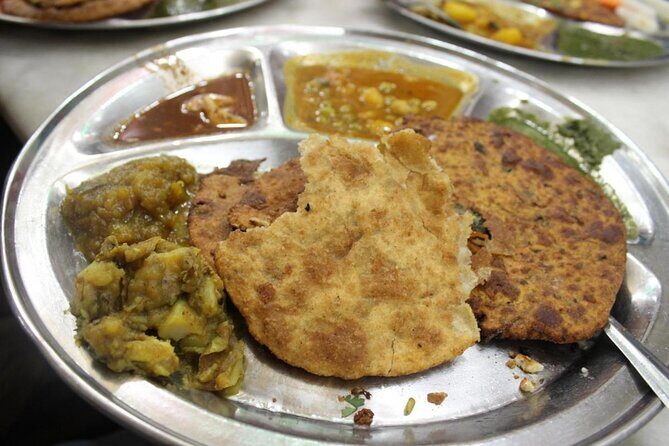
- Gali Paranthe Wali: a short, dedicated stop for traditional stuffed paratha from long-running shops
- Red Fort outside views: quick orientation on the Mughal-era landmark and why it still matters
Old Delhi on Foot: What This 3.5-Hour Walk Really Gives You
If you only have a half day, this is a smart way to get oriented. Old Delhi can feel like you’re stepping into a living marketplace maze, and that’s the point. A guided walk helps you connect streets, smells, and sights instead of just walking past them.
I like how the tour is structured around real-life parts of the city: markets, food, and a major monument view from the outside. You’re not stuck in one place staring at displays. You’re moving through the neighborhoods where people shop, eat, and celebrate.
Also, the time split feels practical. Most stops are short, which keeps the walk from dragging. The one longer market segment gives you enough breathing room to slow down and notice details.
You can also read our reviews of more walking tours in New Delhi



Where You Meet and How the Timing Works (No Hotel Pickup)

You meet at 839, Netaji Subhash Marg, Lal Qila, Old Delhi, New Delhi, Delhi 110006. The start time is 11:30 am, and the tour ends back at the same meeting point.
There’s no hotel pickup or drop-off included, so plan to reach the meeting area on your own. The meeting point is listed as near public transportation, which helps if you don’t want to figure out logistics right before the walk.
Because it’s a set start time, arrive a few minutes early. Narrow-lane navigation can take longer than you expect, even when you think you’re close.
Chandni Chowk’s Market Pulse at Pasar Chandni Chowk
This is where the tour begins in Old Delhi’s action zone. Pasar Chandni Chowk is presented as one of the busiest streets of India, and the vibe matches that claim fast. You’ll spend about 1 hour 30 minutes here, which is generous for a walking tour—enough time to actually take in what’s going on.
What I like about this segment is the way it’s framed. It’s not just about shopping. You’re being shown how the street reflects unity and diversity in the way people live and work side by side. That context helps you understand why you’ll see different languages, trades, and food stalls all in the same walkable zone.
What to watch for: this area is busy by design. If you get flustered by lots of movement and close spacing, keep your pace steady and let the guide do the routing. You’ll enjoy it more if you treat it like a guided “street reading” exercise rather than a checklist of stops.
Khari Baoli Spice Market: Dry Fruits and the Bulk Pantry Mindset
Next up is Khari Baoli, where you get a strong look at the spice-and-dry-fruit world. The stop is about 20 minutes, which sounds quick until you realize it’s a dense place. In a short time you can still learn how these markets work: what people buy, how goods are displayed, and why spices matter in daily cooking.
This is the kind of market stop that pays off later. Once you’ve seen bulk spices in this setting, grocery-store labels feel more meaningful. You start to recognize how Indian cooking gets built on spice blends, freshness, and different cuts of ingredients.
The practical tip here is simple: keep a careful eye on what you’re trying to smell and understand. It’s easy to get distracted by everything at once. Use the guide’s pointers to focus on the main categories you’re seeing.
Kinari Bazar for Wedding Supplies: Shop Street Energy, Explained
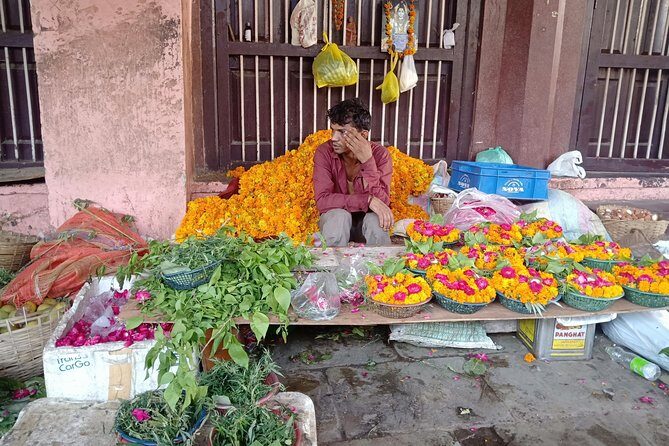
Then you shift into Kinari Bazar, about 30 minutes. This is the street where you’ll find the shopping side of weddings—everything people need for celebrations. The tour frames it as a practical street experience: you’re seeing the types of items that show up in wedding preparation, not just wandering past storefronts.
I find this segment useful because it adds a layer to Old Delhi beyond food. Markets here aren’t only for eating and daily groceries. They’re also for major life events. That changes how you interpret what you’re seeing—every shop becomes part of a larger city system.
Potential drawback: if you’re not interested in shopping, this stop can feel like more browsing than sightseeing. You can still get value by observing the variety and learning what the items are used for, even if you don’t plan to buy.





Gali Paranthe Wali: Stuffed Paratha from Long-Running Shops
Now for the food highlight: Gali Paranthe Wali. The stop is about 15 minutes, but it’s clearly the tasting moment. You’ll find traditional parantha made at 150-year-old shops, and the tour includes tasting some of the best paranthas here.
Even if you’re not a hardcore foodie, this is one of those places where the taste carries the history. You’re not reading about food traditions—you’re experiencing what “old-school” paratha looks and tastes like in the hands of long-running stalls.
What to consider: 15 minutes goes fast in a food street. If you’re picky or like to take it slowly, be ready to commit to one order quickly and enjoy it. Also, since breakfast and tastings are included on the tour, pace yourself so you don’t end up with a full stomach before the last segment.
Red Fort Outside Views: Mughal Landmark Context Without a Long Detour
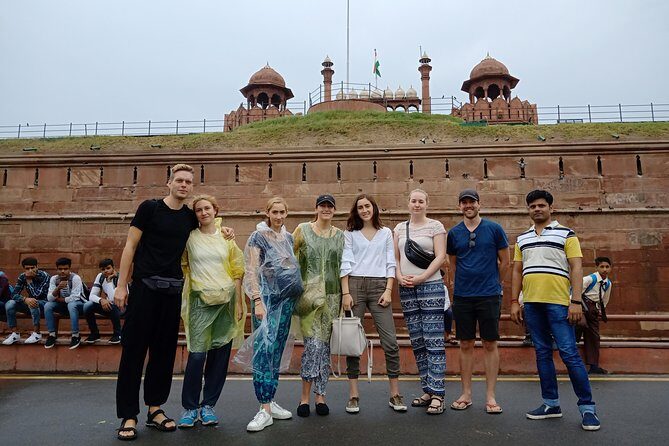
You end with Red Fort, seen from outside. The stop is brief—about 10 minutes—with short briefings on the Mughal Empire fort palace and why it still matters today.
This is a smart way to handle a big-name monument. You get orientation and significance without turning the tour into a museum-style time sink. It’s also a good “bookmark” moment: after markets and food streets, you get a landmark that anchors Old Delhi’s larger story.
A note on expectations: since the fort is viewed from outside in a short stop, don’t treat this as an in-depth Red Fort visit. It’s context and a view, not a full site tour.
What’s Included: Breakfast, Tastings, Coffee/Tea, Water, and Your Guide
This tour’s value is in what it bundles together. You get breakfast, food tasting, coffee and/or tea, and bottled water, plus a local guide. Admission tickets are also included across the stops, which matters because it saves you from extra on-the-spot costs.
At $32.43 per person for around 3 hours 30 minutes, the pricing feels fair when you consider:
- Food is part of the experience, not an optional add-on
- Your guide helps you interpret what you’re seeing in markets that can otherwise feel chaotic
- You’re covering multiple major Old Delhi areas in one guided route
If you’ve paid for separate market tours plus tastings elsewhere, this one often feels like better packaging. You’re paying for a guided, structured morning where you don’t have to decide everything yourself.
The Walking Pace and Group Size: Why Up to 14 People Matters
The tour limits the group to a maximum of 14 travelers. That smaller cap is a big deal in a place like Old Delhi. It helps the guide keep everyone together through narrow lanes and busy intersections without turning the tour into a slow shuffle.
You should expect a steady walking pace with frequent short stops. The route is designed for moving, not for lingering at every corner. If you like quick hits and strong guidance, this fits well.
Comfy shoes are not optional. Even when you’re not walking for long stretches, you’ll likely be on uneven surfaces and turning frequently to look at what’s next.
Who This Tour Fits Best (and Who Might Want a Different Plan)
This tour is a strong match if you want:
- A guided introduction to Old Delhi’s key market streets
- Food stops with actual tasting included
- A simple, organized route that doesn’t require you to plan every turn
It may be less satisfying if you want long museum time, quiet streets, or a slower pace with deep site study. This is designed for sensory, street-level experience. You’ll get more out of it if you like that style.
Should You Book This Old Delhi Walk?
I think you should book if you want an efficient, guided morning that covers the essentials: Chandni Chowk, Khari Baoli, Kinari Bazar, Gali Paranthe Wali, and an outside look at Red Fort. The included breakfast, tastings, drinks, water, and admission help make it feel like a complete experience instead of a bare-bones tour.
Don’t book if you hate walking through busy lanes or you’re only interested in a long, detailed Red Fort visit. This route is short and fast on purpose—great for orientation, less ideal for deep-dive time.
If that sounds like your kind of Old Delhi day, this is a practical pick.
FAQ
What is the duration of the Hidden Gems of Old Delhi – Walk?
The tour lasts about 3 hours 30 minutes.
What time does the tour start?
The start time is 11:30 am.
Where is the meeting point?
You meet at 839, Netaji Subhash Marg, Lal Qila, Old Delhi, New Delhi, Delhi 110006, India.
Does the tour include food and drinks?
Yes. Breakfast, food tasting, coffee and/or tea, and bottled water are included.
Are admission tickets included?
Yes. Admission tickets are listed as included for the tour stops.
Is hotel pickup or drop-off provided?
No. Hotel pickup and drop-off are not included.
How large is the group?
The tour has a maximum of 14 people.
Is the tour suitable for families with kids?
Children must be accompanied by an adult.
Is the meeting point near public transportation?
Yes. The meeting point is listed as near public transportation.
What is the cancellation policy?
You can cancel for a full refund up to 24 hours before the experience start time. If you cancel within 24 hours, the amount paid is not refunded.