REVIEW · JAIPUR
Hands-on Block Printing Workshop
Book on GetYourGuide →Operated by Creatis · Bookable on GetYourGuide
Block printing turns wood and ink into something you can wear. In Rajasthan, this hands-on workshop guides you through the logic of patterns and the satisfying rhythm of stamping fabric, with help from staff like Mohit, Vivek, and Aftab. You’ll also get a chance to see professionals at work nearby.
What I like most is how quickly you start printing for yourself, not just watching. You’ll learn the design building blocks, like Gad (ground), Rekh (outline), and Datte (filler), then apply them to a real scarf or sarong. The other big win is the end result: a one-of-a-kind wearable piece you can actually use.
One thing to consider: two hours moves fast. If you’re hoping for a slow, step-by-step apprenticeship-style deep practice, this is a strong start, but it won’t make you a master printer.
In This Review
- Key things to know before you go
- Block Printing in Rajasthan: what you’re really learning in 2 hours
- The wood blocks, pigments, and tools: how the process starts
- Gad, Rekh, Datte: the pattern language that makes results look professional
- From stamping to layering: how your print actually comes together
- Choosing your design: Sanganeri-inspired options and real personalization
- Your wearable artwork: the Pico stitch scarf or sarong you take home
- The studio setup near the small factory: why watching pros helps
- Small group learning with Mohit, Vivek, and Aftab
- Why $24 feels fair: price, what’s included, and what you actually get
- Who should book this, and who might want to skip it
- Before you go: what to wear and how to get the best experience
- Should you book this hands-on block printing workshop?
- FAQ
- FAQ
- How long is the block printing workshop?
- What is the price per person?
- What will I make during the workshop?
- Is the Pico stitch scarf or sarong included in the price?
- How many people are in the group?
- What languages are used during the workshop?
- Do I have to bring my own materials?
- What kinds of designs can I choose from?
- Will I learn how to print with different colors and layers?
- What should I wear?
Key things to know before you go
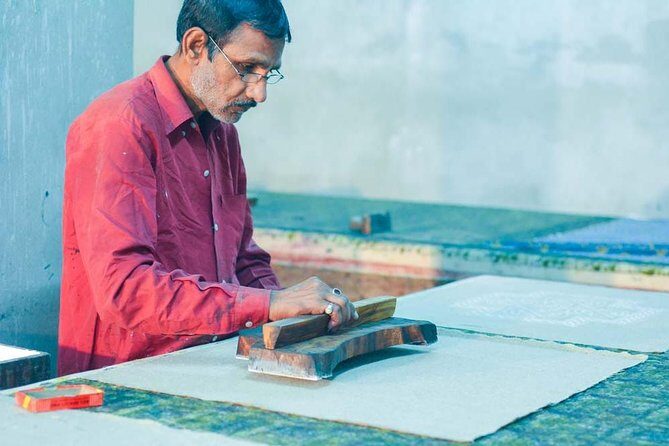
- Small group size (up to 10) means hands-on help when you need it.
- Learn the pattern method using Gad, Rekh, and Datte, not vague instructions.
- Layering with water-based pigments lets you experiment with how prints build up.
- Pick from Sanganeri-inspired designs and personalize colors and layout.
- You’ll print a Pico stitch scarf or sarong, included in the price.
- Watch artisans nearby while you learn, which helps the whole process click.
Block Printing in Rajasthan: what you’re really learning in 2 hours
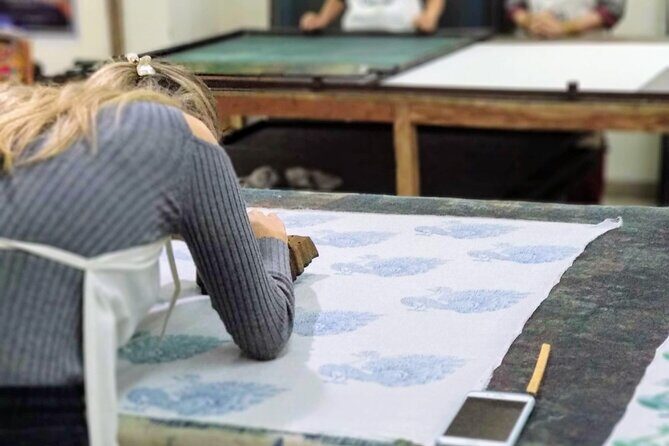
Block printing sounds simple until you try it. The magic is in control: lining up a motif, repeating it without going off pattern, and understanding how outlines and fillers change the final look. In this workshop, you’re not just making something pretty. You’re learning the basic system artisans use to build a design.
The workshop runs for 2 hours, which is a practical length for a hands-on class. Long enough to actually print, short enough to fit into a normal travel day. You’ll work in a studio setting with an instructor team that supports you as you print.
If you want an activity that feels off the beaten track, this is it. You’re using a carved wooden block, pigments, and layering. That’s very different from the usual sightseeing routine.
A few more Jaipur tours and experiences worth a look
The wood blocks, pigments, and tools: how the process starts
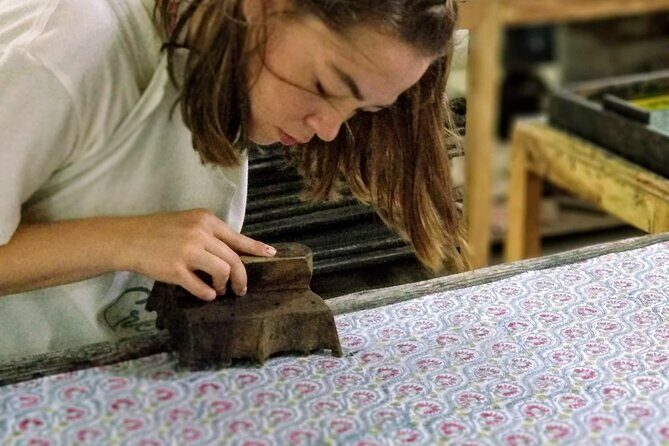
Here’s the first thing you’ll notice: the tools do the heavy lifting. Wooden blocks carry the design, pigments give the color, and your job is to place, press, and layer with intention.
You’ll start with an intro that covers the history and cultural significance of block printing. You’ll also learn the main tools and materials so you understand what you’re holding and why it works. That matters because when you know what the tools do, your prints look better even on your first try.
You’ll work with water-based pigments. The workshop also focuses on mixing and matching colors, so you’re not limited to a single palette. If you like experimenting, this part is where it becomes fun fast.
Gad, Rekh, Datte: the pattern language that makes results look professional
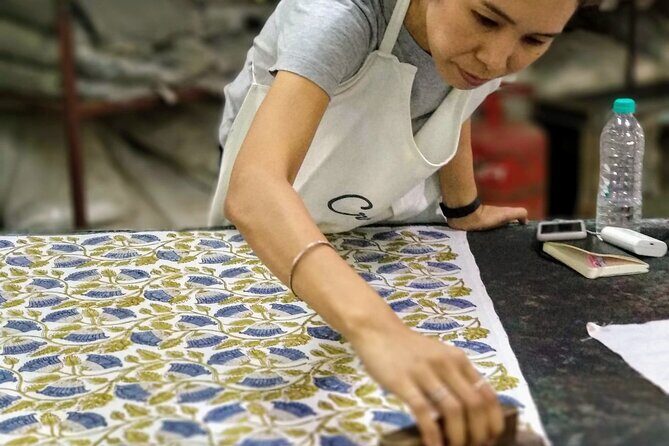
Most beginners get stuck because they treat printing like one big stamp. This workshop gives you a more useful framework.
You’ll learn three design categories:
- Gad (Ground): the base area pattern that sets the overall field
- Rekh (Outline): the linework that defines shapes and clarity
- Datte (Filler): the extra touches that add rhythm and balance
Once you understand those roles, your printing becomes less guesswork. Even if your first layout isn’t perfect, you’ll see how artisans think about composition. And you’ll start making choices that improve the look instead of just repeating.
This is one of the reasons the workshop feels worth it. You leave with a piece you can wear, but you also leave knowing how to adjust your next attempt.
From stamping to layering: how your print actually comes together
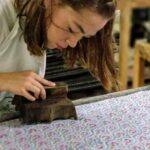
Block printing isn’t one-and-done. The workshop teaches layering techniques, including how to print either a motive (a repeating unit) or an all-over design.
You’ll practice printing with the wooden blocks and experiment with how colors interact when placed in layers. This is where your confidence grows. The repeated action can feel almost meditative, but the outcome changes each time you adjust color order or where you place the filler elements.
You’ll also learn a key idea: printing is a system of steps, not a single moment of creativity. When you understand that, you stop panicking about getting it perfect immediately. You start iterating.
And that’s exactly what you want in a first workshop. You get the satisfaction of progress without needing years of training.
Choosing your design: Sanganeri-inspired options and real personalization
This class isn’t random. You get a range of intricate designs inspired by Sanganeri prints, and you can choose what you want to build.
You’ll also have access to designs from their signature fabric collection (when available). That’s helpful if you’re trying to pick something that will look great once it’s printed at scarf or sarong size.
You’re not stuck with a single color scheme either. The workshop encourages you to mix and match colors, then apply them in layers. In practice, that means you can steer the final look toward what you like: lighter and airy, or more contrast-heavy.
From what I’ve heard from past participants, people tend to enjoy this step most because it turns the class from instruction into ownership. You’re making decisions, not just following a recipe.





Your wearable artwork: the Pico stitch scarf or sarong you take home
The included item is a Pico stitch scarf or sarong. That detail matters for value, because you’re not paying just for time and tools. You’re paying for a finished wearable you can show friends and actually use.
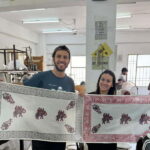
You’ll apply your chosen designs to your fabric during the session. The goal is to create a one-of-a-kind piece that reflects your personal style, not a factory copy.
Pico stitch work also signals something practical: the fabric format is wearable-friendly and sized for travel. Even if you plan to gift it, you’re not going home with something too fragile or too hard to pack.
One more reality check: you’ll get a finished piece by the end of the class, but it’s still a first-time project. Expect it to look handmade. That’s not a flaw. That’s the point.
The studio setup near the small factory: why watching pros helps
One of the most memorable parts for many people is that the studio setting is very close to a small factory where professionals work. Seeing that in context changes your perspective.
When you watch skilled printers work, you understand why techniques matter. You also notice how fast experienced hands can be while still staying consistent. For a beginner, that doesn’t mean you should rush. It means you see the target: clarity, repetition, and clean layering.
This also helps you respect the craft. The workshop doesn’t pretend block printing is easy. It shows you the difference between a good first attempt and the level artisans reach with time.
Small group learning with Mohit, Vivek, and Aftab
This workshop is limited to 10 participants, and that’s a big deal. In a small group, instructors can adjust guidance when something isn’t lining up or when you want help deciding what to print next.
Past sessions highlight staff members like Mohit and Vivek, and also mention Aftab being patient and helpful when participants needed support. That’s the kind of reassurance you want in a hands-on class, because block printing rewards calm focus.
Language support is also built in: English and Hindi. So if you prefer not to rely on translation, you’ve got options. It’s especially useful for clarifying the design logic, like how Gad, Rekh, and Datte should work together.
And because it’s sociable without being crowded, solo travelers often find it an easier way to meet people while still doing something meaningful.
Why $24 feels fair: price, what’s included, and what you actually get
At $24 per person for a 2-hour workshop, the value comes from three things.
First, you’re getting a real included product: the Pico stitch scarf or sarong. That’s not a vague promise. It’s the item you finish during the class.
Second, you’re paying for guided technique. The class covers the design system and the practical mechanics of printing, not just art history trivia.
Third, you’re paying for access to materials and tools. You don’t have to source wooden blocks, pigments, or fabric on your own. That alone makes it cheaper than trying to replicate the experience later.
Is it a bargain compared to a long, multi-day artisan residency? Sure, but that’s not the point. This is a well-shaped first step: guided enough to succeed, hands-on enough to feel satisfying, and fast enough to fit into travel.
Who should book this, and who might want to skip it
I think this works best if you:
- want a hands-on cultural activity in Rajasthan
- enjoy making things with your hands, not just taking photos
- like patterns and color choices
- travel solo and want a friendly, small-group setting
- want a wearable souvenir that looks like you picked it and designed it
You might consider skipping if:
- you need a super structured classroom with lots of lectures (this is mainly practice)
- you expect a long time to perfect your technique (two hours is a start, not a full course)
- you’re traveling with very tight timing, because hands-on workshops reward showing up ready to focus
If you have a mild fear of messing up, don’t worry. The whole design system gives you something to do even when you’re learning.
Before you go: what to wear and how to get the best experience
Wear comfortable clothing suitable for a hands-on workshop. That’s the only instruction you’re given, but it’s practical advice for any craft class.
Bring nothing extra unless you know you’ll need it for personal reasons. The workshop provides the materials: wooden blocks, pigments, and fabric.
Also, mentally plan for repetition. The process can feel rhythmic, and that’s part of why people leave feeling relaxed. If you walk in expecting instant perfection, you might judge your own piece too harshly. Treat it like a first draft with a real finish.
If you want the most satisfying result, make your design choices early and think about color layering as you go.
Should you book this hands-on block printing workshop?
I’d book it if you want something practical, creative, and authentically local without spending days on it. For $24, you’re not just buying a souvenir. You’re learning a real craft approach, using the pattern language of Gad, Rekh, and Datte, and leaving with a Pico stitch scarf or sarong you made.
If you’re the type who likes watching experts work, the nearby factory view adds extra meaning to the class. And the small group format with staff like Mohit, Vivek, and Aftab makes it easier to get unstuck.
One cautious note: if your schedule is too tight, you may feel rushed. Give yourself enough time to focus for the full two hours, and you’ll enjoy it a lot more.
FAQ
FAQ
How long is the block printing workshop?
It lasts 2 hours.
What is the price per person?
The price is $24 per person.
What will I make during the workshop?
You’ll create a Pico stitch scarf or sarong using block printing techniques.
Is the Pico stitch scarf or sarong included in the price?
Yes, it’s included.
How many people are in the group?
The group is limited to 10 participants.
What languages are used during the workshop?
The instructor supports English and Hindi.
Do I have to bring my own materials?
No. The workshop provides the necessary materials, including wooden blocks, pigments, and fabrics.
What kinds of designs can I choose from?
You can choose from a range of intricate designs inspired by Sanganeri prints, and you’ll have access to designs from a signature fabric collection (when available).
Will I learn how to print with different colors and layers?
Yes. You’ll experiment with water-based pigments, mixing colors and layering designs.
What should I wear?
Wear comfortable clothing suitable for a hands-on workshop.