REVIEW · JAIPUR
golden triangle tour with ranthambore by Car
Book on Viator →Operated by Sumit Rajasthan Travel · Bookable on Viator
Road-trips beat check-in chaos in North India. This Golden Triangle plus Ranthambore itinerary keeps you moving by private car, with pickup, a professional guide, and a clear day-by-day plan. I love how the door-to-door transfers (hotel/airport/railway station) cut stress from the start, and how the route strings together the big-name sites without leaving you to figure out every logistics step yourself.
My other favorite part is the human touch: the service is built around a chauffeur you can count on, plus local guidance that helps you pick what matters in each city. In the accounts tied to Sumit Rajasthan Travel, drivers such as Randhir Singh and Dinesh are praised for being friendly, available, and practical with advice on where to go and what to eat.
One watch-out: the tour price covers the car, guide, and transfers, but it does not include hotel nights or monument entrance fees. So your all-in budget can climb once you add accommodations and tickets, especially if you plan to do optional paid activities like an elephant ride at Amber Fort.
In This Review
- Key highlights that make this trip worth your time
- A North India car route that keeps you sane
- Day 1: Landing in Delhi, then Agra Fort and sunset Taj Mahal
- Day 2: Fatehpur Sikri and Chand Baori before Ranthambore
- Day 3: Early tiger safari in Ranthambore, then transfer to Jaipur
- Day 4: Amber Fort by elephant option and a full Jaipur city tour
- Day 5: Drive back to Delhi, plus a possible local home lunch
- Day 6: New Delhi and Old Delhi city touring in one go
- What you really get for the price (and what you pay separately)
- Driver quality and comfort: the difference you notice daily
- Who this tour fits best
- Should you book Golden Triangle with Ranthambore by Car?
- FAQ
- How long is the Golden Triangle with Ranthambore tour?
- What does the tour price include?
- Are hotel nights included in the price?
- Are monument entrance fees included?
- Is this tour private or group travel?
- Do you offer vegetarian options?
Key highlights that make this trip worth your time
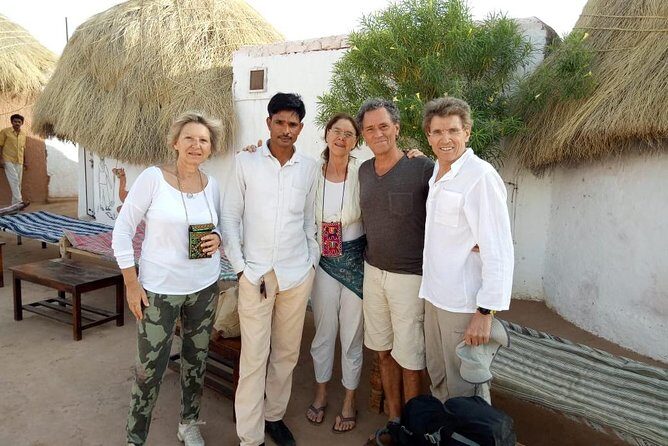
- Max 4 travelers: you get a small-group feel with a private A/C vehicle.
- Early tiger day structure: an early Ranthambore National Park safari day is baked into the plan.
- Sunset Taj Mahal slot: Day 1 schedules Taj Mahal at sunset in Agra.
- Two big stepwell stops: Fatehpur Sikri plus Abhaneri and Chand Baori help break up the road time.
- A driver who handles the small stuff: smooth transfers, safety-focused driving, and practical city guidance.
A North India car route that keeps you sane
This is the kind of trip that works because you are not switching trains, re-routing taxis, and constantly recalculating timing. You’re traveling by private A/C car with a chauffeur, moving in a planned loop: Delhi → Agra → Ranthambore → Jaipur → Delhi, with city tours layered in.
The big value is not just convenience. It’s that the schedule is designed around how these places actually run. Taj Mahal tends to be best when you’re not rushing through it, Ranthambore is easiest when you can start early for safari, and Amber Fort works best when you have daylight and time to wander before you get stuck in traffic or crowds. With a private vehicle, you’re more likely to arrive with a plan and less likely to spend hours stuck.
Also, the tour uses a mobile ticket approach, and the operator offers pickup at multiple starting points (hotel, airport, or railway station). That matters if your arrival day timing is messy or if you’re building your own add-ons in India.
Finally, you’re not locked into a giant group machine. The maximum is 4 travelers, so you should feel more flexible with pacing and questions—especially when you have a professional guide who can explain what you’re seeing in plain language.
You can also read our reviews of more tours and experiences in Jaipur.


Day 1: Landing in Delhi, then Agra Fort and sunset Taj Mahal
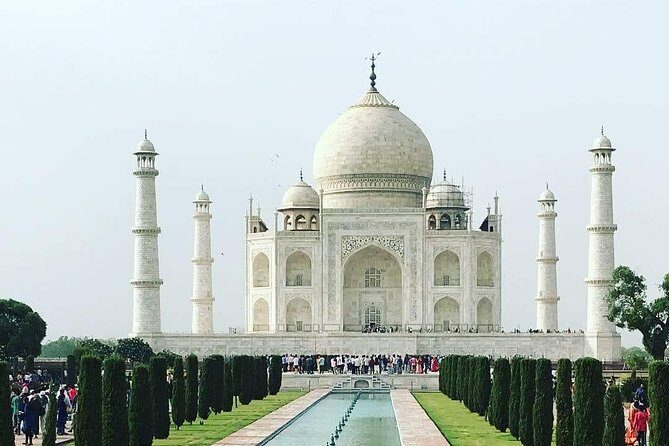
Day 1 starts with arrival in Delhi and a drive to Agra. In the afternoon, you visit Agra Fort and the baby Taj Mahal (a smaller, earlier mausoleum style monument). Then the plan ramps up for the main event: the Taj Mahal at sunset, followed by an overnight stay in Agra.
Why this sequence works: Agra is dense with meaning, but it’s also easy to overschedule. Starting with Agra Fort gives you context for the Mughal era power story, so Taj Mahal doesn’t feel like a random photo stop. Then you get Taj Mahal when light softens and the crowds often feel more manageable than midday.
One practical tip: go in expecting strong feelings and lots of stairs/standing around. Even if you’re not into monuments, Taj Mahal has a way of pulling you into its scale. If you care about photos, sunset timing is where you’ll thank yourself later.
The only thing to budget carefully on Day 1 is what’s not included: monument entrance fees are extra. Your tour covers the guide and transfers, but you’ll pay site tickets directly.
Day 2: Fatehpur Sikri and Chand Baori before Ranthambore
After breakfast, you drive to Ranthambore. On the way, you visit Fatehpur Sikri and Abhaneri, including Chand Baori, the famous stepwell.
This is a smart day for two reasons. First, it breaks up the long road with cultural stops that feel different from the big-city sights in Delhi and the palace-and-fort loop in Jaipur. Second, stepwells are one of those India details that reward slow attention. Chand Baori isn’t just a landmark; it’s a reminder of how people engineered water and shade in very practical ways.
Fatehpur Sikri is the other half of the contrast: a complex Mughal-era site where you can see how religion, power, and court life were represented in stone. Even if you only spend a couple of hours there, you’ll start to connect the dots of what you saw in Agra Fort.
Logistics note: since this is a road tour, you’ll likely get the best experience by wearing comfortable shoes and keeping water handy. Bottled water is included, which helps, but you’ll still want to move at a relaxed pace at each stop.
Day 3: Early tiger safari in Ranthambore, then transfer to Jaipur
Day 3 is built around one key moment: an early morning tiger safari in Ranthambore National Park. After the safari, you drive to Jaipur, with a stop to visit a monkey temple en route, then overnight in Jaipur.
About that safari: wildlife timing is always a little unpredictable, so the best mindset is flexible. You’re not coming for guaranteed sightings. You’re coming for the chance to see how tigers and the landscape interact when the park is at its most active. The early start is what makes that possible.
What I like about this day’s structure is that it doesn’t waste your daylight. Safari first, then road time and a temple stop, then Jaipur. It keeps the travel day from turning into a blur where you arrive tired and cranky with no energy left for the next city.
Also, monkey temple stops can be fun, but keep it practical. If you’re carrying snacks or loose items, keep them secure. With monkeys around, small chaos can happen quickly, so a calm, careful approach helps you enjoy the views and not the chaos.
Day 4: Amber Fort by elephant option and a full Jaipur city tour
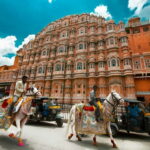
After breakfast, you visit Amber Fort. The itinerary notes you can go up to the fort by elephant if you choose. Then you head into Jaipur for a city tour of the Pink City, including stops such as Palace of the Winds (Hawa Mahal), Water Palace, City Palace, Jantar Mantar, and a museum, finishing with an overnight in Jaipur.
This is a packed day, but it’s packed with variety. Amber Fort is your classic fort experience—big walls, steep views, and the feeling of living inside a former royal machine. If you take the elephant option, you’ll want to treat it as an optional activity rather than a requirement, and you’ll likely want to confirm timing and any extra costs with your driver/guide.
Then Jaipur shifts you into a more urban sightseeing mode. Hawa Mahal is all about light and window drama. City Palace is where you see how royal power lived and evolved. Jantar Mantar gives you the science side—time, movement, and measurement done in stone. And the museum stop can help if you want a break from standing outdoors in the sun.
My practical advice for this day: plan to pace yourself. You’ll want water, sun protection, and a willingness to pause. If you try to sprint through these stops, you’ll miss the small details that make Jaipur feel different from Agra and Delhi.






Day 5: Drive back to Delhi, plus a possible local home lunch
After breakfast, you drive to Delhi. On the way, there’s an optional welcome for lunch in a home with local Indian food. Then you overnight in Delhi.
This is one of the most interesting parts of the schedule because it can add something normal travel often skips: a real taste of daily food rhythms. You’ll want to treat it as an extra that depends on the host and timing, not a guaranteed sit-down feast. Still, the idea is compelling if you’re open to eating like locals rather than only chasing restaurants.
Then, once you reach Delhi, you’re positioned well for the final city tours the next day. That matters because Delhi is huge. If you try to cover Old Delhi and New Delhi on the same day you arrive from long road time, your day can get swallowed by traffic and fatigue.
Day 6: New Delhi and Old Delhi city touring in one go
Day 6 is a city tour day: New Delhi and Old Delhi. You overnight in Delhi again, keeping your trip flexible and avoiding the stress of a long-distance move after sightseeing.
This day is really about contrast. New Delhi tends to feel wider, more planned, and government-ish. Old Delhi tends to feel tighter and older, where the street energy hits you faster. Having both in one tour helps you get a fuller picture of what people mean when they say Delhi feels like two different places.
Keep expectations practical. You’ll likely walk, you’ll deal with busy streets, and you’ll want to move in short bursts—look, explore, then reposition. A professional guide can help you choose what to prioritize so you don’t feel forced to see everything at once.
What you really get for the price (and what you pay separately)
The listed price is $220 per person for the car-based tour with a professional guide and transfers. That’s the headline number, but the value depends on what you’re not paying for yet.
Included:
- Hotel/airport/railway station pickup & drop
- A chauffeur-driven A/C private vehicle
- Fuel, parking, tolls, and interstate taxes
- Professional guide
- Bottled water
Not included:
- Hotel accommodation
- Monument entrance fees
- Alcoholic drinks
So the real budgeting question is simple: how much do you want to spend on hotels and site tickets? If you choose comfortable mid-range hotels and plan carefully for monument fees, the overall cost often feels reasonable for a private car tour that links multiple cities and includes tiger safari timing.
Also, think about the small-but-important costs. Entrance fees can add up across Agra, Fatehpur Sikri, Chand Baori, Amber Fort, and Jaipur’s sights. If you go hard on optional experiences (like the elephant ride option), your total rises again.
One more value note: the tour offers free cancellation, with full refund if you cancel at least 24 hours before the start time. That’s helpful if your flight plans aren’t fully locked in yet.
Driver quality and comfort: the difference you notice daily
In a trip like this, your driver isn’t a background detail. You’re in the car for long stretches, and you need someone who manages timing, road behavior, and the stop-and-go rhythm of India.
The accounts tied to Sumit Rajasthan Travel emphasize safety and friendliness. Drivers such as Randhir Singh and Dinesh are described as attentive and available, and that kind of support matters when you have a kid, tight timing, or you simply want clear guidance on where to eat and where to stop.
Comfort-wise, you should expect a private A/C vehicle and bottled water. One experience also notes a car with Wi‑Fi, which can be a nice perk for downtime, but it’s not stated as a guaranteed feature. If Wi‑Fi matters for your group, ask before you go.
One more practical point: the tour caps at 4 travelers, which usually means you won’t feel squeezed. For a long road loop, that’s a real quality-of-life upgrade.
Who this tour fits best
This works well if:
- You want a classic India highlight route but prefer private car over trains and constant transfers.
- You care about having a guide to explain what you’re seeing, not just drive-by photos.
- You like the idea of a tiger safari day built into a wider cultural tour (not treated as a separate trip).
It may not fit you as well if:
- You’re trying to travel ultra-budget and need the lowest possible daily price, since hotels and entrance fees are separate.
- You hate packed sightseeing days. Day 4 in Jaipur and the Day 1 Agra schedule can feel full, even with a guide.
If you’re traveling with kids, the tour notes that children must be accompanied by an adult. That’s typical, but still worth keeping in mind for walking-heavy sightseeing days.
Vegetarian travelers also have an option: a vegetarian option is available if you advise at booking.
Should you book Golden Triangle with Ranthambore by Car?
I’d book it if you want a smooth, guided loop that connects Delhi, Agra, Ranthambore, and Jaipur without you playing transportation chess for a week. The private A/C car, the professional guide, and the small group size are the big reasons this feels worth it.
I’d think twice if your budget is tight or if you expect the listed price to cover everything. Since hotel accommodation and monument entrance fees are not included, you need to plan your total cost early. Also, if you have strong opinions about pacing, be ready for a full schedule, especially in Jaipur.
If your priority is comfort and guided timing—sunset Taj Mahal, an early safari, and a full Jaipur day—this tour’s structure matches that goal.
FAQ
How long is the Golden Triangle with Ranthambore tour?
The itinerary is planned for about a week, with roughly 6 nights and 7 days. The start time is listed as 8:00 am.
What does the tour price include?
It includes hotel/airport/railway station pickup and drop, a chauffeur-driven A/C private vehicle, fuel, parking, tolls, interstate taxes, a professional guide, and bottled water.
Are hotel nights included in the price?
No. Hotel accommodation is not included, so you’ll need to arrange and pay for your nights separately.
Are monument entrance fees included?
No. Monument entrance fees are not included.
Is this tour private or group travel?
It’s a small group format with a maximum of 4 travelers.
Do you offer vegetarian options?
Yes. A vegetarian option is available, and you should advise at the time of booking.