REVIEW · NEW DELHI
Golden Triangle Tour with Pushkar from Delhi
Book on Viator →Operated by Travel With Us · Bookable on Viator
Golden Triangle, plus Pushkar, without the headache. It stitches together Delhi, Agra, Jaipur, and Pushkar on a private door-to-door plan with a guide and air-conditioned driving. I especially like how the Taj Mahal visit is set up with shoe covers and a golf cart to keep things moving.
What I really like is the mix of big-ticket sights and quieter wonders like Amber Fort and the geometry of Chand Baori stepwell. You’ll also get guided time at Jantar Mantar, where the instruments were built to measure the sky in 1730s Jaipur.
One consideration: some entry tickets are on you, and closures can affect your day, like the Taj Mahal on Fridays or Red Fort/Lotus on Mondays.
In This Review
- Key things that make this tour click
- A Golden Triangle route that actually feels organized in 7 days
- Day 1 in Agra: Taj Mahal, Agra Fort, and the slow reveal of the riverfront
- The Agra pacing tip: plan for walking, heat, and ticket reality
- Day 2 to Jaipur: Fatehpur Sikri detour and the stepwell that makes photos honest
- Day 2 pacing tip: use Chand Baori as a breath between big monuments
- Day 3 Jaipur classics: Amber Fort first, then the palace-and-observatory combo
- Jaipur day reality check: you’ll see a lot, so decide what you want to linger on
- Day 4 Pushkar: temples, pilgrimage energy, and the sacred lake
- A Pushkar tip: dress respectfully and expect a slower emotional pace
- Day 6 Delhi monuments: Old Delhi mosque energy and the Qutub complex payoff
- Delhi pacing tip: mix sacred spaces with quick iconic stops
- Price and value: what $388.64 per person is really paying for
- Small details that make the experience smoother
- Who this tour fits best (and who should rethink it)
- Should you book this Golden Triangle with Pushkar from Delhi?
- FAQ
- What does the tour include besides sightseeing?
- Are monument tickets included?
- Is hotel accommodation included?
- Is breakfast included?
- What happens if my trip includes a Friday or a Monday?
- Will the tour help if I can’t pay with a credit card?
- Are there extra fees around holidays?
Key things that make this tour click
- Private car + professional driver for an efficient, low-stress route across four cities
- Guided visits at all stops, so you’re not guessing what you’re looking at
- Taj Mahal entry flow support: shoe covers and a golf cart ride from parking
- Old Delhi experience included with a rickshaw ride through Chandni Chowk
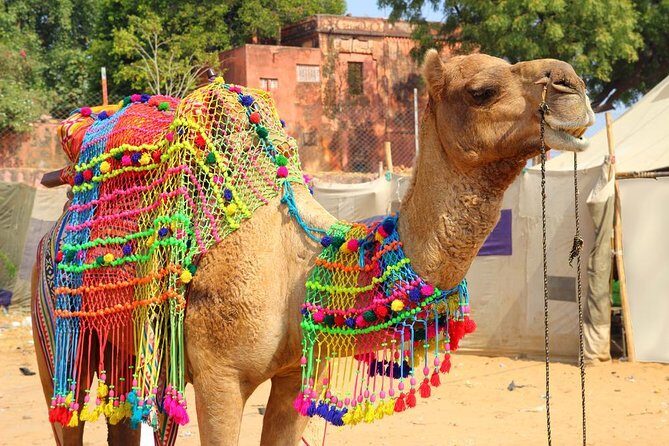
- Pushkar feels different: Brahma Temple, Savitri Temple, and Pushkar Lake
- Customizable route so you can add, remove, or swap monuments after booking
A Golden Triangle route that actually feels organized in 7 days
This kind of trip can go one of two ways: either you’re exhausted from nonstop logistics, or you enjoy the places because everything runs on rails. This one aims for the second option by chaining the classic triangle cities with Pushkar, using one driver, one vehicle, and a guide to reduce the usual ticket/transport scramble.
You also get a “managed time” rhythm. Mornings are for the major sights, afternoons keep to a steady pace, and evenings are intentionally flexible so you’re not trapped in the next activity the second you get back. That matters in India, where traffic and crowd flow can quietly eat your day.
For me, the sweet spot is how it balances famous must-sees with sites that reward slower attention: the stepwells, the observatory, the riverside fort views, and the pilgrimage atmosphere in Pushkar.
You can also read our reviews of more tours and experiences in New Delhi.



Day 1 in Agra: Taj Mahal, Agra Fort, and the slow reveal of the riverfront

Your day starts with a pickup somewhere in New Delhi and a drive to Agra in a private air-conditioned vehicle. Once you arrive, a guide meets you and helps you handle hotel check-in, which is one less thing to manage after hours on the road.
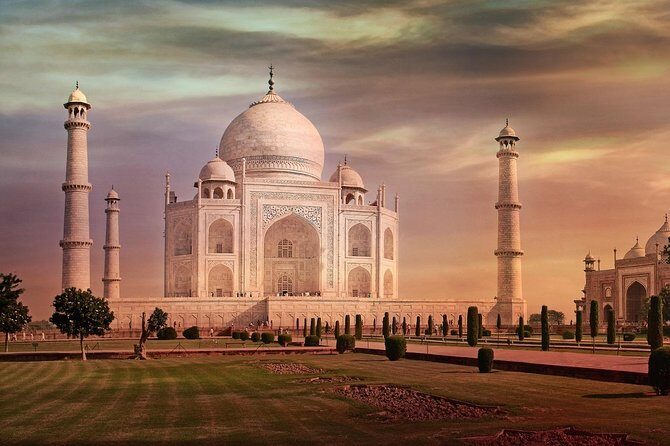
Then comes the main event: the Taj Mahal. You’re guided through it for about two hours, and the practical bonus is the extra handling at the entrance area (shoe covers and a golf cart from the parking zone). That small support adds up when you’re dealing with heat, queues, and timing.
After that, you move into Agra Fort, a UNESCO World Heritage Site. The fort experience is not just walls and courtyards; from a small octagonal tower you get a classic view angle back toward the Taj, with the Yamuna River nearby. You’ll also hear the context of how parts of the fort functioned as spaces like the Hall of Public Audience and royal pavilions.
You’ll finish with Itmad-ud-Daula’s Tomb, often called the Baby Taj. It’s a shorter stop, about 30 minutes, but it’s a good palate cleanser after Taj and Agra Fort because it’s smaller, more intimate, and very “craft-first.”
The Agra pacing tip: plan for walking, heat, and ticket reality
The itinerary gives you a full day in Agra, but the real variable is your comfort level with walking. Mughal-era sites involve steady steps, open courtyards, and sun exposure. I’d treat comfortable footwear like part of your packing checklist, not a nice-to-have.
Also keep your expectations clear on tickets. The Taj Mahal admission is not included, and Agra Fort, Itmad-ud-Daula, and others are also listed as not included in the entry-ticket portion. The guide will help you with ticket purchasing, but credit cards aren’t always accepted everywhere, so cash in INR is smart.
One more timing detail: the Taj Mahal remains closed on Fridays. If your schedule lands there, ask how the day will be adjusted so you’re not stuck between checkpoints.
Day 2 to Jaipur: Fatehpur Sikri detour and the stepwell that makes photos honest
After breakfast, you head out of Agra and drive toward Jaipur. On the way, you stop at Fatehpur Sikri, a former second capital of Mughal Emperor Akbar. It’s about a two-hour visit and works well as a bridge day: you get a major historical site without feeling like you’re starting Jaipur fatigue at full speed.
Then you hit Abhaneri for Chand Baori, a stepwell known for its design and huge number of steps. This is one of those places where the architecture does the talking. The visit is short, about 30 minutes, and there’s no guide listed for this stop—so you’ll want to take it at your own pace, looking for symmetry and perspective lines.
Finally, you arrive in Jaipur and check in. The evening is intentionally light: relax at your hotel, grab food, and reset for the next day’s fort-and-palace circuit.
Day 2 pacing tip: use Chand Baori as a breath between big monuments
I like putting a stop like Chand Baori in the middle of a long route. It gives your brain a different kind of visual input. Instead of reading legends and royal power through massive structures, you’re studying geometry—how the steps funnel light and how the structure changes as you move.
Because it’s self-paced, plan to arrive with fresh energy. If you’re rushed, you’ll miss the “wow” factor that comes from walking to the right angles.




Day 3 Jaipur classics: Amber Fort first, then the palace-and-observatory combo
Jaipur day is where the tour goes full “wow and wow again,” and it’s built in a sensible order.
You start with Panna Meena ka Kund, an ancient stepwell near Amber Fort. It’s a quick stop (about 30 minutes), but it’s worth it because it shows how Jaipur’s water architecture can be both functional and artistic.
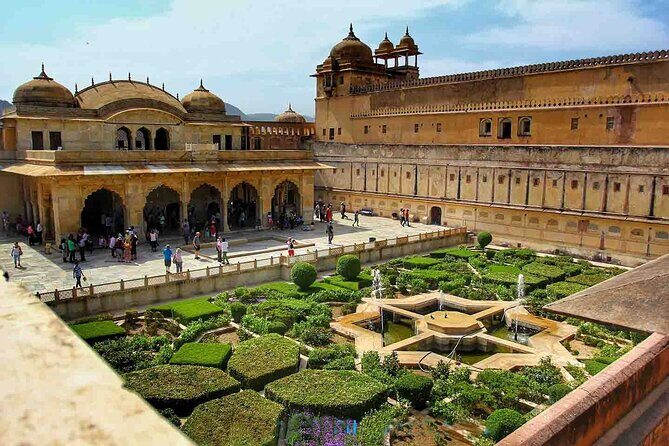
Next is Amber Fort, a major highlight at about two hours. It’s perched on a hill in Amer, and the front view includes Maota Lake, which helps explain why this fort location is so effective. If you like your forts with scenery attached, Amber is your best bet.
Then comes Jal Mahal, the palace that sits in the middle of Man Sagar Lake. It’s about 30 minutes, and the main value is the photo-worthy perspective and the way it changes the usual “fort on a hill” formula.
From there you move into City Palace (about 1.5 hours). It was built in 1721 and served as the seat of the Maharaja of Jaipur. Today, it houses the Maharaja Sawai Man Singh II Museum, and it still functions as part of the royal residence area.
After City Palace, you visit Jantar Mantar, a UNESCO World Heritage Site with 19 astronomical instruments created by King Sawai Jai Singh II in 1734. This is not just tourist content; it’s a rare mix of science and civic design. If you’re the kind of person who likes to understand what a landmark does, you’ll enjoy this.
Finally, you close with Hawa Mahal, the Palace of Wind. Honeycomb-like facades and rows of windows define it, and it’s about 30 minutes to take it in before your guide drops you back at your hotel.
Jaipur day reality check: you’ll see a lot, so decide what you want to linger on
This day is packed, but it’s the kind of packed that makes sense because every stop connects to Jaipur’s identity: water systems, royal power, observatory science, and the look of the city through its architecture.
If you prefer quieter time, plan to spend your extra minutes at Amber Fort or Jantar Mantar. Those are the stops that reward slowing down. If you’re mostly there for the iconic exteriors, Hawa Mahal and Jal Mahal will satisfy you fast.
Day 4 Pushkar: temples, pilgrimage energy, and the sacred lake
This is the day that gives the trip a second personality. Instead of more royal monuments, you step into Pushkar’s spiritual rhythm.
You drive from Jaipur to Pushkar (about three hours) and then check in before sightseeing. Your first stop is the Brahma Temple, the only temple in the world dedicated to Lord Brahma, marked by its red spire and the sacred swan motif at the main entrance. It’s about one hour.
Then you visit Shree Savitri Mata Mandir, also called the Savitri Temple, atop Ratnagiri Hill. It takes about one hour, and it’s an important pilgrimage point for devotees.
Next you head to Pushkar Lake, a semi-circular sacred water body known as TirthaRaj in mythology. After learning the myth-based origin story tied to Brahma and the demon Vajra Nabh, you return to your hotel for the evening.
This day isn’t about collecting stamps. It’s about feeling the place. Pushkar’s sites are active and devotional, and the lake adds a sense of calm even when the streets are lively.
A Pushkar tip: dress respectfully and expect a slower emotional pace
Pushkar is religious space, so you’ll want to dress conservatively and move calmly. You’ll probably spend less time in museums here and more time observing daily devotion, which can be a refreshing switch from Rajasthan and Mughal monuments.
If you like moments that feel grounded, Pushkar Lake is the place to focus. It also makes a good “exhale” after the dense Jaipur day.
Day 6 Delhi monuments: Old Delhi mosque energy and the Qutub complex payoff
After returning to Delhi from Pushkar (about a six-hour drive), you get a full Delhi sightseeing day.
You start at Jama Masjid, India’s largest mosque. It’s listed for about two hours, in the red sandstone courtyard area, built in 1656 with the help of 5,000 workers. It’s also right by the Red Fort area and sits amid Chandni Chowk.
Next is Red Fort, Shah Jahan’s massive residence built between 1639 and 1648. The architecture reflects Indo-Islamic and Mughal style, and it’s scheduled for about two hours. One note: Red Fort is closed on Mondays, and the tour swaps to Gurudwara Bangla Sahib on those days.
After Red Fort, you visit Gurudwara Bangla Sahib. This one is about an hour. A story tied to the eighth Sikh Guru and a tank inside the gurudwara is part of the explanation, and you’ll see the tank still exists within the complex.
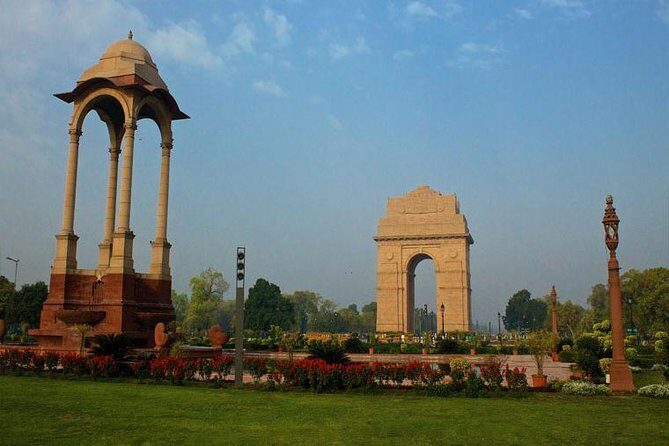
Then you hit India Gate for about 15 minutes. It’s the 1921 Tomb of the Unknown Soldier, with names of 13,300 Indian army servicemen from the First World War carved on the wall.
Next is Rashtrapati Bhawan for about 15 minutes, covering Lutyens and Baker’s major role in New Delhi’s design.
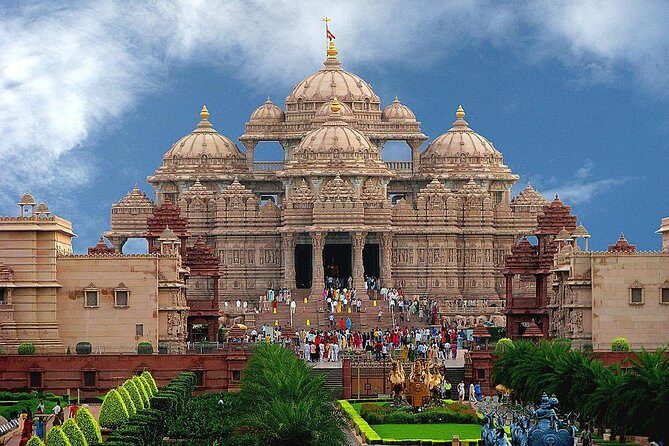
You also visit Humayun’s Tomb (about an hour), listed as UNESCO and described as the first garden tomb of India. You can either visit Humayun’s Tomb or Akshardham Temple, so you’ll get to choose based on preference.
Finally, you go to Qutub Minar and the Qutub complex for about one hour. It’s set as a UNESCO area, and the minaret is noted as built in 1192 with bricks. In the evening, you end with a complimentary drop-off back to your Delhi hotel.
Delhi pacing tip: mix sacred spaces with quick iconic stops
Delhi can overwhelm if you try to treat it like a checklist only. This schedule balances big emotional anchors (Jama Masjid, Gurudwara Bangla Sahib) with shorter “hit it and move” stops (India Gate, Rashtrapati Bhawan). That’s a smart way to keep your energy from evaporating.
Also, plan for varying ticket rules and crowds. The guide’s help with ticket purchases is a real advantage, but I still suggest keeping cash handy and being flexible if card payment isn’t an option at a specific gate.
Price and value: what $388.64 per person is really paying for
At $388.64 per person, you’re not just paying for sightseeing. You’re paying for the structure that makes long-distance travel manageable: a private tour, pick-up and drop-off, a private air-conditioned vehicle, and a professional driver. You also get a tour guide at all sites, plus several small “time savers” like shoe covers and the golf cart at Taj Mahal and a rickshaw ride through Old Delhi.
Hotel accommodation for 6 nights is included only if you select that option. Daily breakfast is also optional based on selection. Meals and drinks are not included, and monument tickets are not included (even though some stops may list admission as free, you should still be prepared for separate ticket costs depending on the exact site and timing).
So the value question is simple: if you’d otherwise have to arrange transport, hire guides, and manage tickets across multiple cities, this bundled approach usually makes sense. If you already have lodging locked in and want total independence, you may decide differently.
One extra “heads up” on cost: a mandatory gala dinner fee applies on New Year’s Eve, Christmas, and from December 24 to January 4.
Small details that make the experience smoother
A few operational touches matter more than they sound:
- You receive mobile tickets, which can reduce last-minute paper handling.
- You get guided ticket purchasing help for sites where you’ll need to buy admission.
- Some monuments may not accept credit cards, so carrying cash in INR is a practical move.
- Shoe covers at the Taj Mahal help you avoid fuss at a time when everyone is moving fast.
- You’ll do plenty of walking, so comfortable footwear isn’t optional.
I also like that this is private for your group. Vehicle size is adjusted by group count: a sedan for 1–2 people, a six-seater wagon for 3–5, and a 10-seater van for 6–10. That keeps the ride comfortable and prevents the “stuffed car” problem.
Who this tour fits best (and who should rethink it)
This tour is a strong match if you want a classic Northern India sweep with less planning stress. It’s also great if you like history explained clearly through guided stops, because the guide is included at all sites.
It’s less ideal if you hate structure. The days are full, and even with private transport, you’ll spend hours on the road across cities. Also, because tickets and meals are not included, you’ll need to budget for on-site admissions and daily food.
If you’re traveling solo, the private format can feel reassuring because you don’t share your schedule with strangers. One solo traveler experience I’ve seen tied the trip quality to the responsiveness and politeness of the team, and that kind of human factor tends to matter on a route this long.
Should you book this Golden Triangle with Pushkar from Delhi?
If your goal is to see Taj Mahal, the major Jaipur icons, and then experience a totally different spiritual vibe in Pushkar, I’d say this is a solid booking. The private vehicle, included guide coverage, and the specific time-savers at the Taj Mahal make the long-route logistics feel manageable.
I’d book it if:
- You want door-to-door pickup and drop-off.
- You like guided context at the big monuments.
- You don’t want to coordinate transport between cities on your own.
I’d think twice if:
- You’re on a tight budget for entry fees and meals.
- You’ll struggle with long drives and lots of walking.
- Your dates land on a Friday (Taj Mahal closure) or a Monday (Red Fort/Lotus closure), and you’d rather keep that exact set of sights.
If you’re flexible on site swaps and you’re ready to budget for tickets and food, this route offers good value for the amount of ground covered and the level of support built into the experience.
FAQ
What does the tour include besides sightseeing?
It includes a private tour, hotel or airport pickup and drop-off, a private air-conditioned vehicle with a professional driver, and a tour guide at all sites. You also get a rickshaw ride through Old Delhi, a golf cart ride from parking to the Taj Mahal entry gate, shoe covers for the Taj Mahal visit, and a mobile ticket.
Are monument tickets included?
No. Monument tickets are not included. The guide will assist with ticket purchases, but some monuments may not accept credit cards, so cash in INR is recommended.
Is hotel accommodation included?
Hotel accommodation for 6 nights is included only if you select that option. Rooms are provided on single, double, or twin-sharing by default, and a triple-sharing room may be assigned for a group of three.
Is breakfast included?
Daily breakfast is included only if you select that option. Meals and drinks are not included otherwise.
What happens if my trip includes a Friday or a Monday?
Taj Mahal remains closed on Fridays. The Red Fort and Lotus Temple are closed on Mondays, and the itinerary will replace those with a visit to Gurudwara Bangla Sahib.
Will the tour help if I can’t pay with a credit card?
Yes. The guides assist with ticket purchases, and it’s still smart to carry cash in INR or ask the driver to help you locate an ATM if needed.
Are there extra fees around holidays?
Yes. A mandatory gala dinner fee applies on New Year’s Eve, Christmas, and from December 24 to January 4 each year.