REVIEW · BANGALORE
Full-Day Private Bangalore City Tour by Metro Train
Book on Viator →Operated by 5 Senses Walks · Bookable on Viator
You can cross Bangalore without fighting traffic. This full-day private tour strings together major landmarks with metro train rides, so the day feels efficient rather than stuck in standstill traffic.
I like that it mixes big-city icons with old Bangalore spirituality. You hit government architecture at Vidhana Soudha, then roll on to older sacred sites like Someshwara Swamy Temple and the Bull Temple, all while staying on a clear route.
One thing to plan for: you’ll need proper worship attire. No shorts or sleeveless tops, and knees plus shoulders must be covered, or you risk being turned away at temples and selected museums.
In This Review
- Key Highlights You’ll Feel Immediately
- Planning the Day: What This Private Tour Actually Feels Like
- Vidhana Soudha and Attara Kacheri: Big Architecture With a Purpose
- Cubbon Park: A Real Break in the Middle of the Sights
- Karnataka High Court / Attara Kacheri Area: Gothic Details You’ll Notice More
- Someshwara Swamy Temple (Halasuru): One of Bangalore’s Oldest Shiva Temples
- ISKCON Bangalore: A Different Kind of Temple Energy
- Lalbagh Botanical Garden: 240 Acres, 1,800+ Plant Species
- Bull Temple (Basavanagudi): Nandi, Dravidian Style, and Local Pride
- Lunch on a Banana Leaf: Food That Becomes Part of the Culture Lesson
- Who This Tour Fits Best (And Who Might Want Something Else)
- Value Check: Is $110 Per Person Worth It?
- Small Tips That Make the Day Smoother
- Should You Book This Private Bangalore Metro Tour?
Key Highlights You’ll Feel Immediately
- Metro transport that saves time: You swap car time for rail time and keep the day moving.
- Temple-to-garden variety: Shiva temples, ISKCON, then Lalbagh’s 240 acres of plant collections.
- Government buildings with story: Vidhana Soudha and Attara Kacheri come with real context, not just photos.
- A strong lunch stop: Lunch is included, and it’s served as a traditional South East Indian meal on a banana leaf.
- Guides who teach actively: Guides like Sasi, Jay, Jai, and Ayannar have a style that uses clear explanations and sometimes visuals like pictures/videos.
Planning the Day: What This Private Tour Actually Feels Like

This is an 8-hour private tour (travel time included) designed to cover a lot without feeling rushed at every stop. You start in the morning at Dr. B.R. Ambedkar Station near Vidhana Soudha, then end at the steps to Bull Temple in Basavanagudi.
At the center of the experience is the metro strategy. Bangalore traffic can drain a whole day. Here, you use public rail to connect areas that are often slow by car. It’s also part of the fun: riding the metro lets you get a real slice of local life, not just view corridors from a vehicle window.
Logistics are straightforward. You get a mobile ticket, and the tour includes metro train tickets. It’s also built for flexibility in the schedule: many stops are on foot near each other, and your guide manages transitions so you don’t waste time figuring out directions.
You can also read our reviews of more city tours in Bangalore



Vidhana Soudha and Attara Kacheri: Big Architecture With a Purpose
Your first major stop is Vidhan Soudha and Attara Kacheri, with a combined chunk of time around 45 minutes to view and learn. Vidhan Soudha is one of Bangalore’s best-known landmarks and it houses the legislative chambers of the state government.
What makes this stop worth your time is how the buildings are treated like living parts of the city, not just “pretty structures.” Vidhan Soudha is described as having three hundred rooms, and the scale alone gives you a sense of how Bangalore’s governance and public life are organized. Then Attara Kacheri brings a very different architectural mood.
Attara Kacheri is Gothic in style and was built in 1867. It was commissioned by Tipu Sultan to house offices for multiple departments of revenue and general secretariat. Today, it’s tied to modern government functions, so you’re seeing a building that still has a job—not just a preserved relic.
Practical note: this is a strong start if you like orientation. You get a handle on the city’s layout and power centers early, which makes later temple neighborhoods feel like different chapters of the same story.
Cubbon Park: A Real Break in the Middle of the Sights
After the stone-and-government opening, you move to Cubbon Park. This stop lasts about 1 hour, and entry is included.
Cubbon Park was established in 1870 by Sri John Meade. The park was planned over 100 acres and has expanded to nearly 300 acres. In plain terms, it’s a long, green pause in the day—space to cool off, reset your legs, and watch how people use a city park.
This is also a nice balancing stop. Temples can be visually intense. Cubbon Park gives you breathing room: a chance to stroll, take photos, and keep your energy for the older sacred sites and Lalbagh later.
One small consideration: it’s a park. If you’re traveling in warm conditions, you’ll want water and some light sun protection. Drinks aren’t listed as included, so I’d plan to purchase water outside the tour flow.
Karnataka High Court / Attara Kacheri Area: Gothic Details You’ll Notice More

This part of the tour is shorter—around 30 minutes—but it’s focused. The day loops back around the Attara Kacheri area, where the Gothic styling comes into clearer view.
You’ll spend time looking at the building’s details and hearing how it fits into Bangalore’s older administrative era. If you like architecture, this is where you start noticing patterns: angles, facades, and the sense that these buildings were designed for authority and permanence.
The payoff here is mental. After government and Gothic visuals, you’ll be ready for the shift to sacred spaces with older roots.
Someshwara Swamy Temple (Halasuru): One of Bangalore’s Oldest Shiva Temples
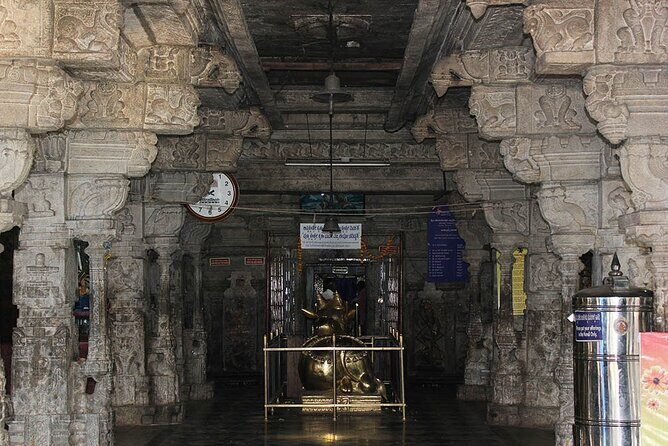
Next up is Someshwara Swamy Temple in Halasuru, with about 1 hour on site. This temple is dedicated to Lord Shiva and is described as being among the oldest in Bangalore.
The guide’s storytelling makes this stop feel more meaningful. The temple is described as originally built in Chola times, nearly a thousand years ago, and the main elements include a sanctum and vestibule. That’s a lot of time to pack into a single city, and the atmosphere helps you feel the age in a practical way: you’re not just looking at an exterior, you’re learning how these places function.
If you care about religious architecture, this stop is a clear win. You’ll walk away with a better sense of how Bangalore’s older layers sit beside modern city life.
You can also read our reviews of more private tours in Bangalore


ISKCON Bangalore: A Different Kind of Temple Energy

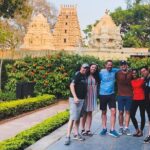
After older Shiva traditions, the itinerary shifts to ISKCON Bangalore (Sri Sri Lakshmi Narasimha Temple). You’ll have about 1 hour, and entry is included.
ISKCON is based on Krishna Consciousness, founded in 1966 in New York City by A. C. Bhaktivedanta Swami Prabhupada. That fact alone helps you place the temple in time: this isn’t ancient in the same way as the Chola-era claim, but it still feels deeply rooted because its mission is devotional practice.
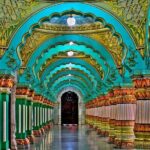
This stop is colorful in the best sense—bright colors, active prayer rhythms, and a temple culture that’s easy to observe even if you’re not an expert in the theology. You’ll also get context on what ISKCON emphasizes, which makes the visit more than just sightseeing.
Dress code still matters here. Keep your shoulders and knees covered to avoid last-minute stress.
Lalbagh Botanical Garden: 240 Acres, 1,800+ Plant Species

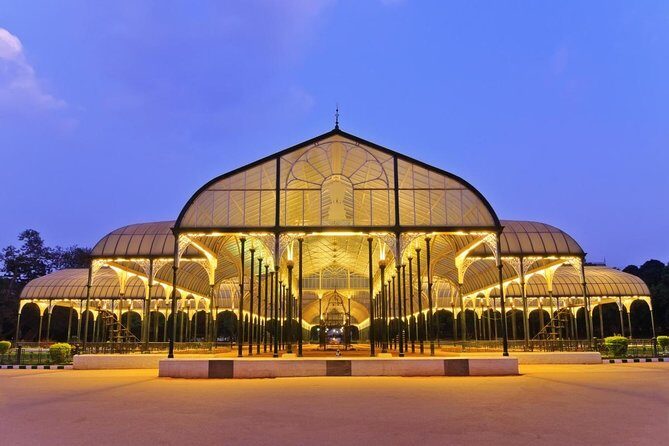
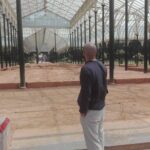
Lalbagh Botanical Garden is the day’s big nature-and-culture reset. You’ll spend about 1 hour, and admission is included.
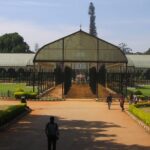
Lalbagh is a 240-acre garden with more than 1,800 species of plants, shrubs, and trees. Even if you don’t know plant names, it’s still a great stop because it gives you shade, variety, and the feeling that Bangalore isn’t only traffic and concrete.
This is where your guide can turn a walk into a story. The point isn’t to memorize species. The point is to see how a city invests in green space and how that connects to local life.
If you like photos, this is also the stop where you’ll naturally take more pictures—because the environment gives you textures and colors you can’t recreate anywhere else.
Bull Temple (Basavanagudi): Nandi, Dravidian Style, and Local Pride
The tour ends at Bull Temple in Basavanagudi. You’ll have about 1 hour, and admission is included.
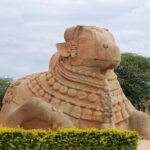
This temple is dedicated to Nandi Bull, the vehicle of Lord Shiva. It’s built in Dravidian style architecture, and the description ties it to Kempe Gowda, the founder of Bangalore. The architecture and the focus on Nandi help the temple feel distinct from the other worship stops on your route.
Ending here is a smart choice. The tour closes with a temple that feels very “Bangalore”—not only in religious terms, but in local identity. When your feet are tired, it’s good to land somewhere memorable.
Lunch on a Banana Leaf: Food That Becomes Part of the Culture Lesson
Lunch is included, and this matters more than it sounds. In a day packed with religious sites and architecture, a sit-down meal prevents “we’ll eat later” chaos.
The lunch experience is described as a traditional South East Indian meal served on a banana leaf. That’s a classic format because it connects the meal to regional custom and makes eating feel like an event, not just fuel.
Also, your guide plays a role here. Several named guides (like Jay and Sasi) are praised for explaining food in context and making it feel approachable. If you’re eating in a new style, this kind of orientation helps you understand what you’re looking at and how to enjoy it without second-guessing.
One note: drinks aren’t included. Plan for water and any other beverages outside the tour.
Who This Tour Fits Best (And Who Might Want Something Else)
I’d recommend this tour if you want a structured day that still feels grounded. It’s ideal for first-time visitors who want to see key Bangalore sights without spending the whole day in traffic.
It’s also a strong fit if you like variety:
- architecture (government buildings and Gothic design),
- devotional visits (Shiva temples and ISKCON),
- and an actual break in a garden setting (Lalbagh and Cubbon Park).
If you hate long walking and you prefer downtime at cafes over temple circuits, this might feel like too much. The itinerary covers a lot of ground in 8 hours, and worship sites require extra attention to dress code and entry rules.
Value Check: Is $110 Per Person Worth It?
At $110 per person, this tour isn’t priced as a budget city hop. But it can feel like good value because several big items are included: full-time guide, lunch, metro train tickets, and admission where applicable, plus all taxes, fees, and handling charges.
Think of it this way:
- You’re paying for a guided route that strings together multiple locations you might struggle to connect smoothly on your own.
- You’re also paying for metro tickets, which reduces the cost and effort of figuring out transit.
- Lunch is included, which removes one common “hidden expense” from your day.
Is it worth it? If your goal is to see real Bangalore highlights efficiently, yes—especially if you’ll otherwise spend time and energy getting around. If you’re traveling with your own transport and you don’t care about guided context, you could potentially DIY some stops. But then you lose the time-saving metro plan and the interpretive layer that makes the architecture and temples click.
Small Tips That Make the Day Smoother
- Wear covered clothes from the start. Don’t count on changing mid-day.
- Bring a light layer. Places of worship may feel cooler inside, depending on the building and day.
- Plan for water. Drinks aren’t included, and you’ll walk and stand at several stops.
- Use the mobile ticket. It’s part of how the day runs smoothly.
- Trust the timing. Each stop has a planned window, and the guide helps you stay on pace.
Should You Book This Private Bangalore Metro Tour?
I’d book it if you want a guided day that feels both efficient and human. The metro approach is the real difference-maker: it helps you experience central Bangalore without getting stuck in traffic. Add in a lunch break that’s actually part of the cultural experience, plus temple and architecture stops with clear explanations by guides like Sasi, Jay, Jai, and Ayannar, and you get a day that’s more than just a checklist.
Skip it only if you know you’ll be miserable with a tight 8-hour circuit or you can’t meet the dress code requirements.
If your ideal first day in Bangalore is “see the city without wasting hours,” this tour fits that goal well.