REVIEW · NEW DELHI
Full Day Old & New Delhi City Tour
Book on Viator →Operated by Tour4Fun · Bookable on Viator
Delhi in one packed day works. This full-day Old and New Delhi loop strings together major sights from Mughal monuments to modern landmarks: Humayun’s Tomb, Qutub Minar, the Lotus Temple, Jama Masjid, and then classic Old Delhi bazaars that spill into spice markets and rickshaws. I also like the private air-conditioned car and the guide who helps you connect what you’re seeing to the story behind it.
The main catch is that it’s still a long 8-hour circuit, and some stops can depend on timing. You should plan for good walking shoes, and remember lunch isn’t included, so eat before you start or budget for a meal break on your own.
In This Review
- Key things I’d watch for before you go
- Why This 8-Hour Loop Makes Sense for First-Time Delhi
- Price and Value: What $11.19 Really Buys
- Getting Started: Pickup, Meeting Point, and How the Day Flows
- Qutub Minar: When the Tower Is the Whole Point
- Humayun’s Tomb: Mughal Planning and the Garden-Tomb Idea
- Lotus Temple: A White Marble Breather in the Middle of the Day
- Raj Ghat: A Quiet Break in the Schedule
- Jama Masjid and the Old Delhi Courtyard Experience
- Chandni Chowk Lanes: Pasar Chandni Chowk by Rickshaw-Style Energy
- Khari Baoli Spice Market: Asia’s Big Spice Hit
- Government District Photo Stops and Sis Ganj Sahib Timing
- Red Fort and India Gate: Closing the Day with Two Icons
- Touring Tips to Make This Day Feel Easier (Not Just Faster)
- Who This Tour Fits Best
- Should You Book This Tour?
- FAQ
- How long is the full day Old & New Delhi City Tour?
- Do I get pickup and drop-off service?
- Where does the tour start?
- Does it include admission tickets for monuments?
- Is lunch included?
- Are there any free stops?
- Is bottled water provided?
- Is a rickshaw ride included?
- How big is the group?
- What is the cancellation policy?
Key things I’d watch for before you go

- A tight hit list across two parts of Delhi: Mughal sites in the south area, then Old Delhi in the afternoon.
- UNESCO and world-famous architecture in one day: Qutub Minar and Humayun’s Tomb both get their own spotlight time.
- Lotus Temple is free and calm on a schedule: you get a set window to see it without overthinking tickets.
- Old Delhi on foot plus a rickshaw moment: courtyards, lanes, and a spice-market stop make it feel like Delhi, not a checklist.
- Guide service included: and that can make the monuments click fast instead of feeling like random stops.
- Some extra stops may be timing-dependent: Gurudwara Sis Ganj Sahib depends on opening hours.
Why This 8-Hour Loop Makes Sense for First-Time Delhi

If it’s your first time in Delhi, you usually face the same problem: the city is huge, traffic eats time, and the best sights are spread out. This tour helps you solve that by running a straight line across the highlights, with pickup and drop-off built in. You’re not trying to figure out transit between Mughal monuments, a Bahai temple, and Old Delhi market lanes.
I like that the day mixes big-icon architecture with everyday street life. You start with UNESCO-level grandeur, then you’re in courtyards and market alleys where Delhi feels louder and more real. And because it’s in an air-conditioned private car, the driving doesn’t drain your energy before you even reach the sights.
The other value piece is the guide service. When someone explains why Qutub Minar is where it is, or what makes Humayun’s Tomb special as a garden-tomb, you stop seeing monuments as stone and start seeing them as planning—architecture as messaging.
You can also read our reviews of more city tours in New Delhi


Price and Value: What $11.19 Really Buys
At about $11.19 per person, this is priced like a budget tour, but with some “real travel” upgrades: hotel/airport pickup, a private air-conditioned car with a driver, guide service, and included bottled water plus masala tea.
You also get help paying for the parts of the visit that usually become annoying line-items: monuments entrance and camera fees are included, and there’s an option that covers rickshaw ride fees (with the all-inclusive option). In Delhi, those small fees can add up fast when you’re trying to pay for everything separately while also managing time.
Two things keep the value honest, though. First, lunch is not included, so you’ll still need to plan your meal. Second, the day is packed, which means each stop is timed—great for seeing a lot, not ideal if you want to linger for hours.
Getting Started: Pickup, Meeting Point, and How the Day Flows

Your pickup and start point is set around Qutub Minar. The meeting point is at the Qutub Minar ticket counter, Seth Sarai, Mehrauli, New Delhi. That’s convenient if you’re already planning to see Qutub Minar early, since it’s a major anchor for the day.
You’ll travel in a private air-conditioned car with a driver, with a group cap of up to 50 travelers. That’s large enough for energy, but small enough that you generally keep moving with the schedule.
Your final drop-off is flexible based on the last stop you visit. The end point is listed near Shani mandir gate no 01, Lal Quila metro station, Old Delhi area—so you’re not stuck far from major Old Delhi transit.
Bring patience for Delhi timing. Even with a structured day, the city’s flow affects the exact order, and some religious-site stops depend on operating hours.
Qutub Minar: When the Tower Is the Whole Point
Qutub Minar is the kind of sight that changes your sense of scale. You get about one hour, and the entrance ticket is included. This is the tall brick minaret—about 73 meters—and it’s described as the tallest brick minaret in the world.
The big reason this stop matters is the story of how it connects to political change. Qutub Minar is linked to Qutub-ud-din Aibak, built in 1193 after the defeat of Delhi’s last Hindu kingdom. That context matters because it changes how you read the monument: it’s not just a pretty tower, it’s a marker of a new chapter in Delhi.
Practical tip: plan your photos early. At landmark towers, the best light and the clearest angles don’t always line up with the time you arrive.
Humayun’s Tomb: Mughal Planning and the Garden-Tomb Idea
Next up is Humayun’s Tomb, with about one hour and entrance included. It’s UNESCO-listed and noted as the first garden-tomb on the Indian subcontinent, which is a big deal if you care about how burial architecture evolved.
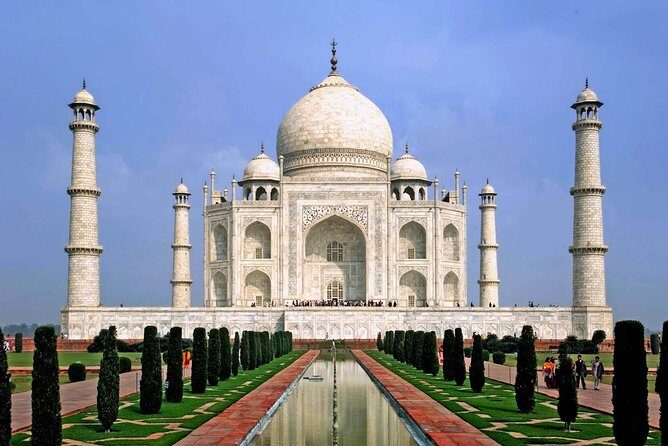
Humayun’s Tomb is also the Mughal monument that inspired the Taj Mahal, so it’s a smart stop even if you’re not visiting Agra. You get to see the blueprint of the idea—symmetry, gardens, and monument-building as a statement you can walk through.
Watch for one common day-trip issue: the afternoon heat. The tomb is a classic place to slow down, but your schedule depends on keeping the day moving. If you like photos, give yourself a few minutes to step back and frame the gardens before you rush.
A few more New Delhi tours and experiences worth a look



Lotus Temple: A White Marble Breather in the Middle of the Day
Then you swing to the Lotus Temple. You get around 45 minutes, and admission is free. The temple is a petal-shaped white marble structure, and it’s described as the last of seven Bahai temples in the world.
This stop is valuable because it’s a contrast. Qutub Minar and Humayun’s Tomb are heavy with history and mass stone. Lotus Temple feels different: more open space, a clean geometric vibe, and a calmer mood even when the day is moving.
Possible drawback: 45 minutes can feel short if you want to do it slowly. The upside is that it prevents the tour from getting stuck at one site, letting you actually reach Old Delhi afterward.
Raj Ghat: A Quiet Break in the Schedule
A stop at Raj Ghat gives you about 30 minutes, free of admission. Raj Ghat is where Mahatma Gandhi was cremated on 31 January 1948, after his assassination, with ashes buried there beside the sanctity of the Yamuna River.
This is one of the places that works best as a pause, not a sprint. In a day packed with monuments and markets, a reflective stop is a good reset for your brain and your feet.
If you tend to run on momentum, take a few minutes here to slow down. It helps the rest of the day feel less like a photo quest and more like a real journey.
Jama Masjid and the Old Delhi Courtyard Experience
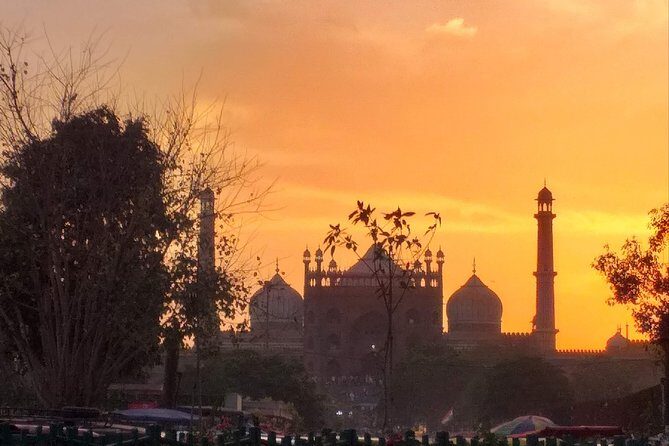
Old Delhi’s main showpiece on this route is Jama Masjid, India’s largest mosque, with about 30 minutes and admission listed as free. It’s built in 1656 with the help of 5,000 workers and sits in front of the royal residence Red Fort, in the midst of Chandni Chowk.
The reason this stop is so worthwhile is how it connects geography and culture. You’re placed where crowds, commerce, and history meet. The red sandstone courtyard gives you room to see the scale of religious architecture in action rather than only from outside walls.
A practical note: because this is a working, important religious site, you’ll likely spend some time negotiating crowds and movement flow. Thirty minutes is enough to soak in the courtyard atmosphere, but not enough for people who want to linger for an extended walk.
Chandni Chowk Lanes: Pasar Chandni Chowk by Rickshaw-Style Energy
From Jama Masjid you move into Pasar Chandni Chowk, also free, with about 30 minutes. This is one of the busiest and oldest areas of Delhi, known for markets in electronics, jewellery, textiles, wedding items, home decoration, and shoes.
What I like here is that you’re not only looking at monuments. You get a taste of the daily economy that makes Old Delhi feel like a living city rather than a museum district.
If the tour includes the rickshaw ride fees under the all-inclusive option, this becomes a fun way to cover more ground without losing your whole afternoon to walking. Even without it, expect lots of narrow lanes and quick stops.
If you’re camera-ready, keep your phone secured in your pocket until you’re moving slowly. Old Delhi streets can be tight, and you’ll want to focus on where you’re stepping.
Khari Baoli Spice Market: Asia’s Big Spice Hit
Next is Khari Baoli, another free stop with about 30 minutes. It’s described as Asia’s biggest spice market, dedicated to spices, dried fruits, nuts, and herbs.
This is one of those stops that rewards your senses, not just your eyes. Even if you don’t buy anything, you’ll notice how spice pricing, aromas, and shop layouts create their own kind of geography.
Time-wise, 30 minutes is perfect for seeing how stalls are arranged and sampling the general vibe. If you want to shop seriously, plan to extend your time elsewhere on your own later—this schedule doesn’t aim to turn the spice market into a shopping day.
Government District Photo Stops and Sis Ganj Sahib Timing
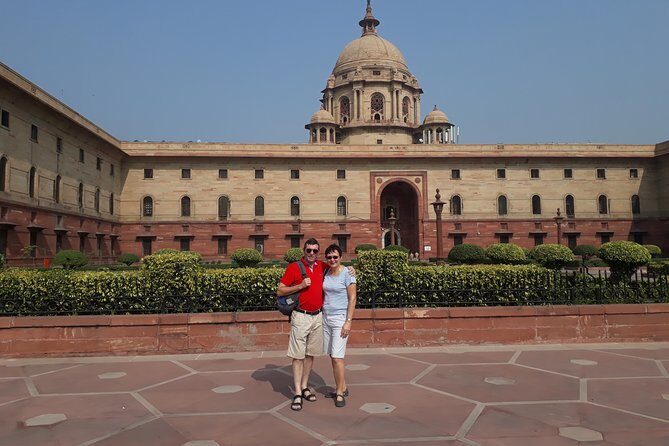
The tour schedule can include quick stops near President House and Parliament House. Those are best treated as photo and orientation moments—more about seeing the modern landmarks of New Delhi than about long stays.
Then there’s Gurudwara Sis Ganj Sahib, which is free and allotted about 30 minutes, but visit timing depends on when the site is open. The gurudwara is dedicated to Guru Teg Bahadur, the 9th Guru of Sikh religion, and was built in 1785.
This stop is a good add-on because it broadens your sense of Delhi beyond one religious theme. The only downside is the timing factor: if the hours don’t match the day’s flow, you may spend more time elsewhere.
Red Fort and India Gate: Closing the Day with Two Icons
Your day ends with major New Delhi and Old Delhi icons. You’ll have stops for India Gate and then Red Fort, plus a final drop-off near the Old Delhi metro area.
India Gate is described as a symbol of modern India, so it helps anchor the day’s story: not only Mughal power and Old Delhi markets, but the idea of a nation framed in monuments of remembrance.
Red Fort is described as a former royal residence built by Mughal emperor Shah Jahan. Even if you don’t get a long inside visit, the fort’s presence works as a dramatic finale after Jama Masjid and the Chandni Chowk area.
What I’d keep in mind: by the end of the day, crowds and fatigue can blur details. Plan to slow down for a few minutes at Red Fort before you head out. Let your last stop land.
Touring Tips to Make This Day Feel Easier (Not Just Faster)
This route succeeds because it moves you between zones with minimal decision fatigue. Still, you can make it smoother with a few smart habits:
- Bring a small water plan even though bottled water is included. You may crave extra sipping during market time.
- Wear shoes you can handle after hours of courtyards and lane-walking. The tour is timed at monuments, but the walking adds up.
- Use masala tea as your energy reset. It’s included, and in Delhi heat it can feel like a sanity drink.
- If you’re the type who likes to read plaques, give yourself permission to do a quick scan. The goal is to see the big landmarks and understand the themes, not memorize every inscription.
Who This Tour Fits Best
This tour is a strong fit if you:
- want a first-timer highlights sweep across Old and New Delhi
- prefer a schedule that takes care of transport and major entrance fees
- like guided context more than wandering alone with maps
- are on a time limit and want to see UNESCO sites without the headache of arranging everything
It’s less ideal if you:
- want a slow, deep exploration of one site (the day is designed for breadth)
- need a long lunch break with sit-down time (lunch isn’t included)
- hate crowded religious spaces or shopping lanes
Should You Book This Tour?
I’d book this if you want the easiest path to Delhi’s top icons in one day—especially the pairing of Humayun’s Tomb + Qutub Minar in the first half and the jump into Jama Masjid + Chandni Chowk + Khari Baoli after lunch. The price is low enough that you’re not paying a fortune for convenience, and the included guide service plus entrance/camera fee support turns a hectic city day into something manageable.
I wouldn’t book it if you’re the type who needs long stays at each stop, or if your trip style is all about unhurried wandering. This is a highlights tour with a real pace. The trade-off is that you see more—and you get to decide what you want to return to later.
FAQ
How long is the full day Old & New Delhi City Tour?
It runs for about 8 hours.
Do I get pickup and drop-off service?
Yes. The tour includes hotel/airport pickup and drop-off.
Where does the tour start?
It starts at the Qutub Minar ticket counter, Seth Sarai, Mehrauli, New Delhi 110030.
Does it include admission tickets for monuments?
Yes. Monument entrance and camera fees are included for the monuments on the schedule.
Is lunch included?
No. Lunch is not included.
Are there any free stops?
Yes. Raj Ghat, Jama Masjid, Pasar Chandni Chowk, and Khari Baoli are listed as admission-free, and Gurudwara Sis Ganj Sahib is also free if visited.
Is bottled water provided?
Yes. Bottled water and masala tea are included.
Is a rickshaw ride included?
Rickshaw ride fees are included with the all-inclusive option.
How big is the group?
The tour has a maximum of 50 travelers.
What is the cancellation policy?
Free cancellation is allowed up to 24 hours in advance for a full refund. Canceling less than 24 hours before start time isn’t refunded.