REVIEW · NEW DELHI
Expeditions India & Bhutan 12 Days
Book on Viator →Operated by Amazing India Tours · Bookable on Viator
Twelve days, two countries, one steady plan. What makes this trip interesting is how it strings together Old Delhi and UNESCO giants with Bhutan’s most iconic dzongs and monastery hikes, all under a private setup. I especially like that you get a private English-speaking driver/guide and that entrance fees in India and Bhutan are handled, so your days stay focused on the sights instead of ticket math.
The main trade-off is pace. You’ll be on the move a lot, including early starts for hikes and a flight day, so the schedule can feel tight if you prefer slow travel or big unplanned breaks. Also, airfare is not listed as included, so you should budget for any required flights outside what the itinerary references.
In This Review
- Key Points to Know Before You Go
- The Big Idea: India Classics, Then Bhutan’s Quiet Power
- Entering Delhi: Jama Masjid to Qutub Minar Without Missing the Best Anchors
- Agra’s Two UNESCO Hits: Taj Mahal’s Mood Swings and Agra Fort’s Strength
- Jaipur and the Pink-City Highlights: Forts, Palace Spaces, and Jantar Mantar
- The Delhi-to-Thimphu Shift: A Flight Day and a New Tempo
- Thimphu Culture Day: Memorial Chorten, a Monastery Hike, and Takin Spotting
- Punakha by Pass and Rivers: Dochula Views, Chimi Lhakhang, and a Dzong at the Confluence
- Rinpung Dzong and Paro’s Setup: Bhutan’s Iconic Fortress Feeling
- Tiger’s Nest Morning: The Hike, Kyichu Lhakhang, and Paro’s Evening Market
- What You’re Really Paying For: Hotels, Guides, Entry Fees, Bhutan Visa, and Transport
- Smooth Support Matters: The Care Factor You’ll Actually Feel
- Who This Tour Fits Best (and Who Might Struggle)
- Should You Book This Expeditions India & Bhutan Tour?
- FAQ
- FAQ
- Where does the tour start and end?
- Is hotel pickup and drop-off included?
- What kind of hotels are included?
- Are entrance fees included for attractions?
- Are meals included in both countries?
- Does the itinerary include any flights?
- Are transport and guides private?
- What are the hiking days in Bhutan?
- Are Bhutan visa fees included?
- Is the tour refundable if plans change?
- Is a gala dinner included on major holidays?
Key Points to Know Before You Go
- Private driver + English-speaking guide for smooth, no-surprises logistics
- UNESCO-heavy India days (Taj Mahal, Humayun’s Tomb, plus more) without planning headaches
- Bhutan hiking time (Tango Buddhist Institute and Tiger’s Nest) built into the itinerary
- Thimphu to Punakha route by passes and rivers with a clear cultural storyline
- Driver care that stands out, including stories of helpful support from drivers like Deepak
- Entry fees and Bhutan tourism/visa fees included, which helps the value add up
The Big Idea: India Classics, Then Bhutan’s Quiet Power

This tour works because it follows a logical emotional arc. Day by day you go from the loud, layered feel of northern India—mosques, bazaars, Mughal monuments—to Bhutan’s slower rhythm, where dzongs and monasteries shape the whole day. You’re not left to stitch together travel days yourself. You’re also not forced into one “big site only” approach; the itinerary spreads the attention across several major stops.
You’ll notice the itinerary is set up for guidance and timing. The hotel handoffs are planned, the sightseeing blocks are scheduled, and the day-to-day transport is private with an air-conditioned vehicle. That matters because this route includes long travel chunks, like the Delhi–Agra push and the drive segments in Bhutan.
Still, it’s not a free-form trip. Expect a structured day. If your idea of a great vacation includes lots of downtime to wander without a plan, you may find the days move fast.
You can also read our reviews of more tours and experiences in New Delhi.


Entering Delhi: Jama Masjid to Qutub Minar Without Missing the Best Anchors
Your first full sightseeing day in New Delhi is built around “Old Delhi first, then Mughal-era monuments, then iconic towers.” You start at Jama Masjid, the largest mosque in India, which sets the tone: scale, texture, and a sense of how the city functions around religious life. Then you head to Chandni Chowk, described as the oldest and biggest bazaar in Old Delhi, where the point is to walk the narrow alleys and watch local shopping unfold. If you want food-sniffing and simple people-watching (not just photos), this is the kind of stop that delivers.
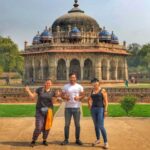
From there, the itinerary shifts to Gandhi and Mughal garden design. Rajghat is the memorial where Mahatma Gandhi was cremated, with an eternal flame burning on one side. Next is Humayun’s Tomb, a UNESCO World Heritage site and often considered India’s early “garden tomb” style—four garden squares and water channels built around the monument.
Later you move to Qutub Minar, one of India’s most famous landmark towers. In a single day, you get religious architecture, market energy, and two major historical anchors. It’s a strong way to get your bearings fast in Delhi.
One practical consideration: this is a lot to cover in one day, so wear comfortable shoes and plan for time spent walking between major stops.
Agra’s Two UNESCO Hits: Taj Mahal’s Mood Swings and Agra Fort’s Strength

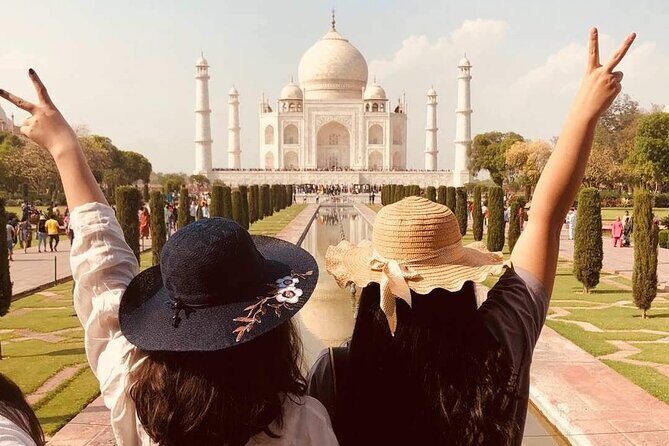
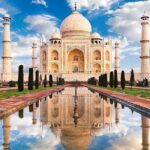
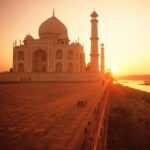
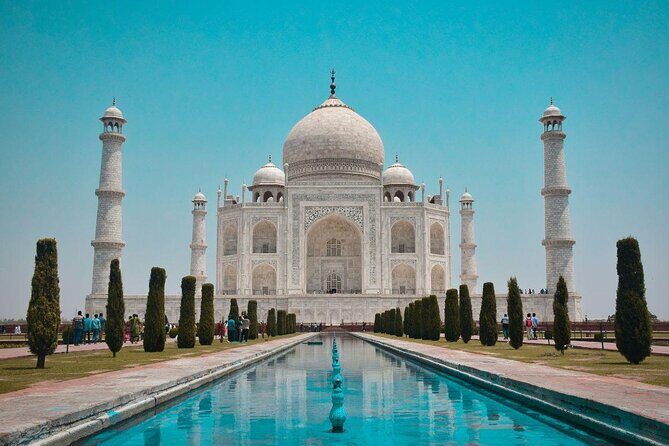
The next big story is Agra. You drive from Delhi, check in, and then go straight to the day’s headline: the Taj Mahal (UNESCO). The itinerary frames it as a monument tied to Shah Jahan and Mumtaz Mahal, and it adds a detail that’s worth remembering when you’re standing there: the marble can appear different depending on the light—pinkish in the morning, milky white in the evening, and golden at night under moonlight.
After the Taj, you move to Agra Fort (UNESCO), described as resembling Delhi’s Red Fort. This pairing is smart. Taj Mahal is about romance and symmetry. Agra Fort is about power and fortification. You get contrast instead of repetition.
How to make this day feel more enjoyable: don’t treat Agra as just a photo stop. Take a few quiet minutes to notice the way each structure is designed to be seen from multiple angles. Also, if you’re sensitive to heat or crowds, try to keep your pace steady and don’t rush your breaks.
Jaipur and the Pink-City Highlights: Forts, Palace Spaces, and Jantar Mantar

After Agra, the route includes Fatehpur Sikri on the way to Jaipur. This is an abandoned Mughal city linked to Akbar’s era, and the stop choice adds variety. Instead of going straight from one urban monument to another, you pause at a place where the “what happened here” feeling is part of the experience. Buland Darwaza and major Mughal structures are included in the itinerary’s description, which helps you understand why this site is famous.
In Jaipur, the schedule is classic Rajasthan sightseeing, but it’s also well balanced:
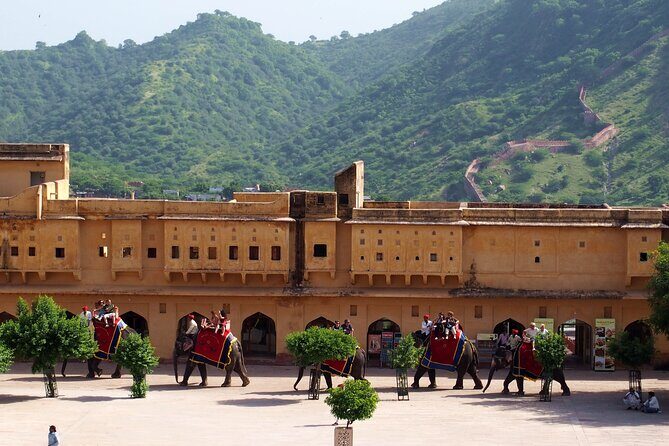
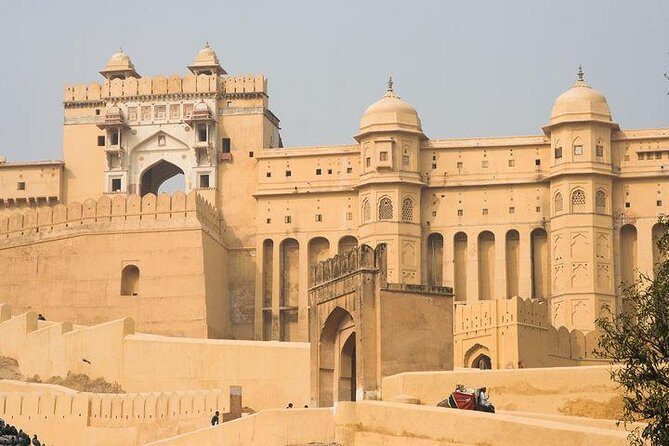
- Amber Fort in the morning, for scale and the sense of how royal power was displayed
- City Palace, for a look at royal residence and court life
- Jantar Mantar, the astronomical site where you can see how knowledge was built into public space
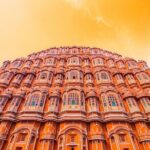
- Hawa Mahal, primarily a drive-past, so you still get it as a visual landmark
The itinerary also includes Jal Mahal (the water palace) in the list of what you’ll visit, which is helpful because it signals that the tour is aiming beyond just forts and selfies.
In the evening, you get free time for shopping in the Jaipur bazaar. That’s useful because it lets you slow down after a day of monuments. The best way to use that free time is simple: pick one or two shopping items you actually want, then stop. Rajasthan markets can run long, and you’ll feel better if you don’t turn it into a marathon.
The Delhi-to-Thimphu Shift: A Flight Day and a New Tempo
Day 7 changes countries. The plan is to drive to New Delhi airport, take a flight to Bhutan, then transfer to Thimphu and check in. Even though the itinerary references that flight segment, airfare is not listed under included items. So plan for that cost separately unless your booking confirmation clarifies otherwise.
Why this day matters: it resets everything. Delhi is intense by design—markets, monuments, movement. Thimphu is set up for ceremony, museums, and religious landmarks. You’re not just changing scenery; you’re changing pace.
Thimphu’s schedule on the next day is packed, but it’s the kind of packed that feels purposeful rather than rushed. The tour’s Bhutan days emphasize specific religious and cultural stops instead of trying to cover every viewpoint.



Thimphu Culture Day: Memorial Chorten, a Monastery Hike, and Takin Spotting
On your Bhutan-side sightseeing day in Thimphu, the itinerary gives you a nice mix of major landmarks and quieter corners.
Start at Thimphu Chorten (Memorial Chorten). Next comes Tango Buddhist Institute, about 14 kilometers from the city center. The itinerary notes it’s a three-storey monastery founded in the 13th century by Lama Gyalwa Lhanampa. The highlight here is the approach: you can reach it through a hike of about an hour through scenic mountain and alpine woods. This is the kind of stop where the journey becomes part of the point, not just the destination.
After that, you visit Buddha Dordenma, a short stop in the schedule, and then Motithang Takin Preserve—a fun break because it’s an animal preserve, not another temple photo line. You finish with the National Folk Heritage Museum, which rounds out the day with a cultural frame beyond buildings.
If you’re the type of traveler who likes a day that teaches you how people live and believe, this Thimphu block works well. The only potential drawback is physical: between the hike to Tango and the general walking at multiple sites, you’ll want comfortable footwear and a realistic energy plan.
Punakha by Pass and Rivers: Dochula Views, Chimi Lhakhang, and a Dzong at the Confluence
The next day pushes toward Punakha via Dochula Pass. The itinerary mentions the elevation and makes the view condition clear: on a sunny day, you can get stunning views of the eastern Himalayan ranges. That’s useful information for setting expectations. If weather isn’t cooperating, you’ll still have the cultural stops and the driving-time structure, but the view payoff may be reduced.
Then you visit Chimi Lhakhang, a temple built in 1499 by Drukpa Kinley’s best follower. The itinerary includes the origin story that Drukpa Kinley is popularly known as the divine mad man, with teachings linked to sex. Even if you don’t focus on the legend, the stop gives context for how Bhutanese spirituality is taught through vivid storytelling.
Next comes Punakha Dzong, located at the confluence of the Mo Chhu and Po Chhu rivers, forming the Puna Tsang Chu. Dzongs are not just scenic buildings; they’re administrative and spiritual centers. Seeing it in that rivers-joined setting helps you understand why the placement matters.
Practical tip: this is a day with driving plus several stops. Pack water and plan to stay present, because you’ll remember the moment more if you’re not rushing between photo points.
Rinpung Dzong and Paro’s Setup: Bhutan’s Iconic Fortress Feeling
After breakfast, you drive to Paro and visit Rinpung Dzong. The itinerary describes it as Bhutan’s best-known and most iconic dzong, with the meaning Fortress on a heap of Jewels. Overnight is in Paro, which sets you up for the next morning’s big monastery hike.
This part of the trip is valuable because it gives you a Bhutan baseline before Tiger’s Nest. You’ll have time to notice how dzongs function in the geography and how they’re built for visibility and presence.
If you’re thinking about how to pace yourself: treat this day as a warm-up. Your next day includes a hike that tends to be the most talked-about moment of the whole itinerary.
Tiger’s Nest Morning: The Hike, Kyichu Lhakhang, and Paro’s Evening Market
Tiger’s Nest is the headline: Taktsang Monastery, also known as Tiger’s Nest. The itinerary notes an early morning hike up to the monastery and describes it as hanging precariously from a steep cliff. The stop is framed as a monument of genuine pride for Bhutanese identity, and it includes a later visit to Kyichu Lhakhang, with details that it was built by Tibetan King Songsten Gampo in the 7th century. It also notes it was one of 108 temples built to subdue a demon terrorizing people of the Himalayas.
This sequence is well planned. Tiger’s Nest sets the emotional high point. Kyichu Lhakhang brings you back to the spiritual foundation behind the icon. In the evening, the itinerary includes time for the local market in Paro.
One consideration: even if you’re fit, this kind of hike day can wear you out. It’s built into the schedule, so don’t plan extra activities afterward. If you’re prone to motion discomfort, keep your day pack organized and try not to overstuff it.
What You’re Really Paying For: Hotels, Guides, Entry Fees, Bhutan Visa, and Transport
The price is $4,245.00 per person for a 12-day route. That’s not cheap, but it’s also not just “a list of attractions.” The value is in the structure:
- Accommodation in selectable 3-star or 4-star hotels
- Private English-speaking driver and private AC vehicle
- Entrance fees to monuments in India and Bhutan
- Bhutan tourism development fees and Bhutan visa fee included
- Three meals per day during your stay in Bhutan
That package approach matters if you’re tired of researching entry fees and arranging your own guides street-by-street. It also matters for cross-border work. Bhutan includes extra steps, and the inclusion of the Bhutan visa fee and tourism development fee helps you avoid unpleasant surprises.
Where you need to be careful: airfare is not included in the listed inclusions. Since Day 7 includes a flight from New Delhi to Bhutan, you’ll want to confirm what your booking covers versus what you must pay separately.
On the hotel side, you’re given the choice of 3-star or 4-star. In practice, that’s a key value lever: if you choose 3-star, you keep costs lower while still getting the same tour framework.
Smooth Support Matters: The Care Factor You’ll Actually Feel
One of the strongest signals in the provided feedback is how well people feel cared for during the handoffs between cities and countries. A recurring theme in the review snippets is that representatives met guests as planned, and that the driver support made the tight schedule feel manageable.
There’s also a specific note about a driver named Deepak being helpful, caring, and honest while executing the program as scheduled. While you can’t guarantee who you’ll get, the important part for your decision is the role this trip assigns to the driver: they’re the calm middle between multiple early starts, monument entry times, and transfers.
If you’re traveling solo and don’t want to coordinate hotels, local guides, and transport yourself, this kind of private, pre-arranged structure can be a big relief. It also helps if your India time is short and you want a coherent route rather than a random hit list.
Who This Tour Fits Best (and Who Might Struggle)
This is a good match if you want:
- A structured route that takes you from Delhi through Agra and Jaipur, then into Bhutan
- Private guidance in both India and Bhutan, with English-speaking support
- A plan that includes major cultural anchors and not just one or two iconic stops
- Built-in Bhutan days with museums, dzongs, and monastery hikes
It may be less ideal if:
- You strongly prefer free time with zero appointments
- You don’t like early mornings, since you have morning hiking days and an early airport departure
- You have tight mobility limits, since the itinerary includes a hike to Tango Buddhist Institute (about an hour) and a hike to Tiger’s Nest (scheduled as a multi-hour day)
The tour notes that most travelers can participate and that it’s near public transportation. That’s helpful, but the hikes are still hikes. If you’re on the fence, focus on your comfort walking uphill for extended periods.
Should You Book This Expeditions India & Bhutan Tour?
If you want guided efficiency—UNESCO sites in India, then Bhutan’s spiritual landmarks with real structure—this is a solid booking. The price becomes easier to justify when you consider that entry fees, Bhutan tourism development fees, and the Bhutan visa fee are included, plus three meals per day while in Bhutan.
Book it if:
- you like a clear itinerary and don’t want to plan cross-border logistics
- you’re excited by Tiger’s Nest and want it built into your schedule
- you value a private setup with an English-speaking guide and driver
Pause before you book if:
- you don’t want to deal with the extra cost of airfare, since air tickets are not listed under included items
- you dislike fast pacing and prefer lots of unscheduled downtime
FAQ
FAQ
Where does the tour start and end?
It starts in New Delhi, India at 8:00 am and ends at Paro International Airport in Bhutan.
Is hotel pickup and drop-off included?
Yes. The inclusions state hotel pick up and drop as per the tour.
What kind of hotels are included?
Accommodation is available with 3-star or 4-star hotels, based on your selection.
Are entrance fees included for attractions?
Yes. Entrances fees of monuments in India and Bhutan are included as per the program.
Are meals included in both countries?
The tour includes three meals per day during your stay in Bhutan. Meals in India are not fully detailed in the provided information.
Does the itinerary include any flights?
The itinerary includes a flight from New Delhi to Bhutan on Day 7, but airfare is listed as not included.
Are transport and guides private?
Yes. The tour includes a private English-speaking driver and a private air-conditioned vehicle.
What are the hiking days in Bhutan?
Tango Buddhist Institute can be reached through a hike of about one hour. Tiger’s Nest is scheduled as a morning hike.
Are Bhutan visa fees included?
Yes. The Bhutan visa fee is listed under inclusions.
Is the tour refundable if plans change?
No. The experience is non-refundable and cannot be changed for any reason.
Is a gala dinner included on major holidays?
No. Any mandatory gala dinner on Christmas and New Year Eve is not included.