REVIEW · NEW DELHI
From Delhi- 2 Days Jaipur Private Tour by Car
Book on Viator →Bookable on Viator
Two days in Jaipur, well paced and private. This tour strings together major sights plus quieter corners, with an air-conditioned private car from Delhi and an evening payoff at Nahargarh Fort sunset. The one catch: entry tickets are not included, so you’ll want to budget for them.
What makes it feel smooth is the human layer. You get an English-speaking guide who can adjust the plan to your pace, helps you skip long ticket lines, and keeps you moving between places without turning the days into a rushed checklist. In the same trip, you also get a real making moment with a hand block printing session, not just photos.
In This Review
- Key highlights you’ll care about
- From Delhi to Jaipur: the comfort that makes the itinerary work
- Day One in Jaipur: Albert Hall Museum, Galtaji Temple, and Royal Gaitor
- Albert Hall Museum and the Indo-Saracenic design
- Galtaji Temple (Monkey Temple) in a rocky valley
- Royal Gaitor Tumbas: white marble chhatris and Rajput-style design
- Nahargarh Fort sunset: the evening view that anchors Day One
- Day Two: Panna Meena ka Kund stepwell, Jal Mahal, and the lake-side contrast
- Panna Meena ka Kund: cool shade in a stepwell
- Jal Mahal: Man Sagar lake and postcard photos
- City Palace to Hawa Mahal: royal rooms, weaponry, and a wind-shaped façade
- City Palace of Jaipur: Mughal-meets-Rajput with a living royal section
- Hawa Mahal: five stories of windows built for cooling and privacy
- Jantar Mantar and the science side of Jaipur
- Lassi break and a handpicked taste of old Jaipur street life
- Less-packed Jaipur stops: Swarga Suli Tower and Jagat Shiromani Ji Temple
- Swarga Suli Tower: a steep climb for big views
- Jagat Shiromani Ji Temple: old stonework, fewer crowds
- Jaipur hand block printing: the workshop that turns sightseeing into something you make
- Price and value: what $141.34 covers, and what it doesn’t
- Who this private Jaipur-from-Delhi trip suits best
- Should you book this Jaipur tour from Delhi?
- FAQ
- Is pickup from Delhi included?
- How long is the tour?
- What’s included in the price?
- Are entrance fees included?
- Do I need a hotel included?
- Can I choose my start time from Delhi?
- Is the tour private or shared?
- Is hand block printing included for everyone?
- Is free cancellation available?
Key highlights you’ll care about
- Nahargarh Fort at golden hour for a wide view of Jaipur city
- An AC car with pickup and bottled-water comforts to start and end each day
- Guide help with ticket lines, so you spend less time waiting
- A mix of iconic stops and quieter stops like Galtaji and Royal Gaitor
- Street-food time plus a lassi break in the middle of sightseeing
- A hand block printing workshop where you create something to take home
From Delhi to Jaipur: the comfort that makes the itinerary work
This is the kind of trip that works because the main travel load is handled for you. You’re picked up and taken in a private, air-conditioned car, with parking, tolls, and fuel handled. That matters on a two-day schedule—when you’re not fighting traffic and transit logistics, you actually have energy left for the sights.
The day-to-day rhythm is also built to feel practical. You can choose a start time from Delhi, which helps if you’re coming from an earlier flight or you just don’t want an ultra-early departure. In the car you get WiFi, bottled water, plus snacks and soft drinks, so you’re not stuck hunting for basics between stops.
I especially like that the tour doesn’t pretend you’ll skip every cost and every small hassle. Entry tickets are not included, and that’s worth knowing up front. The guide will help you buy them and avoid long lines where possible, but you should still expect an extra day budget item for ticket prices.
You can also read our reviews of more private tours in New Delhi


Day One in Jaipur: Albert Hall Museum, Galtaji Temple, and Royal Gaitor
Day 1 leans into architecture and atmosphere, with three stops that each feel different.
Albert Hall Museum and the Indo-Saracenic design
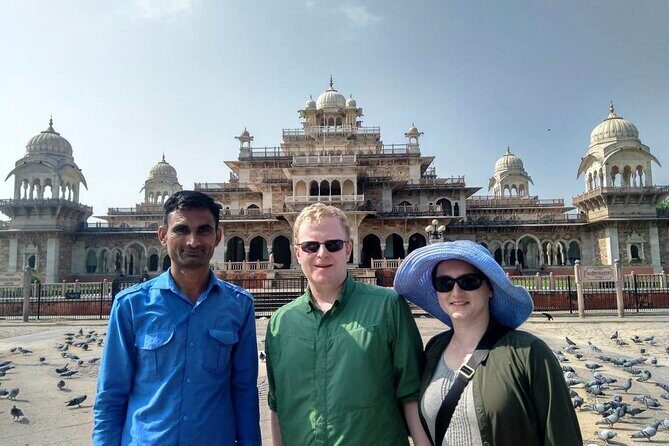
You start at Albert Hall Museum, known for its Indo-Saracenic style and its 19th-century English-in-India influence. Even if you’re not a hardcore museum person, the point here is the building itself: you’ll see the restoration design, chhatri-style towers, and fine craftsmanship mentioned in the description.
This stop is about 45 minutes, with admission ticket not included. That timing is realistic on a two-day trip. It’s long enough to appreciate the structure and look around, without eating your whole day before you reach the more scenic outdoor sites.
Potential drawback: if museums are not your thing, you may wish you had an extra hour for the forts and viewpoints later.
Galtaji Temple (Monkey Temple) in a rocky valley
Next comes Galtaji Temple, often called the Monkey Temple, in a rocky valley. The description highlights weathered temples and three water tanks, plus architectural details like ornate balconies and arches. This is also the kind of stop where you’ll see everyday movement—monkeys roaming around while the place stays calm and visitable.
You get about 45 minutes here and it’s free entry. The value is that this stop gives you a quieter, more local-feeling break from big-ticket landmarks.
Consideration: you’ll want to be mindful around monkeys anywhere in this type of area. The tour description doesn’t get specific, so you should just treat it like a place where animals are part of the scene.
Royal Gaitor Tumbas: white marble chhatris and Rajput-style design
Royal Gaitor Tumbas is the next shift in tone: Jaipur’s former Maharajas are buried here, with white marble chhatris (cenotaphs) and a crematorium area described with yellow sandstone slopes. There’s also a special mention of the Maharaja Jai Singh chhatri with 20 cut support points, which is noted as a favorite because of the carvings.
This stop runs around 30 minutes and ticket is not included. It’s a compact visit, which is good because Day 1 still has your biggest visual reward later.
A few more New Delhi tours and experiences worth a look



Nahargarh Fort sunset: the evening view that anchors Day One
The heart of Day 1 is Nahargarh Fort. The tour promises the most striking perspective on Jaipur city, especially during evening when the city lights come up. The description makes it clear you’ll pass major illuminated points like Water Castle, and that you’ll do a stroll in the market area afterwards with the chance to taste local desserts, backstreets, and rear entryways.
You’ll spend about 3 hours here. That’s perfect for sunset-based plans because sunset never happens on your schedule. You need buffer time for traffic, photography, and simply lingering at viewpoints.
What I’d watch for: the order of sunset timing can matter in real life. The tour includes the drive to viewpoint areas and then a marketplace stroll, so plan on being flexible with how quickly the market portion starts.
If you’re the kind of traveler who likes Jaipur best when it’s lit up and not burning hot, this is the stop that makes the two days feel worth it.
Day Two: Panna Meena ka Kund stepwell, Jal Mahal, and the lake-side contrast
Day 2 starts with a photography-focused and temperature-friendly stop.
Panna Meena ka Kund: cool shade in a stepwell
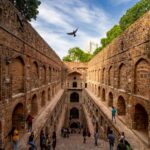
Panna Meena ka Kund is described as a 16th-century stepwell with connected steps on four sides and a room on the northern wall. It’s also described as one of Jaipur’s most amazing photography spots. The practical detail I like is the “summer evenings” cooling effect—because the ground stays cool, it’s a good place to sit a bit instead of just rushing through.
Entry is free and time is about 30 minutes. That makes it a smart opener: you get a memorable architectural feature without spending an entire morning on a crowded landmark.
Jal Mahal: Man Sagar lake and postcard photos
Then you head to Jal Mahal, set in Man Sagar lake. The description focuses on the contrast between light, sand-colored stone walls and the water. It also notes the old castle used for duck-hunting is no longer accessible to the general public, but the view is still treated as a postcard-worthy photo moment. Entry is free, and time here is only about 15 minutes.
This is a classic “quick photo stop” style. If you like short scenic breaks that keep your schedule moving, you’ll appreciate it. If you want a long lakeside walk, you might feel it’s too brief—so consider this more of a visual palate cleanser than a full activity.
City Palace to Hawa Mahal: royal rooms, weaponry, and a wind-shaped façade
Midday on Day 2 focuses on the walled city landmarks, mixing royal interior storytelling with street-level architecture.
City Palace of Jaipur: Mughal-meets-Rajput with a living royal section
City Palace is described as a mix of Mughal and Rajput architecture, and it’s still home to the last decision regal family living in a private segment. The City Palace museum portion is highlighted for an assortment of imperial ensembles and well-protected Rajput weaponry, tracing back to the 15th century.
You’ll spend about 1 hour 30 minutes here, with admission not included. This timing works because City Palace isn’t just one room—it’s a place that benefits from unhurried looking, especially if you’re interested in craftsmanship and historical displays.
Tip for your comfort: plan your energy for indoor viewing here. Jaipur heat can be real, and City Palace is the kind of stop where you might want to pause more than you think.
Hawa Mahal: five stories of windows built for cooling and privacy
Next is Hawa Mahal, meaning Palace of Wind. The description explains the purpose: allow cool wind to circulate through the building, with latticed windows that let royal ladies stay hidden while observing street life below. It’s a five-story structure mixing Hindu and Islamic design.
This stop is about 30 minutes and tickets are not included. It’s timed so you can see the façade and move on without losing the day.
If you’re hoping for a long interior visit, this may not satisfy that urge. But if you want the architecture and the street context, it’s well matched to the 2-day format.
Jantar Mantar and the science side of Jaipur
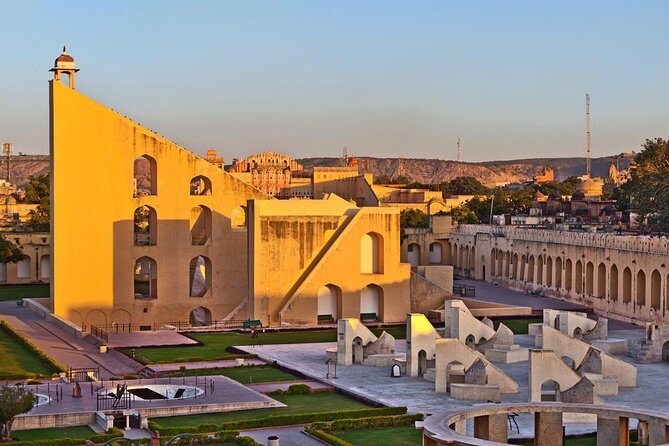
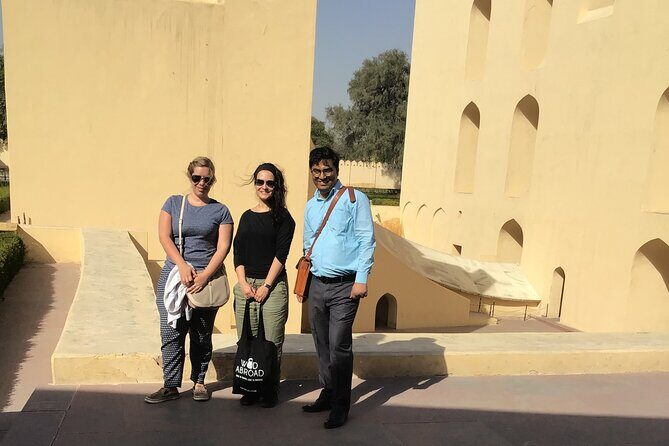
After Hawa Mahal, you visit Jantar Mantar, described as an ancient scientific complex for cosmology. The tour notes stone instruments made in 1726 used to measure time, predict eclipses or sun-related phenomena, and track the movement of stars and planets. It also says this site contains sixteen mathematical gadgets.
Time is about 25 minutes, and admission ticket is not included. The value here is the change in pace: after forts and palaces, you get a different way of thinking about the city.
Consideration: if you’re not into astronomy tools, you may want to lean on the guide to explain what you’re looking at. The tour description doesn’t specify the level of explanation, but having an English-speaking guide is the whole point.
Lassi break and a handpicked taste of old Jaipur street life
You also stop for Lassi at Lassiwala Kishan lal Govind Narain Agarwal. The tour description is simple and helpful: lassi is a local drink made with a bit of sugar and yogurt. Entry is free and time is about 15 minutes.
This is smart scheduling. A cold, creamy break helps you keep going through the later afternoon when your legs and patience might start to flag.
Then comes the old city walking/tuk-tuk portion. The tour description specifically mentions a walking or tuk-tuk tour through old Jaipur’s alleys and backstreets, plus local markets and hygienic street food. You’re not just looking at monuments—you’re being guided through the way Jaipur moves.
Less-packed Jaipur stops: Swarga Suli Tower and Jagat Shiromani Ji Temple
Not every two-day itinerary gives you these “less showy but memorable” stops, and that’s a major reason this tour can feel more personal.
Swarga Suli Tower: a steep climb for big views
Swarga Suli Tower is described as 18th-century and less touristy. The key point is effort: it requires a steep climb, but the breeze at the top and the panoramic views are the payoff. It’s mentioned as 7 or 8 stories with a steep circular staircase to reach the top. Admission is not included.
Time here is about 30 minutes. This stop is for you if you like getting off the main route and you’re comfortable with stairs. If you’d rather spend time sitting than climbing, you may want to skip or only go as far as you feel good.
Jagat Shiromani Ji Temple: old stonework, fewer crowds
Jagat Shiromani Ji Temple is another calmer choice. The description calls it an old temple of Jagat Siromani Ji, dated around 1599 to 1608, and stresses the stonework detail. It’s also described as less explored and not known by many travelers.
Entry is free, time is about 30 minutes. If you like quiet architecture and you want your second day to feel less like a parade, this fits nicely.
Jaipur hand block printing: the workshop that turns sightseeing into something you make
The tour ends with an art-focused experience: Jaipur Hand Block Printing workmanship. You’re guided to design and personalize a hand block printing scarf or napkin, using techniques passed down through generations (as described in the tour content). The session is listed as included, so you’re not paying separately for the workshop.
Time is about 1 hour 30 minutes and admission is free. This is one of the biggest value-adds of the whole trip because it gives you a tangible memory. Photos fade; a printed scarf or napkin is a piece of Jaipur that stays in your closet.
One practical note: if you’re the type who packs lightly, think about how you’ll transport the finished item back home.
Price and value: what $141.34 covers, and what it doesn’t
The price listed is $141.34 per person for about two days, with pickup from Delhi and return transfer included, plus sightseeing in Jaipur by private AC car. You also get an English-speaking private guide, WiFi, bottled water, and car snacks/soft drinks. Lassi and the hand block printing session are included too.
So where does the money go? Mostly into comfort, time savings, and a guide who can help with logistics like ticket lines. That’s why the tour can feel easier than cobbling it together on your own.
The extras to plan for are:
- Entry tickets (your guide helps you skip long ticket lines to buy them)
- Accommodation and meals (the tour includes no hotel; you can get help booking)
- Tips for the drive, guide, and the hand block print master
- Any mentioned fees like camera/video at monuments
- Insurance or medical costs
If you’re traveling with a friend or family member, private-car pricing often starts to make sense fast, especially when you’re trying to cover Jaipur essentials in only two days.
Who this private Jaipur-from-Delhi trip suits best
This tour fits best if you want:
- A structured two-day plan without public transit stress
- A private car with an English-speaking guide who can adjust timing
- Icon sights plus a couple of quieter stops
- A sunset viewpoint moment at Nahargarh Fort
- A hands-on creative activity via hand block printing
It may not fit if you prefer extremely spontaneous travel with no set stops. The itinerary is planned, and even with pacing flexibility, the sequence is still built around the major sights.
Should you book this Jaipur tour from Delhi?
I’d lean yes if you’re aiming for a calm, efficient two-day sweep with a real creative add-on. The strongest points are the private AC transport, the guide support that helps with ticket-line time, and the way the plan includes both big landmarks and smaller stops like Galtaji, Royal Gaitor, Swarga Suli Tower, and Jagat Shiromani Ji Temple.
The only thing you truly need to prepare for is the ticket budget and your own comfort with optional climbs—Swarga Suli Tower is the one that can be a deal-breaker if stairs are an issue.
If you can handle that, this is a smart way to get Jaipur in two days without turning it into a frantic list.
FAQ
Is pickup from Delhi included?
Yes. The tour includes pickup and return transfer from Delhi, along with sightseeing in Jaipur by private air-conditioned car.
How long is the tour?
It’s scheduled for 2 days (approximately).
What’s included in the price?
Included items are a private air-conditioned car for sightseeing, an English-speaking private tour guide, parking, tollways, state taxes, gasoline, WiFi, bottled water, cookies/snacks/soft drinks in the car, lassi, and a hand block printing session.
Are entrance fees included?
No. Entry tickets are not included. The guide assists you in purchasing entry tickets and skipping long lines where possible.
Do I need a hotel included?
No. Accommodation and meals are not included. The tour can help you book a hotel according to your budget.
Can I choose my start time from Delhi?
Yes. You can choose your own suitable start time from Delhi.
Is the tour private or shared?
It’s private. Only your group participates.
Is hand block printing included for everyone?
Yes. A hand block printing session is included.
Is free cancellation available?
Yes, free cancellation is offered up to 24 hours in advance of the experience start time for a full refund.