REVIEW · BIHAR
Divine Delhi: Full-Day Tour of Temples & Spiritual Sites
Book on Viator →Operated by Go City Adventures · Bookable on Viator
Temple stops in Delhi, timed to relax. This full-day route strings together major spiritual landmarks with a local guide, an air-conditioned cab, and a temple-focused plan that keeps moving without feeling chaotic.
I especially like the chance to watch Sikh worship through the Kitchen section at Gurudwara Bangla Sahib, not just the main hall. And I’m glad this tour can be guided by top communicators like Madhvendra (Mona) Singh, who’s praised for making a first day in Delhi feel clear instead of overwhelming.
One caution: the schedule gives you short site windows, so if you want to linger for long photo sessions or slow rituals at every stop, the time at each temple may feel a bit tight.
In This Review
- Key highlights worth your time
- Divine Delhi in One Day: What This Route Really Gives You
- Hotel Pickup, AC Comfort, and a Small Group That Works
- Stop 1: Gurudwara Bangla Sahib and the Sikh Kitchen Behind the Scenes
- Stop 2: Birla Mandir (Lakshmi Narayan) and Hindu Traditions You Can Spot
- Stop 3: Lotus Temple, Marble Waves, and Quiet Bahai Worship
- Stop 4: Swaminarayan Akshardham and Stonework at Human Scale
- Lunch, Timing, and Temple Etiquette: The Stuff That Can Make or Break the Day
- Price and Value: Is $22.52 Actually a Good Deal?
- Who Should Book This Temple-and-Spiritual Sites Tour
- Should You Book Divine Delhi Full-Day Tour of Temples & Spiritual Sites?
- FAQ
- What temples and spiritual sites are included?
- How long is the full-day tour?
- Are hotel pickup and drop-off included?
- Is the tour air-conditioned and do I get transport between stops?
- Are entrance fees included?
- Is lunch included?
- What should I wear or know about temple rules?
Key highlights worth your time
- Guided context, not just photos at every stop, so you know what you’re looking at
- Bangla Sahib’s Kitchen section shows how food support works for the masses
- Lotus Temple visit with Bahai worship areas, including the prayer hall experience
- Akshardham’s scale and stonework, plus the 2005 opening fact about Dr A P J Abdul Kalam
- Small group size (max 12) makes it easier to ask questions and follow directions
- Hotel pickup and drop-off in an AC vehicle, which matters in Delhi traffic
Divine Delhi in One Day: What This Route Really Gives You
If you’re doing Delhi for the first time, it can feel like everything is everywhere and the day slips away in transit. This tour is built around an easy idea: hit a handful of the city’s most famous spiritual sites in one organized flow, with a guide to translate the meaning behind the architecture.
I like that the experience isn’t only about big monuments. You also get a view of how people practice—at Sikh Bangla Sahib, at a Hindu temple focused on Lakshmi and Vishnu, and then in spaces designed for quiet contemplation at the Lotus Temple and Akshardham.
You’ll move through four major stops, with brief stays that keep energy up. That means you get variety—different faith traditions, different design styles, and different crowds—without needing a multi-day deep plan.
You can also read our reviews of more tours and experiences in Bihar.


Hotel Pickup, AC Comfort, and a Small Group That Works
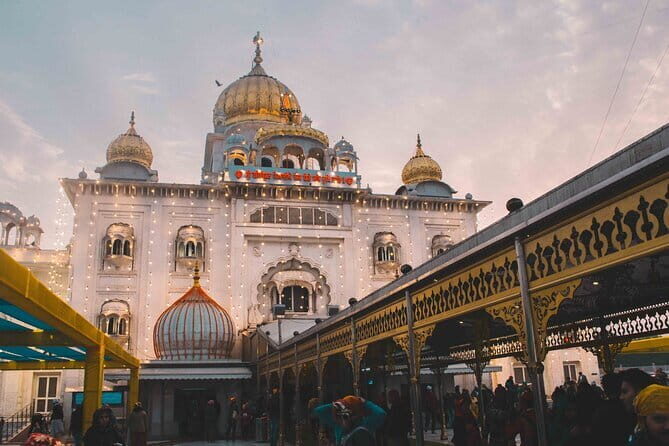
The practical part is real: hotel pickup and drop-off is included, and you ride in an air-conditioned cab. Delhi traffic can turn a sightseeing day into a stamina test, so having this fixed transport saves you from guessing routes and timing.
The group is capped at 12 travelers, which helps more than you might think. In a bigger bus group, your questions often get swallowed. Here, it’s easier to follow the guide’s pace and get quick answers when you spot something you don’t recognize.
This tour also uses a mobile ticket. That’s one less thing to manage while you’re juggling temple rules like removing shoes and covering shoulders and knees.
Stop 1: Gurudwara Bangla Sahib and the Sikh Kitchen Behind the Scenes
Your day starts at Gurudwara Bangla Sahib, a Sikh temple near the Hanuman Temple area. The best part here isn’t only the beautiful space for worship. It’s the way the guide frames what Sikhism values, including a short look at the history and how the community practices their faith.
You also get time in the Kitchen section, where the focus is on how food is prepared for people who come in. This isn’t the type of detail you’d easily find on your own in a single visit, and it changes how you read the whole site. Instead of thinking only about the temple as a building, you see it as a working community space.
Plan for about 40 minutes here. That’s enough time to observe worship areas and take in the kitchen activity if it’s running during your visit, but it’s not meant for a long stay. If you’re traveling with strong interest in Sikh history or want to sit quietly longer, use the guide to point you to the most meaningful sections first.
Etiquette note: be ready for shoe removal and respectful clothing. Knees and shoulders need to be covered, so don’t count on your regular sightseeing outfit working.
Stop 2: Birla Mandir (Lakshmi Narayan) and Hindu Traditions You Can Spot
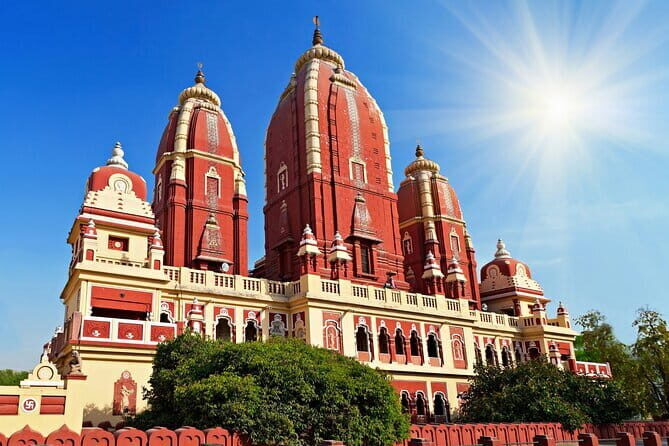
Next is Birla Mandir, also called the Lakshmi Narayan Temple. This stop is dedicated to Lord Vishnu and Laxmi, and the guide helps you connect the symbolism to Hindu religious customs.
The setting is a reminder that Hindu temple architecture often works like a language. You may not catch every meaning in one visit, but once someone points out what the key deities represent, it becomes easier to understand why certain areas and rituals matter.
You’ll have around 35 minutes at this stop, with admission included. That’s a good length for walking the main areas, reading the guide’s explanations, and getting a feel for how worship looks in practice.
What’s the drawback? If you love religious art and want lots of time for close-up viewing, the schedule might feel like it wants speed. Still, the payoff is that you move on to a very different design style at the next stop instead of repeating the same kind of temple experience.
Stop 3: Lotus Temple, Marble Waves, and Quiet Bahai Worship

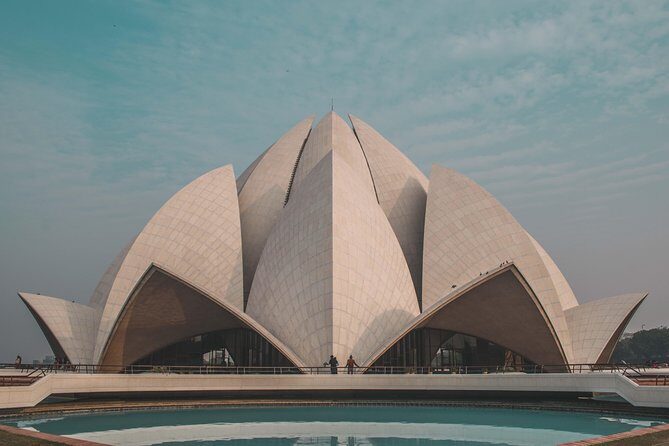
Then you arrive at the Lotus Temple, also known as the Bahai’s House of worship. This is the kind of landmark that instantly photographs well, but the tour tries to keep it from becoming only a picture stop.
You’ll visit the prayer hall and worship in your own style. That wording matters: you’re not expected to perform a ritual you don’t know. Instead, you’re encouraged to participate in the way that’s comfortable—through quiet attention, observation, or prayer if that fits your own practice.
Time here is about 30 minutes. Use it well. Look at the marble surface, notice how the building’s petal-like structure guides sightlines, and then spend the middle portion of that window settling into the space rather than rushing photos the whole time.
A key consideration: you’ll be in a temple environment where the tone is quiet. That means lower volume, slower movement, and patience with rules. If you’re wearing something that makes covering shoulders and knees annoying, this is when you’ll wish you dressed with flexibility in mind.


Stop 4: Swaminarayan Akshardham and Stonework at Human Scale
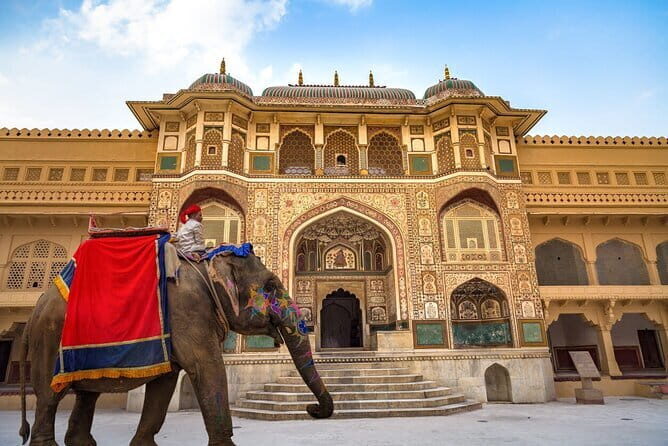
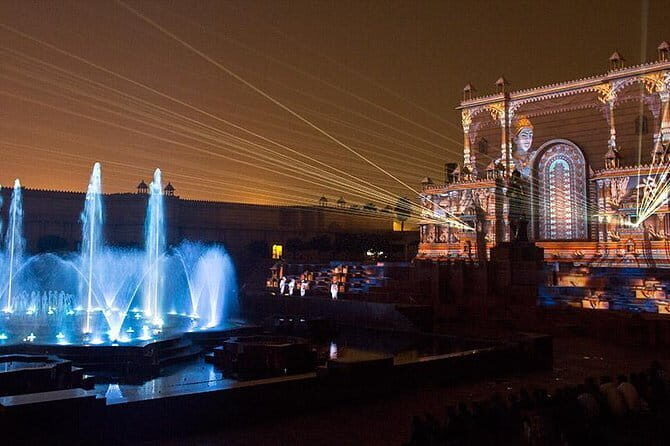
Your final stop is Swaminarayan Akshardham, one of Delhi’s newest temple complexes and a massive expression of carved stone detail. The tour’s description highlights that the architects aimed to create life in every piece of stone, and even if you’re not a design expert, you’ll feel the scale quickly.
Akshardham was officially opened in 2005 by Dr A P J Abdul Kalam, and the site carries a modern gravity. It doesn’t feel like an old village temple. It feels like a carefully engineered spiritual world with its own layout, routes, and pacing.
You’ll stay for about one hour here. Admission is included. That hour is often the best use of the day because Akshardham is the stop where you’re most likely to want multiple angles and a longer look at the carved elements.
The one thing to plan for is movement inside the complex. Even if the tour route overall is manageable, you’ll likely do more walking here than at the simpler stops. If your physical mobility is limited, take your time and lean on the guide for the most efficient route through the main areas.
Lunch, Timing, and Temple Etiquette: The Stuff That Can Make or Break the Day
This kind of tour works best when you accept that you’re not doing one long meditation session at each place. You’re doing a structured day that’s heavy on “see and understand,” with stops designed for short, focused visits.
Lunch is mentioned as a chance to enjoy a meal at a multi-cuisine restaurant, but meals are also listed as not included. Here’s my practical advice: check your exact booking details so you don’t end up hungry without a plan. If lunch is included, great. If it’s not, you’ll want a little buffer in your budget.
Temple etiquette is not optional on this route. You must remove your shoes, and you need to cover knees and shoulders at worship sites. The tour notes a moderate physical fitness level, which usually means you can handle walking at temples and standing in queues, but it doesn’t promise wheelchair-style convenience.
Also keep in mind how the tour keeps moving. You’ll be helped by the guide, and you’ll have guided timing, but you should still manage your expectations. Think of it as a fast education in Delhi spirituality rather than an all-day slow stroll.
Price and Value: Is $22.52 Actually a Good Deal?
At $22.52 per person for roughly 8 hours of sightseeing, the value depends on what you’d otherwise have to pay.
What’s included that you might skip on your own:
- Hotel pickup and drop-off
- Air-conditioned vehicle
- Live tour guide
- All applicable entrance fees
Delhi entrance fees can add up, and transport plus a guided explanation can save you time and confusion, especially when you don’t know what matters at each site. The guide component is a big part of the value here because the tour doesn’t treat temples like just photo backdrops. You get context about Sikh religion, Hindu customs, and what to expect at the Bahai prayer space.
Where you should double-check:
- Meals: lunch is referenced in the experience highlights, but it’s also listed as not included. Confirm what your exact ticket includes.
- Gratuities: tips aren’t included, which is normal, but you should still keep some cash or a plan for tipping if you want to.
For solo travelers especially, this price structure can feel like an easy win. You buy one guided day and avoid the headache of arranging transport between far-flung religious sites while figuring out what to do once you arrive.
Who Should Book This Temple-and-Spiritual Sites Tour
This tour is a strong fit if you:
- Want a first-day orientation to Delhi’s major spiritual sites
- Prefer a guide to help you understand what you see
- Like clear timing and short stops rather than half-day wandering
- Appreciate architecture but also care about what faith looks like in real life
It’s also a good option if you’re visiting alone. The guidance and scheduled pacing can reduce that feeling of walking into big religious sites without a plan.
Who might hesitate? If you want slow, unhurried temple time at every stop, this schedule may feel rushed. Also, if covering knees and shoulders is difficult for you, plan your clothing before you go. Those rules are part of respectful participation and they’re enforced at places of worship.
Should You Book Divine Delhi Full-Day Tour of Temples & Spiritual Sites?
Book it if you want one organized day where you learn as you go—Sikhism at Bangla Sahib, Hindu symbolism at Birla Mandir, quiet worship design at the Lotus Temple, and the scale of Akshardham within an easy hotel pickup and AC ride framework.
Don’t book it if your ideal sightseeing day is long and unstructured, or if you need lots of time at a single site to sit and absorb without moving on. This tour is about variety and momentum.
My final take: for the price, the mix of guided explanations plus included transport and entrance fees is hard to beat. If you match your expectations to the format—short visits, strong guidance, and temple etiquette—you’ll come away with a much clearer sense of Delhi’s spiritual map.
FAQ
What temples and spiritual sites are included?
The tour includes Gurudwara Bangla Sahib, Birla Mandir (Lakshmi Narayan), the Lotus Temple, and Swaminarayan Akshardham.
How long is the full-day tour?
It runs for about 8 hours.
Are hotel pickup and drop-off included?
Yes. Round-trip transfers from your hotel are included.
Is the tour air-conditioned and do I get transport between stops?
Yes. You travel by an air-conditioned vehicle throughout the day.
Are entrance fees included?
Yes. All applicable entrance fees are included.
Is lunch included?
Lunch is mentioned in the experience highlights, but meals are also listed as not included. Check your booking details to confirm whether lunch is included for your specific ticket.
What should I wear or know about temple rules?
Shoes must be removed at places of worship, and you need to cover your knees and shoulders.