REVIEW · NEW DELHI
From Delhi: Golden Triangle Private Tour by Train
Book on Viator →Operated by Hello India Tour · Bookable on Viator
That first look at India’s mix of faiths and empires is wild. This Delhi-to-Jaipur-to-Agra tour strings together big-name sights by train and then smooths everything out with private car and a multilingual guide. It’s a classic Golden Triangle route, but the pacing feels built for comfort, not chaos.
Two things I really liked: the guide flexibility and the way the itinerary balances major monuments with quieter stops. The spots from Shah Jahan-era Delhi to the “Baby Taj” in Agra give you variety, not just a repeat of the same scene.
One thing to consider: it’s a packed 5-day run with lots of walking and temple/monument time blocks, so you’ll want good energy for a full schedule.
In This Review
- Key highlights (the stuff that matters)
- A 5-Day Golden Triangle by Train from Delhi: how the flow works
- Price and what you actually get for $509.77 per person
- Day 1 in Delhi: Old Delhi markets, Mughal tombs, and a temple break
- What to watch on Day 1
- Agra Day: Taj Mahal plus the quieter Mughal side quests
- The Agra pacing trick
- Jaipur Day 1: City Palace, Jantar Mantar, and Hawa Mahal’s strange charm
- If you love design and planning
- Jaipur Day 2: Amer Fort, Jal Mahal, Nahargarh Fort, and Galtaji temples
- The tradeoff on Day 4
- Final Delhi Day: Gurudwara Bangla Sahib and Akshardham’s modern scale
- Why this last day works
- The guide effect: why Subhan sir and multilingual support matter
- Included vs not included: plan your budget without surprises
- Who this private train-based Golden Triangle tour is best for
- Should you book the Delhi Golden Triangle Private Tour by Train?
- FAQ
- How long is the Golden Triangle private tour by train?
- Where does the tour start?
- Is this tour private?
- Do I get tickets included for monuments?
- What meals are included?
- Is the tour guide multilingual?
- Is transportation included?
- Are alcohol and tips included?
- Do I get a mobile ticket?
- What is the cancellation policy?
Key highlights (the stuff that matters)
- Guide who adapts on the fly: Subhan sir style of guiding comes through in how the plan can be modified to your requests.
- Ticket handling without the stress: The tour is set up so you don’t have to stand around just to get in.
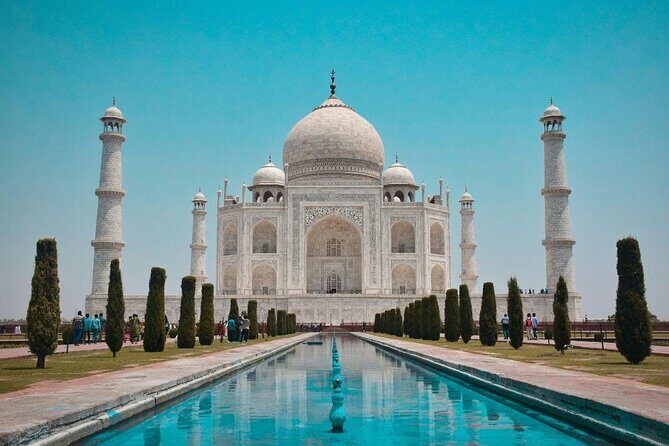
- A strong mix of landmarks: You get the big icons (Taj Mahal, Qutub Minar, Hawa Mahal) plus supporting sights like Itimad-ud-Daulah and Mehtab Bagh.
- Real religious landmarks, not just photos: Gurudwara stops include the famous free kitchens and the feel of daily devotion.
- Private transport between cities and sights: It keeps transit predictable while you focus on the sights.
- Private group = your pace: Only your group participates, which usually means less waiting and less “herding.”
A 5-Day Golden Triangle by Train from Delhi: how the flow works
The Golden Triangle is popular for a reason. You hit three cities that tell three different chapters of North India—Delhi’s layered imperial past, Agra’s Mughal brilliance, and Jaipur’s Rajput-era planning. Doing it by train plus private car matters, because it reduces the travel friction that can eat your vacation days.
You also get a structured “see the essentials” approach. The plan moves through Delhi → Agra → Jaipur, then back to Delhi for a final day of spiritual landmarks. Each day has a mix of monuments, heritage sites, and at least one moment that feels less like a “checkpoint” and more like a lived-in place.
And the guide component is where this tour often wins. In the reviews, Subhan sir shows up again and again: knowledgeable, but also focused on keeping things fun and educational at the same time. Even better, he’ll listen to your requests and modify the route when possible. That’s a big deal on a tight 5-day plan—because “tight” only works well if you can adjust.
You can also read our reviews of more private tours in New Delhi


Price and what you actually get for $509.77 per person
At $509.77 per person, this isn’t a budget hop. It’s a private, multi-city setup with transportation and a guide. So the value isn’t just that you’re seeing three famous cities—it’s that you’re paying for fewer uncertainties.
Here’s what the price is built on, based on what’s included:
- All fees and taxes
- Private transportation
- Multilingual tour guide
- Monument tickets if you choose that option
- Lunch if you choose that option
That “if selected” part matters. When you price-check tours, you don’t want to accidentally compare a plan with ticket access included versus one without. If you do choose the ticket option, the schedule lists major admissions as covered on key stops like Humayun’s Tomb, Qutub Minar, Taj Mahal, Agra Fort, and more.
Also note the tour is private (only your group participates), with pickup offered and mobile ticket mentioned. Private tours cost more, but the benefit is usually less time lost to logistics. In one review, the guide setup also meant no long lines just to get in—which is the kind of small thing that saves your mood.
The one cost you should expect on top: tips for the guide/driver and alcohol are not included. If you’re traveling with a group, you can also ask about group discounts, since they’re part of the offering.
Day 1 in Delhi: Old Delhi markets, Mughal tombs, and a temple break
Day 1 sets the tone: Delhi in one day can feel like ten different cities. You start with Jama Masjid, one of the largest mosques in India, commissioned by Mughal Emperor Shah Jahan and built between 1650 and 1656. The point here isn’t only the architecture. It’s the way the sight anchors the whole Mughal-era story in Old Delhi.
Next comes Chandni Chowk (Pasar Chandni Chowk / Moonlight Square). This is one of the oldest and busiest markets near the Old Delhi Railway Station. You’ll connect the monument map to daily life. The Red Fort is at the eastern end of Chandni Chowk, so even if you don’t do it in full, the geography helps everything click.
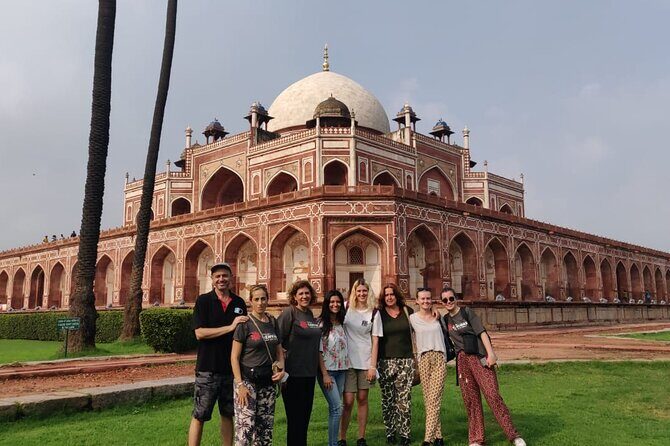
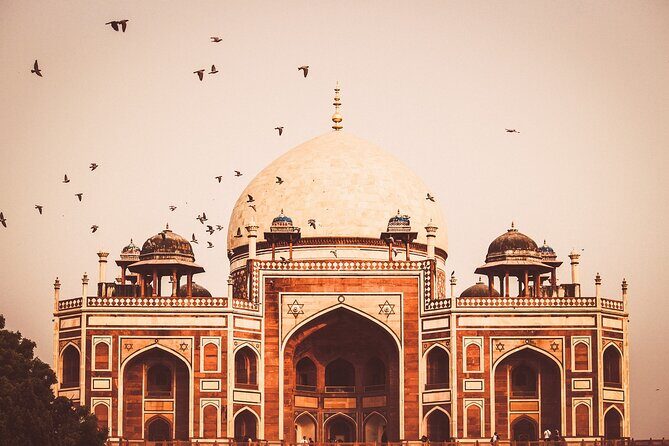
Then the itinerary shifts to monumental calm with Humayun’s Tomb. It’s the tomb of Emperor Humayun, commissioned by his wife Empress Bega Begum, designed by Persian architects. A stop like this slows the tempo. After the market energy, it gives you space to see Delhi’s grandeur with fewer distractions.
After that, you go for Qutub Minar. It’s described as Delhi’s tallest monument and among the most visited in the city. Qutub Minar works well for a tour day because it’s a “big shape” landmark—easy to orient yourself around, even if you’re not a history nerd.
You then get a smart culture shift: Gurudwara Sis Ganj Sahib. Sikh heritage is part of Delhi’s real daily rhythm, and this stop adds something very practical—the free kitchen where about 50,000 people eat without paying. It’s not a performance; it’s a functioning system. If you care about how religions show up in daily life, this is a strong stop.
The day continues with Lotus Temple, a Baha’i House of Worship known for its flowerlike form. It’s a change in spiritual language from mosque to temple to modern design. Finally, you end with India Gate, a memorial to soldiers of the British Indian Army who lost their lives between 1914 and 1921.
What to watch on Day 1
With so many stops packed into one day, you’ll want to pace yourself. Pick one or two places to really linger in, and treat the rest as “see it, absorb it, move on.” That strategy keeps the day enjoyable instead of tiring.
Agra Day: Taj Mahal plus the quieter Mughal side quests
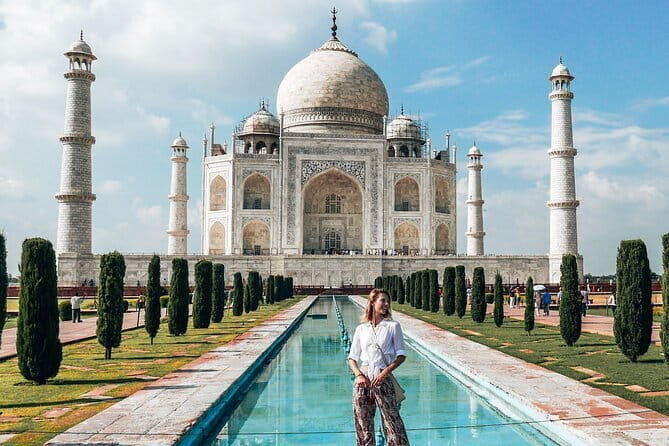
Agra is where your Golden Triangle day becomes truly memorable. You start with the headline: the Taj Mahal, an ivory-white marble tomb on the Yamuna’s south bank. It was built from 1631 to 1653 by Shah Jahan to house Mumtaz Mahal’s tomb, with help from about 20,000 workers. There’s a reason people plan their whole trip around this. Even if you’ve seen photos, it’s the real scale and the “gravity” of the place.
From there, the tour doesn’t stop at the iconic single point. You go to Agra Fort, once the Mughal Dynasty’s main residence until the capital moved to Delhi in 1638, and later taken over by the British. This fort stop is helpful because it puts the Taj Mahal into a larger story of power, residence, and movement.
Next is Tomb of Itimad-ud-Daulah, also nicknamed the Baby Taj. It’s often described as a draft of the Taj Mahal, which makes it a great “compare and notice” stop. If the Taj’s beauty feels overwhelming, Itimad-ud-Daulah can feel more intimate.
Then you finish with Mehtab Bagh, also known as the moon garden, a charbagh complex north of the Taj Mahal across the Yamuna. The value here is alignment and perspective. You get a garden space meant to be read alongside the Taj’s position across the river.





The Agra pacing trick
This itinerary spreads Agra’s impact across multiple levels: the grand landmark (Taj), the living power center (Agra Fort), a refined mausoleum (Itimad-ud-Daulah), and a viewpoint garden (Mehtab Bagh). That mix helps you leave Agra with more than one mental image.
Jaipur Day 1: City Palace, Jantar Mantar, and Hawa Mahal’s strange charm
Jaipur’s first day brings three very different “why it matters” stops.
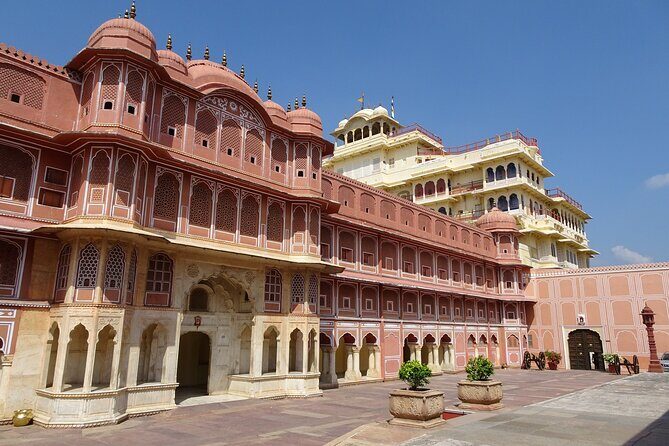
Start with City Palace, established in 1727 when Maharaja Sawai Jai Singh II moved his court from Amber to Jaipur. It served as the ceremonial and administrative seat of the Maharaja, and it also hosted religious and cultural events while supporting arts and commerce. City Palace is useful on a tour because it doesn’t just sit there looking pretty—it gives you the political and cultural frame for the rest of Jaipur.
Then you visit Jantar Mantar, a UNESCO World Heritage site made up of nineteen astronomical instruments built under Sawai Jai Singh, completed in 1734. This is a fun contrast to the Mughal architecture of Delhi and Agra. It’s also where a guide can shine by turning the instruments into something you can understand in a short visit.
Finally, there’s Hawa Mahal (Palace of Wind). The beehive design was intended to let royal ladies observe street life below without being seen. Even in a short stop, it teaches you how Jaipur’s architecture solved real social needs, not just “decoration.”
If you love design and planning
You’ll likely enjoy Jantar Mantar and Hawa Mahal most on this day. They’re not just famous; they explain how the city worked.
Jaipur Day 2: Amer Fort, Jal Mahal, Nahargarh Fort, and Galtaji temples

Day 4 is where Jaipur shifts from palace-town elegance into fort-and-hills terrain.
You start with Amber Fort (Amer Fort). The tour lists it as two hours with admission included. Forts are always good on a private plan because you can go at the pace that matches your group’s stamina. Amber is also a classic “big wow” structure, and it’s positioned in a way that makes the sight feel commanding.
Next is Jal Mahal, the palace in the middle of Man Sagar Lake. It was originally constructed in 1699 and later renovated and enlarged in the 18th century by Maharaja Jai Singh II. Jal Mahal works because it’s visually odd—in a good way. It’s also a reminder that Jaipur isn’t only forts and palaces; water features matter too.
After that, you go to Nahargarh Fort, overlooking Jaipur from the edge of the Aravalli Hills. Along with Amer Fort and Jaigarh Fort, it formed a defense ring. The name means abode of tigers, and knowing that before you see it helps the stop feel less like a generic view point and more like a strategic landscape.
Then you close with Galtaji Temple. It’s an ancient Hindu pilgrimage about 10 km away from Jaipur and built into a narrow crevice in the ring of hills around the city. This stop is the softer side of Day 4—less “fort history,” more devotional site feel.
The tradeoff on Day 4
This is a lot of changing scenery. That’s a perk, but it can also make the day feel physically busy. If your group likes one stop to feel like a full experience, choose your priority early: Amer Fort or Nahargarh, for example.
Final Delhi Day: Gurudwara Bangla Sahib and Akshardham’s modern scale
On Day 5, the itinerary turns spiritual again, this time in Delhi’s more contemporary public-landscape style.
You start at Gurudwara Bangla Sahib, one of the prominent Sikh gurdwaras in Delhi, linked with the eighth Sikh Guru, Guru Har Krishan. A key feature is the Sarovar (holy river) inside the complex. This stop also includes the scale of the community kitchen—about 75,000 people eat without cost.
Then comes Swaminarayan Akshardham, which officially opened in 2005. The tour lists it as a one-hour visit with free entry. Akshardham is the kind of stop that gives you a feel for how Indian spiritual life has modern presentation as well as ancient roots.
Why this last day works
You end with two religious sites that aren’t just monuments. They show how faith becomes public service (kitchens and daily life) and how architecture can communicate devotion in new forms.
The guide effect: why Subhan sir and multilingual support matter
The most repeated praise in the tour experience is the guide. In multiple comments, Subhan sir is specifically mentioned, with compliments about organization, education, and friendliness. One review also highlighted French speaking and quick adaptation to needs and aspirations.
That matters on a route like the Golden Triangle, because the “right” experience depends on the group. Some people want more context. Others want more time to wander and take photos. A flexible guide can steer the day without breaking the schedule.
Also, the tour’s ticket handling seems designed to prevent wasted time. One review notes there was no need to stand in a long line to get tickets. Even if you’ve traveled in India before, that kind of setup is a big quality-of-life upgrade.
Included vs not included: plan your budget without surprises
From the included list, you can build a clear baseline:
- All fees and taxes
- Private transportation
- Multilingual tour guide
- Monument tickets and lunch are included only if you select those options
Not included:
- Alcoholic drinks
- Tips/gratuities for guide and driver
This means your best “budget move” is simple: decide whether you want monument tickets included in your package choice. If you don’t, you may pay at sites later, and that can change how smooth the day feels.
Who this private train-based Golden Triangle tour is best for
This tour fits best if you want:
- A private schedule (not a bus full of strangers)
- The major hits across three cities without doing all the planning yourself
- A guide who adjusts when your group has different interests
- A mix of temples, forts, palaces, and markets—so the trip feels like a full picture of North India
It may feel a little intense if your group prefers slow travel with lots of free time. The route is packed with major stops, and each day has defined time blocks.
Should you book the Delhi Golden Triangle Private Tour by Train?
If you like structure but also want room to change course, I’d book it. The price is high for a reason: private transport, multilingual guidance, and a plan built around seeing a lot without drowning in logistics.
I’d lean yes especially if:
- You want a guide like Subhan sir, known for organization and flexible tailoring
- You care about ticket efficiency (no long waits)
- You’re excited by the full Golden Triangle mix: Delhi’s Mughal landmarks, Agra’s Taj-area masterworks, and Jaipur’s forts plus astronomy and palace design
I’d hesitate if you’re the kind of traveler who wants a very light schedule. With so many landmarks on the calendar, you’ll get the best experience if you go in ready for a full-feeling 5 days.
FAQ
How long is the Golden Triangle private tour by train?
It’s listed as approximately 5 days.
Where does the tour start?
The location is New Delhi, India, and the tour includes pickup offered.
Is this tour private?
Yes. It’s described as a private tour/activity with only your group participating.
Do I get tickets included for monuments?
Monument tickets are included only if you select that option. Some stops list admission ticket included, but the overall inclusion depends on the option selected.
What meals are included?
Lunch is included only if you select that option. Meals at the gurudwaras are part of the sites themselves, where free kitchen service is mentioned.
Is the tour guide multilingual?
Yes, the tour includes a multilingual tour guide.
Is transportation included?
Yes. Private transportation is included.
Are alcohol and tips included?
No. Alcoholic drinks are not included, and tips/gratuities to the guide and driver are not included.
Do I get a mobile ticket?
Yes. Mobile ticket is listed as a feature.
What is the cancellation policy?
Free cancellation is available. You can cancel up to 24 hours in advance for a full refund; cancellations made less than 24 hours before the start time are not refunded.