REVIEW · NEW DELHI
Delhi: Private Old & New Delhi City Tour with Car & Guide
Book on GetYourGuide →Operated by Intrepid India · Bookable on GetYourGuide
Old Delhi feels like a film you can walk into. I like how this tour pairs Old Delhi street time (including a classic rickshaw moment) with major UNESCO landmarks in New Delhi, all with a private guide and air-conditioned car when you need a break. You’ll also get a smooth plan for seeing both Mughal-era icons and government-district sights without piecing it together yourself.
The one drawback to keep in mind is that what you actually pay for depends heavily on your selected option. If you skip the full-inclusive package, entry tickets and lunch may not be included, and monument fees can vary.
In This Review
- Key takeaways before you go
- Old Delhi on Foot: Jama Masjid, Chandni Chowk, and Khari Baoli
- The Rickshaw Ride: A Short Moment That Feels Like the City’s Own Story
- Red Fort Outside and the Art of the Photo Stop
- New Delhi Icons: India Gate and Rashtrapati Bhavan Photo Passes
- Qutb Minar and Humayun’s Tomb: UNESCO Stops With Built-In Meaning
- Lotus Temple and Gurudwara Bangla Sahib: Different Faiths, Same Calm
- Timing, Delhi Traffic, and Why the Private Car Matters
- Price and Value: How a $3 Listing Can Still Be a Real Decision
- Guide Quality, Shopping Stops, and Gratuity Reality Check
- Pickup, Drop-off, and Getting Started Without Headaches
- Clothing, Comfort, and Practical Stuff That Actually Helps
- Should You Book This Delhi Old & New City Tour?
- FAQ
- How long is the Old & New Delhi city tour?
- What is included in the tour price?
- Are entry tickets included?
- Is lunch included?
- Does the tour include pickup from the airport and hotels?
- Which major sites are visited?
- Is Lotus Temple always included?
Key takeaways before you go
- Old Delhi by foot and rickshaw: You’ll trade time in traffic for close-up market streets and small-lane views.
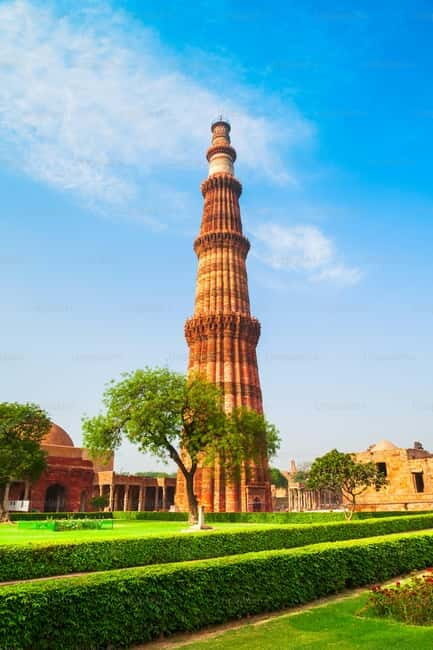
- Major Mughal and UNESCO stops: Qutb Minar and Humayun’s Tomb are planned as guided highlights.
- New Delhi contrasts in one loop: India Gate and Rashtrapati Bhavan are quick photo-and-pass moments that still matter.
- Option-based flexibility: Choose guide-only, car, entry tickets, and/or an all-inclusive lunch.
- Car time is your stress buffer: Delhi traffic is unpredictable, so the private driver helps you stay on schedule.
- Monday swap for Lotus Temple: If your day lands on Monday, Lotus Temple is replaced by a Qutb Minar focus.
Old Delhi on Foot: Jama Masjid, Chandni Chowk, and Khari Baoli
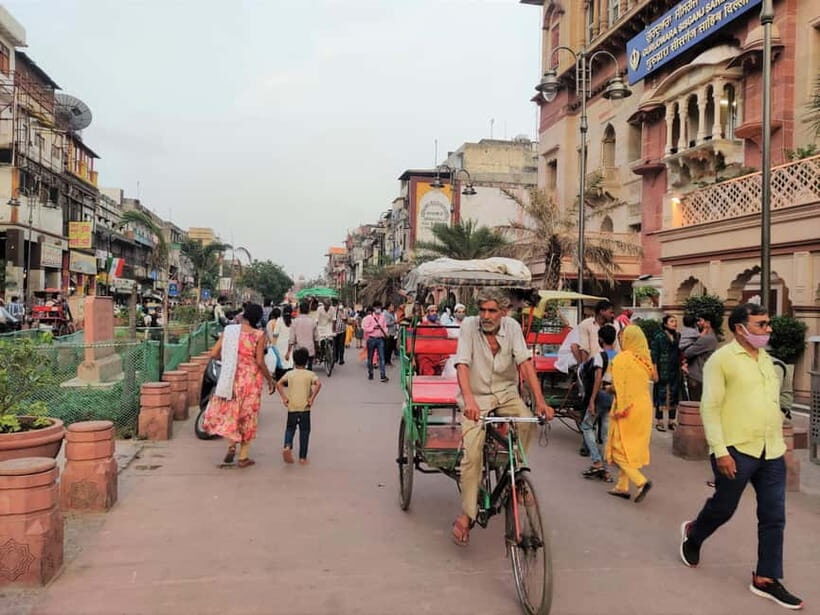
If you want Delhi with context—not just selfies—start in Old Delhi. This tour is built around walking through the places where people actually shop, pray, and move through the day. That’s the difference between seeing monuments and understanding a city’s daily rhythm.
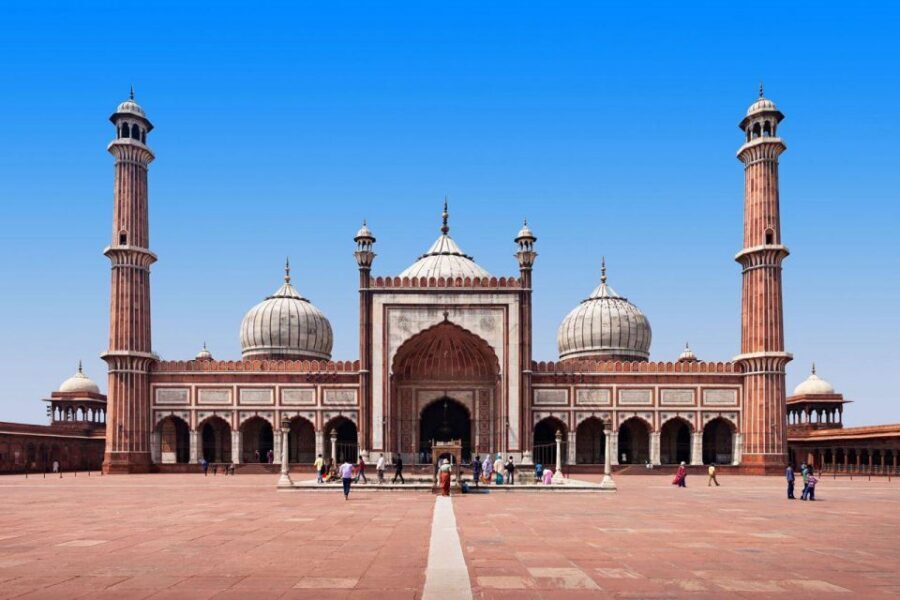
You’ll begin with Jama Masjid, one of India’s largest mosques. A guided visit here helps you notice things most people rush past: how the space is organized for worship, what to expect when you enter, and how the surrounding area fits into the neighborhood’s layout. Dress matters too. Keep shoulders and knees covered, and expect modest clothing to feel less like a rule and more like a free ticket to being comfortable.
Next comes Chandni Chowk, the famous market area tied to Old Delhi’s historical pulse. You don’t just pass through—you spend guided time there, which is where the guide’s value shows. Market streets can look chaotic until someone points out landmarks, typical shopping lanes, and what you’re seeing beyond the storefronts. You’ll also get a feel for what people buy and why, from spices to everyday essentials.
Then you move to Khari Baoli, another legendary spice market. A guided hour here works because spices aren’t just color on camera. They’re part of how families cook, trade, and store goods. You’ll likely notice the sensory overload—smells, stacks, and quick conversations—so having someone explain what you’re seeing saves you from guessing.
What to watch: market stops can mean lots of walking and uneven pavement. If you’re not steady on your feet, bring shoes that give grip and skip overly heavy bags.
You can also read our reviews of more guided tours in New Delhi



The Rickshaw Ride: A Short Moment That Feels Like the City’s Own Story
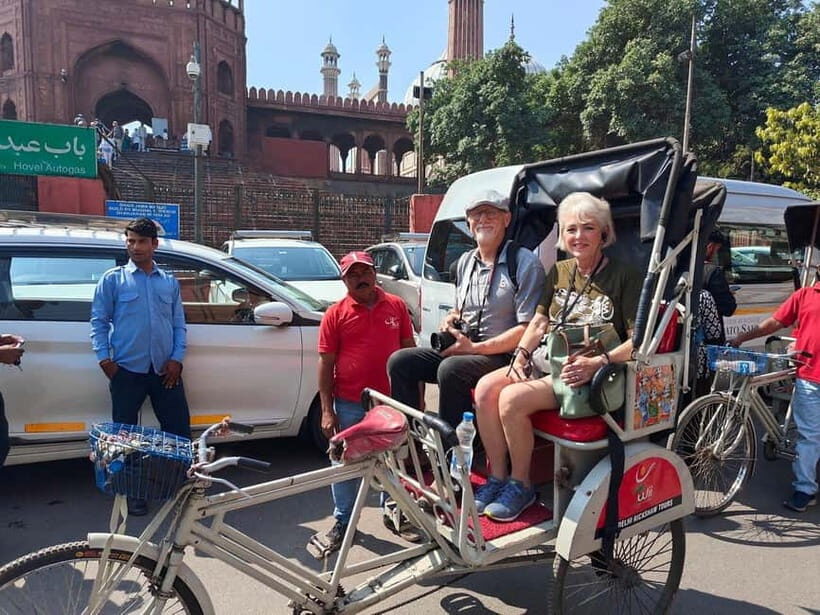
The rickshaw ride is short, but it hits hard. It’s one of those experiences where the city instantly feels closer—because narrow lanes compress your view and slow you down in a real way. It also creates the best kind of contrast: you go from guided explanations to a ride that lets you absorb the streets without reading everything like a textbook.
For me, the big win is timing. You’re not spending hours trapped in congestion. You’re getting a contained slice of Old Delhi’s movement patterns, the way local people likely experience it day-to-day.
Practical tip: keep your phone secure and your movements calm. Market lanes can be tight, and you’ll appreciate not having to juggle bags while you’re trying to get photos.
Red Fort Outside and the Art of the Photo Stop

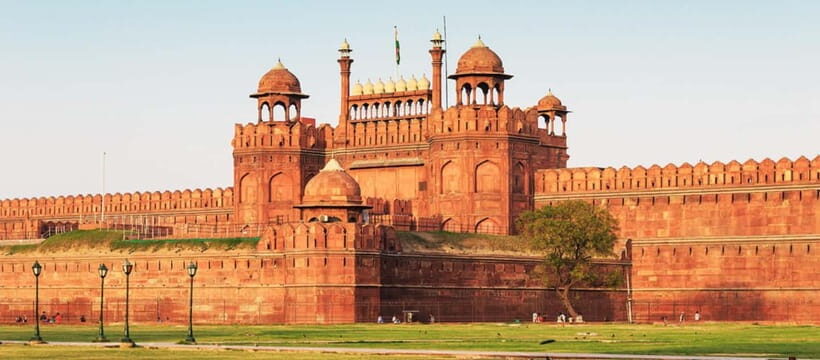
The Red Fort portion is a pass-by/photo stop rather than an in-depth guided entry. That can sound underwhelming—until you realize what it’s doing for you. It gives you the instant visual identity of Mughal power without forcing the day to stretch too long.
You’ll also use this segment to regroup mentally. Old Delhi walking builds your appetite for seeing big structures, and the Red Fort view acts like a reset button before the tour shifts to New Delhi’s wide, planned avenues.
Good to know: If you want deeper time at Red Fort (beyond the outside photo moment), you’ll need to plan that separately. This tour keeps the pace moving so you can cover multiple major sites in one day.
New Delhi Icons: India Gate and Rashtrapati Bhavan Photo Passes

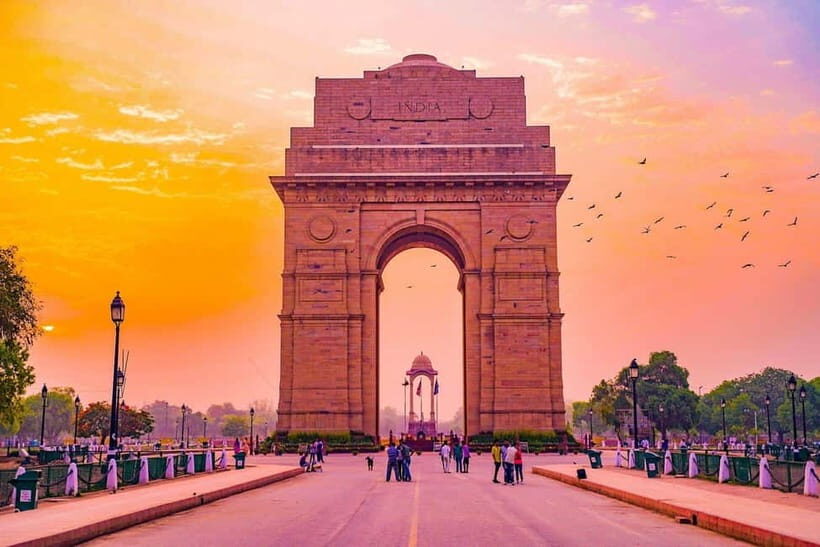
Then you transition into the New Delhi side: cooler angles, broader streets, and government landmarks that define the city’s layout. India Gate is quick—guided for a half-hour—but it’s still one of the most meaningful “fast stops” on the itinerary because you get the story behind the memorial setting, not just the view.
Rashtrapati Bhavan is also a pass-by/photo stop. You don’t go inside on this style of tour, but you still get the impact of scale. These photo moments matter more than you’d think because New Delhi’s architecture is about how the city is organized, and the buildings’ size is part of the message.
What you’ll feel: by the time you reach this area, Delhi has already switched gears on you. Old Delhi teaches senses; New Delhi teaches perspective.
Qutb Minar and Humayun’s Tomb: UNESCO Stops With Built-In Meaning
This is where the tour becomes a real guide-led education day. Qutb Minar is treated as a guided visit, and that guidance helps you read the site beyond the famous tower. You’ll be better able to connect what you see to why the monument is UNESCO-listed and what makes the complex historically significant.
You should also plan around the day-of-week issue: the Lotus Temple is closed on Mondays. If your tour date falls on a Monday, you’ll get a Qutb Minar-focused swap instead. That’s useful because it prevents a common disappointment—turning up at a closed site and losing your slot.
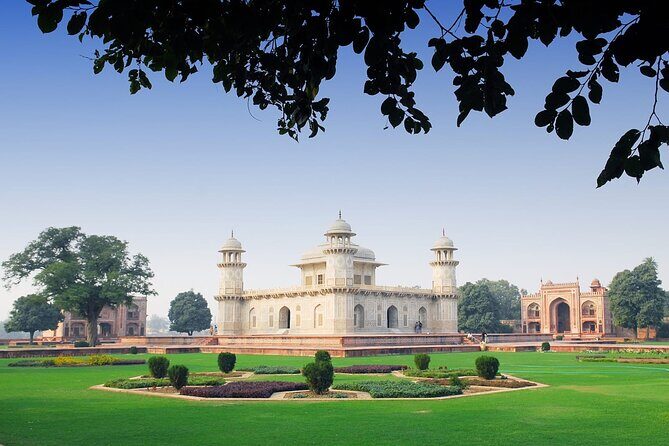
Next is Humayun’s Tomb, another UNESCO highlight included with guided time. This stop works especially well late in the day. After hours of markets and city landmarks, your brain is ready to slow down and notice symmetry, the gardens’ structure, and how the setting creates a calm pocket inside a busy metropolis.
Tip for better photos: arrive ready to pause. These sites reward people who spend an extra minute not shooting, just looking.
You can also read our reviews of more city tours in New Delhi






Lotus Temple and Gurudwara Bangla Sahib: Different Faiths, Same Calm

Lotus Temple is included with guided time (except Mondays, when the swap happens). It’s the kind of building that looks good from every angle, but the guide’s job is making sure you understand what you’re seeing. Even if you’re not religious, you’ll likely appreciate the site’s atmosphere and design logic.
Then there’s Gurudwara Bangla Sahib. This stop also comes with guided time, and it helps you understand how Sikh worship shapes the space. You may also notice how the site feels more community-centered than monument-focused. That’s a useful contrast to the grand Mughal-style landmarks earlier in the day.
What I like about this section: it balances “big-history sightseeing” with places where people are there for practice and peace. Your day stops feeling like a checklist and starts feeling like a map of beliefs in the city.
Timing, Delhi Traffic, and Why the Private Car Matters
Delhi traffic is unpredictable. That sentence sounds obvious until you’ve actually tried to move across the city without a plan. This tour uses a private air-conditioned car to protect your time, especially between Old Delhi and New Delhi.
Half-day versions are about 4–5 hours, while full-day tours run closer to 8–9 hours. If you have a tight schedule—airport day, limited hotel time, or a late flight—pick the shorter option. If you want more walking and more guided explanation, go full-day.
Also consider the pace. The route mixes longer guided visits (like Jama Masjid and market time) with shorter photo-and-pass moments (like Red Fort and Rashtrapati Bhavan). That pacing keeps you from burning out while still hitting the main icons.
Small warning: even with a car, you should build in buffer time. Delhi doesn’t care about your itinerary.
Price and Value: How a $3 Listing Can Still Be a Real Decision
The listed price shown here is $3.00 per person, which is so low that it forces one smart habit: check what your option includes. The important part isn’t just the number—it’s whether you’re buying a guide with a car, plus whether entry tickets and lunch are included.
Here’s how to think about value:
- If you choose an all-inclusive setup, you’re paying for entry tickets and an included lunch, which reduces surprise costs.
- If you choose a more basic option (like guide-only or car-only), you may still love the experience, but you’ll want to budget for monument entry fees and meals on your own.
This tour also offers bottled water, which sounds minor until you’re out in the heat with walking hours ahead. It’s the kind of detail that keeps the day from turning into a dehydration scavenger hunt.
And there’s a practical win: you get guidance and planning so you’re not stuck figuring out timings, routes, or where to stand for the best views.
My advice: if you’re price-sensitive, choose the option that matches your priorities. If you hate adding tickets later, choose all-inclusive.
Guide Quality, Shopping Stops, and Gratuity Reality Check

A private tour is only as good as the human running it. The majority of accounts you’ll find for this kind of tour focus on guide competence, good pacing, and safe driving—but there’s also one kind of problem you should protect yourself from.
One low-rated account described a guide spending extra time on shopping stops instead of fully covering the planned sights, plus pressure around tipping. Another complained about meal hygiene and said they never received a promised refund.
You can’t control every guide, but you can reduce risk:
- Ask your guide upfront to keep the day on the sight-focused schedule you want.
- If shopping stops matter to you, great. If they don’t, say so early.
- For tipping, follow your own comfort level. If gratuity feels forced, that’s a bad sign.
I’ve also seen names like Arun (described as excellent) and Alvina (noted for knowledgeable English and a pleasant style), plus drivers such as Harri (credited with safe driving) and Consigliato (mentioned as a driver recommendation). Those examples are a reminder of what you should look for: clear explanations, calm driving, and a pace that respects your time.
Pickup, Drop-off, and Getting Started Without Headaches
This tour is designed for an easy start. Pickup can be arranged from Delhi Airport or hotels in Delhi, Gurugram, Noida, Ghaziabad, and Faridabad. For airport arrivals, a driver meets you at Delhi Airport Terminal 3, Exit Gate 4, holding a placard with your name. That detail matters because airports can swallow time fast.
Drop-off options cover a long list of Delhi-area neighborhoods and major areas, including Aerocity, Connaught Place, Paharganj, Janakpuri, Rohini, and more. That reduces the chance you’ll end your day stranded across town.
What you should bring: passport or an ID card. And avoid pets and oversize luggage.
Clothing, Comfort, and Practical Stuff That Actually Helps
For religious sites like Jama Masjid, Lotus Temple, and Gurudwara Bangla Sahib, wear modest clothing. You don’t need a costume, but you do need shoulders and knees covered so you can focus on the experience instead of adjusting fabric all day.
This tour is also wheelchair accessible, which can matter in a city where sidewalks and curb cuts aren’t consistent. If you use a wheelchair or walker, it’s smart to mention it when booking so your guide and driver can account for how long you’ll be on foot.
Finally, plan for heat and sun. Even with air-conditioning between stops, you’ll still spend time outside in markets and at monuments.
Should You Book This Delhi Old & New City Tour?
Book it if you want a guided day that covers the headline sights of Old and New Delhi with less stress than DIY. It’s a good match for people who like a mix of market life, Mughal-era icons, and UNESCO monuments—without spending your entire day trapped in planning mode.
I’d book the all-inclusive option if you hate surprise costs. Entry tickets and lunch can be worth it when your schedule is tight and you want the day to feel complete. If you’re on a budget, choose the option that fits your priorities, but budget for monument fees and meals if they aren’t included.
Skip or rethink it if you strongly dislike shopping detours or you know you’re sensitive to pace. In that case, message your preferences early and set expectations about what you want emphasized.
If you go in with realistic timing and clear priorities, this is the kind of tour that helps you understand Delhi in a single, well-structured day.
FAQ
How long is the Old & New Delhi city tour?
Half-day tours are about 4–5 hours, while full-day tours are around 8–9 hours. The overall duration is listed as 4–8 hours depending on your selected option and starting time.
What is included in the tour price?
Included options typically feature a private expert guide, and a private air-conditioned car with driver (depending on what you select). Bottled water is included, and a rickshaw ride in Old Delhi is included if you choose that option.
Are entry tickets included?
Entry tickets are only included with the full-inclusive option. If you book a guide-only or partial option, monument entry fees are not included (and monument fees can vary).
Is lunch included?
Lunch is included only with the all-inclusive option. For other options, meals and drinks are not included unless you add lunch.
Does the tour include pickup from the airport and hotels?
Yes. Pickup is available from Delhi Airport or hotels in Delhi, Gurugram, Noida, Greater Noida, Ghaziabad, and Faridabad (as per option). For airport pickup, the driver meets you at Terminal 3, Exit Gate 4 with a placard showing your name.
Which major sites are visited?
You’ll see Jama Masjid and Chandni Chowk in Old Delhi, plus Khari Baoli and an Old Delhi rickshaw ride if selected. In New Delhi, the tour includes India Gate, photo/pass stops for Red Fort (outside) and Rashtrapati Bhavan, and UNESCO visits like Qutb Minar and Humayun’s Tomb, along with Lotus Temple and Gurudwara Bangla Sahib where applicable.
Is Lotus Temple always included?
Lotus Temple is closed on Mondays. On those days, the tour will include Qutb Minar instead.