REVIEW · NEW DELHI
From Delhi: Private Delhi, Agra & Jaipur Golden Triangle Tour
Book on Viator →Operated by Travel With Us · Bookable on Viator
Golden Triangle tours feel different when the details are handled. This one pairs a private AC car with an expert guide, so you spend your time looking up at monuments instead of figuring out logistics. One thing to plan for: most major entrances have separate tickets, so your final cost depends on what you pay on-site.
I like that the pace is built for first-timers. You get classic hits across Delhi, Agra, and Jaipur, plus a mix of viewpoints, palaces, mosques, and old-school streets—without feeling rushed from stop to stop. You’ll also notice the service tone from the operator: in past experiences, people repeatedly pointed to friendly drivers, helpful guides, and feeling safe throughout the trip.
The route is straightforward: pickup in Delhi-area, then Agra, Fatehpur Sikri and stepwell detour, Jaipur highlights, and finally a full-day Old and New Delhi finish. If you’re flexible and ready for a lot of walking (and some early starts), this is a strong value way to do the Golden Triangle privately.
In This Review
- Key Things I’d Prioritize On This Tour
- Price and Logistics: What You’re Really Paying For
- How the Route Works: Delhi → Agra → Jaipur → Delhi
- Day 1 in Agra: First Look at the Taj Mahal (With Golf-Cart Access)
- Agra Fort: The Fortress Behind the Beauty
- Day 2: Fatehpur Sikri’s Grand Gate and the Stepwell Detour
- Jaipur Day 1: Amber Fort, City Palace, Jal Mahal, and Hawa Mahal
- Amber Fort
- City Palace of Jaipur
- Jal Mahal
- Hawa Mahal
- Jaipur Day 1 Wrap: Panna Meena ka Kund and Jantar Mantar
- Panna Meena ka Kund
- Jantar Mantar
- Day 4: The Return Drive to Delhi
- Day 5 in Delhi: Red Fort, Jama Masjid, Qutub Minar, and More
- What’s Actually Included (That You’ll Feel Day-to-Day)
- Ticket Reality Check and Other Practical Notes
- Who This Tour Fits Best
- Should You Book This Delhi, Agra & Jaipur Private Tour?
- FAQ
- How long is the Delhi, Agra and Jaipur Golden Triangle tour?
- What does the tour include for transportation?
- Is this tour private or shared with other groups?
- Which cities are included?
- Are monument entry tickets included?
- Does the tour include hotel accommodation and breakfast?
- Is pickup available from different locations around Delhi?
- Is the Taj Mahal ever closed?
- What comfort items are provided for the Taj Mahal visit?
Key Things I’d Prioritize On This Tour
- Taj Mahal comfort extras: golf cart to the entrance plus shoe covers.
- A real private setup: it’s just your group in your vehicle, not mixed with strangers.
- Old Delhi texture: a rickshaw ride that actually fits the day’s sights.
- Jaipur in one long stretch: Amber Fort plus palace and observatory stops in the same itinerary.
- Water and pacing help: unlimited bottled water, and timed blocks for major attractions.
- Customization exists: you can add, remove, or change monuments after booking by request.
Price and Logistics: What You’re Really Paying For
At about $184.09 per person for roughly 5 days, you’re not just buying entry-level sightseeing. You’re buying the work that turns a Golden Triangle into a smooth trip: pickup/drop-off coordination, private transportation, guided visits at each stop, and time saved by having someone handle ticket processes and on-the-ground flow.
The value is strongest if:
- you’d rather avoid public transport stress between cities,
- you want someone to explain what you’re seeing (and keep you moving efficiently),
- you travel with family or friends and want everyone to stay together.
The price can shrink or grow depending on entry tickets. The plan notes that many monument entrances are not included. So budget extra for the big paid sites—especially the Taj Mahal and several major forts/observatories/museums. If you already know which places you must enter, you can estimate your add-on cost fairly well.
You can also read our reviews of more private tours in New Delhi


How the Route Works: Delhi → Agra → Jaipur → Delhi
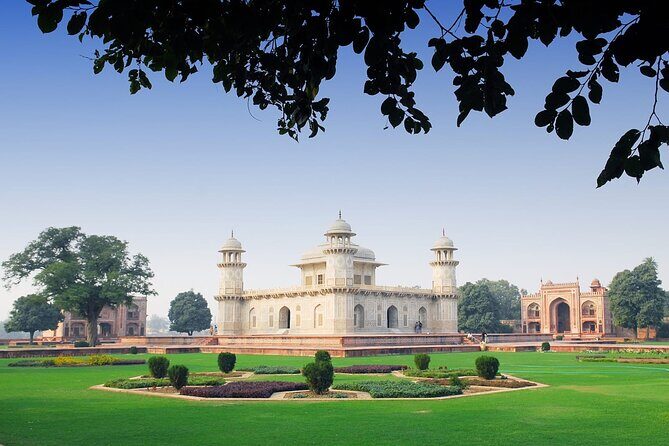
This itinerary is arranged like a loop: you begin in the Delhi area, move to Agra, then head south-west to Jaipur with a key stop in between, and finally return to Delhi for a packed last day.
Here’s the practical meaning of that for you:
- City-to-city movement is done by car, so you don’t spend your day chasing trains or buses.
- You get an overnight in Jaipur (so you’re not trying to see everything in one day).
- You also overnight in Delhi before the final Old Delhi/New Delhi sightseeing day, which helps with energy and reduces last-minute chaos.
Drive times are approximate and can vary with traffic, but the structure is designed so you’re not waiting around too long. The tour includes a private vehicle based on group size: a sedan for 1–2 people, an Innova-style 6-seater wagon for 3–5 people, and a van for larger groups. That matters because comfort and entry timing can be very different depending on whether you’re squeezed into a crowded setup.
Day 1 in Agra: First Look at the Taj Mahal (With Golf-Cart Access)
Agra is where the Golden Triangle usually wins people over, and the Taj Mahal is the reason. Your day starts with pickup from your Delhi-area location—airport, railway station, hotel, or other specified spots in the Delhi/Noida/Gurugram/Aerocity/Ghaziabad/Faridabad region. Then you transfer to Agra via a modern highway route.
Once you arrive, you check in, then you head to the Taj Mahal. This isn’t just a quick glance. You’re scheduled a couple of hours at the site, which is enough time to:
- see the main mausoleum and its white marble surfaces up close,
- walk the grounds and take photos from multiple angles,
- absorb the scale without rushing.
Two small comfort details are a big deal here:
- Golf cart ride between the drop-off point and the Taj Mahal entrance.
- Shoe covers for the entrance area.
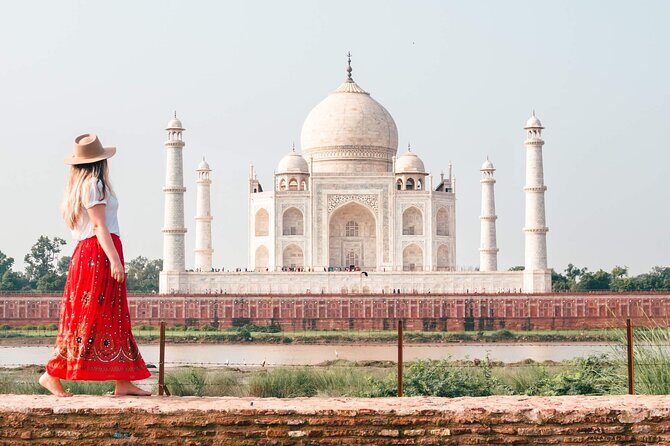
The Taj Mahal itself: Mughal Emperor Shah Jahan ordered its construction in 1632 as a final resting place for Mumtaz Mahal. If you’re standing there in person, the story clicks because the building looks like it belongs to the landscape, not like it was simply placed on top of it.
One practical note: the Taj Mahal is closed on Fridays. If your dates fall on a Friday, you’ll want to confirm the plan’s adjustment in advance.
Agra Fort: The Fortress Behind the Beauty
After Taj Mahal, you move to Agra Fort. This UNESCO World Heritage site gives you a different lens on Mughal power—less romance, more defense and empire.
You’ll have about two hours here, which is helpful because Agra Fort isn’t one monument you zip through. It’s a complex, with historic walls and views across the river area. You’ll get a sense of why this region mattered politically and strategically, not just aesthetically.
Why this stop feels worth it: the Taj Mahal grabs your attention first, but Agra Fort helps you understand the “why” behind the “wow.” It’s the kind of contrast that turns a set of photos into a real story.
Day 2: Fatehpur Sikri’s Grand Gate and the Stepwell Detour
Day 2 starts with Fatehpur Sikri, a UNESCO site known for Mughal architecture. The highlight is Buland Darwaza, plus the Jama Masjid. You get a couple of hours—enough to see the scale and walk the core areas without feeling exhausted too early.
Here’s the value of Fatehpur Sikri for you: it’s not just carved stone. It’s a whole royal-city layout idea, and the architecture communicates status, ceremony, and rule.
Then you head to Abhaneri Stepwell, also known as Chand Baori. This is one of those stops that feels unusual at first, because it’s not a palace or a tomb. But it teaches you something important about water planning and community design—built in a way that creates an endless pattern of steps down into depth.
You’ll be stopping long enough to see it properly, about five hours scheduled after Fatehpur Sikri until Jaipur check-in. That long block can include driving + time for photos and a relaxed look, but it also means you should plan for energy management: wear grippy shoes and keep water handy.




Jaipur Day 1: Amber Fort, City Palace, Jal Mahal, and Hawa Mahal
Once you reach Jaipur, you check in for an overnight. The next big chunk is Amber Fort.
Amber Fort
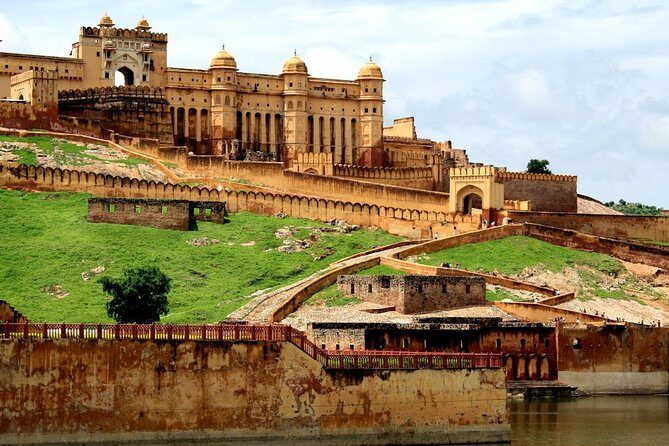
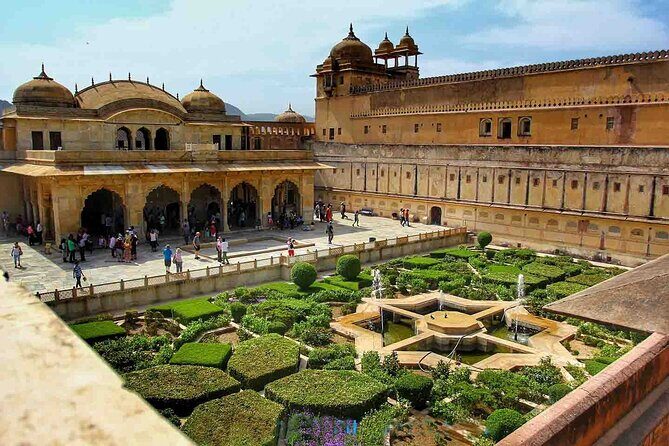
Amber Fort is scheduled for about two hours. It’s a UNESCO site and one of Jaipur’s most dramatic strongholds. This is the part where you’ll notice details like gates, courtyards, and how the fort sits with commanding views.
If you like your monuments with a story, this one delivers: it gives you a sense of how royal life was organized around defense and display.
City Palace of Jaipur
Next comes City Palace. You get about one hour here, and it’s not just a building. It’s a complex with museums and courtyards. The plan notes displays such as textiles, costumes, weapons, and paintings.
What I like about including City Palace: it slows the day down just enough. You can shift from outdoor fort views to indoor artifacts and see how rulers projected identity through objects, clothes, and art.
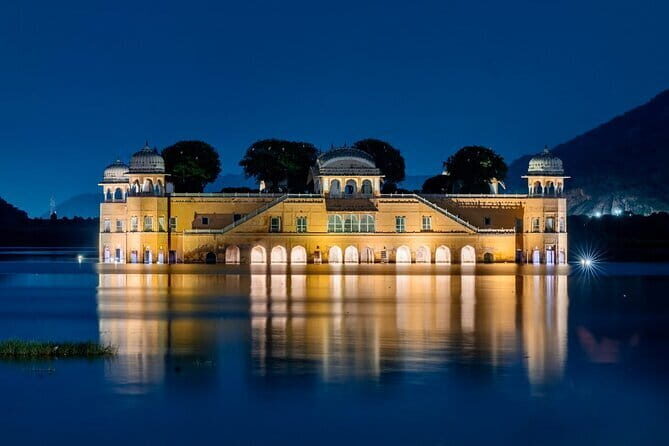
Jal Mahal
Then you visit Jal Mahal, the palace set in the Man Sagar Lake area. The schedule gives you around 30 minutes.
Even if you only spend a short time here, it’s still worth it because the setting is unexpected: it looks like a fantasy scene because the building appears to float above water. The plan also mentions it was restored by Jai Singh II in 1734, which gives the site more than just a pretty postcard vibe.
Hawa Mahal
Finally, you reach Hawa Mahal—Palace of Wind. You’ll have about 30 minutes.
It’s iconic: built by Maharaja Sawai Pratap Singh in 1799, with five stories and 953 windows designed so royal women could observe city life unseen. The scale is the wow moment, and the windows pattern makes it feel architectural rather than decorative.
If you’ve got patience for details, you’ll enjoy walking around the outer view points and reading the design logic.
Jaipur Day 1 Wrap: Panna Meena ka Kund and Jantar Mantar
The same day continues with two more sites plus an observatory.
Panna Meena ka Kund
You stop at Panna Meena ka Kund, another stepwell, for about 30 minutes. It’s known for symmetry in its stairways and for its historical use as a water storage and community gathering place.
This is one of those stops that quietly improves your trip. After seeing forts and palaces, the stepwell shows a different kind of engineering thought—one built for daily life, not royal display.
Jantar Mantar
Then comes Jantar Mantar, a UNESCO-listed observatory built by Jai Singh II in 1728. You’re scheduled about 1.5 hours.
The big instruments make you look at the sky differently. The value here is learning that astronomy wasn’t just abstract for these rulers—it was made physical in stone instruments built to measure and track. If you like science-meets-culture, this is one of the best “why does this work” stops on the itinerary.
By the end of this day, you’ll have a full Jaipur snapshot: defense, palace life, lake scenery, observation windows, water architecture, and the sky.
Day 4: The Return Drive to Delhi
Day 4 is the travel day back to Delhi. After breakfast, you drive back, check in at your Delhi hotel, and overnight again.
That extra night matters. It prevents the classic Golden Triangle problem where day five becomes a blur because you’re arriving late after a long drive. Here, you’re positioned to enjoy the final day with more control over your energy.
Day 5 in Delhi: Red Fort, Jama Masjid, Qutub Minar, and More
Your last day is a full-day tour of New Delhi and Old Delhi, with a chauffeur pickup from your hotel.
You start at Red Fort (Lal Qila), a 17th-century Mughal fortress built by Shah Jahan. You’re scheduled about an hour. It’s a heavy start, in the best way: you get the power and scale of Mughal architecture right away.
Next is Jama Masjid, India’s largest mosque, built between 1644 and 1658. It can hold 25,000 worshippers, and you’ll have about two hours. It’s the kind of site where size alone makes an impression, and spending enough time helps you notice materials and design rather than just looking up once.
Then you go to Raj Ghat, Gandhi’s cremation memorial. The time block is short (about 30 minutes), but the significance lands quickly because it’s not about decoration—it’s about memory.
After that, you visit Qutub Minar, a UNESCO World Heritage site and a famous tall minaret. You’ll have about 1.5 hours. It’s a classic Delhi silhouette moment and a strong stop for people who want to see how older styles shaped the skyline.
Humayun’s Tomb comes next, also UNESCO and a major Mughal mausoleum. You’ll get about an hour.
Then you shift to religious diversity with Gurudwara Bangla Sahib, a Sikh shrine known for its sacred water tank. Your schedule gives you about 30 minutes here, and this stop adds a calmer pace to the day.
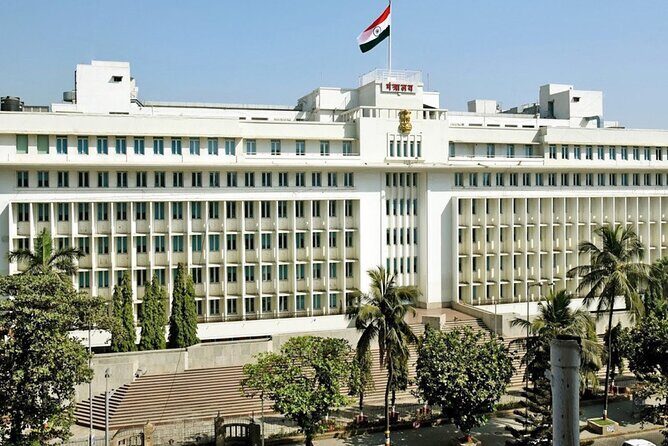
From there you go to Rashtrapati Bhawan, the massive official residence area with a 330-acre footprint designed in 1929 by Sir Edwin Lutyens and Herbert Baker. You’ll only have about 20 minutes, so treat it as a quick design-and-impression stop rather than a deep visit.
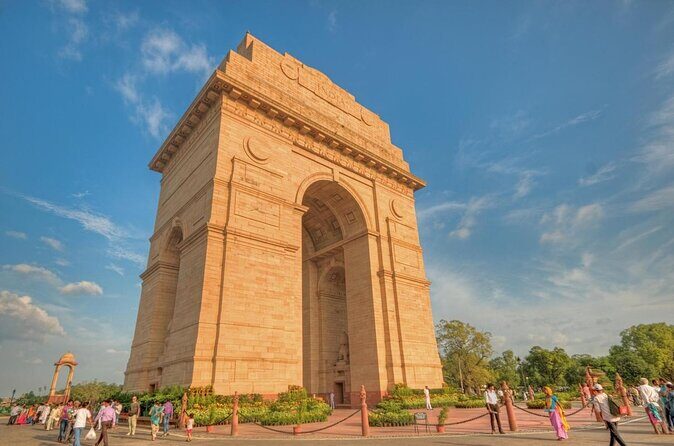
Finally, you end at India Gate, a 1931 war memorial honoring Indian soldiers. The plan gives you about 30 minutes, and then you’re dropped at the Delhi airport or your preferred location.
What’s Actually Included (That You’ll Feel Day-to-Day)
This tour isn’t only about seeing landmarks. It includes several small items that reduce friction across the trip:
- Private AC vehicle for sightseeing and transfers between cities and sites
- Pickup and drop-off from your chosen Delhi-area starting point
- Expert tour guide at all sites to explain what you’re looking at and keep timing on track
- Rickshaw ride through Old Delhi (a fun change of pace from cars)
- Golf cart ride to/from the Taj Mahal entrance
- Shoe covers for the Taj Mahal entrance area
- Unlimited bottled water
- Mobile tickets are part of the setup
If you select the hotel option, you also get 4-night hotel accommodation and breakfast at the hotel. That’s not a small detail in India, where meal plans and schedules vary. Breakfast included helps keep your mornings moving.
Ticket Reality Check and Other Practical Notes
Before you go, know how ticketing works in real life here: many entrances are listed as not included, and some sites are listed as free entry within the plan (like Raj Ghat, Gurudwara Bangla Sahib, Rashtrapati Bhawan, and India Gate). Because the plan also states that guides will assist with ticket purchases, you’ll still get support—but you should bring money for the paid monuments you want.
Two more practical tips from the plan:
- Some monuments may not accept credit cards, so carry cash in INR or ask your driver/guide for help finding an ATM.
- Wear comfortable footwear. This itinerary includes a fair amount of walking across forts and large grounds.
Also note: there’s a compulsory gala dinner fee on New Year’s Eve, Christmas, and between Dec 24 and Jan 4. If your travel dates land in that window, factor it in.
Who This Tour Fits Best
This is a great match if you want:
- a private Golden Triangle with one group and one vehicle,
- a guide who explains the monuments rather than just dropping you at entrances,
- classic sights with some breathing room (you’re not cramming every city into a single day),
- and a day in Delhi that covers both Old and New Delhi highlights.
It’s especially suitable for families because the tour format keeps everyone together, reduces uncertainty, and prioritizes comfort details like bottled water and vehicle-based transfers.
If you love very slow travel with lots of free time in each city, you might find the schedule packed. This trip is built for seeing the key icons efficiently.
Should You Book This Delhi, Agra & Jaipur Private Tour?
I’d book it if you want the Golden Triangle in a controlled, guided way—especially if you care about comfort details at the Taj Mahal and you prefer a friendly, safety-first operator approach. The repeated praise for service and the way the trip makes people feel looked after is exactly what you want in a country where navigation can be overwhelming.
I wouldn’t book it blindly if you’re determined to keep costs extremely tight, because monument entry fees are a big variable, and you’ll want cash for on-site purchases.
If you’re deciding right now, do this: list the monuments you consider non-negotiable, budget for their entrances, and choose this tour if you’ll use the included comfort (private car, guides, water, Taj Mahal golf cart). That’s when the value equation gets very good.
FAQ
How long is the Delhi, Agra and Jaipur Golden Triangle tour?
It runs for about 5 days.
What does the tour include for transportation?
You’ll travel in a private, air-conditioned vehicle for sightseeing and city transfers, with hotel/airport pickup and drop-off.
Is this tour private or shared with other groups?
It’s private. Only your group participates.
Which cities are included?
The tour covers New Delhi, Agra, and Jaipur.
Are monument entry tickets included?
Entry tickets are generally not included, though the itinerary lists some sites as free entry.
Does the tour include hotel accommodation and breakfast?
Hotel accommodation for 4 nights and breakfast are included if you choose the hotel option.
Is pickup available from different locations around Delhi?
Yes. Pickup is available from options such as airport, railway station, hotel, and other listed Delhi-area locations.
Is the Taj Mahal ever closed?
Yes. The Taj Mahal is closed on Fridays.
What comfort items are provided for the Taj Mahal visit?
The plan includes golf cart ride access to/from the Taj Mahal entrance and shoe covers.