REVIEW · NEW DELHI
Delhi Highlights: Old & New Delhi Tour with Guide and Transfers
Book on Viator →Operated by Crystal India Holidays · Bookable on Viator
Delhi can overwhelm fast. This full-day highlights tour stitches together Old Delhi and New Delhi with smooth transfers, a guide, and a rickshaw ride where the streets get tight and the history feels close.
You also get a classic mix of landmarks like Jama Masjid, India Gate, Qutub Minar, and Humayun’s Tomb, plus a few calm stops for balance in your day.
What I really like is how easy it is to move around. You’re picked up at your hotel or arrival point, carried in an air-conditioned car sized to your group, and kept going with bottled water during the drive.
The other big plus: the guides. Reviews mention guide Dilip’s clear storytelling, Shiv Raj meeting the group around Qutub Minar, and driver Anil handling Delhi traffic with patience and attention to detail. One consideration: it’s an 8 to 9 hour day, and a few major stops close on Monday (Red Fort, Lotus Temple, Swaminarayan Akshardham), so plan your dates.
In This Review
- Key things to know before you go
- Why this Old Delhi and New Delhi plan works in one long day
- Hotel pickup and AC transfers: the real time-saver in Delhi
- Jama Masjid and Chandni Chowk: stepping into Delhi’s street-level theater
- Rickshaw ride in Old Delhi: the street-level view most people miss
- Khari Baoli spice market: the 17th-century chaos you can taste (and smell)
- Agrasen ki Baoli step-well: the calm detour in the middle of the noise
- Red Fort (UNESCO-listed) and the limits of closing days
- Gurudwara Bangla Sahib and India Gate: faith and national monuments in the same day
- Parliament House and Rashtrapati Bhavan: the planned capital vibe
- Qutub Minar and Humayun’s Tomb: Mughal-era scale you’ll feel
- Lotus Temple, Raj Ghat, and Swaminarayan Akshardham: faith and reflection, paced
- Price and value: what you’re really paying for
- Who this tour suits best (and who might want a different plan)
- Should you book this Delhi highlights tour?
- FAQ
- FAQ
- How long is the Delhi highlights tour?
- Do you get pickup and drop-off during this tour?
- Is the transport air-conditioned?
- Is this a private tour or shared with other people?
- Is a rickshaw ride included?
- Are entrance fees included?
- Is lunch included?
- Which sites are closed on Mondays?
- Can I cancel for free?
Key things to know before you go

- Old Delhi by rickshaw, not just photos: you’ll do a included rickshaw ride focused on the Spice Market area and Chandni Chowk.
- Comfort in the traffic: pickup and drop-off plus an AC car sized for 1–2, 3–4, or up to 5–10 people.
- A packed route across Delhi: Jama Masjid, Khari Baoli, Agrasen ki Baoli, Gurudwara Bangla Sahib, India Gate, Qutub Minar, and more.
- Guides that explain, not just point: reviews highlight guides like Dilip and Shiv Raj, plus practical safety talk from the tour team.
- Optional add-ons matter: entrance fees and lunch are included only if you select the option.
- Monday closures are real: Red Fort, Lotus Temple, and Swaminarayan Akshardham are closed every Monday.
Why this Old Delhi and New Delhi plan works in one long day

Delhi is two cities with a single metro map. Old Delhi pulls you into crowded bazaars, mosque courtyards, spice stalls, and step-well mysteries. New Delhi feels more planned and monumental—government buildings, wide ceremonial roads, and big-name landmarks.
This tour’s value is that it doesn’t force you to “figure it out” between the worlds. You move by private AC car, then slow down where you need to: Jama Masjid and Chandni Chowk, the spice markets of Khari Baoli, and the older corners around Agrasen ki Baoli. It’s a good choice if you want depth without spending your whole day stuck in transit.
The route also has a smart rhythm. It starts with the weight of Old Delhi (Jama Masjid, bazaar lanes), then adds historic variety (step-well, Qutub Minar, Humayun’s Tomb). It finishes with calmer, reflective stops like Raj Ghat and quieter worship spaces like the Lotus Temple and Swaminarayan Akshardham—assuming your day isn’t Monday.
You can also read our reviews of more guided tours in New Delhi


Hotel pickup and AC transfers: the real time-saver in Delhi
One of the most practical parts is how the day begins: pickup from your hotel, airport, railway station, or another chosen location in Delhi, Noida, or Gurugram. At the end, you’re dropped back in Delhi, Noida, or Gurugram.
In a city with heavy traffic and complicated routes, an air-conditioned private car does two things for you:
- It protects your energy for the walking parts.
- It keeps the itinerary moving even when Delhi decides to clog up the roads.
You’ll also get bottled mineral water during the journey. That sounds basic, but in a day built around long drives plus market time, it’s not nothing.
A small caution: transfer times are approximate and depend on time of day and traffic. So yes, you can plan your schedule, but don’t book anything tight right before or right after without buffer.
Jama Masjid and Chandni Chowk: stepping into Delhi’s street-level theater
Jama Masjid is the first major anchor point. This Friday Mosque is built with red sandstone and has capacity for around 25,000 people. When you stand in the area, the scale is the point. The guide experience here is key: it’s easy to see a big monument and move on, but harder to understand what you’re looking at.
Then the tour shifts straight into Chandni Chowk—Old Delhi’s main drag in Shahjahanabad. This is not a “quiet viewing” kind of stop. You’re in the bazaar lane world where shops and food places stack next to each other, and the street looks like it’s been doing the same job for centuries.
What you should expect:
- Short on time, long on sensory input.
- Lots of photo opportunities, but also lots of people.
- A good reason to go with a guide who can keep you moving without you feeling rushed.
The best part of this segment is contrast. Jama Masjid gives you the architectural weight. Chandni Chowk gives you the lived-in side of the city.
Rickshaw ride in Old Delhi: the street-level view most people miss

After Chandni Chowk, you’ll switch into a rickshaw ride (included). The ride is designed to give you the feel of Old Delhi markets—specifically the Spice Market and Chandni Chowk Market areas.
This is one of those experiences where the rickshaw is doing more than transportation. It gives you a slower pace and a different angle. You’re not only walking through crowds; you’re moving through them, which helps you understand how these markets “work” as a system.
Practical note: rickshaws in busy market areas can feel intense. You’ll want to keep your phone and valuables secure and stay attentive. One review specifically mentioned that the guide helped with practical protection tips like how to guard against pickpockets, which is exactly what I’d recommend.
Khari Baoli spice market: the 17th-century chaos you can taste (and smell)
Khari Baoli is where the tour turns up the spice factor. It’s described as Asia’s largest spice market in Old Delhi, and it dates back to the 17th century. With hundreds of shops, it’s the kind of place where you’ll see spices you recognize—and spices you don’t.
This stop is only about 30 minutes, so don’t plan to “browse deeply” like you’re shopping for groceries. Instead, treat it like a guided orientation:
- Look for color and variety first.
- Ask your guide what’s commonly used locally.
- Decide quickly if you want to buy anything.
Even if you don’t buy spices, Khari Baoli makes Old Delhi click. It connects the stories from the monument stops to the everyday life happening in the streets.






Agrasen ki Baoli step-well: the calm detour in the middle of the noise
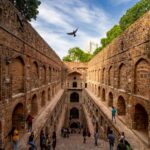
Not every Delhi highlight tour includes Agrasen ki Baoli, but it’s a memorable one. This monument dates back to the 14th century and is famous for its roughly 103 steps descending to the bottom.
Why it’s worth your time: step-wells are a particular kind of Delhi architecture. They don’t hit you like a huge mosque or a towering minaret. Instead, they feel personal and grounded. It’s a visual change-of-pace from the bazaars without leaving the Old Delhi vibe behind.
This is a short stop (around 15 minutes), so you’ll want to slow down once you’re there. It’s the sort of place that rewards a little stillness.
Red Fort (UNESCO-listed) and the limits of closing days
The tour includes the Red Fort, described as a colossal sandstone structure built over nearly ten years and listed as one among the UNESCO World Heritage sites. It’s also tied to the Mughal presence for nearly two centuries, so it sits at the center of Delhi’s imperial story.
Two practical realities:
- You’ll want to treat this as a major “time block” in your day because you can’t see it well if you rush.
- It’s closed every Monday.
If your dates land on a Monday, don’t panic. Your itinerary still includes many other monuments, but Red Fort will be unavailable that day. That means your best move is to be flexible and trust the guide’s flow to make the rest of the day meaningful.
Gurudwara Bangla Sahib and India Gate: faith and national monuments in the same day
Next comes Gurudwara Bangla Sahib, with its white marble and onion-shaped domes. It’s described as a Sikh shrine with immense religious significance and it draws countless devotees.
This stop adds a different kind of meaning to your Delhi day. Old Delhi can feel like architecture and commerce. A gurdwara adds a spiritual rhythm—something you experience more through presence than through tickets or “must-see” checklists.
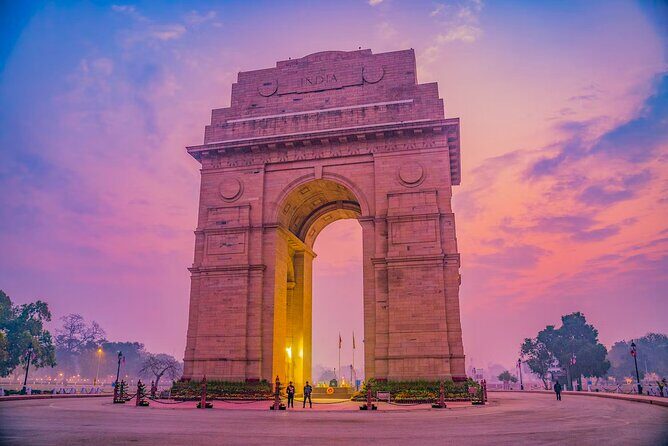
After that, India Gate brings you back to New Delhi’s grand scale. The arch is 42 meters high and was designed by Lutyens in 1921. It memorializes about 90,000 Indian Army soldiers. Even if you don’t spend long here, the monument’s size and setting change the tone of your walk.
This combo works well because it’s not only about Hindu, Sikh, and Islamic landmarks. It’s about how different parts of Delhi tell different stories—religious, civic, and historical—without requiring you to choose just one theme.
Parliament House and Rashtrapati Bhavan: the planned capital vibe
The tour also includes viewpoints around Parliament House (Sansad Bhavan) and the President’s House (Rashtrapati Bhavan). These are heavy on the “New Delhi is designed” mood.
From the details provided:
- Parliament House is tied to the moment Britain handed over responsibility in 1947 (the building is where that handover occurred).
- Rashtrapati Bhavan is described as having around 2.5 km of corridors and 340 rooms, plus a dome and Durbar Hall, and a presidential library.
These stops are often more about the surrounding context than about deep interior time. If you like city planning, axes, and the way governments present themselves through architecture, you’ll appreciate this portion.
If you prefer pure monument time over institutional buildings, keep your expectations realistic: you’ll see the landmark context as part of a broader route.
Qutub Minar and Humayun’s Tomb: Mughal-era scale you’ll feel
Qutub Minar is a standout in the route. It’s described as an Afghan-style victory minaret, standing about 73 meters high with five storeys. It’s tied to Qutb-ud-din and the idea of proclaiming supremacy over defeated rulers.
Then you shift into Humayun’s Tomb, described as extremely surreal and charming, with symmetrical gardens, arched facades, and Persian and Mughal elements. This is the kind of monument that benefits from slow looking—especially the garden layout and how the building sits within it.
Both stops give you a “Delhi architecture lesson” without a formal classroom. And since you’re on a guided route, you’re not stuck guessing what to notice first.
A practical note: Qutub Minar includes an admission ticket in the provided info, while Humayun’s Tomb includes admission fees as well. If you’re selecting an option with entrance fees included, these become simpler.
Lotus Temple, Raj Ghat, and Swaminarayan Akshardham: faith and reflection, paced
You’ll reach Lotus Temple next. It’s described as the Bahai House of Worship, built in the form of a lotus flower, designed in 1986 by an architect named Fariborz (the name is cut off in the details, but 1986 and the design concept are clear). The point here is calm: a geometric silhouette in a city that rarely pauses.
Then comes Raj Ghat, the memorial dedicated to Mahatma Gandhi. It’s a black marble platform marking the spot of his cremation on 31 January 1948, a day after his assassination.
This is one of those stops that works even if you’re not a history buff. The memorial is straightforward, and the meaning is heavy.
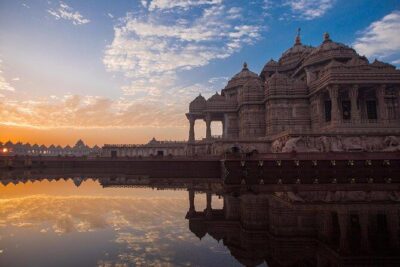
Finally, Swaminarayan Akshardham is included as a Hindu temple and spiritual-cultural campus showcasing traditional and modern Hindu culture, spirituality, and architecture. Just note: it’s closed every Monday along with Lotus Temple. So plan your dates if these are top priorities.
Price and value: what you’re really paying for
The listed price is $7.25 per person, and that’s hard to judge without seeing what’s selected. Here’s how I’d think about value using only what’s provided.
You’re getting:
- Private air-conditioned car sized to your group (important in Delhi heat and traffic).
- Pickup and drop-off at hotel or arrival points.
- A rickshaw ride in Old Delhi.
- Entrance fees and lunch only if you choose the option.
- Bottled water, plus taxes and GST.
So the value isn’t only the sightseeing. It’s the logistics. If you were to do this on your own, you’d spend energy figuring out routes and negotiating transport between Old and New Delhi while also paying for individual ticketing. This tour packages a lot of that work.
One caution to keep you from disappointment: monument entrance fees can differ based on whether you’re a foreigner, SAARC/BIMSTEC cardholder, or an Indian/OCI cardholder. Valid ID is required to get tickets accordingly. That means you should have the right documentation handy.
Also, gratuities are optional and not included. If you like tipping guides for excellent day-of help, budget for it.
Who this tour suits best (and who might want a different plan)
This is a strong match if:
- You want a guided overview across both Old Delhi and New Delhi.
- You’d rather skip public transport and spend your energy on the monuments.
- You enjoy markets but don’t want the hassle of navigating them alone.
- You’re visiting for the first time and want to prioritize the big hits like Jama Masjid, India Gate, Qutub Minar, and Humayun’s Tomb.
You might consider a different approach if:
- You’re traveling on a tight schedule and can’t handle a long day (8 to 9 hours is a lot of hours).
- You’re specifically focused on any of the Monday-closed sites (Red Fort, Lotus Temple, Swaminarayan Akshardham).
- You prefer slow, neighborhood-by-neighborhood wandering with no fixed sequence.
Should you book this Delhi highlights tour?
Yes, I’d book it if your goal is to see major Old and New Delhi landmarks with a guide, comfortable transfers, and at least one authentic street experience via rickshaw. The combination of air-conditioned car movement, structured stops, and Old Delhi market time is the reason this tour makes sense for many visitors.
I’d think twice if your dates fall on Monday and those three closed sights are your top priorities. In that case, look at your itinerary flexibility and whether you’d still feel happy with the rest of the day’s lineup.
FAQ
FAQ
How long is the Delhi highlights tour?
The tour runs about 8 to 9 hours, depending on timing and traffic.
Do you get pickup and drop-off during this tour?
Yes. The driver can pick you up from your hotel, airport, railway station, or another desired location in Delhi, Noida, or Gurugram, and you’ll be dropped off in Delhi, Noida, or Gurugram.
Is the transport air-conditioned?
Yes. You travel by a private, air-conditioned car with seating sized to your group (sedan for 1–2, SUV for 3–4, and a ten-seater van for 5–10).
Is this a private tour or shared with other people?
This is a private tour/activity. Only your group will participate.
Is a rickshaw ride included?
Yes. A rickshaw ride in Old Delhi is included, designed for a tour of the Spice Market and Chandni Chowk Market areas.
Are entrance fees included?
Entrance fees are included only if you select the option for monuments. Also, ticket costs differ by visitor category, and valid ID is required.
Is lunch included?
Lunch is included only if you select the option for lunch.
Which sites are closed on Mondays?
Red Fort, Lotus Temple, and Swaminarayan Akshardham are closed every Monday.
Can I cancel for free?
You can cancel for a full refund up to 24 hours before the experience starts.