REVIEW · NEW DELHI
Delhi: Half day Old and New Delhi Tour on Iconic Landmarks
Book on Viator →Operated by Namastes India · Bookable on Viator
Delhi can feel like chaos—this tour helps you steer. You get a private guide, planned stops, and reliable transport that keeps you from wasting time figuring things out. I also like that it pairs big-name monuments with quick hits in Old Delhi spice streets, so you feel both sides of the city in one go.
The one thing to weigh is time: several stops are short (some are 15–30 minutes), so if you want long, slow museum-style visits, you may want to pair this with a longer follow-up.
In This Review
- Key points to know before you go
- How the Old and New Delhi Route Works in 4–5 Hours
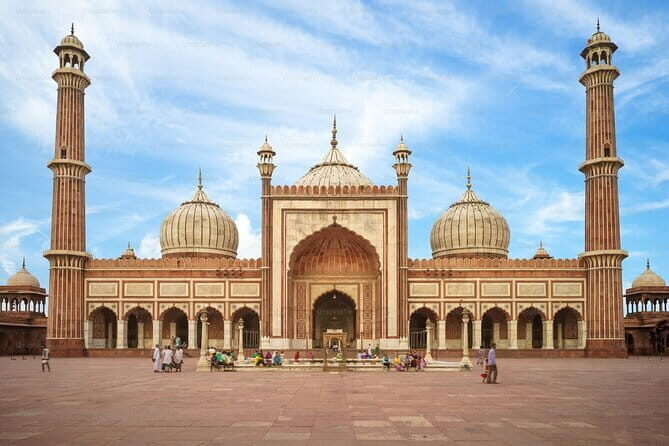
- Jama Masjid: The Scale Shock of Red Sandstone
- Chandni Chowk by Tuk-Tuk: Markets, Senses, and Fast Pacing
- Red Fort: Mughal Power in a Defined Time Slot
- India Gate: The Unknown Soldier and a WWI Memorial Moment
- Rashtrapati Bhavan and Parliament House: Government Landmarks Briefly, Clearly
- Gurudwara Bangla Sahib: Sikh Heritage and a Medical-Emergency Legend
- Lotus Temple: Modern Faith and a Reset in 30 Minutes
- Price and Value: What $5 Gets You (and What You’ll Still Budget)
- Getting Around Safely in Delhi Traffic
- Who This Tour Fits Best (and Who Should Choose Another Plan)
- Should You Book This Old and New Delhi Tour?
- FAQ
- How long is the Old and New Delhi tour?
- Where does the tour start, and where do we end?
- Do you offer pickup from nearby cities like Noida or Gurugram?
- Is this tour private?
- Are entrance tickets included?
- What’s not included in the price?
Key points to know before you go
- Pickup from Delhi and nearby cities makes your morning much less stressful.
- A/C car + a professional driver helps you handle Delhi traffic without white-knuckling it.
- Tuk-tuk into Chandni Chowk keeps the Old Delhi feel without the logistics headache.
- Most major stops are free to enter, with optional monument entry costs depending on your choice.
- Water and umbrellas are provided, which matters when Delhi weather turns on you.
- A tight 4–5 hour loop covers Mughal, colonial, Sikh, and modern Delhi in one pass.
How the Old and New Delhi Route Works in 4–5 Hours
This is built for people who have limited time but still want the highlights. Expect about 4 to 5 hours, with a schedule that moves from Old Delhi’s religious and market area to New Delhi’s government and memorial zones, then finishes back with drop-off help.
You can get picked up between 8:00 AM and 3:00 PM from Delhi, Noida, Gurugram, Ghaziabad, and Faridabad, depending on the option you choose. If you’re driving in from outside the city center, this saves a lot of time, since that’s where public transport and transfers can get annoying fast.
The tour is private, so it’s just your group. That means you can keep the pace you want, ask questions, and get help navigating crowded lanes without feeling like you’re in a cattle pen.
Logistics are also the “quiet hero” here: parking, tolls, and fuel are covered, and you’ll get a mobile ticket. Plus, the operator provides water bottles, and umbrellas when the weather calls for it. In Delhi, that’s not a small detail—it can be the difference between a nice walk and a miserable one.
There’s a built-in safety angle too. The experience is guided by someone used to handling crowds, busy intersections, and common scam pressure points. I like that it’s positioned as protection in crowded areas, not just as “here’s what you should photograph.”
Finally, timing matters: several stops are brief. You’ll get context and orientation, but you shouldn’t assume you’ll linger everywhere. Think “see it, understand it, move on.”
You can also read our reviews of more tours and experiences in New Delhi.



Jama Masjid: The Scale Shock of Red Sandstone
You start at Jama Masjid, India’s largest mosque, with about 1 hour to explore the red sandstone courtyard. Free admission is listed for this stop, so you can spend that time on site rather than hunting for ticket counters.
The biggest thing you’ll notice is scale. This isn’t a small neighborhood mosque—you’re stepping into a full complex designed for major gatherings. Even if you’re not religious, the architecture and the sheer open courtyard give you a real sense of how this place works.
Plan for a little walking and crowd navigation, because this area draws people throughout the day. You might also want to dress respectfully, especially if you’re entering prayer areas. The exact rules aren’t spelled out here, but it’s smart to come covered and conservative.
A guided visit helps because the guide can explain what you’re looking at—like the layout, the way the courtyard functions, and why this mosque is such a landmark in Delhi’s Muslim heritage.
Chandni Chowk by Tuk-Tuk: Markets, Senses, and Fast Pacing
From Sunheri Masjid, you’ll be transported by tuk-tuk to the Chandni Chowk bazaars in Old Delhi. You get about 30 minutes here, which is short, but the tuk-tuk transfer is a practical shortcut that keeps you from losing time to Delhi’s lane chaos.
Chandni Chowk is one of those places where your senses take over: food smells, spice colors, shopfront bustle, and constant movement. In a short window, you want a guide to help you aim your time instead of wandering until you’re tired and hungry.
You then move into the spice story at Khari Baoli, another 30 minutes. This is where you’ll get a close-up look at Indian spices and learn about their uses and history. That’s the kind of stop that’s hard to self-navigate well, because a local explanation turns a quick sniff-and-buy moment into something you actually remember.
Keep expectations realistic: this is not a slow shopping spree. It’s a sensory highlight with just enough time to sample the atmosphere and learn what you’re seeing.
Red Fort: Mughal Power in a Defined Time Slot

The Red Fort is a major part of the Mughal story, built by Shah Jahan between 1639 and 1648. It’s described here as showcasing Indo-Islamic and Mughal styles, which is exactly what you’ll want a guide to point out while you’re seeing it from the right angles.
Because the schedule is tight, don’t expect a long, detailed museum-style visit. Instead, you’ll get a focused understanding of what the fort represented—residence, power, and a statement of empire.
If you’re someone who loves architecture, this stop can still feel rewarding even with limited time, as long as you arrive with the basics in mind: what Mughal rule looked like, and how monumental buildings like this were designed to project authority.
India Gate: The Unknown Soldier and a WWI Memorial Moment
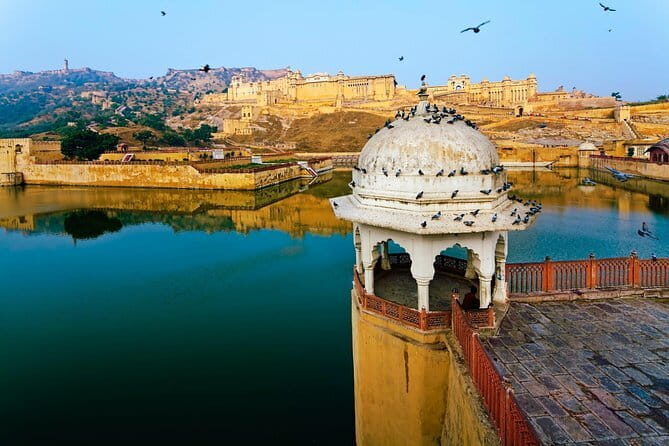
Next up is India Gate, with a short 15 minutes stop. The key focus is the Tomb of the Unknown Soldier, dedicated in 1921, listing the names of 13,300 Indian Army servicemen who died in the First World War.
Even if you only have a few minutes, this is one of the best places on the route to pause and reflect. It’s a clean, organized space compared to Old Delhi, and that shift in mood is part of the value of the tour.
A good guide here helps you connect the monument to the broader story of India’s role in global conflict—without turning it into a lecture. In a time-boxed city tour, short stops still work when you know what to focus on.





Rashtrapati Bhavan and Parliament House: Government Landmarks Briefly, Clearly
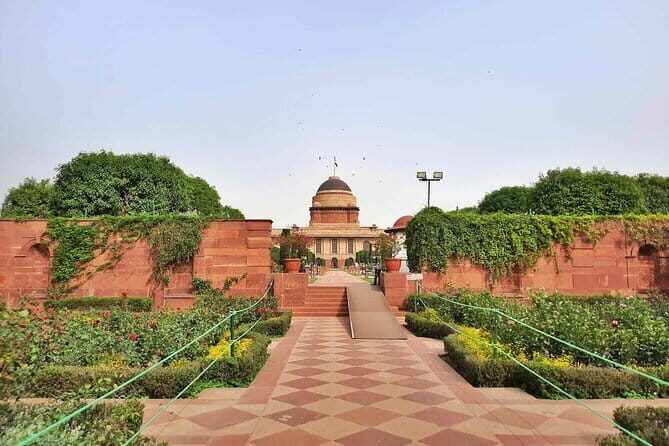
You’ll then head toward Rashtrapati Bhavan area and Parliament House, with about 15 minutes for this stretch. The Parliament House is referenced as housing India’s Lok Sabha (lower house) and Rajya Sabha (upper house).
This is a “see and understand” stop rather than a deep visit. It’s still useful because it grounds you in modern Delhi—how power functions today after all the Mughal and British-era storytelling you’ve been building.
If you’re the type who likes photos with context, ask your guide to point out the key areas as you pass so you walk away knowing what each landmark represents.
Gurudwara Bangla Sahib: Sikh Heritage and a Medical-Emergency Legend
At Gurudwara Bangla Sahib, you get about 1 hour. This is historically linked to the eighth Sikh Guru, who resided here in 1664 and provided medical care to people during a cholera outbreak.
That story matters. It reframes what you might assume about a temple stop. Here, the meaning isn’t just architecture or worship—it’s also service, care, and how religious leaders responded when communities faced disease.
In practical terms, you’ll likely spend time inside the complex and take in the atmosphere. A guide helps you understand the significance behind what you see, especially if your background knowledge is limited.
Lotus Temple: Modern Faith and a Reset in 30 Minutes

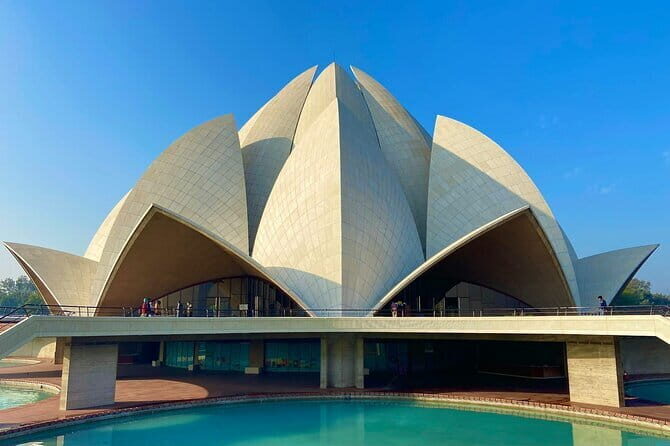
The tour finishes with the Lotus Temple, a Baháʼí House of Worship, inaugurated in December 1986. You’ll have about 30 minutes here.
The highlight is its floral lotus shape, which has become a recognizable modern Delhi landmark. This stop is a nice counterbalance to the older, more chaotic-feeling areas you’ve already visited.
Because the time is short, treat this as a reset: walk in, absorb the design, find a calm viewing spot, and take a few photos. It’s the kind of visit where even a brief stop can feel satisfying because the setting encourages slowing down.
Price and Value: What $5 Gets You (and What You’ll Still Budget)
The headline price listed is $5.00 per person, and that’s strikingly low for a private, guided experience with transportation. But here’s how to interpret the value properly.
What seems clearly included:
- Personalized live tour guide
- Transportation for pick-up and drop-off (within Delhi/nearby cities depending on the option)
- Parking, tolls, fuel, and taxes
- Mobile ticket
- Water bottles, and umbrellas if needed
What’s not included, and you should plan for:
- Meals and gratuities are not included.
- Tips are listed as €10.00 per person.
- Entrance fees are included if an option is selected, listed as €10.00 per person.
- Meals are listed as €30.00 per person.
Also, the schedule marks many stops as admission ticket free (Jama Masjid, India Gate, and others in the plan). Still, because there’s a separate line about optional entrance fees, I recommend you confirm which parts require extra payment for your chosen option before you go.
So is it a bargain? For the structure you get—private guide, transport, short, efficient sightseeing in both Old and New Delhi—it’s a strong value if you want a first-time orientation. If you’re the type who plans long ticketed museum visits, you may feel the time pressure and spend extra anyway.
Getting Around Safely in Delhi Traffic
Delhi driving is not for the faint of heart, which is why the transport quality matters. The experience is designed around a driver who’s used to handling busy streets, and the vehicle experience shows up as a positive theme in real-world feedback: people like the air-conditioned, clean car and easy driving style.
The guide also plays a real safety role. In crowded areas like market streets and major religious sites, local guidance helps you avoid wandering into confusing lanes and reduces the chance of getting targeted. That’s especially valuable if you’re not familiar with how Delhi works day-to-day.
Two practical touches also help with day comfort:
- Water bottles on hand means you won’t scramble for hydration mid-route.
- Umbrellas are provided based on weather, which is a big deal in India when rain can show up quickly.
Who This Tour Fits Best (and Who Should Choose Another Plan)
This tour is a great fit if:
- You’re in Delhi for a short time and want a clear hit list.
- You want an organized mix of Old Delhi and New Delhi without map stress.
- You prefer a private format where you can ask questions and adjust pace.
It may not fit perfectly if:
- You want long, slow visits that require more time at each site.
- You’re looking for deep, ticketed museum hours at every stop.
- You like to wander on your own all day; this route is structured, not free-roam.
For most first-timers, though, this is exactly the kind of plan that helps you understand the city fast—and then decide what to revisit later.
Should You Book This Old and New Delhi Tour?
If you want a smooth, time-efficient introduction to Delhi’s biggest landmarks, I’d say it’s worth booking. The combination of private guide + transport + crowd-aware pacing is the main reason—especially if you’re traveling with limited time and don’t want to wrestle with transit and parking.
Two things to check before you commit:
1) Confirm which optional monument entries apply to your choices, since there’s a line item for entrance fees under selected options.
2) Budget for tips and food, since meals and gratuities aren’t included.
Also, if your plans might shift, the cancellation terms are free up to 24 hours before start time. That gives you a little breathing room.
If you’re choosing only one “quick orientation” day tour in Delhi, this is a solid way to see the city’s layers—markets and mosques on one side, memorials and government landmarks on the other—without losing the whole day to logistics.
FAQ
How long is the Old and New Delhi tour?
It runs about 4 to 5 hours (approx.), moving between Old Delhi and New Delhi landmarks with short stops.
Where does the tour start, and where do we end?
The meeting point is Sunehri Masjid, Nishad Raj Marg, Lal Qila, Old Delhi, New Delhi, Delhi 110006. The activity ends back at the meeting point, and a drop-off within Delhi/nearby cities is offered depending on the option.
Do you offer pickup from nearby cities like Noida or Gurugram?
Yes. Pickup is offered from Delhi, Noida, Gurugram, Ghaziabad, and Faridabad between 8 AM and 3 PM, based on the option you select.
Is this tour private?
Yes. It’s a private tour/activity, meaning only your group will participate.
Are entrance tickets included?
Many stops are listed as admission ticket free in the plan. Also, entrance fees are included if an option is selected (listed as €10.00 per person). Confirm what’s included with your selected option.
What’s not included in the price?
Meals and gratuities are not included, and tips are not included (listed as €10.00 per person). Meals are also listed as €30.00 per person.