REVIEW · BANGALORE
Day trip from Bangalore to Lepakshi for Temple architecture & paintings
Book on Viator →Operated by 5 Senses Walks · Bookable on Viator
Granite bulls and fresco walls, all in one day. This private Lepakshi trip is interesting because you’re not just sightseeing—you’re getting guided meaning for the temple architecture and the vivid wall paintings. I especially like how the visit is paced so you can actually look closely (instead of rushing past carvings), and I also like that lunch is included so you don’t spend the middle of the day hunting food. The main consideration: it’s a long day with an early start, so plan for a tired return even if everything goes smoothly.
You’ll leave Bangalore early (pickup starts around 7:30am) and drive out to Lepakshi in Andhra Pradesh. Once there, you jump straight into the big highlights: the huge Nandi bull in granite, then the Veerabhadra Swamy Temple with its mandapas and distinctive artwork. If you like history told in plain language, this format works well because your guide can connect what you’re seeing to stories and symbols.
One more practical note: this is a private group tour, so it’s easy to ask questions, but it also means you’ll keep the same pace as your group. Bring water for breaks if you’re sensitive to heat—beverages aren’t included, and the day is temple-heavy.
In This Review
- Key Highlights Worth Your Time
- Lepakshi: Why This Temple Town Feels Like a Living Museum
- The Bangalore-to-Lepakshi Day Plan (and How to Use Your Time)
- Veerabhadra Swamy Temple: Mukha, Artha, Garbha Griha, and the Pillar Hall
- India’s Largest Nandi Bull: 15 Feet of Granite and Plenty of Photo Time
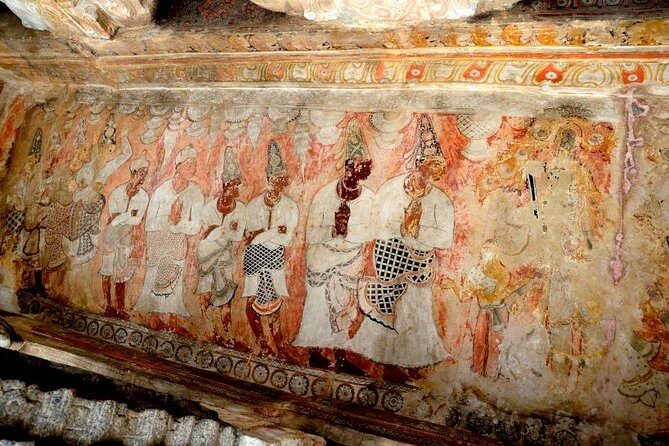
- Lepakshi Paintings: Orange-Red Frescoes and Elegant Line-Work
- Lunch Break and Pacing: What Works on a 10-Hour Template Day
- Price and Value: Is $145 a Good Deal for Lepakshi?
- Who This Tour Suits Best (and Who Should Rethink)
- Should You Book This Lepakshi Day Trip?
- FAQ
- FAQ
- What time does the tour start?
- How long is the day trip to Lepakshi?
- What are the main stops on this tour?
- Is lunch included?
- Are entry tickets included?
- What time do you leave Lepakshi for the return trip?
- Is free cancellation available?
- Is this tour private?
Key Highlights Worth Your Time
- One giant Nandi, one single granite block: India’s largest Nandi statue is about 15 ft tall and 27 ft long.
- Virabhadra Swamy Temple by mandapa layout: Mukha Mandapa, Artha Mandapa, and Garbha Griha all map the story of the site.
- Wedding hall details: a grey sandstone hall with 38 carved monolithic pillars tied to the Shiva–Parvati legend.
- Paintings with a signature look: orange-red background with elegant line-work for deities and scenes.
- Guides who explain what you’re looking at: names like Mayuri, Vignesh, and Hareesh show up for clear, story-based explanations and smooth timing.
- Tickets and lunch built in: entry tickets for both major stops and a South Indian vegetarian lunch are included (beverages aren’t).
Lepakshi: Why This Temple Town Feels Like a Living Museum
Lepakshi can hit you fast—in the good way. One moment you’re staring at a massive stone bull, and the next you’re walking into a temple complex where the buildings are arranged like a visual script. It’s not just that it’s old; it’s that the carvings and painting style were designed to guide your attention.
The standout here is the mix: big, iconic stone sculpture plus finely detailed mandapas plus wall paintings in a very specific style (orange-red background and elegant line-work). When your guide connects those elements—who worshipped where, what the mandapas were for, and why the proportions matter—the whole site makes more sense than if you show up with only a photo list.
Also, this is a rare format from Bangalore: you get a full day in one place without having to manage transport, tickets, and timing yourself. For a trip that’s roughly 10 hours, that kind of structure is a real value.
A few more Bangalore tours and experiences worth a look


The Bangalore-to-Lepakshi Day Plan (and How to Use Your Time)
Pickup begins at 7:30am, then you head out to Lepakshi. Expect an early start and a full slate, because the day is built around two main temple stops plus time to wander and look closely.
At around the middle of your schedule, there’s a lunch break, and then you continue on to the main temple areas. You’ll depart Lepakshi around 4pm and return to Bangalore for drop-off at your original departure point. That means you’re done in daylight, but you won’t have time for extra detours.
The practical win is that the itinerary is simple. There are no confusing “switch to another bus” moments, and you can focus on your eyes and your questions. The schedule is also realistic: the temple portion needs time (it’s not one quick hall), and the Nandi stop is short enough that you’ll still feel energetic.
If you want photos, plan to slow down near each key structure. The Nandi is the obvious shot, but the temple details are where the day rewards patience: carved pillars, the mandapa layouts, and painting surfaces that you can only appreciate when you stop.
Veerabhadra Swamy Temple: Mukha, Artha, Garbha Griha, and the Pillar Hall
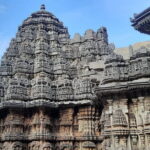
Your first real stop is the Veerabhadra Swamy Temple, described as a 16th century Vijayanagara style masterpiece. You’ll start with Mukha Mandapa, a space used for dance and cultural activity. Even if no one is performing, it helps to imagine what this hall was for—because the structure’s purpose affects how you look at the carvings and the flow of movement.
Next is the Artha Mandapa, where the king did worship. Then you reach the Garbha Griha, where the deity is housed. This three-part layout is the heart of why a guide matters. Without explanation, the complex can feel like multiple buildings. With explanation, it reads like a sequence of intentions—public activity, royal worship, then the core sanctum.
What I love about this temple stop is the “story space” feeling. Each section isn’t just decorative; it points to how people used the temple. Your guide helps translate that into clear, walk-and-look time, which is exactly what you want on a day trip.
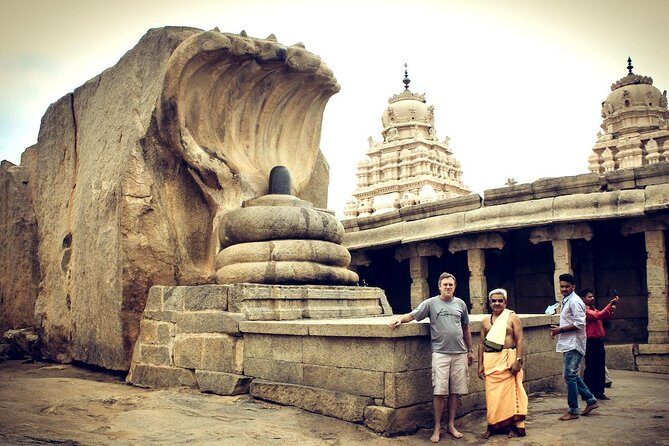
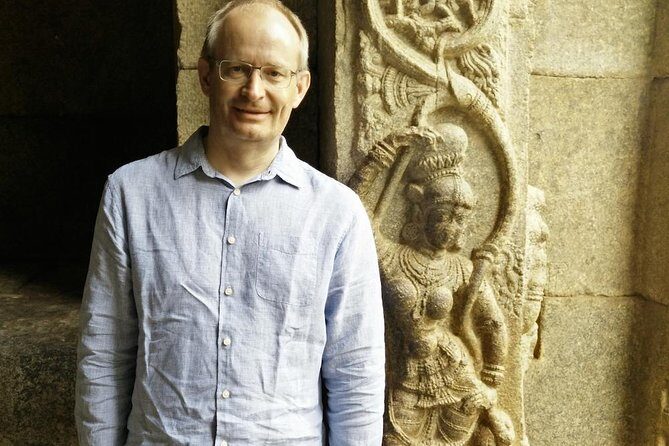
The other major highlight is the unusual wedding-hall style area made of grey sandstone, with 38 carved monolithic pillars. The legend links the place to the marriage of Lord Shiva and Lady Parvati in antiquity. Even if legends aren’t your thing, the visual impact of pillar symmetry is. You can’t really appreciate it from a distance—you need to stand there and notice how the pillars hold up the space.
Potential drawback to consider: temple time can be slower than you expect, especially when you’re trying to read and photograph carvings. If you’re the type who gets impatient in still places, set yourself a goal like: pick one mandapa section to focus on with photos and one section to focus on without photos.
India’s Largest Nandi Bull: 15 Feet of Granite and Plenty of Photo Time
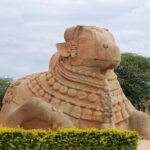
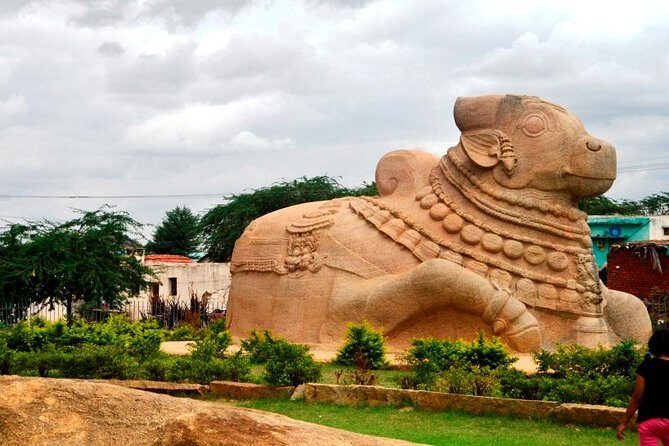
Then comes the star photo moment: the Lepakshi Bull—India’s largest Nandi statue. This bull stands about 15 feet tall (around 4.5 meters) and stretches roughly 27 feet long. What makes it extra impressive is that it’s formed out of a single block of granite, which is the kind of detail that makes you stop and stare for longer than you meant to.
Look closely and you’ll notice the decorative treatment of Nandi, including jewelry elements. The statue wears a kaasu malai (bell-chain), along with earrings and other jewelry details. That matters because it turns a “giant stone object” into a specific character in the temple story.
This stop is shorter on purpose—about 30 minutes—but it’s the right length for most people. You can do a first pass for overall scale, then step in for detail shots. If you plan to take photos, do it in stages: wide shot first, then jewelry and face detail.
One more practical thing: the temple area can have some movement around it, including small animals you might spot in the grounds (some visitors note monkeys). So keep an eye on belongings and don’t wave food around like you’re auditioning for a wildlife documentary.
Lepakshi Paintings: Orange-Red Frescoes and Elegant Line-Work
After you’ve handled the big stone shapes, Lepakshi’s paintings bring a different kind of energy. The painting style here is described as having elegant line-work against an orange-red background. That contrast is one reason these murals feel dramatic even when the room or wall isn’t huge.
What you’ll want from your day here is a little guidance on what you’re seeing. The murals aren’t just colorful decoration; they’re tied to deities and myth themes. When your guide points out figures and symbolism in plain language, you start recognizing patterns instead of treating every panel as random.
This is also where the guided aspect pays off for people who don’t read long religious texts. Your guide can connect the paintings to the architecture you already saw—the mandapas, worship spaces, and how the temple design shapes the viewing experience.
A small tip: take time to look from different angles. Paintings can look different as you move because the surface texture and lighting change. You don’t need to become an art student; you just need to slow down for a minute at each panel.


Lunch Break and Pacing: What Works on a 10-Hour Template Day
Your tour includes a South Indian vegetarian lunch, but beverages aren’t included. That means you’ll probably want to plan for water or other drinks outside the meal slot, especially during travel and walking time.
The pacing is simple: temple time first, lunch in the middle, then more exploring before the 4pm departure. For many people, that works because you’re not hungry while doing the more detailed architecture segments.
My practical advice: treat lunch like fuel, not like a leisurely sit-down. You’ll feel better if you eat, rest your legs for a short window, and then get back out for the final temple areas without over-slowing the afternoon.
If you’re sensitive to fatigue, wear comfortable shoes with grip. These temple grounds involve walking on uneven surfaces. A private car helps you reset your body between sections, but you’ll still be on your feet enough to feel it by the end of the day.
Price and Value: Is $145 a Good Deal for Lepakshi?
At $145 per person, this tour feels priced like a true day trip deal rather than a “ticket-only” arrangement. Here’s why: you’re paying for a private car, a private guide, pickup and drop, and entry tickets for the key stops—plus lunch.
So you’re not just buying admission. You’re buying time. The big value is that your guide can point out what matters in the temple architecture—Mukha Mandapa’s cultural use, Artha Mandapa’s royal worship context, and the meaning of spaces like Garbha Griha. That kind of explanation turns a collection of structures into a coherent walk.
Also, the tour is set up for convenience: a mobile ticket, group discounts, and a clear start time means you don’t burn mental energy coordinating the day. For a route from Bangalore to Lepakshi, that convenience can be worth a lot, especially if you don’t want to plan transport and guide logic yourself.
The only “value trade-off” is time. It’s a 10-hour loop. If you’re planning to add extra stops in the countryside, this tour won’t give you much wiggle room. But if your goal is focused temple-and-paintings time with minimal hassle, the price-to-structure ratio is strong.
Who This Tour Suits Best (and Who Should Rethink)
This is a great fit if you want a temple trip that’s practical. You’ll like it if you enjoy architectural details, paintings, and myth explained in a way that matches what you’re physically seeing.
It’s also a good choice if you’re traveling with limited time in South India. A day trip lets you sample Lepakshi without committing to a multi-day stay.
You might want a different plan if you prefer totally independent travel with no fixed pace. Because it’s a private group tour, you’ll move as your group moves. And because it starts early, it won’t feel like a relaxed morning.
If you’re a first-timer to Indian temple sites, this tour can be especially helpful because it gives you the “where am I standing and why does it matter” answers fast. Guides such as Mayuri and Vignesh (plus Hareesh) are specifically called out for their friendly, organized explanations and their ability to connect sculpture and painting to meaning.
Should You Book This Lepakshi Day Trip?
I’d book it if your ideal day is: early start, a focused route, and real guidance for temple architecture and painting interpretation. You’re getting a strong set of Lepakshi highlights in one go: the Virabhadra Swamy Temple, the huge granite Nandi, and the orange-red painting style that makes the site so memorable.
Skip it only if you hate early mornings, have low patience for walking time, or you want lots of free time for wandering beyond the main highlights. For most people who care about meaning—not just photos—this private format is a smart way to do Lepakshi from Bangalore.
FAQ
FAQ
What time does the tour start?
The tour starts at 7:30am with hotel pickup.
How long is the day trip to Lepakshi?
The duration is about 10 hours (approx.).
What are the main stops on this tour?
You’ll visit Veerabhadra Swamy Temple and the Lepakshi Bull (India’s largest Nandi statue).
Is lunch included?
Yes. A South Indian vegetarian lunch is included, but beverages are not.
Are entry tickets included?
Yes. Admission tickets are included for the temple stop and the Nandi bull.
What time do you leave Lepakshi for the return trip?
You depart Lepakshi around 4pm and return to Bangalore for drop-off.
Is free cancellation available?
Yes. You can cancel for a full refund if you cancel up to 24 hours in advance of the experience’s start time.
Is this tour private?
Yes. It’s a private tour/activity, meaning only your group participates.