REVIEW · DARJEELING
Colonial Heritage Walking Tour in Darjeeling
Book on Viator →Operated by Darjeeling Walks · Bookable on Viator
Darjeeling has layers, and this walk stitches them. You get a guided loop that mixes colonial landmarks with everyday hill-town sights, from the Clock Tower to church and temple stops, with photo history built in along the way. It’s the kind of tour where you start seeing the same street corners in totally different time periods.
Two things I really like: the way the guide connects the British-era club and civic buildings to how Darjeeling actually functioned day-to-day, and the included breaks at Keventer’s and Glenary’s, which make the walk feel more like a local afternoon than a checklist. You also get a stop at Das Studio, one of the oldest photography studios in town, which helps you picture how Darjeeling looked before the modern rush.
One consideration: this is a group walking tour with lots of short stops (often 10–30 minutes). If you prefer slow browsing, detailed interiors, or extra time at cafés and viewpoints, you’ll want to plan your own follow-up after the tour—especially when weather is good and you’ll want to linger.
In This Review
- Key things to know before you go
- Entering Colonial Darjeeling: What This Walk Actually Shows You
- Clock Tower to Town Hall: The First “Read the City” Moment
- The Private-Society Side of British Rule: Planters Club and Gymkhana Club
- A UNESCO-Listed Landmark in Plain Sight: The Head Post Office
- Churches and Temples: Darjeeling’s Spiritual Mix Isn’t an Afterthought
- Keventer’s and Glenary’s: Included Breaks That Feel Like Part of the Story
- Das Studio, Oxford Bookshop, and the Handcraft Stops
- Darjeeling Mall, Raj Bhavan, and the Winter Capital Connection
- Museums and Education Stops: The Story Goes Beyond Tea
- Old Market and the British-Era Transport Echoes
- Value and What You Get for $27.97
- Who This Tour Fits Best (And Who Should Consider Another Option)
- Should You Book It?
- FAQ
- How much does the Colonial Heritage Walking Tour in Darjeeling cost?
- How long is the tour?
- What’s included in the ticket?
- Is admission required at every stop?
- Where does the tour start and end?
- What’s the meeting point and tour ending point like?
- What’s the group size?
- Is the tour suitable for most people?
- Does the tour run only at certain times of day?
- What happens if weather is bad?
Key things to know before you go
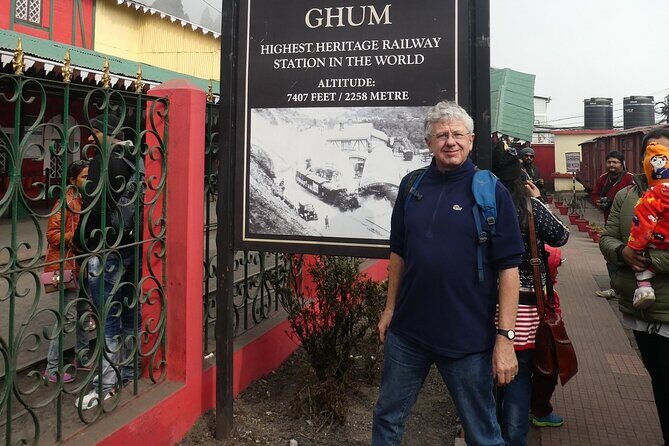
- 2 to 3 hours of guided walking, with most stops timed to keep the pace lively
- Keventer’s and Glenary’s snacks are included, so you’re not hunting for lunch mid-route
- Colonial clubs and civic buildings: Planters Club, Gymkhana Club, Town Hall, and the Post Office
- Spiritual mix: you’ll see Anglican church architecture alongside temple stops
- Photo and Tibet context: Das Studio and the Himalayan Tibet Museum add depth beyond British-only stories
Entering Colonial Darjeeling: What This Walk Actually Shows You
This tour is built around the way Darjeeling grew during the British colonial era—and how that story doesn’t stay in one lane. You’ll move from civic symbols (like the Clock Tower and the Town Hall area) to club life (Planters Club and Gymkhana Club), then into the religious side of town with St. Andrews Church and temple stops later on.
What makes it click is the pacing. You don’t just stand at landmarks and move on. You get enough time at each place to notice details—architecture, purpose, and why these buildings mattered—then you roll right into the next contrast. One moment you’re looking at British-built structures that signaled governance and settlement. The next moment you’re at a spiritual site that shows Darjeeling is much more than a colonial museum piece.
And there’s a useful extra layer: the tour places Darjeeling in the larger Himalayan context. You may hear a comparison with Simla—one place felt more commercially busy, the other held onto an older English comfort vibe. The story often ties tea ambitions to geopolitical realities, including the idea that Tibetans arrived as refuge during tense regional pressures. It’s a reminder that Darjeeling’s identity was shaped by where people could live, trade, and work.
You can also read our reviews of more walking tours in Darjeeling
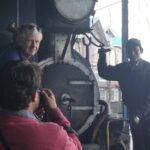
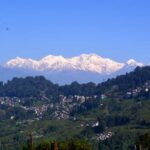
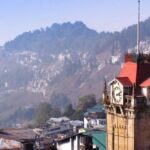
Clock Tower to Town Hall: The First “Read the City” Moment
You start at the Darjeeling Clock Tower, built in the 1850s. It’s a classic hill-town anchor: a landmark you can use later to orient yourself. The tower houses the Darjeeling Town Hall, and that matters because it immediately frames the rest of the walk. This wasn’t just scenery for tourists—it was a civic heartbeat for a town taking shape.
Even if you’re not a facts-only person, you’ll probably enjoy the practical part: once you’ve seen the Clock Tower, the rest of the route starts to feel connected. You’re less likely to wander aimlessly later, because your mental map gets built in real time.
Time note: you have about 30 minutes here, including the stop itself. It’s enough to take photos, get oriented, and absorb why the clock tower became a reference point for the town.
The Private-Society Side of British Rule: Planters Club and Gymkhana Club
The Planters Club stop is a key part of why this tour feels like more than a scenic walk. The Darjeeling Planters Club began in 1868 for British planters and their families. That start date alone tells you it wasn’t meant for casual visitors—it was for a specific social group shaping the town around tea and settlement life.
Then you’ll continue to the Darjeeling Gymkhana Club, established in 1909. Here the details get more tangible: badminton courts, card rooms, and an excellent library. It’s easy to think of “colonial life” as statues and buildings. These stops help you picture routines—sport, social evenings, and reading spaces—where the British community reinforced its world in a foreign climate.
What I like most: these club stops show how power works beyond government offices. It’s in who had access, who gathered where, and how leisure and administration could overlap.
What to watch for: since the time at each club stop is limited (around 15–30 minutes depending on the point), you won’t get a slow-motion exploration of every room. Go in looking for big-picture details first, then decide if you want deeper time later on your own.
A UNESCO-Listed Landmark in Plain Sight: The Head Post Office
The walk includes the Darjeeling Head Post Office, built in May 1921. It’s described as one of the oldest post offices in the region and is also labeled as a UNESCO World Heritage Site.
This is the kind of stop that pays off for practical travelers. A post office isn’t just a historic building—it’s a clue to communications, trade, and daily life. When towns expand through tea routes and regional networks, mail systems become part of the infrastructure. Seeing it during a heritage walk makes the colonial story feel more grounded.
Time note: the stop is short, about 15 minutes. Use it to look closely at the building itself and absorb what makes it historically significant rather than trying to do everything at once.
Churches and Temples: Darjeeling’s Spiritual Mix Isn’t an Afterthought
One of the more satisfying elements here is that the tour doesn’t treat spirituality as a side quest. You’ll see both Christian and temple architecture, which helps you understand Darjeeling as a lived-in religious crossroads.
At St. Andrews Church, you’re looking at a structure originally built in 1843. It’s along the Mall Road and holds memories connected to Lt. Gen A Lyod, believed to be the discoverer of Darjeeling. This is the Anglican side of the story, tied to the British presence.
Later, you’ll reach a Dhirdham Temple near the railway station, built in the style of Kathmandu’s Pashupatinath temple. That architectural reference point is the kind of detail that makes a walking tour feel smarter—suddenly, Darjeeling’s style links back to the wider Himalayan religious world, not just to British settlement.
Small but important travel tip: even if you’re not planning a long interior visit, dress and behave respectfully. Church and temple etiquette is part of being a good guest here, and it’ll also make your guide experience smoother.

Keventer’s and Glenary’s: Included Breaks That Feel Like Part of the Story
You get a built-in food rhythm thanks to included stops at Keventer’s and Glenary’s—Bakery, Restaurant & Pub.
At Keventer’s, the stop is described as cozy and nostalgic, tied to Edward Keventer’s dairy farm of Ghoom. It’s also placed with an iconic viewpoint in mind, and your ticket includes time for breakfast and snacks. For me, this is one of the best values on the tour because it solves the hardest problem in Darjeeling: eating well while you’re moving. You’re not guessing what to order between steep walks and changing weather.
At Glenary’s, the stop includes time (around 15 minutes) and leans into the café vibe. It’s known as a hangout and described as encouraging sunset views. Again, you’re not meant to linger for hours during the tour—but you can still use the short window to grab something sweet or savory and reset before the next heritage block.
Practical move: since these stops are timed, don’t plan a massive meal. Treat them as a strategic snack/break that keeps your energy up for later stops.
Das Studio, Oxford Bookshop, and the Handcraft Stops
Not every heritage tour includes things that help you take a memory home. Here, you get several quick stops that work well even with short time windows.
Das Studio is one of the oldest photography studios in Darjeeling, started in 1927. The walls are decorated with panoramic photos from different periods. This is one of those stops that makes the colonial walk feel three-dimensional. You’ll see the town’s older faces and wider views, which makes the architecture and street corners feel less abstract.
Then there’s Habeeb Mullick & Sons Estd 1890, described as a great place for handcrafted curios. You’ll also pass Oxford Book and Stationery Co., housed in hill-style cottage architecture, with lots of souvenir items. These aren’t meant for deep shopping marathons. They’re short chances to pick something local and useful without getting stuck.
My advice: if you’re serious about shopping, set one clear item goal for this section. The time is limited, and it’s better to leave with one good purchase than ten rushed maybes.
Darjeeling Mall, Raj Bhavan, and the Winter Capital Connection
When the route hits Darjeeling Mall, it’s doing more than showing you a pretty street. The Mall ties into Darjeeling’s status as a Winter Capital during its heydays, including the presence of Government House, Raj Bhavan.
The British built Government House in 1840, and ownership later shifted to the Maharaja of Coochbehar in 1877. That kind of detail helps you understand the building as a symbol of changing authority—who held influence, who governed, and how the elite spaces shifted over time.
Time note: the stop is about 15 minutes. Use it to look for the visual contrast between the colonial-era structure and how the street functions today.
Museums and Education Stops: The Story Goes Beyond Tea
This tour doesn’t stop at clubs and church doors. You’ll also pass through stops that explain Darjeeling’s cultural and educational layers.
At the Himalayan Tibet Museum, the focus is on accounts of thousands of years of Tibet’s indigenous history and the centuries-old Tibet–India relationship. It’s a strong counterbalance to a tour that could easily become British-only. Even if you read only part of what’s on display, the museum framing helps you place Darjeeling’s role in the region.
There’s also Turnbull High School, described as a lesser known colonial school following places like Nepali High School and Bishop’s House. Then you’ll visit Hayden Hall, described as tied to the history of the Hayden Hall Institute and its enterprising women. These stops add a human dimension: learning, institutions, and who had access to education.
Later, you’ll encounter the Chittaranjan Das Memorial, connected to a figure in India’s independence movement. That’s important because it reminds you that colonial heritage isn’t just about British structures—it’s also about the Indian story that grew in reaction.
Old Market and the British-Era Transport Echoes
Old Darjeeling has a rhythm, and the route finally hits the Old Market area, described as the heart of the Old British Market plus nearby connections to the old railway station and old British Ropeway. This is where the town’s everyday energy meets the heritage theme.
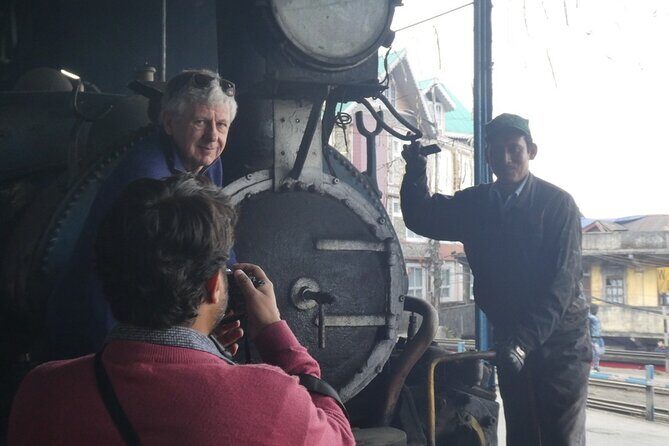
You’ll also get an included stop linked to Darjeeling Himalayan Railway, starting its journey in the 1870s. The railway matters here because it’s part of how Darjeeling became reachable, connected, and economically viable for trade—especially for tea.
How I’d use the time: treat these stops as your “sense check” moments. If earlier stops made you picture colonial governance and club life, the market and railway context show how those systems moved people and goods.
Value and What You Get for $27.97
At $27.97 per person, this tour is priced like an entry-level heritage walk—yet it includes meaningful value beyond guiding.
Here’s what supports that value:
- A professional guide leading you through multiple heritage sites over 2 to 3 hours
- Several stops with free admission
- Included stops at places like Keventer’s and Glenary’s, where food/snacks are part of the ticket
- Included admissions at other sites along the way (like Gymkhana Club and specific education/museum-related stops)
If you’ve ever paid for a short walking tour and then spent the rest of the day separately buying entry fees and snacks, this is a cleaner deal. You’re getting the structure of a guided day, plus at least some of the spending is handled.
Best part for budget-minded travelers: you won’t need to plan every single purchase while you’re outside walking. The included snack stops make it easier to keep your day moving.
Who This Tour Fits Best (And Who Should Consider Another Option)
I think this tour is a great match if you:
- like heritage stories but don’t want to study a textbook
- enjoy architecture, institutions, and the “how the town worked” angle
- want included food breaks so you’re not constantly stopping to decide where to eat
It’s also a good choice if you’re traveling with time limits. In a few hours, you’ll cover colonial-era civic spots, clubs, religious architecture, plus a museum frame that connects Darjeeling to Tibet-related history.
Consider another option if you:
- hate group pacing and prefer slow, long stops
- want deep interior time at churches, clubs, or museums
- plan to shop heavily, since several shops are quick stop moments
If the weather is nice, you’ll naturally want to linger. The tour requires good weather, and if it gets canceled due to poor conditions, you’ll either be offered another date or a full refund. That flexibility helps.
Should You Book It?
Yes, you should book this tour if you want Darjeeling’s colonial and spiritual layers in one guided walking loop, with food stops that actually break the routine. The mix of Clock Tower–style civic landmarks, club institutions like the Planters Club and Gymkhana Club, and the Tibet-focused museum stop gives you a wider picture than a typical tea-and-building route.
I’d skip it only if your idea of a great tour is long time in one place. This one is efficient. It’s designed to help you see more, faster, and then let you choose where to slow down afterward.
FAQ
How much does the Colonial Heritage Walking Tour in Darjeeling cost?
It costs $27.97 per person. The price includes all fees and taxes.
How long is the tour?
The tour lasts about 2 to 3 hours.
What’s included in the ticket?
All fees and taxes are included. Admission is included at several stops, and snacks at Keventer’s and Glenary’s are included.
Is admission required at every stop?
No. Some stops are listed as free admission, while others include admission as part of your ticket.
Where does the tour start and end?
The start is Limbugaon, Darjeeling, West Bengal 734101, India. The tour ends at St. Andrews Church in the Chauk Bazaar area of Darjeeling.
What’s the meeting point and tour ending point like?
You’ll meet at Limbugaon and finish at St. Andrews Church. The end location is shown for navigation via Google Maps.
What’s the group size?
The tour has a maximum of 50 travelers.
Is the tour suitable for most people?
Most travelers can participate, and the tour is near public transportation.
Does the tour run only at certain times of day?
The available hours shown are Monday through Sunday, 7:00 AM to 7:00 PM.
What happens if weather is bad?
The tour requires good weather. If it’s canceled due to poor weather, you’ll be offered a different date or a full refund.