REVIEW · CHENNAI
British Architecture Walk, an immersive walking tour in Chennai
Book on Viator →Operated by 5 Senses Walks · Bookable on Viator
British architecture in Chennai feels like a guided map. I like the small groups and the way the local guide connects what you’re seeing to the British era that shaped parts of the city.
You’ll get a structured 2.5-hour walk through major landmarks, with enough context that the buildings stop looking random and start looking intentional.
Snacks and coffee/tea are included, and some stops include admission tickets in the tour price. That combo matters because it keeps the pace relaxed instead of turning it into a ticket-hunt marathon.
One possible drawback: you’re walking for about 2.5 hours, so comfortable shoes and sun protection are a real help.
In This Review
- Key things that make this walk work
- British-Era Style in Chennai: what you’ll actually notice
- Price and timing: $55 for a guided route with ticketed stops
- Egmore to the University of Madras: the route makes sense
- Egmore Station and Chennai Central: Gothic Revival and Indo-Saracenic cues
- Victoria Public Hall and the Ripon Building: ceremony, authority, and names
- Southern Railway Headquarters and Napier Bridge: style meets movement
- University of Madras and the Victory War Memorial: education and WWI memory
- Included snacks, coffee/tea, and optional transfers: small comforts that matter
- How to get the most out of it (without overthinking it)
- Who should book this British architecture walk in Chennai?
- Should you book this tour?
- FAQ
- How long is the British Architecture Walk in Chennai?
- How much does the British Architecture Walk cost?
- Is hotel pickup or drop-off included?
- What’s the group size limit?
- Are snacks and drinks included?
- Do I need to download or use a ticket on my phone?
- Which stops include admission tickets?
- Are admission tickets included at every stop?
- What is the cancellation policy?
Key things that make this walk work

- Small group format (max 15) means you’re not lost in a crowd while questions fly.
- Local guides like Hareesh and Satish have been highlighted for energetic, clear explanations and lively pacing.
- Snacks plus coffee/tea are included, which is great for an evening or pre-dinner schedule.
- Select admission tickets included at key sights, so you spend more time looking and less time arranging.
- A focused British-architecture storyline ties Indo-Saracenic, Gothic Revival, and civic buildings into one route.
British-Era Style in Chennai: what you’ll actually notice
This tour is built around a simple idea: Chennai wasn’t just shaped by one architectural tradition. British rule influenced how major public buildings were designed and how power showed up in brick, stone, and layout.
The best part is how quickly your eye starts to sort styles. You’ll see Indo-Saracenic forms (a mix influenced by both local and imperial design tastes) alongside Gothic Revival features, plus the civic swagger of stations, halls, and official offices. Once you learn what to look for—arches, towers, rooflines, and naming conventions—the city becomes way easier to read on your own.
It’s also a practical way to get oriented. The route connects major landmarks near well-known areas of Chennai, so you’re not just seeing architecture in isolation. You’re seeing it in context—close to where the city moves, gathers, and remembers.
You can also read our reviews of more walking tours in Chennai


Price and timing: $55 for a guided route with ticketed stops
At $55 per person for about 2 hours 30 minutes, this is priced like a thoughtful guided experience, not a long day tour. The value comes from the mix of what’s included: a local guide, snacks, coffee/tea, and admission tickets at several stops.
Those included entries matter because British-era buildings in major hubs can be busy, and entry processes take time. If you’re going to pay entrance fees anyway, this structure saves effort and keeps you on schedule.
You’ll also be glad it’s small-group. With up to 15 travelers, you can ask follow-up questions instead of feeling like you’re interrupting a lecture. And if your plans are tight, the approximate 2.5 hours is long enough to feel satisfying but short enough to still have a full evening.
Egmore to the University of Madras: the route makes sense
The walk starts at Chennai Egmore (Gandhi Irwin Rd, Egmore, Chennai) and ends near the University of Madras (Navalar Nagar, Chepauk, Triplicane). That’s a smart layout because it traces a north-to-south arc through major civic and transportation landmarks.
You’ll also notice the tour is designed for practical meeting points. It’s listed as near public transportation, and that helps if you don’t want to rely on a taxi just to start. Since the tour ends at the University area, you can connect afterward to nearby dining and sightseeing without needing to backtrack.
And because the route is stop-focused rather than “walk for walking’s sake,” you’re not guessing when something important will appear. Each segment has a clear architectural theme.
Egmore Station and Chennai Central: Gothic Revival and Indo-Saracenic cues
Stop 1: Chennai Egmore Railway Station
Egmore is more than a century old and is described as one of the early buildings in Indo-Saracenic style, designed by Henry Irwin. The tour’s timing here is about 20 minutes, with an admission ticket included.
What you should do at this stop: look for the blending of formal, imperial-styled elements with local design language. Stations like this often weren’t only built to move people—they were built to announce the arrival of a new era of administration and travel.
Stop 2: Chennai Central Railway Station
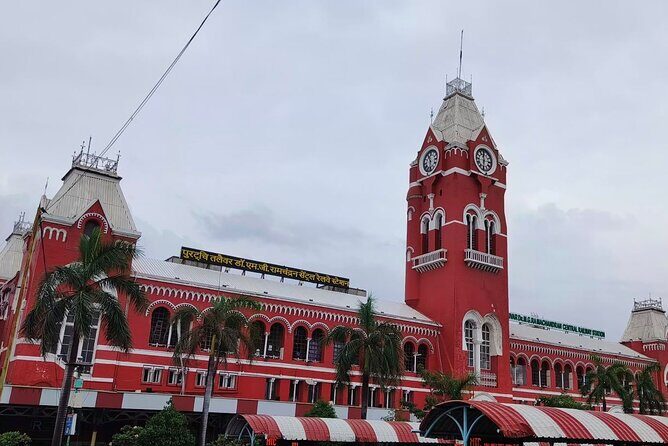
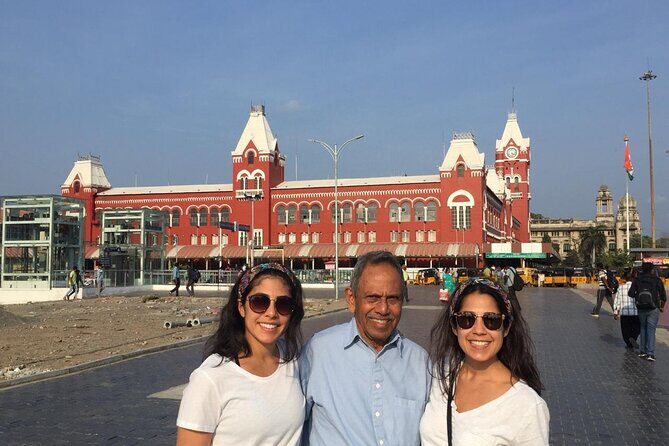
You then head to the Central Railway Station, built in 1873 in Gothic Revival style by British architect George Harding. The tour notes that Robert Chisholm modified it, adding the central clock tower and Travancore caps on the main portions. This stop is about 30 minutes, also with admission ticket included.
This is a good moment to focus on vertical design. Gothic Revival tends to pull your eye upward with tower forms and rhythm. The clock tower addition is especially helpful, because it gives you a “time + power” symbol you can interpret rather than just admire.
Practical note: since both station stops include entry, you’ll spend more time inside the architecture and less time managing separate ticket steps.
Victoria Public Hall and the Ripon Building: ceremony, authority, and names
Stop 3: Victoria Public Hall
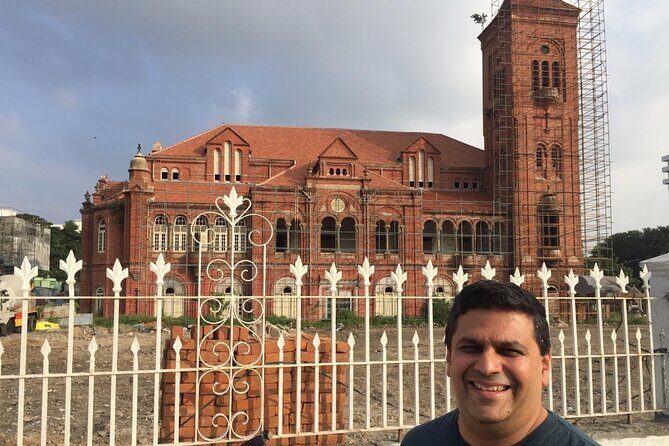
Victoria Public Hall was opened to the public in 1887 to commemorate the Golden Jubilee of Queen Victoria. It’s named after the queen and was used for events like public meetings. This stop runs about 20 minutes, but admission isn’t included.
Even without entry, this is a valuable stop because it teaches you how commemorations turned into buildings. When you understand that a hall could be both a ceremonial tribute and a practical public forum, the architecture feels more connected to civic life rather than just a decorative past.
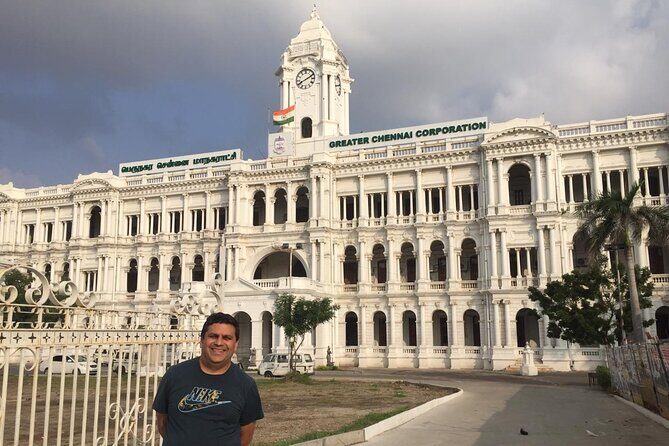
Stop 4: Greater Chennai Corporation Office / Ripon Building area
From here the route continues to the Ripon Building, commissioned in 1913. The tour notes it was designed by G.S.T. Harris and built by Loganatha Mudaliar, and that it’s named after Lord Ripon, a Governor-General.
This is one of those stops where a short time window can still pay off—about 15 minutes—because you’re learning how names and office buildings reflected British governance. If you like architecture that doubles as political messaging, don’t rush your photos here. Try to spot how the building’s presence works in the streetscape.




Southern Railway Headquarters and Napier Bridge: style meets movement
Stop 5: Southern Railway Headquarters
Next up is the Southern Railway Headquarters, built in Indo–Saracenic style and completed in 1921. The tour states it was designed by N. Grayson and built by Samynada Pillai. This stop is about 15 minutes, and admission isn’t included.
I like this segment because it keeps the British architectural theme moving beyond just stations. You’re seeing how style carried into major administrative infrastructure—railways weren’t only engineering projects. They were prestige projects too.
Stop 6: Napier Bridge
You’ll then cross to Napier Bridge, built in 1869 across the Coovum river and named after Francis Napier, the British governor of Fort St George. The tour notes it connects the Marina to Fort St George. This is another 15-minute stop with admission ticket included.
Here’s what to look for: bridges tell you how a colonial city wanted people and power to flow. And because Napier Bridge links major areas, it also shows how British-era decision-making shaped movement patterns that still matter today.
A quick caution: bridges and river-adjacent areas can feel windier and more exposed. If you’re going at a hotter part of the day, plan shade breaks and bring water.
University of Madras and the Victory War Memorial: education and WWI memory
Stop 7: University of Madras (Senate House area)
The tour then heads to the University of Madras, focusing on the Senate House, described as the administrative center of the university. It’s located along Marina Beach and is noted as a great example of Indo-Saracenic design, constructed by Robert Chisholm. This stop is about 15 minutes, and admission isn’t included.
This section is a reminder that architecture wasn’t limited to rail and government offices. Education buildings can be just as much about identity as they are about function. If you pay attention to form and detail, you’ll see why Chisholm’s influence shows up again and again.
Stop 8: Victory War Memorial (formerly Cupid’s bow)
The final architectural moment is the Victory War Memorial, described as originally called Cupid’s bow and built to commemorate the victory of the Allied Armies during World War I (1914–1918). It’s about 15 minutes, and admission ticket included.
This stop adds emotional weight to the whole route. You’re not only reading British architecture through style and governance—you’re reading it through memory. A war memorial is a statement about who the city chooses to remember and how public space becomes a kind of long-term newspaper.
If you’re the type who likes to connect buildings to stories, this last stop often lands the hardest.
Included snacks, coffee/tea, and optional transfers: small comforts that matter
This tour includes coffee and/or tea, and snacks are provided at no extra cost. That’s a big practical win because it reduces the “what do I eat now?” stress during a concentrated walk.
There’s also an option for hotel transfers (hotel pickup and drop-off if you select it). Even if you don’t choose transfers, the meeting point is described as near public transport, which helps you keep travel time from eating into your experience.
Finally, you’ll get a mobile ticket. That’s one less thing to manage before you meet your guide, especially in a city where you might be juggling maps, rides, and lunch plans.
How to get the most out of it (without overthinking it)
Bring comfortable walking shoes. This is a walking tour with multiple short stops, and you’ll get more out of the architecture if your legs aren’t begging for mercy.
Also, come with at least one question. If you’re curious about how styles blend, ask about the Indo-Saracenic mix. If you like power symbols, ask how stations, halls, and memorials worked as public messages.
Since the group is limited to 15 travelers, your guide can probably answer more than you expect. If you get a guide like Hareesh or Satish, expect enthusiastic explanation and strong pacing.
One last tip: because some stops include admission tickets and others don’t, keep your pace flexible. You’re not doing a rush-and-snap tour. You’re doing a look-and-learn route.
Who should book this British architecture walk in Chennai?
Book it if you want:
- A guided, structured route through well-known British-era architecture
- A clear explanation of Indo-Saracenic and Gothic Revival features
- A small-group experience that lets you ask questions
- Built-in comfort like snacks and coffee/tea
Consider skipping it if:
- You want a long, free-roam self-guided day (this is a focused walk with specific stops)
- You don’t like short stops with short entry windows and prefer slower, deeper museum-style time
The fact that it’s rated 4.9 with 98% recommended (and capped at 15 travelers) is a good sign you’ll likely enjoy the pacing and guidance.
Should you book this tour?
Yes, if your main goal is to understand why Chennai’s British-era buildings look the way they do—and to see multiple major landmarks in a single afternoon/evening without chaos. The included guide, snacks, coffee/tea, and the fact that some entries are built into the price make the $55 feel like a fair deal, not just a markup for walking.
I’d book it especially if you’re the type who walks around a city and wants answers fast. This tour is designed for that. You’ll finish with a better eye and a clearer mental map of how colonial-era design still shows up around you.
FAQ
How long is the British Architecture Walk in Chennai?
The tour lasts about 2 hours 30 minutes.
How much does the British Architecture Walk cost?
It costs $55.00 per person.
Is hotel pickup or drop-off included?
Hotel pickup and drop-off are optional. It’s not included unless you select the transfer option.
What’s the group size limit?
The tour has a maximum of 15 travelers.
Are snacks and drinks included?
Yes. Snacks are provided at no extra cost, and coffee and/or tea is included.
Do I need to download or use a ticket on my phone?
Yes. The tour uses a mobile ticket.
Which stops include admission tickets?
Admission tickets are included at Egmore Railway Station, Chennai Central Railway Station, Napier Bridge, and the Victory War Memorial.
Are admission tickets included at every stop?
No. Admission tickets are not included at Victoria Public Hall, the Ripon Building area (Greater Chennai Corporation Office), Southern Railway Headquarters, and the University of Madras.
What is the cancellation policy?
You can cancel for free up to 24 hours in advance for a full refund. Canceling less than 24 hours before the start time isn’t refundable.