REVIEW · BANGALORE
Belur and Halebidu From Bangalore
Book on Viator →Operated by Discover Activities · Bookable on Viator
Carvings here feel like they still breathe. This Belur and Halebidu tour is a fast, full-day way to see Hoysala temple art at its finest, with early pickup and two focused visits to the temples most people talk about.
I love how the Chennakeshava Temple in Belur links art to a specific 1117 victory and then shows centuries of careful finishing. I also like the way the Hoysaleswara Temple in Halebidu turns worship into a wall-to-wall story of gods, people, animals, and even scenes of war, hunting, music, and dance.
One thing to plan for: entry fees and meals aren’t included, so you’ll want to budget extra and manage the long 13–14 hour day starting at 6:00am.
In This Review
- Key highlights worth planning for
- 6:00am pickup: how this becomes a true one-day Hoysala trip
- Belur’s Chennakeshava Temple: stone made for a 1117 victory
- What makes Belur special: pillars, precision, and 100 years of finishing
- A simple way to enjoy the carvings without getting lost
- Halebidu’s Hoysaleswara Temple: Shiva, Nandi, and an 80+ year build
- Reading the carvings at Halebidu: war, hunting, music, and dance
- Price and value: what $99 really buys on this Bangalore day trip
- Comfort, group setup, and the human touch of pickup changes
- Who should book this, and who might want a different approach
- Should you book the Belur and Halebidu From Bangalore tour?
- FAQ
- What’s included in the Belur and Halebidu tour from Bangalore?
- Are entry fees included for the temples?
- How long does the tour take, and when does it start?
- How much time do we spend at Belur and Halebidu?
- Is this a private tour or shared group?
- Can I cancel for a full refund?
Key highlights worth planning for
- Vishnuvadhana’s 1117 victory at Belur: a named ruler and a specific battle story tied to the temple’s creation
- Over 100 years of decoration at Belur, with finishing work continuing long after the original order
- Nandi faces you at Halebidu, placed opposite the Hoysaleswara Temple
- An unfinished, 80+ year construction at Halebidu, which makes the site feel uniquely human and historic
- Wall inscriptions as visual storytelling, including war, hunting, music, and dance scenes
6:00am pickup: how this becomes a true one-day Hoysala trip
This tour is built for early starts. It kicks off at 6:00am from your Bangalore hotel area (pickup is offered), then you’re driven to Belur and Halebidu with the whole day structured around two major temple stops. With total time around 13 to 14 hours, it’s not a slow, wandering pace. It’s more like: get there early, look carefully, take photos, then head back before dinner time turns into a second day.
What makes this format worth it is the private transportation. You’re not coordinating buses or taxis while you’re trying to focus on the temples. And because it’s a private tour/activity, it’s only your group, not a packed schedule with strangers cutting in between photo stops.
The other practical detail: each temple visit is about 1 hour. That’s enough time to see the main carvings and layout, but it’s also a reminder. If you want to study every panel like a museum display, plan to look at fewer things in deeper detail, rather than trying to see everything.
You can also read our reviews of more tours and experiences in Bangalore.

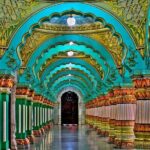
Belur’s Chennakeshava Temple: stone made for a 1117 victory
Belur’s highlight is the Shri Chennakeshava Swamy Temple, constructed on the orders of the Hoysala king Vishnuvadhana to celebrate a military victory in 1117 AD against the Cholas in the battle of Talakad. That’s one of the reasons I like this stop: it doesn’t feel like a random old building. It feels like a political moment turned into sacred art.
The temple is also described as exceptionally large and lavishly decorated, and here’s a detail that really matters for your visit: the decoration didn’t stop after the king’s order. It continued across nearly 103 years, carried forward by various successors. In other words, you’re seeing a project that outlived the original ruler, with each generation adding its own finishing layer.
Architecturally, the temple is tied to the Hoysala style and the prompt details how the Hoysalas followed Dravidian and vesara influences while still leaving a distinct signature of their own. When you’re standing there, you’re basically reading a design language. Look for the kind of precision that makes the carvings feel almost too exact for human hands.
What to do during your 1-hour visit
- Start by taking in the temple structure as a whole before you zoom in on the stonework.
- Spend extra time on the areas with the densest carving. That’s where the “how did they do this?” feeling usually lands.
- If you’re taking photos, aim to shoot from a few angles rather than only straight-on. These temples often reward small shifts in viewpoint.
What to know before you go
Entry fees aren’t included, so budget for tickets on arrival. That’s normal for historic sites, but it does mean the temple time will feel a little tighter if you don’t have your ticket sorted quickly.
What makes Belur special: pillars, precision, and 100 years of finishing
If you’re the type who stops when a building starts looking like it’s trying to outsmart you, Belur is a good match. The temple is famous for carvings and for the kind of detailing that can look almost mechanical. One of the most memorable impressions from people who’ve visited is how the temple pillars and details feel so exact, like the workmanship is unbelievably controlled.
Another reason Belur earns attention is the emotional logic of the place. The temple is connected to victory—victory turned to devotion, with architecture as the message. Then the work continues for decades. That timeline is the quiet magic here. A single ruler starts something, then the temple becomes a long-term cultural project.
A simple way to enjoy the carvings without getting lost
Carving overload is real. The best strategy is to pick a theme for each minute:
- 10 minutes: the overall shape and layout
- 20 minutes: one cluster of carvings you find most compelling
- 10 minutes: pillars and columns (where the precision usually shines)
- 10 minutes: a final sweep, slower, for anything you missed
You’ll see less overall, but what you do see will “stick” better.
Halebidu’s Hoysaleswara Temple: Shiva, Nandi, and an 80+ year build
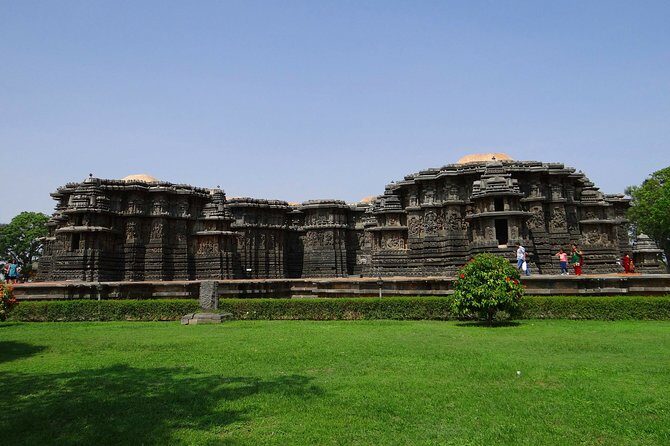
After Belur, you drive to Halebidu for the Hoysaleswara Temple, dedicated to Lord Shiva. The setting also comes with a name that adds context: Halebidu city was known as Dwarasamudra, described as the gateway to the seas. You don’t have to picture the coast to enjoy it—just know the area had a sense of arrival and connection, and the temple reflects that importance.
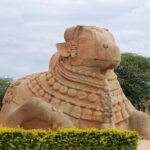
Halebidu also gives you a strong visual cue right away: opposite the temple is a big statue of Nandi. Nandi matters because it’s a traditional symbol tied to Shiva. Even if you’re not a hardcore iconography person, it helps you orient the site quickly.
Here’s the detail that makes Halebidu feel different from many completed temples: construction took more than eighty years to build partially and then it was left uncompleted. That doesn’t make it less impressive. If anything, it creates a more honest experience. You’re seeing a sacred building that was grown over time and then, for whatever historical reasons, never fully reached the final plan.
What to do during your 1-hour visit
- Take 60 seconds to find Nandi and then look back toward the main temple. It helps the layout make sense.
- Look for the wall inscriptions that list scenes and figures—those are where your “story” experience starts.
- Spend your last 10 minutes scanning for variety: humans, animals, and action scenes often appear in different zones.
Again, entry fees aren’t included, so expect a short queue or small ticket process before you settle into the carvings.




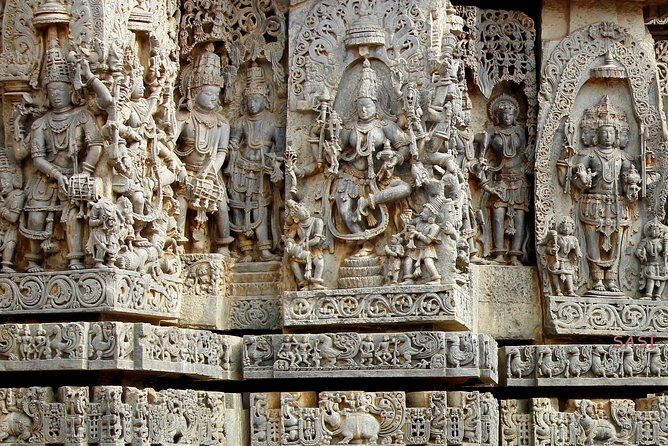
Reading the carvings at Halebidu: war, hunting, music, and dance
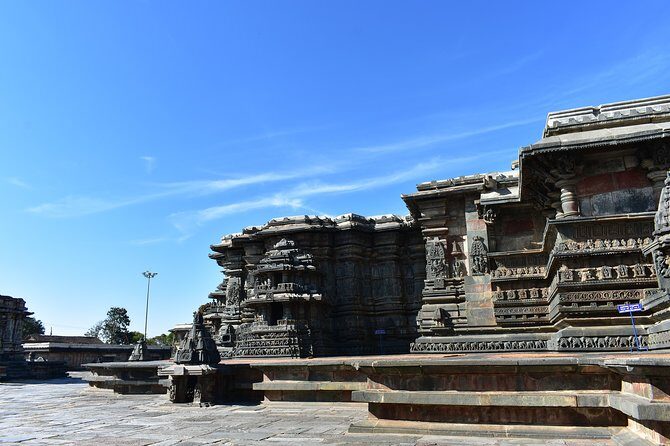
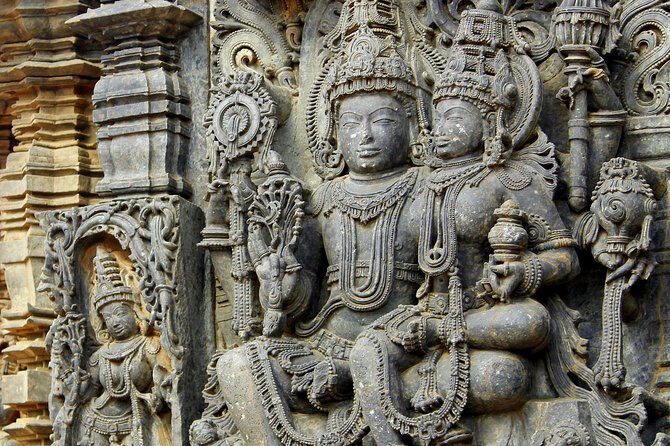
Halebidu is often described as a paradise for art and sculpture lovers, and the reason is clear once you start looking at the wall inscriptions. The carvings don’t just show gods sitting politely. They show a broader world: humans and animals, and scenes related to war, hunting, music, and dance.
This is one of the best parts of the tour if you want temples that feel alive rather than purely decorative. The prompts mention endless display of gods and humans alongside action. That means you can treat the temple like a visual timeline: ideas of power, daily life, and celebration all appear carved into stone.
One practical tip: don’t try to “decode” every panel in a single hour. Instead, choose two categories and commit:
- Choose one action theme (war or hunting) and one cultural theme (music or dance).
- When you find a panel with a clear scene, stay on that area a little longer.
That way, the carvings don’t become a blur. They become stories you can actually follow.
Price and value: what $99 really buys on this Bangalore day trip
At $99 per person, this tour is mostly paying for private transportation and a time-efficient schedule that gets you from Bangalore to two temple sites. The price also reflects that the experience is structured and managed as a single unit: pickup is offered, there’s group discount information available, and you get a mobile ticket.
What’s not included is important for value math:
- Entry fees for the temples
- Meals
- A local guide
So the real question isn’t just what you pay upfront. It’s what you’ll spend on top. If you arrive ready to budget for tickets and food, this can be a good deal because you’re avoiding the hassle costs of figuring out your own transport across two sites in one day.
Also, the private format matters more on a long day. With 13–14 hours total, you’re better off when someone else handles driving and timing. That keeps your attention on what you came for: the carvings and architecture.
Comfort, group setup, and the human touch of pickup changes
Because it’s private, your group rides together. That tends to make the schedule easier to follow, especially when you’re moving early and trying to stick to temple entry windows. If you’re coming with family or friends, this style often feels calmer than a shared group where you get separated or slowed by different interests.
One small detail that showed up in real-world experiences: pickup can be adjusted when your hotel isn’t on a standard list. Mr. Jai Singh appears as the point of contact in published responses, and in at least one case, he arranged a driver pickup at a hotel that wasn’t listed. That’s the kind of service you’ll appreciate if your accommodations don’t match a neat checklist.
Who should book this, and who might want a different approach
This tour is a great match if you care about Hoysala art and want a straightforward day from Bangalore. It’s ideal for:
- People who love stone carving and architectural details
- Anyone short on time who still wants both Belur and Halebidu in one trip
- First-timers who want the drive handled and a focused schedule
It may be less ideal if you want a slow, guided museum-style experience. Each temple is around 1 hour, and the tour doesn’t include a local guide, so you’ll be doing some of the interpretation yourself. That’s still totally workable, especially if you’re comfortable reading the space visually.
If you’re thinking about alternatives, one published tip is that KSRTC buses can cover circuits around these places, sometimes combined with other nearby heritage stops like Sravanbelagola (a Jain temple). If you enjoy independent travel and you don’t mind planning logistics, that’s another route to consider.
Should you book the Belur and Halebidu From Bangalore tour?
Book it if you want a single-day hit of Hoysala temple architecture with pickup, private driving, and two concentrated stops. At $99, the value works best when you factor in that you’re buying convenience: someone gets you there, someone brings you back, and your time is already structured around the main sights.
Skip or reconsider if you know you’ll struggle with early mornings and long days, or if you want meals and temple guidance included. Since entry fees and meals aren’t part of the package, you’ll need a bit of cash and a bit of self-management.
My practical take: this tour is for people who look at carved stone and think, how on earth did they build this? If that describes you, you’ll likely feel satisfied leaving Belur and Halebidu—because you’re seeing the key works of a style that still looks shockingly engineered even after centuries.
FAQ
What’s included in the Belur and Halebidu tour from Bangalore?
The tour includes private transportation. You’ll be picked up early in the morning and driven between Bangalore, Belur, and Halebidu.
Are entry fees included for the temples?
No. Entry fees are not included, so you’ll need to pay for admission at the temples.
How long does the tour take, and when does it start?
It runs about 13 to 14 hours and starts at 6:00am.
How much time do we spend at Belur and Halebidu?
Each temple stop is listed as about 1 hour: Beluru Shri Chennakeshava Swamy Temple and then Hoysaleswara Temple at Halebidu.
Is this a private tour or shared group?
This is a private tour/activity. Only your group participates.
Can I cancel for a full refund?
Yes, free cancellation is available. You can cancel up to 24 hours in advance for a full refund.